
Best to Forget
When understanding the question has a greater value than knowing the answer

Every night at midnight, the purple clouds came out to dance with the blushing sky. And every night the ring of eleven stood in a circle and sang their chorus. Their harmonies held as fine a pitch as a tabernacle choir. Without a conductor, or the need for one, their combined voices blended from a rich harmonic chorus down to a single-note solo and back to harmonies again. Then they would smile at each other and return to their homes on Maple Street, walking purposefully, peacefully in the purple night. No goodbyes. No “see you tomorrow night” or “catch ya later.” Silence—actually more like a silent wake. A trail of audible radiance no human having heard it once would ever, could ever, forget.
These eleven would never remember.
There is no telling how many nights the midnight choir had joined to create this magic. Without someone to record, observe, or document the event there was simply no telling. There was no evidence that the moment had occurred. No memory of it. No memory of anything.
On Day One, as it would come to be known, an elderly couple that had been married for over 60 years looked into each other’s eyes and saw a perfect stranger. A mother, moments after giving birth to her new baby daughter, lovingly picked up the tiny stranger and asked, “Where did you come from?” A veteran airline pilot turned toward his copilot and asked, “Where are we?” just as a flight attendant entered the cockpit with a look of terror on her face. “Oh wow! We are so high! You can see for miles!” She leaned her head between the pilot and copilot and the three of them gazed out the windows of the speeding jet. In about sixteen minutes the plane would land in the Pacific Ocean about fifty miles off the coast of San Diego, California. Not a soul would survive the crash, or the fire, or the drowning. The navy men aboard their training vessel watched as the plane splashed into the sea. They would gasp in awe, then turn their heads away, squinting from the blinding sun, and relax into whatever activity drew their curiosity. And they would hum, or sing, and some would whistle graceful melodies, or peppy tunes, or mournful tones. Within a few minutes the group of seabees, witness to hundreds of deaths only moments ago, would be enjoined in nothing less than delightful song.
To this day, there is still too much to know and too much that cannot be explained. The world, it is assumed, suffered an attack by unknown source. A tremendous amount of loss occurred, an incalculable loss. But to say the world “suffered an attack” doesn’t quite explain all that changed on that day. Suffering, as it happens, is measured by contrasts, by tolerance for change, by memory of what was and is no more. The world is not suffering. It is a peaceful world filled with what could best be described as riddled with human grace. Kind people mingle with other kind people. Old and young, tall and small, silly and stoic, all kinds, all sorts of all mankind are just that: kind.
It is an easy world. It is a safe world. It is a world of midnight harmonies and purple midnight skies, and a kind of silence that cannot be described by the lack of sound, rather by the utter eradication of noise. The noisy voices, the stewing, seething hisses of angry shrews, the cries of injured soldiers, the angry shouting of unhappy couples, the groans of the broken hearted, the furious cries of injustice were simply and suddenly absent. Roaring motors now rust on the bottom of the ocean. Desiccated roadside corpses have, for decades, become nothing more than dust in the steady, blowing wind. The blood has dried. The bones are buried beneath grasses and flowers. The rains have washed away the ashes of the fires and the creek beds are abundant with new life. The oceans are clearing. The death, the sounds of death, the sadness of death, indeed the evidence of death are simply gone. Or at least not remembered. It has been sixteen years. 16 years, 4 months, and 3 days to be exact. Today is 16.04.03
* * *
Abigail, Rack, Elle, Mokey, Landau and Chip stood in the elevator lobby. The marble floor shone, the marble walls rose twenty feet up to the ceiling, the brushed steel elevator doors reflected back half-distorted images of the five teens and Chip.
“It’s your turn, Elle,” said Chip, nodding toward the directory. Elle stepped up to the directory mounted behind clear glass doors on the lobby wall. She laughed a single “ha.” “Very funny, Chip,” she half-groaned. Then with a quick double-check, entered the code numbers that would summon the elevator into the keypad.
“What.” Mokey half-asked. "What did he do this time?" Elle, almost reluctant to say, took in a breath of courage and leaned in toward her young co-worker, and half-whispered, “The elevator code is the date day I got my first period.” Mokey blushed, Elle blushed. Chip tucked in his laughter with a not too innocent, “What?” Eyeballs rolled, heads dropped, everyone prayed for any kind of interruption. And there it was.
The lowered heads simultaneously rose to greet Otis and Sam. Nods and stiff grins were cast as precisely as a flock of flamingos, as the two old men shuffled past, pushing a rolling canvas cart past the elevator bay—just passing by. The shiny floors, the shiny doors, the clear glass windows—all were the work of these two men. They had provided custodial care to this building decades before Day 1. And now they lived in what was, back in the day, the third floor cafeteria. The cafeteria kitchen was their kitchen. The mens room was their bathroom. The ladies room was their laundry room. They called it the clean room today as they had called it way back when. They didn't "remember" that is what it had been called. That was just what they called it. Clean is what is was, after all. They slept, not side by side, but head to head under the long table in the executive conference room. In all the world, there was no better, safer, more appropriate place for Otis and Sam than the third floor of the headquarters of Universal Mining. This was where they were on Day 1 and this is where they would remain until the end. The end being nowhere in sight.
The elevator door opened and the flamingo heads turned to enter. Abigail, Rack, Mokey, Landau and Chip boarded. Elle remained behind, re-entered the code and the door closed. She stood alone, listening to what little sound existed. Otis and Sam’s wheels. Some gentle mutterings between the two of them, a quietly whistled tune they shared. And there it was, the distant sound of an elevator door opening and closing three floors down. A quiet motor brought the elevator up to the lobby again. Elle heard the car brake engage. She entered the code again and the doors opened. Chip waved his arm, in an “after you” gesture. Elle entered. Chip stayed behind and entered the code to send her on her way. He opened the glass doors on the directory and plucked out the little, white plastic numbers that he had placed there that morning before the kids had arrived. Kids. They weren’t kids. They were the people running the world. The irony wasn’t lost on Chip. He would do anything for these kids. Indeed he may have saved their lives. Most certainly they would save his.
* * *
Here he was, a man of what? 35? There was no way to say for sure. Unless and until the kids were able to unearth some record of his birth his age would remain one of the countless mysteries this odd new world kept concealed. His job was to protect and guide them to the best of his abilities, as it had been for sixteen years. Changing the elevator codes was part of the protection scheme. The basement of this building was the command center and, more important, the sanctuary where these kids had worked, at least in the case of Elle, since age 5.
Chip closed the cabinet doors, locked it up, and set the key on the top edge of the case, out of sight. It wouldn’t be long before Rack would be able to reach it. Chip already suspected Rack had seen the key but he would never have risked reaching for it even if he knew for sure it were there. Not Rack. He would have lifted Abigail up by her armpits and made her grab the key. Rack was never one to claim responsibility for anything…not even if it made him the hero. It was hard to say if it was humility that drove him to this extreme, or the desire to remain invisible which as he grew was becoming less and less possible. He missed being little. He had been a wunderkind, and now that he was approaching adulthood—whatever that meant—soon enough he wouldn’t be able ride on his youth, or impress anyone with the huge toothless grin he flashed when, at age six, he hacked into the security feed for every security camera in the city. The advantage the crew had gained by this new level of surveillance was a true game-changer. And this hyper-intelligent goofball kid had cracked the code. Now the team would be able to keep an eye on the town, on the streets, and on their parents. But more important, Chip would be able to keep an eye on the kids after they went home every night. Was he a guardian or a spy? To Chip, 100% guardian. He hadn't a single sinister bone in his body. After all, he lived in a world of abundant virtue. To be anything less than a good man would be poisonous perhaps, and most certainly unnecessary.
Chip spent the short elevator ride from the lobby down to the third lower level to mentally sort his plans for the day. So little responsibility rested on his head these days now that the kids could reach the gas pedal. They were maturing faster now, even faster than when they were four and five. Their early childhood development had been both terrifying and exhilarating to watch. Terrifying because it was so swift. Exhilarating because it was probably going to be the thing that saved the planet from...he always got stuck on the next thought...from what? The planet had never been better.
He had to learn how to parent children who were not his own. He was sixteen on Day 1, and only about twenty-one when he became their guardian, chauffeur, coach, and big brother. Technically, he could have been a brother to one or more. In fact, he could be a father. The resemblance between him and Landau was growing more and more obvious as Land grew. It wouldn’t be long before the kids were able to restore some of the digital data from before Day 1. Books filled with written histories were in abundance. But personal data, as in who begat who, was nearly impossible to find and even harder to trust. So much file corruption had occurred, and so many databases had simply been destroyed that it was almost not worth the effort. The overrriding question always loomed, did it matter? The question that needed answering wasn’t, is Landau my son, or my brother? It was what happened? And can we fix it? Still, the questions that haunted Chip’s dreams were these: Why wasn’t I affected? Why did my parents and all the other people on earth lose their memories, and their ability to form new memories? Why can’t I remember where I was that day? Why can’t I 'walk in peace' like everyone else? Why am I not drawn to the midnight singing circles? What happened, or didn’t happen to me, and why? Can the kids fix it? What will happen if they do?
The question that never once occurred to him was, why are the night sky clouds purple?
About the Creator
Lori Oliver
I prefer to write funny stuff but my sense of humor is derived from having grown up in the ‘60’s. Now that I’m in my sixties I find it causes friction. So fiction it is.
Reader insights
Nice work
Very well written. Keep up the good work!
Top insight
Excellent storytelling
Original narrative & well developed characters
Keep reading
More stories from Lori Oliver and writers in Earth and other communities.
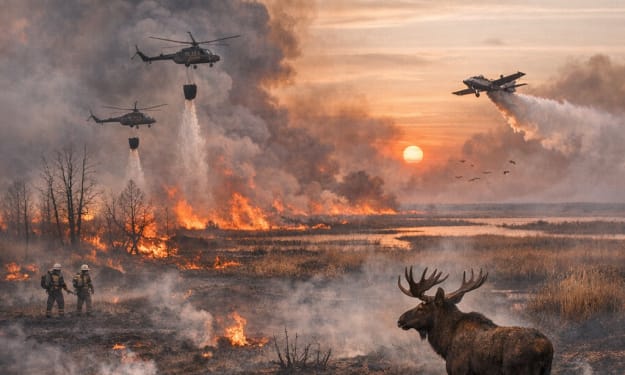
the largest fire in Poland in the 21st century
A fire that for several days turned the largest national park into a scorched wasteland Spring 2020 in Biebrza National Park was supposed to look like it does every year. Vast marshes and peat bogs were beginning to revive after winter, and the Biebrza Valley was filling with the sounds of birds returning to breed. This unique area, considered one of the most valuable natural regions in Europe, suddenly became the scene of the largest fire in Poland in the 21st century. The fire, which broke out in April, consumed thousands of hectares of protected nature and left behind a landscape of devastation.
By Pożarnictwo about 15 hours ago in Earth
I Spoke to Astrophysicists About Starlink’s Expansion: The Doomsday Scenario Keeping Them Up at Night
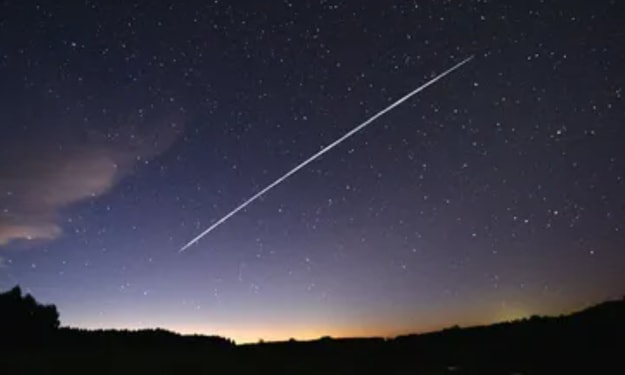
SpaceX’s Starlink project has captured headlines for its ambitious goal: provide high-speed internet across the globe by deploying thousands of low-Earth orbit satellites. While the idea of connecting remote communities is exciting, astrophysicists and space experts are sounding the alarm about a growing doomsday scenario that could threaten both space exploration and our ability to observe the night sky. After speaking to several astrophysicists, it’s clear that Starlink’s expansion, if unchecked, could dramatically alter Earth's orbital environment, disrupt astronomical observations, and even increase the risk of space debris collisions. Here’s what experts are warning the public about. The Scale of Starlink’s Expansion As of now, SpaceX has launched over 4,000 Starlink satellites, with plans to deploy tens of thousands more in the coming years. Each satellite orbits at altitudes between 340 km and 1,200 km, which places them in the low-Earth orbit region used by countless other satellites and scientific missions. Astrophysicists point out that this rapid proliferation is unprecedented. Dr. Lisa Montez, an astronomer specializing in satellite impacts on optical telescopes, told me, “We are looking at a situation where the density of satellites is increasing faster than anyone has fully planned for. This is uncharted territory.” The problem isn’t just the sheer number of satellites—it’s the concentration in specific orbital bands, which makes collisions more likely and complicates orbital management. The Night Sky Is at Risk For centuries, humanity has marveled at the stars, studying the cosmos to better understand our place in the universe. But astrophysicists warn that Starlink is dramatically altering the night sky, making it more challenging to conduct research and enjoy unpolluted stargazing. Every time a telescope captures an image, the reflective surfaces of Starlink satellites can leave streaks of light, masking or distorting the data. “Even a single bright satellite passing through a telescope’s field of view can ruin an entire night of observation,” Dr. Montez explains. Observatories around the world are already noticing the impact. The Vera C. Rubin Observatory in Chile, set to be one of the most advanced facilities for studying dark matter and the evolution of galaxies, may see thousands of Starlink satellites crossing its field of view nightly, potentially reducing the quality of its data and increasing processing costs. The Doomsday Scenario: Space Debris Beyond observations, astrophysicists are increasingly concerned about space debris, which could trigger a cascading chain reaction known as Kessler Syndrome. This occurs when collisions between satellites produce debris that then hits other satellites, creating more debris in an accelerating feedback loop. Professor Rajesh Patel, a space environment specialist, told me, “If a few hundred Starlink satellites collide, it could create tens of thousands of fragments. That would threaten other satellites, international space missions, and even human spaceflight.” Space debris doesn’t just float harmlessly—it travels at speeds over 28,000 km/h, enough to destroy functional satellites or damage spacecraft. With tens of thousands of Starlink satellites planned, the potential for catastrophic collisions is growing, especially since low-Earth orbit is already crowded. Mitigation Efforts and Controversies SpaceX has acknowledged these concerns and claims to implement collision avoidance protocols, using automated systems to maneuver satellites out of harm’s way. The company also plans for satellites to deorbit at the end of their lifespan, burning up in the atmosphere. However, experts argue that these measures may not be enough. Automated systems can fail, and human error or unexpected orbital dynamics could still lead to accidents. Furthermore, the sheer number of satellites makes it difficult to track and manage each one effectively, particularly as other private companies and nations plan similar mega-constellations. Dr. Montez adds, “Even if every satellite works perfectly, the night sky is already changing. The aesthetic and scientific impacts are immediate, whereas collision risks are looming but potentially devastating.” Broader Implications for Humanity The expansion of Starlink raises ethical and regulatory questions. Who has the right to fill low-Earth orbit? How much impact on astronomy and scientific research is acceptable for the sake of global internet coverage? International regulatory bodies like the United Nations Office for Outer Space Affairs (UNOOSA) and the Federal Communications Commission (FCC) have some oversight, but critics argue that global coordination is lagging behind corporate launches. Without international agreements and enforceable regulations, the sky could become a congested and hazardous environment, impacting both science and commerce. Astrophysicists emphasize that this isn’t just a matter of aesthetics. The ability to observe celestial phenomena affects climate science, space weather monitoring, and tracking near-Earth objects. If observations are increasingly compromised, our understanding of Earth and space could suffer. What Can Be Done? Experts suggest several strategies to mitigate risks: International Coordination: Global treaties or agreements to regulate satellite density and orbital placement. Reflectivity Reduction: Coating satellites to reduce brightness and their impact on telescopes. Enhanced Tracking Systems: Better monitoring of orbital debris and automated collision avoidance. Selective Deployment: Careful planning to avoid overcrowding specific orbital bands. While SpaceX is implementing some of these solutions, astrophysicists argue that industry self-regulation is insufficient. They advocate for a coordinated international approach to protect both scientific research and long-term orbital sustainability. Conclusion The expansion of Starlink represents a remarkable technological achievement, promising global internet access and unprecedented connectivity. Yet it also highlights the unintended consequences of space commercialization, including the potential for a cluttered sky, disrupted astronomy, and catastrophic space debris collisions. Astrophysicists remain vigilant. They warn that without careful oversight, humanity could face a doomsday scenario in low-Earth orbit, jeopardizing scientific discovery and space safety for generations. As we continue to celebrate innovations like Starlink, it’s crucial to remember that the sky belongs to all of us—scientists, enthusiasts, and everyday observers alike. Balancing technological progress with environmental stewardship of space may be one of the most critical challenges of the 21st century.
By Muhammad Hassan2 days ago in Earth


Comments
There are no comments for this story
Be the first to respond and start the conversation.