
"Beneath the Surface: How Climate Change is Reshaping Coastal Communities"
An in-depth look at rising sea levels, disappearing shorelines, and the human cost of a warming world.

The ocean used to be ten steps from Maria Lopez’s front porch. Now it’s two. When the tide is high, it licks at the concrete foundation of her home in Isle de San Marcos, a small fishing village off the Gulf Coast. Sandbags surround the base of her house like a protective wall, though Maria knows they won’t hold forever.
“Our lives are changing faster than we can adapt,” she says, her eyes scanning the horizon, where the sea glitters beneath a low, humid sky.
Maria’s story is not unique. Across the globe, coastal communities like hers are facing the increasingly harsh reality of climate change. Rising sea levels, stronger storms, and coastal erosion are not distant threats—they're here, now, washing away land and livelihoods inch by inch.
According to data from the Intergovernmental Panel on Climate Change (IPCC), global sea levels have risen by more than 8 inches (21 cm) since 1900. The rate of rise has more than doubled in the past three decades. For communities situated just a few feet above sea level, every inch counts. In the U.S. alone, over 40% of the population lives in coastal areas, and many are now on the front lines of climate-induced displacement.
In San Marcos, the once-bustling main street is now a ghost town. Storefronts stand empty, their doors warped from flood damage. The school relocated inland last year after repeated closures due to mold and water damage. The local fishing industry, the community’s economic lifeblood, has been devastated by saltwater intrusion and changing fish migration patterns.
“The ocean used to feed us. Now it threatens to swallow us whole,” says Mateo Cruz, a third-generation fisherman who now supplements his income by working part-time in construction. “We used to talk about hurricanes like they were rare. Now, we brace for one every season.”
Climate scientists say this is the new normal. Warmer oceans fuel stronger storms, and melting glaciers and polar ice caps accelerate sea level rise. But while the science is clear, the solutions are complex—especially for small or economically vulnerable communities.
Some towns have begun “managed retreats,” relocating entire neighborhoods away from the coast. Others are investing in sea walls, elevated homes, or artificial reefs to slow erosion. But these efforts require money, planning, and often political will—things not all communities have in abundance.
“We don’t have the resources to move, and we don’t have the luxury to wait,” Maria explains. “We’re stuck trying to survive, day by day.”
Despite the dire situation, hope persists. Grassroots groups in San Marcos have organized clean-up drives, lobbied for funding, and educated residents on climate resilience. Renewable energy initiatives, such as solar panel installations and wind turbines, have started to replace aging infrastructure. In schools, students learn not just about climate science, but also about adaptation, sustainability, and advocacy.
One such student is 14-year-old Luz, Maria’s granddaughter. “We can’t undo what’s already happening,” Luz says, “but we can stop it from getting worse. I want to be a marine biologist so I can help save the ocean—and our home.”
Stories like Luz’s show the power of community in the face of adversity. But experts warn that local action, while vital, must be matched by global policy changes. Emissions reduction, sustainable development, and climate justice must all work together to slow the tide—both literally and figuratively.
Dr. Anika Rehman, a coastal climate researcher, emphasizes that while the problem may feel distant to some, it is interconnected with global systems. “When one community suffers, it creates ripples,” she says. “Displacement leads to migration, which can lead to economic strain, political tension, and social upheaval. Addressing climate change is not charity—it’s self-preservation.”
Back in San Marcos, the sun sets over the water as Maria and Luz stack the last of the sandbags for the evening. In the fading light, the ocean seems calm. But beneath the surface, the currents of change move steadily onward.
“Maybe we can’t fight the ocean,” Maria says, “but we can learn to live with it—if the world helps us.”
About the Creator
Keep reading
More stories from Muhammad Saad and writers in Earth and other communities.
"Whispers of the Wild: The Boy and the Lion"
The wind carried secrets in the savannah—soft murmurs only the truly silent could hear. Kito, a boy no older than ten, was one such listener. With no family left, he wandered the golden plains alone, speaking little, but hearing everything—the rustle of grass, the language of birds, the distant rumble of thunder. He understood the wild, not with words, but with heartbeats.
By Muhammad Saad 8 months ago in Earth
Amid European Energy Fears, Coal Creeps Back Into Favour
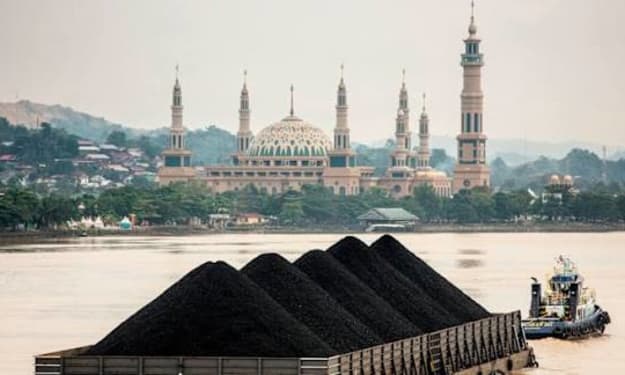
Europe’s energy landscape is shifting as fears over supply security and rising costs drive some countries back toward coal, a fossil fuel many had hoped to phase out entirely. The resurgence comes amid heightened tensions over energy imports, particularly natural gas, as the war in Ukraine and geopolitical friction with Russia have exposed vulnerabilities in the continent’s energy systems. Germany, long seen as a leader in renewable energy adoption, recently announced plans to keep several coal-fired power plants online longer than initially scheduled. Officials cited winter energy demands and the need to maintain a reliable baseload while natural gas supplies remain constrained. Similar considerations are emerging in Poland, the Czech Republic, and other nations that rely heavily on imported energy. “The energy crisis has forced governments to make difficult choices,” said Dr. Klaus Weber, an energy policy analyst at European Energy Institute. “While the climate goals remain important, ensuring citizens have access to electricity and heat this winter has become a more immediate priority.” The return to coal is not simply a response to price spikes. Energy security has become a pressing concern after European reliance on Russian gas pipelines was disrupted, prompting countries to diversify sources and store reserves. Coal, abundant in Europe and globally traded at competitive prices, provides a short-term buffer against shortages. At the same time, rising electricity costs have placed enormous pressure on households and industries. According to recent statistics from the International Energy Agency, European electricity prices surged by nearly 40% in the past year, prompting governments to subsidize energy bills and rethink fuel strategies. Coal-fired generation, though more polluting, offers predictable output and can be ramped up quickly to stabilize grids. Renewable energy advocates have expressed concern that this shift could undermine Europe’s climate leadership. Coal emits roughly twice the CO₂ per unit of energy compared to natural gas, posing challenges to achieving net-zero targets. Critics warn that extending coal use—even temporarily—risks locking in infrastructure that is inconsistent with long-term decarbonization goals. “Every megawatt-hour produced from coal is a step backward for Europe’s climate ambitions,” said Maria López, senior campaigner at Greenpeace Europe. “Governments need to pair any temporary measures with accelerated renewable deployment to avoid backsliding on emissions reductions.” Some nations are attempting to balance these pressures by deploying cleaner coal technologies. Advanced coal plants with carbon capture and storage (CCS) can reduce emissions by capturing a significant portion of CO₂ before it enters the atmosphere. Germany and the Netherlands are investing in pilot projects to integrate CCS into existing power plants, though critics note that large-scale implementation remains costly and complex. Analysts suggest that Europe’s return to coal is likely to be temporary. Once gas supplies stabilize and renewable infrastructure expands, reliance on coal is expected to decline. Yet the episode has highlighted the fragility of energy systems in the face of geopolitical shocks and the tension between short-term energy security and long-term climate goals. Meanwhile, citizens and businesses are feeling the immediate impact. Many households in Eastern and Central Europe face sharply higher heating costs this winter, and industrial manufacturers are warning that energy-intensive production could be scaled back if prices remain high. Policymakers are caught between the urgent need to maintain supply and the imperative to meet climate commitments. The European Union is working on strategies to mitigate these challenges. Measures include expanding LNG import terminals, investing in cross-border electricity interconnectors, and boosting renewable energy capacity. However, the gap between energy supply and demand, exacerbated by geopolitical tensions, means coal may remain a stopgap solution for months to come. Europe’s cautious return to coal underscores a broader reality: energy transitions are never linear. Even as governments and citizens push toward a greener future, external shocks—conflict, supply disruptions, and price volatility—can temporarily alter priorities. The key challenge for policymakers will be ensuring that short-term reliance on fossil fuels does not derail long-term climate ambitions.
By Fiaz Ahmed 4 days ago in Earth



Comments
There are no comments for this story
Be the first to respond and start the conversation.