
Banana and Earth: A Deeply Rooted Connection
Banana and Earth: A Deeply Rooted Connection

Banana and Earth: A Deeply Rooted Connection
Bananas are one of the most widely consumed fruits on Earth. Found in nearly every country, they hold cultural, economic, nutritional, and agricultural importance. But behind this popular fruit lies a complex relationship with the planet—from its origins and farming practices to its impact on the environment.
Origin and History
The banana plant is believed to have originated around 7,000 years ago in Southeast Asia, particularly in regions of Malaysia, Indonesia, and the Philippines. From there, it spread to India and later to Africa and other tropical regions. When Portuguese and Spanish explorers ventured into the Americas, they brought banana plants with them, establishing the fruit in Central and South America.
Over time, bananas became a staple fruit in many diets due to their sweet taste, portability, and nutritional value. Today, they are grown in over 135 countries, making them the fourth most important food crop in the world after rice, wheat, and corn.
Banana Plant and Its Growth
Although commonly referred to as a tree, the banana plant is technically a giant herb. It belongs to the Musaceae family and can grow up to 20 feet tall. The plant grows from a corm and produces large leaves that form a pseudo-stem. After about 9–12 months of growth, the plant flowers and develops fruit.
Banana cultivation thrives in tropical and subtropical climates with rich, well-drained soil, regular rainfall, and warm temperatures. Countries near the equator, such as India, Brazil, Ecuador, and the Philippines, are some of the largest producers of bananas in the world.
Varieties of Bananas
There are over 1,000 varieties of bananas globally, but most commercial bananas belong to the Cavendish group. This variety is popular for its sweet flavor, shelf life, and resistance to certain diseases. Other varieties include red bananas, plantains (used for cooking), and apple bananas.
Plantains are starchier and often cooked before eating, commonly used in Latin American, African, and Caribbean cuisines. Red bananas have a slightly raspberry-like flavor and are rich in beta-carotene.
Nutritional Value and Health Benefits
Bananas are packed with nutrients. A medium banana contains:
Vitamin C
Vitamin B6
Potassium
Fiber
Manganese
Natural sugars (fructose, glucose, sucrose)
These nutrients help maintain heart health, regulate blood pressure, aid digestion, and provide a quick energy boost. The high potassium content is especially valuable for muscle function and heart rhythm.
Bananas also contain antioxidants and compounds like dopamine and catechins, which may support brain health and reduce the risk of chronic diseases.
Cultural and Economic Importance
Bananas play a vital role in the economies of many developing nations. Millions of people depend on banana farming for their livelihood. In countries like Ecuador, Costa Rica, and Colombia, banana exports are a major source of foreign exchange.
Culturally, bananas hold spiritual and symbolic meaning in various traditions. In India, banana leaves are used in religious rituals and as eco-friendly plates for serving food. In some African regions, banana beer and banana-based dishes are part of the local cuisine and heritage.
Environmental Impact
While bananas provide many benefits, their large-scale commercial production poses several environmental challenges:
Monoculture Farming: Most banana plantations grow a single variety (usually Cavendish), which makes the crop vulnerable to diseases like Panama disease (Tropical Race 4). This lack of genetic diversity can lead to devastating crop failures.
Pesticide Use: To protect against pests and diseases, banana farms often use heavy chemical pesticides and fungicides. These chemicals can contaminate soil and water, harming nearby ecosystems and posing health risks to farmworkers and communities.
Deforestation: In some areas, forests are cleared to make way for banana plantations, leading to habitat loss and biodiversity reduction.
Water Consumption: Banana farming requires a lot of water. In water-scarce areas, this can strain local water supplies.
Waste: Banana farming generates a large amount of organic waste, including stems and leaves. While some waste can be composted, much of it ends up in landfills.
Sustainable Banana Farming
To reduce the environmental impact, many farmers and organizations are turning to sustainable practices, such as:
Organic Farming: Avoiding synthetic pesticides and using natural compost and pest control methods.
Agroforestry: Growing bananas alongside other crops and trees to enhance biodiversity and reduce the need for chemical inputs.
Fair Trade Certification: Supporting farms that treat workers fairly, pay living wages, and implement environmentally responsible practices.
Water Management: Using drip irrigation and rainwater harvesting to conserve water.
These practices not only protect the Earth but also ensure the long-term viability of banana production.
The Future of Bananas
The banana’s journey is not without challenges. Climate change, soil degradation, disease outbreaks, and rising demand all threaten its future. Scientists are working on developing disease-resistant banana varieties and exploring new farming techniques to secure the fruit’s survival.
Consumers also play a role by supporting sustainable brands, reducing waste (like overripe bananas), and advocating for eco-friendly farming practices.
Conclusion
The banana is more than just a fruit; it’s a symbol of the intricate link between agriculture, culture, economy, and the environment. As one of Earth’s most cherished foods, protecting its future means protecting the ecosystems and communities that sustain it. From soil to shelf, the story of the banana is deeply rooted in the health of our planet—and in the hands of those who care for it.😍
Disclaimer
The information provided in this Article post is for general informational and educational purposes only. While we strive to ensure accuracy, we do not guarantee that all information is up-to-date or error-free. The content is based on personal opinions and experiences and should not be considered professional advice.
About the Creator
Keep reading
More stories from Budhirai Tripura and writers in Earth and other communities.
Earth and Trees: A Vital Connection
Earth and Trees: A Vital Connection Earth, our only home in the vast universe, is a planet brimming with life, diversity, and natural beauty. Among all living organisms that contribute to Earth’s ecosystem, trees stand tall—both literally and figuratively—as one of the most crucial components of our environment. They play an essential role in maintaining the health of our planet, supporting life in countless ways, and symbolizing the deep bond between humanity and nature.
By Budhirai Tripura9 months ago in Earth
Himalayas Bare and Rocky After Reduced Winter Snowfall, Scientists Warn
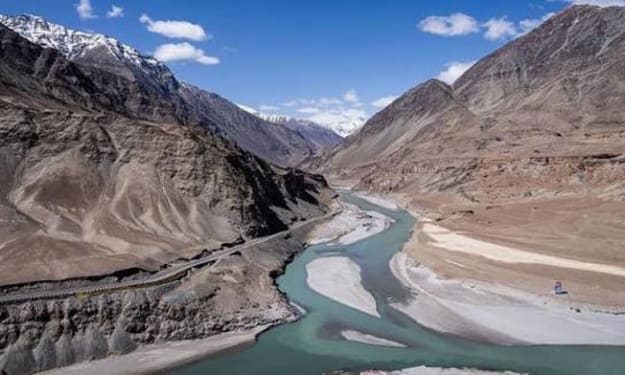
The Himalayas, often described as the world’s “Third Pole,” are facing a dramatic and worrying transformation. Scientists are warning that reduced winter snowfall is leaving vast stretches of the mountain range bare, rocky, and increasingly vulnerable to long-term environmental damage. Once known for their thick snow blankets and powerful glaciers, parts of the Himalayas are now showing exposed rock earlier than ever before—an alarming sign of climate stress in one of Earth’s most critical ecosystems. A Visible Change in the World’s Highest Mountains Winter snowfall plays a vital role in the Himalayan climate system. Snow acts as a protective layer, insulating glaciers and regulating the slow release of meltwater into rivers during warmer months. However, researchers monitoring satellite data and ground stations report that recent winters have brought significantly less snowfall across large areas of the range. As a result, snowlines are rising higher up the slopes, leaving lower and mid-altitude regions exposed. This has turned once-white mountain landscapes into expanses of dark rock, which absorb more heat from the sun, accelerating warming in a dangerous feedback loop. Why Reduced Snowfall Matters Snow is more than a scenic feature—it is essential to the health of Himalayan glaciers. When snowfall declines, glaciers lose their main source of replenishment. At the same time, exposed ice and rock melt faster under direct sunlight. Scientists warn that this imbalance is speeding up glacier retreat across the Himalayas. Many glaciers are now shrinking at rates not previously recorded, threatening the long-term stability of water systems that support nearly two billion people across South and Southeast Asia. Impact on Asia’s Major Rivers The Himalayas feed some of the world’s most important rivers, including the Indus, Ganges, Brahmaputra, Yangtze, and Mekong. These rivers depend on seasonal snow and ice melt to maintain consistent flow throughout the year. Reduced snowfall means less stored water for the dry season. In the short term, faster melting can cause floods and landslides. In the long term, however, shrinking glaciers could lead to water shortages, affecting agriculture, hydropower, and drinking supplies across multiple countries. A Growing Risk of Disasters Bare, rocky slopes are far more unstable than snow-covered ones. Snow helps bind loose material together, while exposed rock and soil increase the likelihood of landslides and avalanches. Scientists have already observed a rise in slope failures and glacial lake outburst floods in the region. As glaciers retreat, meltwater often accumulates in fragile lakes dammed by loose rock and ice. These lakes can burst suddenly, releasing destructive floods that threaten mountain communities and downstream infrastructure. Climate Change at the Core Researchers agree that climate change is the primary driver behind the declining snowfall. Rising global temperatures are altering weather patterns, causing more winter precipitation to fall as rain rather than snow. Even small temperature increases at high altitudes can drastically change how moisture behaves. Additionally, warming oceans and shifting atmospheric circulation are affecting the timing and intensity of winter storms that traditionally brought snow to the Himalayas. Effects on Local Communities and Wildlife Mountain communities that rely on predictable snowfall for farming, tourism, and water storage are already feeling the effects. Farmers report changes in planting cycles, while winter tourism has declined in some regions due to unreliable snow conditions. Wildlife is also under pressure. Species adapted to cold environments are losing habitat as snow cover shrinks. Plants that depend on snowmelt are struggling to survive in drier, warmer conditions, disrupting fragile alpine ecosystems. Scientists Call for Urgent Monitoring and Action Experts stress the importance of improved monitoring of snowfall, glacier health, and water flows across the Himalayan region. Better data can help governments plan for future water management challenges and disaster risks. At the same time, scientists emphasize that local adaptation alone is not enough. Reducing global greenhouse gas emissions remains critical to slowing temperature rise and preserving what remains of the Himalayan snow and ice. What the Future Holds If current trends continue, large parts of the Himalayas could see permanent changes within decades. Reduced snowfall and accelerating glacier loss may reshape landscapes, ecosystems, and human livelihoods on an unprecedented scale. The sight of bare, rocky Himalayan slopes is more than a visual change—it is a warning signal. The world’s highest mountains are responding rapidly to a warming planet, and the consequences will extend far beyond the peaks themselves.
By Fiaz Ahmed Brohi7 days ago in Earth
Nature’s Hidden Gems: Discovering the Rarest Flowers on Earth
Introduction: When Beauty Meets Rarity Nature is filled with wonders, but few are as captivating—and as elusive—as the rarest flowers on Earth. From enormous parasitic blooms to delicate orchids that appear only under precise conditions, these plants challenge our understanding of survival, evolution, and beauty.
By Ahmed aldeabella4 days ago in Earth



Comments (1)
Hello, just wanna let you know that according to Vocal's Community Guidelines, we have to choose the AI-Generated tag before publishing when we use AI 😊