
"Bamboo: The Versatile and Sustainable Solution for Contemporary Products"
- Sarath Kumar
Eco-friendly bamboo is quickly replacing traditional materials in the manufacture of contemporary products. Bamboo is a rapidly growing grass that can be harvested without replanting, making it a highly renewable resource. It also takes very little water and fertiliser to grow, making it a much more environmentally friendly option than many other crops.
Bamboo's strength and durability are two of its primary advantages as a material. Bamboo fibres are more resistant to pests and rot than many other types of wood. This makes it an excellent choice for flooring, furniture, and building materials. Bamboo is also a great fabric alternative to traditional cotton because it grows with less water and pesticides and has a much lower carbon footprint. Bamboo flooring, for example, is well-known for its durability and moisture resistance, making it an excellent choice for bathrooms and kitchens. Bamboo furniture is also gaining popularity because it is lightweight and fashionable, and bamboo textiles are soft, breathable, and hypoallergenic. In addition, bamboo charcoal has a reputation for cleaning both water and air, which makes it a fantastic choice for water and air filters.
The adaptability of bamboo is another advantage. Textiles, paper, and charcoal are just a few of the things that may be made from bamboo. As a result, it is a very adaptable and versatile material for a variety of applications. Additionally, bamboo can be utilised to create items like bicycles, toothbrushes, and cutlery. Bamboo is being more widely used in a variety of products, from apparel to home decor, as consumer demand for environmentally friendly goods rises.
For items that are intended to decompose or compost, bamboo is a fantastic solution. Compared to products created from synthetic materials, bamboo is a far more sustainable option because it is a natural material that will degrade over time. This is particularly crucial in the modern world, where plastic waste is a big problem. Utilizing and composting items like bamboo straws, toothbrushes, and utensils can help reduce the environmental impact of plastic trash.
The potential of bamboo as a sustainable material to help fight climate change is one of its most fascinating features. Bamboo is a very effective carbon sink, which means it can take up a lot of carbon dioxide from the air. When bamboo is harvested and turned into products, the carbon is sequestered, which contributes to a decrease in the atmospheric concentration of carbon. This is because bamboo grows up to 91 cm (35 inches) per day, which is far faster than conventional trees, and it absorbs more carbon dioxide per hectare than any other plant. Because of this, bamboo may now be harvested considerably more regularly, increasing its capacity to absorb carbondioxide. environment.
Despite all these advantages, bamboo products are still not as widely available as we would like since producing them is more expensive and labor-intensive than producing materials like plastic or wood. Bamboo pulping is the process of turning bamboo into an useable material and involves chemically dissolving the bamboo strands. This technique can be expensive and harmful to the environment. However, this might change with further research, development, and funding. For instance, using enzymes to degrade the bamboo fibres is a more popular and environmentally beneficial option than using traditional pulping techniques. Additionally, the range of items that can be manufactured from this sustainable material is expanding thanks to the advent of new technologies like 3D printing with bamboo.
In conclusion, Bamboo is a fantastic substitute for conventional materials and has the potential to significantly contribute to the development of a more sustainable future due to its adaptability and capacity to fight climate change. Products made from bamboo can be used for a variety of purposes, including flooring, furniture, apparel, and home décor. Additionally, it can be composted and biodegraded, decreasing environmental plastic waste. Furthermore, bamboo is an effective weapon in the fight against climate change because to its capacity to absorb significant amounts of carbon dioxide. Bamboo pulping may be made more affordable and environmentally friendly with further research and development, making it a more desirable option for both producers and consumers. Overall, bamboo is an adaptable and long-lasting resource that has the potential to significantly contribute to the development of a more sustainable future.
THANK YOU
About the Creator
Sarath kumar
Youngster, Attempting to focus on problems in the surrounding area and to create a better environment.
Keep reading
More stories from Sarath kumar and writers in Earth and other communities.
"The Diversion of Pop Culture"
Pop culture and entertainment have always been important in influencing how we view the world. These entertainment mediums, which range from music to movies and television, have the capacity to affect our attitudes, feelings, and behaviour. However, there has been an increasing worry in recent years that entertainment and popular culture are taking our focus away from the actual issues affecting people all over the world.
By Sarath kumar3 years ago in Education
Global Lawn Mowers Market Set for Strong Growth as Smart Landscaping Goes Mainstream (2025–2033)
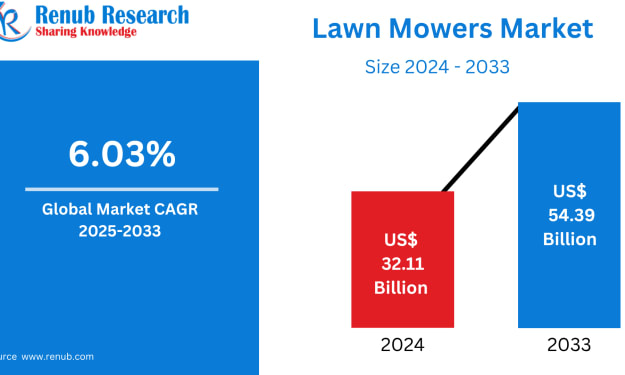
Global Lawn Mowers Market Size & Forecast 2025–2033 The Global Lawn Mowers Market is entering a transformative decade, reshaped by rapid urbanization, the rise of smart homes, and growing environmental awareness. According to Renub Research, the market is projected to grow from US$ 32.11 billion in 2024 to US$ 54.39 billion by 2033, expanding at a CAGR of 6.03% from 2025 to 2033.
By jaiklin Fanandishabout 10 hours ago in Earth
Homeowners Don’t Want to Move: The Big Deal About Shrinking Backyards
In neighborhoods across the country, a subtle but growing trend is taking root: homeowners aren’t moving, and it’s not just because of the housing market. Many are staying put because their backyards—once spaces for relaxation, gardening, and family fun—are shrinking, either physically due to new development or symbolically as life priorities shift. What may seem like a minor detail—an ordinary backyard—is, for many, a defining feature of home life. Losing it can change how people live, play, and even feel about their communities. This shift has consequences for families, urban planning, and even the way cities are designed. It also sheds light on why homeowners are willing to compromise on size, style, or even location rather than give up their outdoor space. Why Backyards Matter More Than Ever Backyards are more than just patches of grass. They are extensions of our living space, providing: Personal outdoor retreats for reading, gardening, or hosting friends. Safe spaces for children and pets to play. Social hubs for barbecues, birthdays, and neighborhood gatherings. Mental and physical health benefits, including fresh air, sunlight, and exercise. For families who have invested years into landscaping, planting trees, or building decks and patios, the backyard is an emotional asset. Moving to a new home often means losing these personal touches—and many homeowners aren’t willing to take that step. “Backyards are part of our identity,” says Laura Jennings, a landscape designer in suburban Chicago. “People have memories tied to them—first steps, garden harvests, family barbecues. That’s why so many homeowners are staying put, even if it’s tempting to relocate for a bigger house or a better neighborhood.” The Trend of Shrinking Yards Urban densification and suburban development have slowly eaten into traditional backyard space. In many cities, large lots are being replaced with townhomes, duplexes, or small-lot single-family homes. Even in suburban neighborhoods, new constructions often prioritize indoor square footage over outdoor space. The shrinking backyard trend has several effects: Less room for recreation: Families may struggle to fit a swing set, pool, or garden into a smaller yard. Increased desire to stay put: Homeowners prefer maintaining a familiar outdoor space rather than trading it for a slightly larger indoor area. Higher emotional attachment: As yards become more limited, the significance of every tree, patch of grass, or vegetable garden grows. For many, the choice isn’t just about square footage—it’s about quality of life. Homeowners Are Making Trade-Offs As a result, more homeowners are staying in place longer, even if it means: Skipping a bigger kitchen or extra bedroom. Living in a less “trendy” neighborhood. Paying more in maintenance or property taxes to keep a cherished yard intact. Some have embraced innovative backyard solutions to maximize smaller spaces: Vertical gardens and container planting. Multi-functional patios that serve as dining, lounging, and play areas. Creative landscaping, including raised beds, pergolas, and tiny ponds. These adaptations allow homeowners to maintain the sense of space and enjoyment they’ve built over years without relocating. Emotional and Social Dimensions Beyond practical reasons, the backyard has a symbolic meaning. It represents: Continuity and stability: Homeowners see staying put as preserving a lifestyle. Family history: Many yards hold stories—graduations, summer afternoons, first bike rides. Community connection: Long-term residents know neighbors, local schools, and nearby amenities. Moving often means giving up these ties. A survey by the National Association of Home Builders found that over 60% of homeowners aged 35–55 preferred staying in their current homes, citing yard size and outdoor enjoyment as key factors. For these individuals, giving up a backyard is not a small inconvenience—it’s a major life decision. The Impact on Neighborhoods and Cities The trend of staying put also affects broader urban and suburban planning. Fewer homeowners moving means: Less turnover in neighborhoods, which can reduce housing market fluidity. Pressure on developers to include quality outdoor space in new builds. Greater demand for parks and community green spaces, as private yards shrink. Urban planners and developers are noticing the importance of outdoor space in retention and satisfaction metrics. Homes with usable yards, green roofs, or communal gardens often have higher value and attract long-term residents. The Future of Backyard Living As city lots shrink and suburban sprawl continues, homeowners are adapting: Smaller, highly curated gardens instead of sprawling lawns. Multi-functional backyards designed for work, play, and entertainment. Investment in outdoor amenities such as fire pits, decks, or small pools. Some communities are exploring shared backyard concepts, like community gardens and pocket parks, to supplement shrinking private spaces. While these aren’t a complete replacement for personal yards, they provide social and environmental benefits and may encourage homeowners to stay in their homes longer. Conclusion: More Than Grass and Trees Shrinking backyards might seem like a minor design issue, but for homeowners, it’s deeply tied to lifestyle, family life, and personal identity. The reluctance to move is not just a reaction to the housing market; it reflects an emotional, social, and practical connection to outdoor space that indoor square footage alone can’t replace. As urban density grows and lot sizes shrink, the importance of backyards will continue to shape homeowner decisions, neighborhood design, and community dynamics. Families are showing that a yard is not just grass and trees—it’s a place of memory, freedom, and connection. In a world where real estate trends often prioritize indoor luxury, the backyard remains a powerful symbol of home, anchoring families to the places they love—and keeping many from moving at all
By Muhammad Hassanabout 12 hours ago in Earth



Comments
There are no comments for this story
Be the first to respond and start the conversation.