
Antarctica's Enigmatic Ice Walls
Unveiling the Frozen Secrets
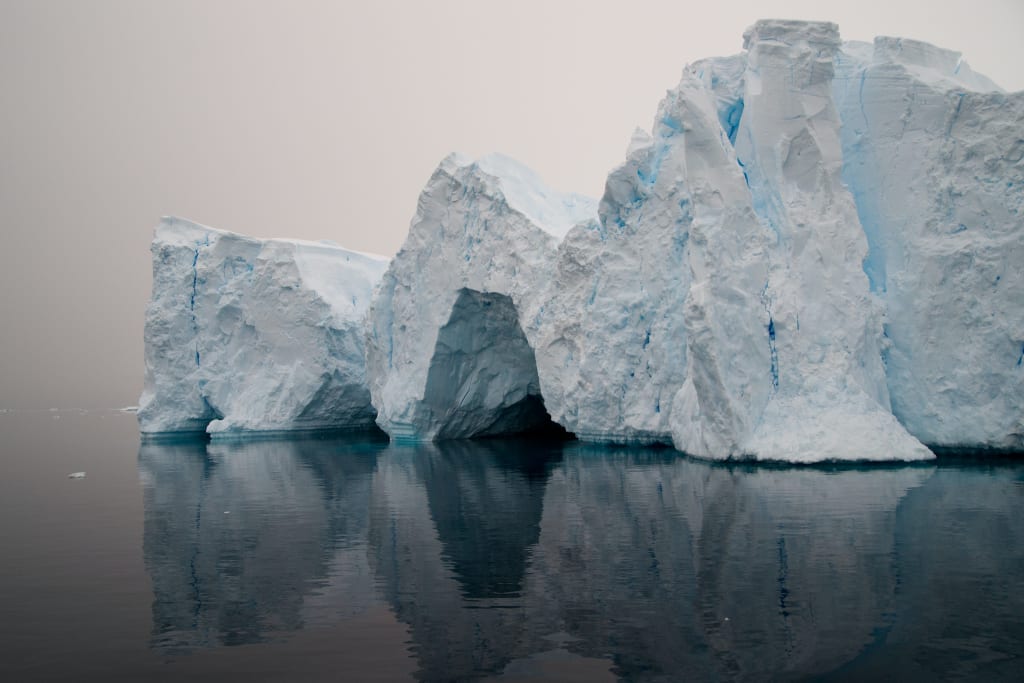
Part 1: The Icy Enigma
Antarctica, the Earth's southernmost continent, has long captured the imagination of explorers, scientists, and adventurers. An inhospitable land of ice and extreme conditions, Antarctica remains one of the least explored and least understood regions on our planet. At its heart lies a captivating enigma—the presence of massive ice walls that surround the continent's perimeter.
Part 2: The Ross Ice Shelf: A Frozen Barrier
Among the prominent ice walls in Antarctica is the Ross Ice Shelf, named after British explorer Sir James Clark Ross, who discovered it in 1841. Stretching over 600 miles (970 kilometers) along the coastline, the Ross Ice Shelf stands as the largest ice shelf on Earth. Enormous in scale, this icy expanse reaches heights of over 200 feet (60 meters) above the sea, creating an awe-inspiring natural barrier between the land and the Southern Ocean.
Part 3: The Formation of Ice Shelves
To understand the origins of ice shelves, we must delve into the unique dynamics of Antarctica's climate. The continent's exceptionally cold temperatures cause vast amounts of snowfall, accumulating over centuries and compressing into ice sheets. These ice sheets flow gradually toward the ocean, where they meet the coastline. In some areas, the ice extends beyond the land and into the water, forming floating extensions known as ice shelves.
Part 4: A Fractured Beauty
While ice shelves may appear solid and impenetrable, they are not without vulnerabilities. The dynamic nature of Antarctica's climate leads to a continuous cycle of ice formation, movement, and eventual calving—the breaking off of large chunks of ice from the shelf's edge, forming icebergs. This process is an integral part of the natural life cycle of ice shelves, with calving events providing insights into the ice shelf's health and stability.
Part 5: The Scientific Quest
Scientists have embarked on numerous research expeditions to unravel the mysteries concealed within Antarctica's ice walls. These endeavors, coupled with advancements in satellite imagery and remote sensing technology, have provided valuable insights into the structure, behavior, and significance of these icy giants.
Part 6: Beneath the Surface
Exploring beneath the surface of ice shelves has been a tremendous challenge due to their immense size and the extreme conditions they present. However, scientists have managed to gather crucial data using innovative techniques. For example, by drilling through the thick ice cover, researchers can extract ice cores, providing valuable records of past climate conditions and atmospheric composition. By analyzing these ice cores, scientists can reconstruct a detailed climate history spanning thousands of years.
Part 7: Climate Change Indicators
Antarctica's ice shelves act as key indicators of climate change. The increasing rate of ice shelf melting and calving events has raised concerns among scientists. Research indicates that rising global temperatures and warming ocean currents play a significant role in destabilizing these ice walls. As warmer waters circulate beneath the ice shelves, they contribute to the melting and thinning of the ice, ultimately leading to the disintegration of some sections.
Part 8: Impacts on Sea Level Rise
Antarctica's ice shelves play a critical role in stabilizing the Antarctic ice sheet, which contains an enormous volume of ice. Should the ice shelves collapse or significantly retreat, it could have profound implications for global sea levels. The disintegration of major ice shelves could allow the inland ice to flow more rapidly into the ocean, contributing to an accelerated rise in sea levels.
Part 9: Window into Ancient History
The study of Antarctica's ice walls provides a unique window into our planet's ancient climate history. Ice cores retrieved from the ice shelves hold a treasure trove of information, capturing atmospheric gases and preserving records of past temperatures, air composition, and even traces of prehistoric life. By deciphering these records, scientists can gain insights into Earth's climate patterns, identify significant climatic events, and improve our understanding of current and future climate change.
Part 10: The Fragile Balance
As our planet continues to experience the effects of climate change, the stability and fate of Antarctica's ice walls hang in the balance. Understanding the intricate mechanisms driving the behavior of ice shelves is crucial for predicting future changes and their potential impacts on sea levels and global climate patterns. The scientific community remains committed to ongoing research, monitoring, and modeling efforts to unravel the complex dynamics of these icy giants and their role in the Earth's climate system.
Part 11: A Call for Action
The presence of Antarctica's ice walls stands as a reminder of the fragility of our planet's ecosystems and the urgent need to address climate change. The scientific discoveries made in this remote and icy realm highlight the interconnectedness of our planet's climate systems and the profound impact of human activities on the environment. Antarctica's enigmatic ice walls beckon us to act responsibly, to preserve the delicate balance of our world, and to strive for a sustainable future for generations to come.
Conclusion:
Antarctica's ice walls, with the Ross Ice Shelf as its emblematic representative, continue to fascinate and challenge our understanding of the Earth's climate system. As scientists brave the extreme conditions and technological frontiers to unravel their secrets, the story of Antarctica's ice walls serves as a poignant reminder of the urgent need to address climate change and safeguard our planet for future generations.
About the Creator
Keep reading
More stories from writers in Earth and other communities.
True Happiness
On a sturdy apple tree, a mother dove lived peacefully with her tiny baby. The tree provided them with shelter, shade, and a sense of security. Every day, the mother dove would watch over her little one, teaching it to flap its wings, coo softly, and enjoy the calm of the natural world. Life had been simple, quiet, and safe for them, and she felt content in the little world that belonged entirely to her and her chick.
By Sudais Zakwan6 days ago in Earth
Instructions Included Challenge Winners
For the Instructions Included challenge, we asked writers to tell a story through instructions and to trust the form to carry what could not be said outright. Across the top entries, that trust paid off in many different ways.
By Vocal Curation Team3 days ago in Resources



Comments