
Animal Architects II: Homes You Won’t Believe Were Built by Beasts
Tunnels with air conditioning. Domes that defy gravity. These animals aren't just surviving — they’re building wonders.

Macrotermes Termites: Engineers of the African Savanna
Deep in Africa, Macrotermes termites build towering mounds that can reach over 30 feet (9 meters) high. But it’s not just the size that amazes scientists — it’s what’s inside.
These termite mounds have built-in ventilation systems that regulate temperature and humidity. Even though the outside environment can be extremely hot during the day and freezing at night, the inside of the mound stays stable — thanks to a complex system of air shafts and tunnels.
The termites farm a special fungus inside the mound, which breaks down tough plant material. They live in complete darkness, yet they construct structures so advanced they rival human-designed buildings for efficiency.
These tiny insects prove that intelligence isn’t always about brains — sometimes it’s about instinct, teamwork, and perfect design.
Vogelkop Bowerbirds: Artists of the Forest
Male Vogelkop bowerbirds, found in New Guinea, build elaborate “bowers” — not nests, but courtship structures meant to impress females. These bowers can take weeks to construct and are decorated with flowers, berries, shells, beetle wings, and even pieces of plastic or glass if available.
Each male has his own unique style and color preference. Some prefer blue objects, while others arrange their collections by shape or texture. The female doesn’t care about the male’s appearance — she judges him based on his artistic ability and creativity.
These birds aren’t just builders — they’re curators, designers, and performers. And they remind us that the drive to create beauty isn’t uniquely human.
Beavers: The Dam Masters
Beavers are famous for their dams and lodges, which they construct by felling trees, piling up logs, and sealing gaps with mud. Their dams slow down rivers and create ponds, which provide protection from predators and access to food.
What’s remarkable is how their construction transforms entire ecosystems. Beaver dams help control water flow, prevent erosion, support wetlands, and increase biodiversity.
Their lodges, often built in the middle of the pond, have underwater entrances, a dry living chamber, and ventilation. It’s not just a shelter — it’s a fortress with natural engineering.
Compass Termites: Builders with Built-In Direction
In Australia’s Northern Territory, compass termites build mounds shaped like thin slabs — tall, flat, and always oriented north-south. Why?
The design helps regulate temperature. The narrow edges of the mound face the rising and setting sun, reducing heat absorption, while the flat sides catch the morning and evening light to warm the mound gradually.
It’s a form of passive solar control, and they do it without any tools or blueprints — just instinct and generations of adaptation. Even engineers are impressed by how effectively these mounds manage heat.
These termites show that architectural genius can come from the smallest of minds.
Paper Wasps: Builders of Delicate Cities
Paper wasps chew wood fibers and mix them with saliva to create a kind of paper. With it, they build intricate hanging nests, shaped like open honeycombs, usually found under eaves or tree branches.
Each cell in the nest is carefully sized for larvae. The structure is lightweight, yet strong and waterproof. The wasps constantly repair and expand the nest as the colony grows.
Their teamwork and architectural precision prove that building something delicate doesn’t mean it’s fragile — it can be incredibly functional.
African Weaverbirds: Knots, Loops, and Architecture on Branches
Weaverbirds, especially the Southern masked weaver, are expert builders. Males construct hanging woven nests using grass, twigs, and leaves, weaving them together in tight knots without ever being taught.
Each nest is suspended from a tree branch and is carefully shaped into a hollow globe with a narrow entrance, which helps keep predators out. If a female doesn’t like the craftsmanship, she’ll simply ignore it — forcing the male to tear it down and start all over again.
It’s trial, error, and improvement — and it all happens with just a beak and instinct.
Spittlebugs: Frothy Fortresses on Stems
Spittlebugs might not seem like architects, but their homes are tiny marvels of protection. The nymphs produce a foamy mass, known as spittle, around their bodies while feeding on plant sap.
This bubbly shelter protects them from predators, insulates against heat and cold, and helps retain moisture. It’s a one-room house made of bubbles, but it works perfectly for the bug’s needs.
Sometimes, the best architecture is simple — and very, very weird.
Ants: Complex Underground Cities
Some ant species, like leafcutter ants, create underground colonies that span hundreds of square meters. These cities have separate chambers for nurseries, food storage, waste disposal, and even fungal gardens.
The tunnels are ventilated through a system of shafts that allow air to flow through the nest, preventing the growth of harmful gases. Some supercolonies even have millions of individuals, each playing a role — workers, soldiers, nurses, and queens.
It’s a society of builders — without blueprints, without machines, yet fully functional and astonishingly complex.
Community
These animal architects don’t build for fun — they build to survive, thrive, and attract love. Their creations are shaped by instinct, environment, and evolution, but the results often rival — or even surpass — human design.
From termite towers with internal climate control to bowerbird art galleries and weaverbird cradles, these creatures show us that intelligence takes many forms.
If this article made you look at a mud pile or a buzzing wasp’s nest with new eyes, share it with someone who loves the wild genius of nature.
Because in every twig, bubble, and tunnel — there's a story of survival and design.
About the Creator
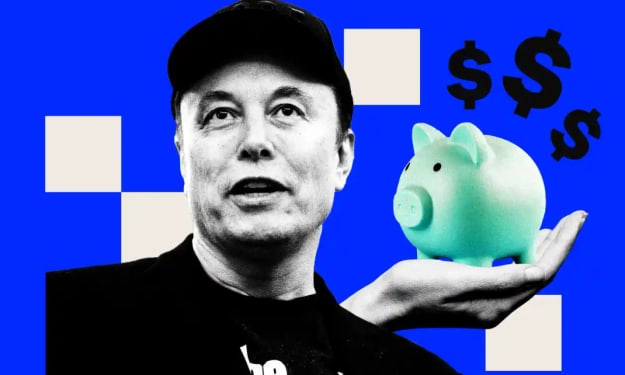
Elon Musk Says Retirement Savings “Won’t Matter” in 20 Years—Here’s What Experts Think
Recently, Elon Musk sparked a heated debate on social media with a bold claim: in 20 years, traditional retirement savings “won’t matter.” The Tesla and SpaceX CEO suggested that the way people think about money and retirement today might be completely obsolete in a couple of decades. As usual, Musk’s statements are equal parts provocative and visionary, leaving many wondering whether they should rethink their financial plans entirely. To get clarity, we reached out to seven personal finance and AI experts to hear their thoughts on Musk’s prediction. Their insights provide a mix of caution, optimism, and futuristic thinking. 1. The Case for Obsolescence: AI and Automation AI strategist Dr. Karen Liu believes Musk isn’t exaggerating when he talks about the diminishing importance of retirement savings. “If AI and automation continue at the current pace, many traditional jobs could disappear,” she explains. “By 2046, people might earn income from AI-driven ventures, digital assets, or royalties rather than a 9-to-5 paycheck. In that case, the way we save for retirement could indeed look very different.” She emphasizes that new financial models might emerge, such as universal basic income (UBI) or AI-managed wealth portfolios, making conventional retirement accounts less critical. “People might no longer need 401(k)s or IRAs in the same way we do now,” she adds. 2. The Human Factor: Some Things Don’t Change Personal finance advisor Marcus Bell takes a more conservative view. “Even if the economy changes drastically, money management skills won’t be irrelevant,” he says. “Musk may be right that retirement savings as we know them may evolve, but having a financial cushion will always matter. Emergencies, healthcare costs, and life changes won’t disappear.” Bell suggests a hybrid approach: continue contributing to traditional retirement accounts while exploring alternative investments like digital currencies, AI-managed funds, or entrepreneurial ventures. 3. Cryptocurrency and the Digital Asset Revolution Crypto expert Priya Desai sees Musk’s comment as a nod toward the rise of digital assets. “By 2046, much of personal wealth may reside in cryptocurrencies, tokenized real estate, and NFTs rather than bank accounts or pensions,” she says. Desai believes that blockchain technology could redefine ownership and wealth accumulation, making traditional retirement savings less central. However, she cautions: “Digital assets are highly volatile. While they may replace some retirement vehicles, they aren’t a guaranteed substitute. Diversification will remain crucial.” 4. AI-Powered Wealth Management AI entrepreneur Rohan Kapoor points out that AI itself could make traditional retirement planning almost obsolete. “Imagine AI systems that continuously optimize your investments, taxes, and spending in real-time,” he says. “If AI handles wealth accumulation more efficiently than humans, you may not need to manually save and plan decades in advance.” Kapoor predicts that by 2046, AI advisors could create personalized financial lifelines that automatically adjust for inflation, market changes, and lifestyle goals. In this scenario, traditional 401(k)s might feel outdated. 5. The Social Safety Net Factor Economist Dr. Elise Morgan reminds us that social and political structures will also play a role. “Even if technology changes how wealth is accumulated, government programs like Social Security, healthcare, or UBI will shape retirement,” she explains. “Musk’s statement assumes a high-tech, highly automated economy, which is just one possible scenario.” Morgan urges caution: relying solely on futuristic predictions could be risky. Traditional savings may still act as a fallback if economic or technological disruptions fail to deliver as Musk anticipates. 6. Mindset and Wealth Beyond Money Financial psychologist Sandra Liu emphasizes that wealth isn’t only monetary. “Even if retirement accounts lose their traditional meaning, financial literacy, resourcefulness, and the ability to leverage technology will remain critical skills,” she says. “Musk’s prediction is more about mindset than accounts. People who can adapt, innovate, and use technology to generate income will thrive regardless of conventional savings.” 7. Preparing for the Future, Not Panicking Finally, futurist Jared Thompson encourages a pragmatic approach: “Don’t panic or abandon your retirement plan just because Elon Musk said so. Think of it as a signal to diversify—invest in tech, learn AI skills, and explore new income streams.” Thompson suggests a “layered strategy”: keep some traditional retirement savings while experimenting with AI-driven investment platforms, cryptocurrencies, and entrepreneurial projects. What Does This Mean for You? Musk’s prediction may sound extreme, but the expert opinions reveal a spectrum of possibilities. Here’s a practical takeaway: Keep saving, but diversify: Don’t abandon retirement accounts, but explore AI-driven investments, crypto, or digital assets. Invest in skills: AI, coding, and tech literacy may be as valuable as cash reserves in 20 years. Embrace flexibility: Financial plans should be adaptable to rapid technological and societal changes. Mind the basics: Emergency funds, debt management, and smart spending remain essential regardless of tech trends. In short, Musk’s warning isn’t necessarily a call to abandon traditional retirement planning—it’s a reminder that the future of money is changing rapidly. Those who combine conventional strategies with an eye on emerging technologies may be the ones who truly thrive in 2046. Conclusion: Elon Musk’s claim that retirement savings “won’t matter” in 20 years is provocative, but it opens an important conversation about the intersection of finance, technology, and the future of work. While some experts see it as a harbinger of radical change, others stress prudence and flexibility. Either way, the message is clear: the next two decades will demand both financial savvy and tech literacy. The question isn’t whether retirement savings will disappear—it’s whether you’ll adapt to the evolving financial landscape.
By Muhammad Hassan4 days ago in Earth
Things you don't know about Africa
Africa: What You Probably Didn’t Know Article No. 1671 Tuesday, 25 February 2020 By Wardah Baloch In terms of land area, Africa is the second-largest continent in the world. It covers nearly 22 percent of the world’s total landmass and about 6 percent of the Earth’s total surface area. Only Asia is larger than Africa in size.
By Sudais Zakwan4 days ago in Earth


Comments
There are no comments for this story
Be the first to respond and start the conversation.