
An unacceptable, but helpless fact: we live in the most barren place in the universe
The most barren place in the universe

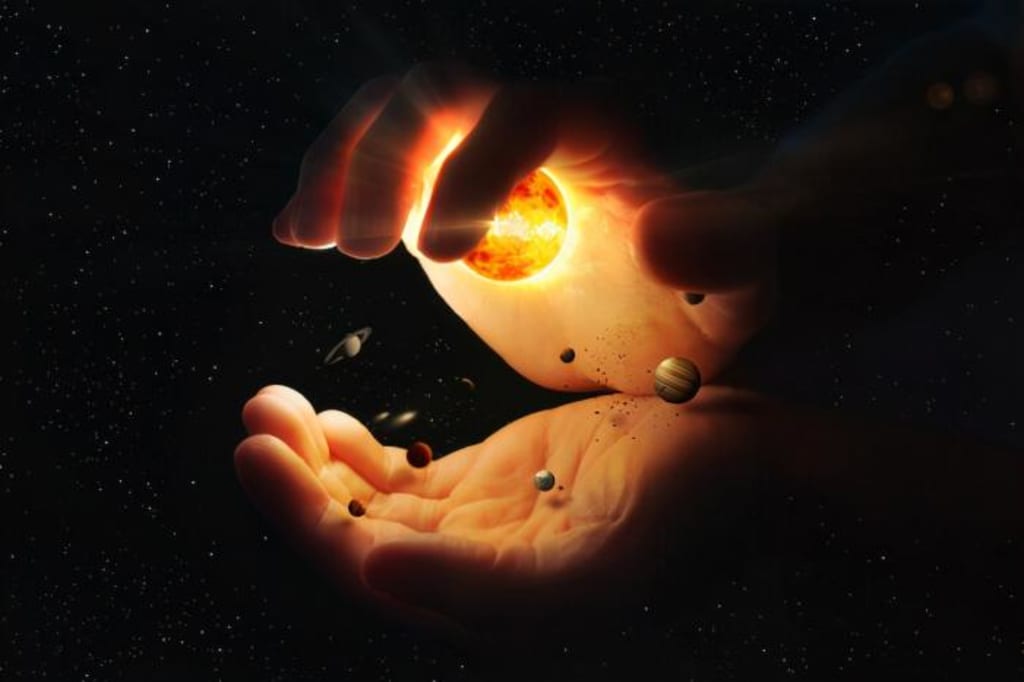
Different countries or regions have different names for the Milky Way. In ancient China, people called the Milky Way Galaxy "Tianhe" and "Tianhan", and in the Western world it was also called "Milky way", you read that right, the literal translation is "Milk Road".
Although you are in the Milky Way, do you really understand this splendid galaxy? And what is its place in the entire observable universe?
In fact, if viewed from a macro perspective, the Milky Way is actually just an ordinary galaxy in the universe, and the reason why we think it is special is mainly because it gave birth to human beings.
So far, because human beings have not found any alien existence in the universe, so from a certain point of view, we can actually think that we have the entire universe alone.
However, this view is also very narrow, because the human vision is not wide enough, so that we can't even see the Proxima Centauri 4 light-years away clearly, and we can only roughly calculate that it is a red dwarf star through various methods. There are at least two planets within its gravitational circle.
At present, humans have discovered thousands of planets outside the solar system. Some of these planets have harsh environments, but some are very similar to the earth, and the similarity can even reach 98%. Is there life and civilization there? Still an unknown.
According to relevant calculations, there are about 6,000 stars that can be directly identified by the human eye, and once high-precision observation equipment is used, this number will immediately expand by tens of millions of times, but even so many stars are actually just around us. It is just a small area of the sky, the vastness of the universe far exceeds the conventional understanding of human beings.
Many people believe that after hundreds of years of observation and research, human beings should have a very thorough understanding of the solar system, but in fact, human beings can't talk about the solar system at all, or there is still a very long way to go. To go, there are still many secrets hidden behind the dark curtain, waiting for human beings to pursue and explore.
As the "boss" of the solar system, the sun occupies 99.86% of the mass of the solar system. The remaining 8 planets, 5 dwarf planets, more than 100 satellites, as well as countless comets, meteorites, and cosmic dust, all counted as only 0.14% of the mass of the entire solar system.
According to calculations, the gravitational influence radius of the sun is about more than 1 light-year. According to the current level of technology, it takes at least 17,000 years for human aircraft to cross this long distance.
On the cosmic mesoscale, the nearest star system, the Proxima Centauri 4.22 light-years away, will be able to reach there in 70,000 years according to the current speed of Voyager 1.
Does such a huge distance scale mean that the sun is very special in the Milky Way? The answer is of course no. If you remove the fact that humans exist, the sun is an ordinary yellow dwarf star in the Milky Way, sitting on a spiral arm called the Orion Arm, about 30,000 light-years away from the center of the Milky Way.
Looking at the solar system alone, you may think that the solar system is very large, but when you look at the entire Milky Way, it is as small as a small gravel falling into the sea, because the diameter of the Milky Way reaches 200,000 light-years, and there are 200-400 billion stars in it.
Just as the sun falls into the Milky Way, the Milky Way is also extremely small in the entire universe, because there is a celestial structure called the galaxy group (cluster) above the Milky Way, and the Milky Way is a member of the local galaxy group.
There are about 50 galaxies in the Local Group, covering an area of the universe about 10 million light-years in diameter. In the Local Group of galaxies, the most massive galaxy is the Andromeda galaxy at a distance of 2.5 million light-years from Earth, and the second largest galaxy is our own Milky Way.
Don't think that's the end of it, the vastness of the universe is far beyond your imagination. Above the Local Group of galaxies is the larger Hyperlocal Cluster, also known as the "Virgo Supercluster".
The Virgo Supercluster contains hundreds of local groups of galaxies, with at least more than 2,500 galaxies, covering a sky area of 1-200 million light-years.
The Local Group of galaxies, where the Milky Way is located, is located on the edge of the Virgo Supercluster, orbiting around its center of mass, and it takes about 100 billion years to make one revolution.
At present, scientists have discovered dozens of superclusters in the universe, which contain at least more than 120 billion galaxies, and this is only a small part of the observable universe. According to speculation, the number of galaxies in the entire observable universe has reached at least one trillion to ten trillion.
Beyond the observable lies a vast unknown
But don’t forget, the visible part of the universe only occupies 4.9% of its total mass, and 95.1% is unobservable dark energy and dark matter, and what they are, humans still have no clue.
In addition, this is only the observable universe, and there is an unobservable universe outside the observable universe. Humans still do not know how big and what the unobservable universe is.
Do you know how small we are now? If we compare it vividly, the observable universe is a vast sea, the Milky Way is a drop of water in this sea, the solar system is an electron or a smaller existence in this drop of water, and the earth is simply indescribable.
In 2013, three astronomy enthusiasts discovered the largest cosmic void structure to date, the "KBC void", which is roughly spherical and an astonishing 2 billion light-years in diameter.
If the KBC hole was only large, it might not have attracted much attention, the most important being that it contains the Laniakea supercluster, which is the upper-level structure of the Virgo supercluster.
In other words, the Milky Way where we are now is actually in this huge cosmic void, so from the perspective of the distribution of matter in the universe, we actually live in the most barren place in the universe.
It is worth mentioning that many people believe that this is also one of the reasons why humans have not yet discovered traces of alien civilizations. Just like a person in a barren desert, of course he cannot discover the prosperous world.
About the Creator
suzanne darlene
Take you to understand scientific knowledge
Keep reading
More stories from suzanne darlene and writers in Earth and other communities.
Why is the "ozone hole" hardly mentioned now? Is it a lie of the century, or has it healed?
From the end of the 0th century to the beginning of the 21st century, what were the most mentioned environmental issues? Perhaps the first thing that comes to most people's minds is the greenhouse effect, ignoring another issue that is also of concern - the hole in the ozone layer.
By suzanne darlene3 years ago in Earth
Top Australian Writers’ Festival Cancelled After Palestinian Author Barred
One of Australia’s most respected literary festivals has been cancelled following a fierce backlash over the decision to bar a Palestinian author from participating. What began as a programming dispute quickly escalated into a national debate about free speech, cultural inclusion, and political pressure in the arts. The cancellation has sent shockwaves through Australia’s literary community, raising urgent questions about whose voices are allowed on public platforms and at what cost.
By Aarif Lashari6 days ago in Earth
The Trans Youth Athletes in the US Fighting for Their Rights: ‘Playing Is an Act of Resistance’
Across the United States, sports have become an unexpected front line in the fight over transgender rights. For many trans youth athletes, simply stepping onto a field, track, or court is no longer just about competition—it is an act of resistance. As state legislatures debate and pass laws restricting transgender participation in school sports, young athletes are finding themselves at the center of a national culture war that reaches far beyond the locker room.
By Aarif Lashari6 days ago in Earth
The Devil's Cut
“Comrade, finally you’re awake.” The voice was smooth, sensual. A flickering incandescent bar was all that lit the white, sterile room. All Vladimir remembered was everything going black. He tried to move his arms and found them strapped to the gurney.
By Matthew J. Fromm5 days ago in Fiction




Comments
There are no comments for this story
Be the first to respond and start the conversation.