

Ants are known for their highly organized and cooperative behavior, which is a result of evolved skills. Here are a few examples of the skills and abilities that ants possess:
Communication:
Ants are able to communicate with one another using a variety of chemical signals, such as pheromones, which they use to mark trails and share information about food sources.
Navigation:
Ants are able to navigate through their environment using a combination of visual cues and chemical signals. They are able to find their way back to their nest even if they've been displaced far away.
Problem-solving:
Ants are able to solve problems related to foraging and nest building. They are able to adapt their behavior in response to changes in their environment, such as discovering new food sources or dealing with obstacles.
Division of labor:
Ant colonies have a division of labor among its members, where different ants have different roles and responsibilities, such as foraging, nest maintenance, and caring for the young.
Coordination:
Ants are able to coordinate their actions with one another to accomplish tasks that would be difficult for a single ant to do alone, such as moving large objects or defending the colony.
Memory:
Ants have a remarkable ability to remember locations and routes, they are able to find their way back to the nest and to food sources even after long absences.
Collective Intelligence:
Ants working together as a colony, creating a sort of “super-organism” where the colony as a whole exhibit intelligent behaviors.
These skills, combined with the ants' small size and high reproductive rate, allow them to form highly successful colonies that can persist in a wide variety of environments.
Species of Ants
There are more than 12,000 known species of ants that have been identified and described by scientists. These species are grouped into around 20 different genera, with the most diverse genera being Camponotus, Pheidole, and Formica. However, it is estimated that there may be as many as 22,000 total species of ants, many of which have yet to be discovered and described.
Ants are found on every continent except Antarctica, and they occupy a wide variety of habitats, including forests, deserts, grasslands, and even underground. They are a highly successful and ecologically important group of insects, known for their complex social behavior and highly organized colonies.
Ants can be defined by their morphological characteristics as well as their behaviour and colony organization, examples of different types of ants are:
Carpenter ants:
These large, black ants are commonly found in wooded areas and are known for their ability to tunnel through wood, causing damage to buildings and other structures.
Fire ants:
These reddish-brown ants are known for their aggressive behavior and painful stings, and are found in parts of the southern United States and South America.
Leafcutter ants:
These ants are known for their agricultural habits, and they use leaves to cultivate a fungus that serves as their primary food source.
Harvester ants:
These ants collect seeds and store them in underground chambers, and are known for their large colonies and aggressive behavior.
Army ants:
Army ants are known for their large, highly organized colonies and their nomadic lifestyle.
Formic acid ants:
These ants secrete formic acid, which they use as a weapon against predators and other ants.
Some common colors that ants can be include:
Black: Many species of ants, such as carpenter ants, are black in color.
Brown: Many ants are various shades of brown.
Red: Fire ants, for example, have a reddish color.
Yellow: Some species of ants have yellowish or golden hues.
Green: Some species of ants are greenish in color.
A mixture of colors: Some ants are multicolored, and may have different colored segments on their body.
About the Creator
Sella
I tried to provide accurate and reliable information on a wide range of topics. If you have questions or are looking for information on a specific subject, I may be able to help you find the answers you are looking for.
Life Philosophies
Treat others with kindness and respect Treating others with kindness and respect is an important life philosophy because it helps to create a positive and harmonious environment for everyone. It involves showing consideration, compassion, and understanding towards others, and acting in a way that reflects these values. When you treat others with kindness and respect, you help to build trust, foster positive relationships, and create a sense of community. It is important to remember that everyone deserves to be treated with kindness and respect, regardless of their background, beliefs, or circumstances
By Sella3 years ago in Motivation
Tourists Banned From Entering a Famous Snowfall Spot for Four Days: What Happened and Why It Matters
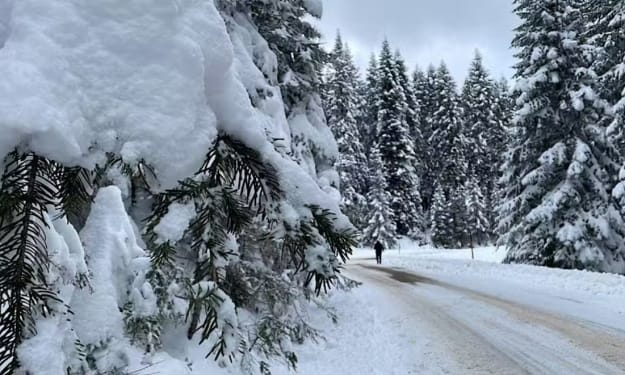
Snowfall destinations attract millions of tourists every year. Fresh snow, white landscapes, and winter activities turn certain locations into seasonal hotspots. But sometimes, nature’s beauty comes with serious risks. Recently, authorities temporarily banned tourists from entering a famous snowfall spot for four days, citing safety, environmental, and logistical concerns. The decision sparked debate among travelers, local businesses, and environmental experts. While many tourists expressed disappointment, officials argued that the ban was necessary to protect lives, infrastructure, and the fragile winter environment. Why Authorities Imposed the Ban The temporary closure was not an impulsive move. Officials announced the restriction after extreme snowfall overwhelmed the area, making roads dangerous and emergency access difficult. Heavy snow accumulation reduced visibility, increased avalanche risks, and caused traffic congestion that emergency services could not manage effectively. In previous years, similar conditions had resulted in stranded vehicles, medical emergencies, and damage to local infrastructure. Authorities learned that allowing unrestricted tourism during extreme snowfall could turn a scenic trip into a disaster. By banning entry for four days, officials aimed to: Clear roads and restore access routes Reduce the risk of accidents and avalanches Allow emergency services to operate efficiently Prevent environmental damage caused by overcrowding Tourist Reactions: Frustration and Understanding Many tourists had planned their trips weeks in advance. Hotels were booked, transportation arranged, and expectations set. For them, the sudden ban felt unfair and inconvenient. Social media quickly filled with complaints, with travelers questioning why better planning hadn’t prevented the closure. However, others supported the decision, acknowledging that safety should always come first. Experienced travelers pointed out that winter tourism carries inherent risks, especially in mountainous or high-altitude regions. As one frequent visitor noted online, “Snow is beautiful, but it doesn’t care about travel plans.” Impact on Local Businesses Local businesses often feel the immediate impact of such bans. Hotels, restaurants, tour operators, and small vendors rely heavily on seasonal tourism. A four-day closure can mean significant financial losses, especially during peak snowfall periods. Some business owners expressed concern about lost revenue, while others supported the ban as a necessary short-term sacrifice. Many acknowledged that accidents or fatalities would cause far greater long-term harm to the region’s reputation. In some cases, local authorities offered partial relief measures, such as rescheduling permits, extending hotel bookings, or waiving certain fees. These steps helped ease tensions between officials and the tourism industry. Environmental Concerns During Peak Snowfall Beyond safety, environmental protection played a major role in the decision. Popular snowfall destinations often experience severe strain during peak tourist seasons. Large crowds can damage snow-covered vegetation, increase waste, and disturb wildlife. When snow accumulates rapidly, ecosystems become even more vulnerable. Trampling through fragile areas, littering, and off-road driving can cause long-lasting damage that takes years to recover. Temporary bans give nature time to stabilize. Snowpack settles, wildlife adjusts, and authorities can manage waste and infrastructure more effectively. In this sense, the restriction serves not only humans but the environment as well. The Growing Challenge of Overtourism This incident highlights a broader global issue: overtourism. As social media makes scenic locations instantly famous, tourist numbers can surge beyond what places are designed to handle. Snowfall spots are especially vulnerable because weather conditions can change rapidly. Without strict controls, overcrowding can lead to: Traffic jams in remote areas Overburdened emergency services Increased pollution Higher accident rates Temporary bans are increasingly being used as a management tool, allowing authorities to balance tourism with safety and sustainability. How Authorities Decide When to Close Tourist Sites Decisions like this are usually based on data, not guesswork. Authorities monitor: Snow depth and weather forecasts Road and infrastructure conditions Emergency response capacity Past incident records When multiple risk factors align, closures become unavoidable. Officials also consult meteorologists, environmental experts, and local administrations before announcing restrictions. Clear communication is essential. In this case, officials used public notices, social media updates, and travel advisories to inform tourists and prevent confusion. What Tourists Can Learn From This For travelers, the incident offers valuable lessons. Winter travel requires flexibility. Weather-related bans are not punishments—they are protective measures. Tourists can reduce disruption by: Checking local advisories before traveling Booking refundable accommodations Avoiding peak congestion periods Respecting local rules and restrictions Understanding the realities of winter destinations can make travel safer and more enjoyable. Will Bans Like This Become More Common? As climate patterns become more unpredictable, temporary closures may become more frequent. Sudden heavy snowfall, extreme cold, or rapid snowmelt can quickly turn tourist-friendly areas into hazardous zones. Authorities worldwide are likely to adopt stricter crowd-control measures, especially in fragile or high-risk environments. While inconvenient, these steps are part of responsible tourism management. Final Thoughts The four-day ban on tourists entering a famous snowfall spot reminds us that nature sets the rules—not travel schedules. While such decisions may disappoint visitors and affect local businesses, they play a crucial role in ensuring safety, protecting ecosystems, and preventing long-term damage. Responsible tourism requires patience, adaptability, and respect for local conditions. Sometimes, the smartest travel decision is waiting until nature is ready to welcome visitors again.
By Muhammad Hassan3 days ago in Earth
Conquering the Annapurna Base Camp Trek: A Himalayan Odyssey
Conquering the Annapurna Base Camp Trek: A Himalayan Odyssey The Annapurna Base Camp (ABC) trek is more than just a trek; it is a spiritual journey into the core of the Himalayas. The towering snow- covered peaks reach for the sky while the rhododendron woods seem to tell the tales of the adventure in their whispers. Located in the Annapurna region of Nepal, the ABC trek is a magnet for thousands of adventurers annually. This trek provides the stunning vistas of some of the biggest Himalayan peaks including Annapurna I (8, 091m) and the uniquely fishtail, shaped Machapuchare mountain (6, 993m). It is a must for all adventurers, regardless of their experience level. The ABC trek is like a melting pot of adventure, culture, and nature that are barely matched anywhere else on this planet.
By Pranjal Pandeyabout 16 hours ago in Earth



Comments
There are no comments for this story
Be the first to respond and start the conversation.