
Alexander III of Macedon, commonly known as Alexander the Great
A brief overview of the life, accomplishments, and legacy of the famous ancient Greek king and military leader Alexander the Great.


Alexander III of Macedon, commonly known as Alexander the Great, was a famous ancient Greek king and military leader who lived from 356 BC to 323 BC. He was born in Pella, the capital city of the Macedonian Kingdom, and was the son of King Philip II of Macedon and Queen Olympias.
Alexander became king at the age of 20, after his father was assassinated in 336 BC. He then embarked on a series of military conquests that would ultimately make him one of the greatest military leaders in history. He conquered much of the known world, including Greece, Egypt, Persia, and parts of India, before his death at the age of 32.
Alexander was known for his military genius, his strategic thinking, and his bravery in battle. He was also a skilled diplomat and a patron of the arts and culture. He founded several cities, including Alexandria in Egypt, which became a center of learning and culture in the ancient world.
Alexander's legacy is still felt today, both in the areas he conquered and in the ways in which he influenced Western culture. He is remembered as a symbol of strength, courage, and leadership, and his story has inspired countless works of art, literature, and film.
Alexander the Great's military conquests were remarkable and unprecedented for his time. He started his military campaigns by securing his position in Greece and then moved on to conquer the Persian Empire, defeating the Persians in a series of battles including the Battle of Issus and the Battle of Gaugamela. He then went on to conquer Egypt, where he was declared pharaoh, and continued his conquests eastward into India.
One of Alexander's most famous achievements was the founding of Alexandria in Egypt, which became a center of learning and culture in the ancient world. He also encouraged the blending of Greek and Persian cultures, which led to the development of Hellenistic culture, a fusion of Greek, Persian, and other cultural traditions.
Alexander was a charismatic leader and inspired great loyalty in his troops. He was known for leading from the front, often fighting alongside his soldiers in battle. He was also known for his temper and his quick, sometimes brutal, responses to perceived slights.
Alexander's reign was not without controversy, and there are many accounts of atrocities committed by his army during his conquests. He was also known for his heavy drinking, and it is believed that his excessive consumption of alcohol contributed to his death at the young age of 32.
Despite these controversies, Alexander the Great is still remembered as one of the most successful military commanders in history and a symbol of the power and potential of human ambition. His legacy continues to inspire awe and fascination today.
Alexander's military conquests were not only remarkable in their success but also in their speed. He was able to conquer vast territories in a relatively short period of time, thanks in part to his brilliant tactics and his ability to inspire and motivate his troops.
One of the keys to Alexander's success was his use of cavalry, which he used to devastating effect in battle. He also employed innovative tactics, such as the use of the phalanx formation, which allowed his troops to withstand enemy attacks while maintaining a cohesive front.
Alexander's legacy also includes his role in spreading Greek culture throughout the regions he conquered. He encouraged the building of Greek-style cities and the adoption of Greek customs and beliefs, which helped to create a sense of unity among the diverse peoples of his empire.
After Alexander's death, his empire was divided among his generals, leading to a period of instability and conflict known as the Wars of the Diadochi. However, the influence of Alexander's conquests and his ideas about the blending of cultures continued to shape the ancient world for centuries to come.
In addition to his military and cultural accomplishments, Alexander was also known for his personal relationships. He had a close bond with his childhood friend and lover, Hephaestion, who accompanied him on many of his campaigns. He also married several times, including to Roxana, the daughter of a Bactrian nobleman, and to Stateira, the daughter of the Persian king Darius III.
Overall, Alexander the Great's impact on history and culture cannot be overstated. His achievements continue to inspire and fascinate people around the world, and his legacy is a testament to the power of human ambition and the potential for greatness in all of us.
About the Creator
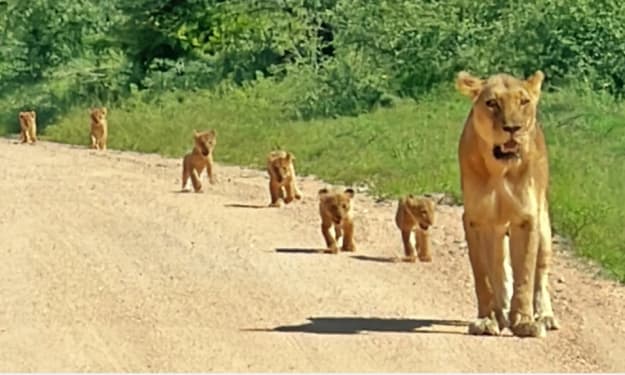
Tiny Lion Cubs Struggle To Keep Up With Mom
In the heart of the African savannah, life is a constant lesson for young animals. Few scenes are as endearing — or as heartwarming — as tiny lion cubs trying to keep pace with their mother. These little bundles of fur face a world full of challenges, from learning to hunt to avoiding dangers, all while depending on the guidance and protection of their experienced mom. Watching cubs wobble and tumble as they attempt to keep up with their mother reminds us that growing up, even in the wild, is a journey full of struggle, determination, and adorable missteps. The Early Days of Lion Cubs Lion cubs are born blind and helpless, usually in litters of two to six. For the first few weeks, they rely entirely on their mother for warmth, food, and safety. Even after opening their eyes and beginning to explore, the cubs are far from independent. The first months are crucial. Cubs learn social cues, hunting basics, and survival skills simply by watching their mother and the pride. But as anyone who has observed them knows, there’s often a huge gap between observation and action. Tiny cubs often struggle to match their mother’s pace, especially when she moves through long stretches of savannah or leads the family on patrols. A Mother’s Role in the Wild For a lioness, raising cubs is a full-time commitment. She hunts, defends her territory, and teaches her young, all while staying alert to predators such as hyenas, leopards, and even rival lions. The cubs, meanwhile, attempt to mimic her every move — often with clumsy yet charming results. A mother lion’s patience is remarkable; she frequently slows down, nudges them along, or stops to ensure no cub is left behind. These moments, while stressful for the tiny cubs, are vital learning opportunities. Struggling to Keep Up: Why It’s So Hard There are several reasons why tiny lion cubs have trouble keeping pace with their mother: Short Legs, Big Steps: Lion cubs’ legs are tiny and their coordination is limited, making it difficult to cover the same distance as an adult lioness. Curiosity: Cubs are naturally curious. A single butterfly or rustling bush can distract them, leaving mom to pause repeatedly. Energy Levels: Young lions tire quickly. Even with frequent naps, the cubs’ stamina is far lower than their mother’s. Learning Through Play: Play is not just fun; it teaches hunting, balance, and social skills. Running off to pounce on a sibling or chase an insect is all part of their education. Despite these challenges, the cubs’ determination to keep up demonstrates their resilience and growing understanding of the wild world. Lessons in Teamwork and Survival Every cub struggling to keep up is also learning crucial survival skills. The journey across the savannah is more than a test of speed — it’s a lesson in: Coordination: Cubs learn how to move efficiently across different terrains. Patience: They begin to understand the rhythms of adult life and the pace required for survival. Social Skills: Staying with the group teaches cubs how to interact with siblings and the pride, which is essential for their future roles. Observation: By following their mother, cubs study hunting techniques, territorial behavior, and predator awareness. Even the moments when cubs stumble or lag behind are essential for their development. These experiences prepare them for independence, which comes sooner than many might expect. The Cutest Moments in the Wild Anyone who has watched tiny lion cubs knows that their struggles are often irresistibly cute. Video clips from wildlife reserves frequently show cubs toddling along, tumbling over each other, or getting distracted mid-step. Observers often comment that these little stumbles reveal personality, determination, and playfulness, making them one of nature’s most heartwarming spectacles. While their mother is serious and focused, the cubs inject a sense of humor and lightness into life on the savannah. Why This Matters The struggles of lion cubs aren’t just adorable — they’re vital for understanding wildlife behavior. Conservationists and animal behaviorists use these moments to study growth patterns, social structures, and survival strategies in lion populations. These observations also highlight the importance of preserving natural habitats. Cubs must learn in a safe environment to survive; habitat loss, poaching, and climate change make these early struggles even more dangerous. Protecting the African savannah ensures that future generations of lions can experience the same lessons and playful tumbles. The Road to Independence Within a year, these tiny cubs will be more agile, faster, and more confident. By the time they reach two to three years old, males may begin to leave the pride, while females often stay and become caretakers themselves. Every misstep, tumble, and lagging moment is part of the journey toward strength, coordination, and independence. Watching them now gives us a glimpse of the challenges they will overcome, and the survival skills they will carry for life. A Celebration of Motherhood Ultimately, these scenes remind us of the incredible bond between mother and cubs. Her patience, vigilance, and teaching are the foundations of their future. The cubs’ struggles highlight the trials of growing up, while their determination showcases the resilience and beauty of wildlife. For those observing, it’s a powerful lesson in care, guidance, and perseverance, not just in lions but in the natural world as a whole. Final Thoughts Watching tiny lion cubs try to keep up with their mother is both entertaining and enlightening. It’s a story of growth, struggle, and resilience — a reminder that even the fiercest creatures start small, learning step by step. These little lions capture hearts while teaching life lessons: patience, determination, teamwork, and the importance of guidance. As they tumble and waddle across the savannah, they show us that growth is a process, one adorable misstep at a time. For wildlife enthusiasts, animal lovers, and anyone enchanted by nature, these tiny cubs are proof that even in the wild, love, care, and persistence are universal truths.
By Aarif Lashari2 days ago in Earth
Microbiota, microbiome or microflora: how to speak correctly and why it is for health.
You've probably heard the phrase, "We are what we eat." But modern science says more precisely: we are also those who live in us. Until 2016, it was believed that there are many times more bacteria in our body than our own cells. The latest calculations by mathematicians show that we divide the body with our microorganisms by about 50/50: about 30 trillion of our cells versus 38 trillion bacterial ones.
By Yaroslav Gorohov6 days ago in Earth



Comments
There are no comments for this story
Be the first to respond and start the conversation.