
Airstrikes Pound Gaza as Israel Announces Plans to Displace More Residents
Airstrikes Devastate Gaza as Israel Expands Displacement Efforts


As Israel announces plans to relocate additional residents, Gaza is the target of airstrikes. *May 8, 2025*
The Gaza Strip is once again under intense bombardment, with Israeli airstrikes killing dozens of Palestinians amid escalating military operations. As of this week, at least 92 people — including women, children, and journalists — have lost their lives in a new round of attacks, drawing global condemnation and deepening fears of a humanitarian catastrophe.
The strikes, which Israel claims are directed at Hamas agents and infrastructure, have destroyed civilian areas, including a school in the Nuseirat refugee camp that is currently serving as a shelter. Palestinian health authorities say that some of these attacks have killed entire families, and the number of people who have died since the conflict started in October 2023 is over 52,000. Many of the victims are women and children, with hospitals overwhelmed and unable to cope with the constant influx of casualties.
The airstrikes come as Israeli Prime Minister Benjamin Netanyahu announced plans to intensify operations in Gaza and take control of the entire territory. Netanyahu emphasized that this would include the "evacuation" of residents from high-conflict zones. However, Palestinian officials and international human rights organizations view this as a thinly veiled effort at forced displacement.
Humanitarian groups have condemned the move, arguing that displacing hundreds of thousands of civilians in a war zone violates international law. “This is not a relocation — it’s an expulsion,” said a spokesperson for Amnesty International. “These actions raise serious questions about the intent and legality of Israel’s military strategy.”
The approval by the Israeli government to outsource the distribution of humanitarian aid to private businesses adds to the controversy. Traditionally coordinated by international NGOs and the United Nations, the new approach has sparked outrage from aid agencies who fear this will politicize the delivery of food, water, and medicine — or worse, be used to control the population.
“This could lead to mass displacement and potentially the permanent removal of Palestinians from their land,” said a senior UN relief official. “If aid becomes conditional on evacuation, it crosses a red line.”
There is a dire humanitarian situation in Gaza. Food operations by major organizations like the World Food Programme and World Central Kitchen have been halted due to Israeli restrictions on aid trucks. Hospitals, already overwhelmed, are collapsing under the strain of casualties. Clean water is scarce, electricity is intermittent, and the few remaining medical centers are running out of critical supplies.
International reaction has been swift. UN officials, including Special Rapporteurs, have warned of a potential genocide if the international community fails to act. In a joint statement, they described the conditions in Gaza as a “catastrophe of historic proportions,” and called for an immediate ceasefire and investigation into possible war crimes.
The Israeli government maintains its defiance in the interim. Netanyahu argues that Hamas must be fully dismantled, and that the military campaign is essential for Israel’s long-term security. Hamas, in turn, has vowed to continue fighting, demanding a full Israeli withdrawal and rejecting any conditions that would leave Gaza under foreign control.
Diplomatic efforts to reach a ceasefire have stalled. The United States and Egypt have attempted mediation, but the latest round of talks collapsed in Cairo earlier this month. Israel's domestic politics, where Netanyahu relies on the support of far-right coalition partners, are a major factor in the conflict's prolonged duration, according to analysts. The civilian population continues to bear the brunt of the violence. With nearly 2 million people displaced, many of them sheltering in overcrowded tents or damaged schools, daily life has become a struggle for survival. Families are caught in the crossfire of a war with no clear end in sight, without food, medicine, or hope. Calls for accountability are growing louder. Human Rights Watch and other groups have documented what they describe as “indiscriminate and disproportionate” use of force. The International Criminal Court has already launched a preliminary investigation into actions by both Israeli forces and Palestinian militants.
As the bombing continues, one thing is clear: Gaza is on the brink of collapse. Without urgent international action — including pressure on all parties to return to the negotiating table — the region risks plunging into even greater chaos, with consequences that could echo far beyond its borders.
The people of Gaza, exhausted and broken, are calling out to the world. Whether anyone is listening remains to be seen.
About the Creator
GLOBAL NEWS
World News Updated
Short News upload
Technology News
Keep reading
More stories from GLOBAL NEWS and writers in Earth and other communities.
Inside Trump's $11 Billion Health Plan to Replace “Neo-Colonial” USAID
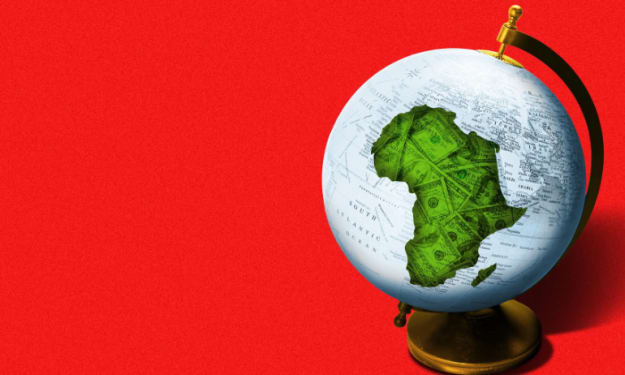
In the landscape of global health aid, few proposals have stirred as much debate as former President Donald Trump’s ambitious plan to restructure American assistance abroad. Dubbed an $11 billion health initiative aimed at replacing USAID’s current framework, the plan seeks to pivot away from what Trump and his allies have criticized as the “neo-colonial” approach of U.S. foreign aid. While the plan promises greater efficiency and impact, experts are split on whether it is a practical solution or a politically driven gamble. Trump’s Critique of USAID The United States Agency for International Development (USAID) has long been a central pillar of American foreign assistance, distributing billions in aid annually to address health crises, food insecurity, and development challenges worldwide. However, Trump’s administration and its supporters have often described USAID’s approach as bureaucratic, inefficient, and reflective of a “neo-colonial” mindset. In public statements, Trump argued that the U.S. was spending taxpayer dollars on programs that benefited foreign governments or contractors more than the intended local communities. Critics of the plan say that while USAID has flaws—as any large bureaucracy does—its extensive networks and decades of experience provide an unmatched capacity to deliver aid efficiently and safely. The Core of the $11 Billion Proposal At the heart of Trump’s proposal is an $11 billion fund designed to consolidate, modernize, and streamline U.S. health aid. Unlike the traditional USAID model, which relies heavily on long-term partnerships with governments and NGOs, the new plan emphasizes: Direct Impact Funding: Allocating resources to frontline health workers and local initiatives rather than intermediaries. Data-Driven Investments: Using real-time health data to target outbreaks and crises more efficiently. Private Sector Partnerships: Leveraging U.S. pharmaceutical companies, tech firms, and healthcare startups to deliver vaccines, treatments, and medical infrastructure. Shorter Program Cycles: Moving away from multi-year funding commitments in favor of more flexible, results-oriented programs. Proponents argue that this approach could reduce bureaucratic overhead and ensure U.S. aid reaches communities faster. By “cutting out the middlemen,” Trump supporters claim, America can avoid the pitfalls of slow-moving aid programs that sometimes fail to adapt to crises. Reactions from the Global Health Community Global health experts, however, have expressed concern about both the logistics and philosophy of the plan. Dr. Melissa Ortega, a senior researcher at the Global Health Policy Institute, explained, “The idea of bypassing established structures like USAID may sound appealing on paper, but in practice, it risks undermining decades of institutional knowledge. Health systems are complex, and short-term projects cannot replace long-term capacity building.” Some critics have also questioned the characterization of USAID as “neo-colonial.” While U.S. foreign aid has historically been tied to geopolitical interests, many programs today are designed collaboratively with recipient countries and local organizations. Reducing oversight could unintentionally increase the risk of misuse, corruption, or health inequities. On the other hand, supporters of Trump’s plan point to examples of inefficiency in USAID programs, citing cases where aid was delayed or mismanaged. By introducing more direct funding models, they argue, U.S. taxpayer dollars could achieve a higher “return on health outcomes.” Political Implications Trump’s health aid overhaul proposal is not just about international development—it is also deeply political. Framing USAID as a “neo-colonial” institution resonates with a populist narrative that America should prioritize its own citizens and assert greater control over how taxpayer money is spent abroad. Domestically, the $11 billion plan faces scrutiny from Congress. Lawmakers from both parties have questioned whether dismantling USAID’s systems could destabilize ongoing health programs in countries where the U.S. has long-term commitments. The potential impact on global health security—including the fight against pandemics like COVID-19—adds another layer of concern. Internationally, U.S. allies and partner nations are watching closely. Sudden shifts in aid delivery could disrupt health programs in low- and middle-income countries, many of which rely on predictable funding cycles to maintain vaccination campaigns, maternal health services, and disease surveillance. Possible Benefits and Risks If executed carefully, the Trump-backed model could bring several benefits: Faster Response Times: Direct funding could accelerate delivery of vaccines, treatments, and emergency support. Innovation Boost: By partnering with private sector companies, the plan could accelerate development of new health technologies. Accountability: With performance-based metrics, the plan may better measure the impact of U.S. aid. However, the risks are equally significant: Disruption of Existing Programs: Abrupt changes could destabilize ongoing health projects. Loss of Expertise: USAID’s decades of experience in navigating local governance, supply chains, and community engagement may be hard to replace. Geopolitical Fallout: Allies accustomed to collaborating with USAID might see the move as destabilizing, reducing cooperation on global health initiatives. Looking Ahead As Trump and his allies continue to advocate for this $11 billion overhaul, the debate over the future of U.S. health aid is intensifying. Proponents view it as a necessary modernization of an outdated system, while critics fear it could undercut decades of carefully built infrastructure and global partnerships. Ultimately, the success of this plan will hinge on its ability to balance efficiency with stability, innovation with oversight, and political objectives with humanitarian needs. For now, the proposal remains controversial, representing a dramatic departure from traditional approaches to U.S. foreign aid. Whether it will reshape global health for the better—or simply create more uncertainty—remains to be seen. In the end, the Trump health plan is as much about ideology as it is about dollars. It challenges the conventional wisdom of international development and asks whether a more streamlined, results-focused approach can truly replace a system built over decades. As the world watches, the stakes could not be higher: the future of U.S. global health aid—and the lives it touches—hangs in the balance.
By Muhammad Hassan5 days ago in Earth
Nitrogen is necessary for young tropical rain forests to combat climate change.
By absorbing carbon dioxide from the atmosphere and storing it in wood, tropical rainforests contribute to the slowing of climate change. Forests that develop quickly are even more important because they absorb carbon more quickly.
By Francis Dami4 days ago in Earth



Comments
There are no comments for this story
Be the first to respond and start the conversation.