
Ai and the future: My Experience and hope
Ai Experience and Hope
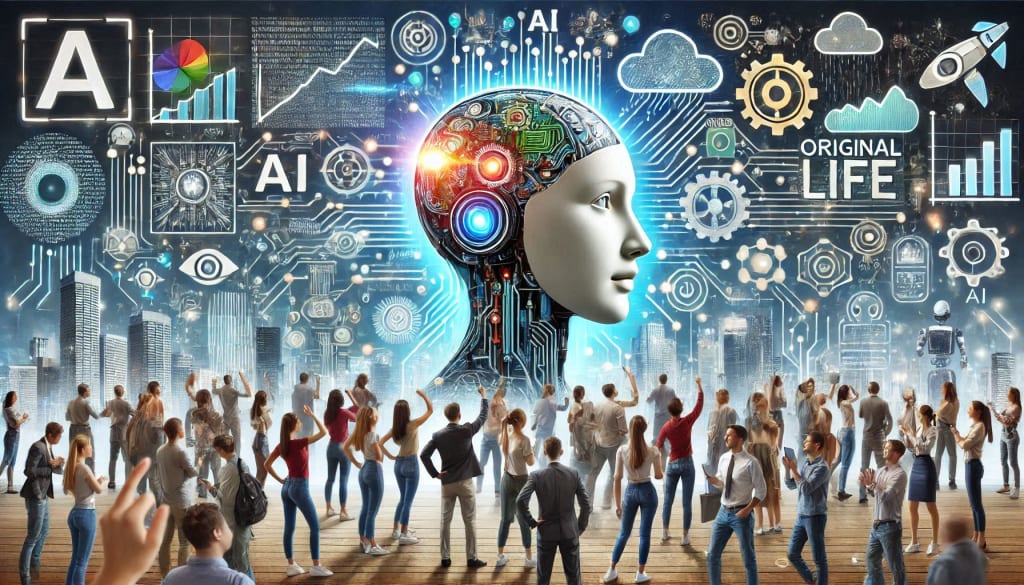
### AI and the Future: My Experience and Hope
#### Introduction
Artificial Intelligence (AI) is no longer a distant concept confined to the pages of science fiction novels or speculative discussions about the future. In fact, it is becoming an integral part of our daily lives, reshaping industries, influencing the way we communicate, work, and even think. As someone who has witnessed the evolution of AI firsthand, the journey has been both fascinating and complex. This article is an exploration of my personal experiences with AI, along with my hopes for its role in the future.
#### The Beginning of My Journey with AI
My first introduction to AI was through the use of simple machine learning models in everyday applications. Initially, these systems seemed basic, like recommending movies or suggesting products based on previous choices. Yet, it was clear even then that the potential of AI was immense. Over time, I began to explore more advanced concepts such as neural networks, deep learning, and natural language processing (NLP), which are at the heart of many modern AI applications.
AI, when viewed from the lens of personal experience, seemed like an exciting frontier with vast possibilities. However, it also brought up concerns about privacy, security, and the ethics surrounding its use. Through various experiments, whether interacting with personal assistants like Siri or exploring automated services in industries, it became evident that AI was not just a tool—it was an evolving entity that could redefine the future of work, creativity, and even human interactions.
#### My Experience with AI's Role in Everyday Life
From smart home devices to predictive algorithms on social media, AI’s presence in my life has been undeniable. One of the most profound changes I’ve observed is in the way businesses and services operate. For example, customer support chatbots have become more sophisticated, sometimes making it difficult to distinguish them from human agents. These systems are designed to handle large volumes of queries efficiently and often provide more immediate responses than traditional customer service channels.
The personal experience with AI has not been limited to just interactions with digital tools. In healthcare, AI’s potential to diagnose diseases, analyze medical data, and even personalize treatment plans is transforming the field. My own experience with health apps, which use AI to monitor sleep patterns, physical activity, and even predict possible health risks, shows how AI is becoming a powerful partner in self-care.
AI has also played a significant role in education, especially during the pandemic, where online learning tools powered by AI algorithms helped make remote education more personalized. By analyzing student responses and progress, AI can suggest learning resources and tailor lessons to individual needs. This personalization of learning has had a major impact on my view of the future of education.
#### AI in the Workplace: Transformation or Threat?
As AI continues to advance, the workplace is one of the areas where its impact is most visible. Automation and intelligent systems are gradually replacing certain manual tasks, which can cause a great deal of concern among workers fearing job loss. However, my personal view is more nuanced. While it is true that AI will eliminate some jobs, it will also create new opportunities.
The key lies in how we adapt to these changes. Through reskilling and embracing new technologies, we can work alongside AI, rather than be replaced by it. AI’s role in the workplace is not just about automation—it’s about enhancing human capabilities. From project management to design, AI tools are being developed to complement the skills of workers and increase productivity.
For example, in my field of writing and content creation, AI tools have become invaluable in streamlining research, suggesting structure, and even generating first drafts. While AI can handle repetitive tasks, the creative and emotional intelligence that humans bring to the table remains irreplaceable. It is clear to me that AI will not be a replacement for human creativity but rather a powerful assistant to expand our potential.
#### Ethical Concerns and My Hopes for Responsible AI
One of the biggest concerns I have with the future of AI revolves around the ethical implications of its development and deployment. As AI becomes more integrated into our lives, questions about privacy, bias, and transparency become increasingly important.
AI systems are often trained on vast amounts of data, which can inadvertently introduce biases into the models. These biases can perpetuate societal inequalities, leading to unfair decisions, especially in areas like hiring, lending, and law enforcement. It’s crucial that AI developers take responsibility for the data they use and the impact their systems have on society. More than ever, we need regulations that ensure AI is used in ways that benefit everyone, not just a select few.
Another ethical concern is the issue of autonomy. As AI systems become more advanced, they will be able to make decisions with little to no human intervention. While this could lead to more efficient decision-making, it also raises questions about accountability. Who is responsible when an AI system makes a harmful decision? My hope is that the future of AI will include robust ethical guidelines and a focus on transparency to ensure that AI systems are held accountable for their actions.
#### AI and the Environment: A Bright Future for Sustainability
An area where AI holds great promise is in environmental sustainability. As the world faces the challenges of climate change, AI can play a pivotal role in mitigating its effects. From optimizing energy consumption in buildings to predicting weather patterns and modeling climate change, AI has the potential to help us better understand and address environmental issues.
In my view, AI can help humanity achieve sustainability goals in ways that were previously unimaginable. For example, AI-powered systems can analyze data from various sources to create more efficient supply chains, reducing waste and energy consumption. Additionally, AI can help in developing renewable energy solutions, from predicting the best locations for solar farms to optimizing energy storage systems.
My hope is that AI will play a central role in achieving global sustainability goals. With the right investment and collaboration, AI can contribute significantly to reducing carbon emissions, conserving resources, and creating a more sustainable future for generations to come.
#### The Human Connection: Maintaining Empathy in an AI-Driven World
While AI holds immense potential, it is important not to lose sight of the human aspect. As AI systems become more capable, it is crucial that we maintain empathy and emotional intelligence in our interactions, both with machines and with each other.
My experience with AI has shown me that, while machines can perform incredible tasks, they cannot replicate the warmth, understanding, and connection that human beings share. As we incorporate AI more deeply into our lives, it’s vital that we use these technologies to foster deeper human connections rather than replace them.
I envision a future where AI and humans work in harmony, with AI handling tasks that are repetitive and time-consuming, allowing people to focus on creativity, innovation, and building meaningful relationships. By focusing on the human side of technology, we can ensure that AI enhances, rather than diminishes, our connections with one another.
#### Conclusion: A Vision for a Balanced Future with AI
In conclusion, AI holds immense promise for the future, but it also brings with it challenges that must be addressed. My experience with AI has shaped my understanding of its potential and limitations, and my hope for the future is one where AI serves as a force for good. By embracing AI’s capabilities while maintaining ethical standards, we can build a future that is both innovative and humane.
The key to navigating this future lies in collaboration—between humans, AI developers, and governments. By working together, we can ensure that AI is used responsibly and that its benefits are distributed equitably. I am hopeful that, with careful thought and consideration, AI will be a powerful tool that not only transforms industries but also enhances our lives in meaningful ways.
About the Creator
Keep reading
More stories from Jay Bobade and writers in Earth and other communities.
"Colors and Connections"
Ritika was a small-town girl who loved colors. She lived at the corner of a narrow lane, with her favorite spot being a little veranda, where an old easel and scattered paint bottles were always waiting for her. Painting wasn't just a hobby for Ritika but her escape, passion, and voice in a world that didn't always hear her. She wanted to create a masterpiece that connected with people on an emotional level. Her father was a humble schoolteacher and her mother took care of the household. Though their financial situation was very tight, her parents never stopped her passion. "Your colors define who you are, Ritika," her father often said. Encouraged by these words, Ritika put her soul into every painting she created.
By Jay Bobadeabout a year ago in Art
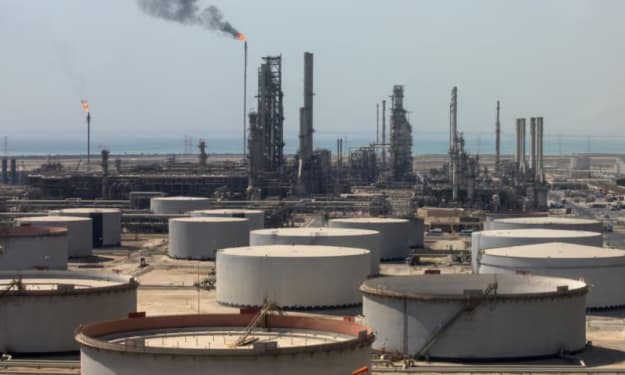
Half of World’s CO2 Emissions Come From Just 32 Fossil Fuel Firms, Study Shows
A groundbreaking new study has revealed that 32 fossil fuel companies are responsible for half of global carbon dioxide emissions since the industrial era began. The findings highlight the outsized influence of major oil, gas, and coal producers on climate change, and raise urgent questions about accountability, regulation, and the transition to cleaner energy.
By Aarif Lashari3 days ago in Earth
Plans Lodged for Assembly Rooms Replacement
Plans have been officially lodged for the replacement of the iconic Assembly Rooms, marking a major step in the transformation of one of the city’s most cherished cultural and social landmarks. The move aims to preserve the legacy of the site while creating a modern, versatile venue capable of hosting contemporary events, conferences, and community gatherings.
By Aarif Lashari4 days ago in Earth
The Blue Ridge Stalker
Tom had left the Ford down the way, its spark plugs finally exhausted and no mechanics for a dozen miles back through the foothills to Strossburg. No matter, he had worn his boots—almost as if he planned for this to happen. The puzzle he sought to solve emanated from the woods clinging to the slopes above; the valley behind held no mysteries.
By Stephen A. Roddewig3 days ago in Fiction



Comments
There are no comments for this story
Be the first to respond and start the conversation.