
Agricultural Vulnerability
Adaptation Strategies, and Policy Implications.

Agriculture, the cultivation of land, animals, and plants for food, fiber, biofuels, medicinal plants, and other products, is the backbone of many economies worldwide. Agriculture remains the key industry in developing countries, employing millions of people. However, agriculture is facing significant challenges in the current era. One of the most significant issues that have taken the headlines in recent years is Agricultural Vulnerability. Agricultural vulnerability can be defined as the susceptibility of agriculture to the effects of risks and events that can impact the productivity, sustainability, and resilience of agricultural systems. This paper aims to discuss Agricultural Vulnerability and its global effects on all sectors.
Currently, the world’s population stands at over 7.7 billion people, and it is expected to reach 10 billion by 2050. The global demand for food and agricultural products is on the rise, and it is expected to increase by more than 50% by 2050. However, agriculture is facing significant challenges that could hinder its ability to meet the rising demand for food. These challenges include climate change, water scarcity, land degradation, pest and disease infestations, food frauds, and food-borne illnesses, among others. The impacts of these challenges are not only felt in the agricultural sector but also in other sectors of the economy.
The effects of Agricultural Vulnerability are mostly felt in countries that rely heavily on agricultural products to sustain their economies. In Africa, agriculture accounts for more than 30% of the GDP and employs over 60% of the population. Therefore, any shocks or disruptions in the agricultural sector can have serious economic, social, and political consequences. Climate change, for instance, has already led to a decline in agricultural productivity in many African countries. Extreme weather events such as floods, droughts, and storms have become more frequent, leading to increased crop failures, livestock loss, and land degradation, among others.
Agricultural productivity in many developing countries is also hampered by water scarcity. In many parts of the world, water is becoming increasingly scarce due to population growth, urbanization, and industrialization, leading to increased water competition between different sectors. In agriculture, irrigation accounts for about 70% of total water consumption. Thus, water scarcity can have severe impacts on agricultural productivity. Crops that require a lot of water, such as rice, maize, and wheat, are the most vulnerable to water scarcity.
Land degradation is another significant challenge facing agriculture. Over the past few decades, human activities such as overuse of land, deforestation, and soil erosion have led to significant land degradation in many parts of the world. Land degradation reduces the productivity of agricultural land and can lead to desertification, a process where fertile land becomes barren, unsuitable for agricultural production. Land degradation also leads to soil fertility decline, increasing the input costs of agriculture to farmers.
Additionally, pest and disease infestations continue to pose significant challenges to agriculture. Pests, such as locusts, armyworms, and rodents, can destroy entire crops, leading to food shortages and economic losses. Diseases, on the other hand, can affect both animals and plants, leading to reduced productivity and increased mortality rates. The COVID-19 pandemic is an example of how diseases can disrupt global food supply chains, leading to food shortages and price hikes.
Food frauds and food-borne illnesses are other challenges that affect agricultural productivity. Food frauds refer to any deliberate actions to misrepresent, adulterate, or substitute food products for financial gain. Food fraud can lead to consumer mistrust and reduced demand for agricultural products. Food-borne illnesses refer to infections caused by consuming contaminated food or water. Food-borne illnesses can lead to serious health problems and cause economic losses due to reduced demand for food.
The effects of agricultural vulnerability extend beyond the agricultural sector to other sectors of the economy. Agriculture is interconnected with other sectors such as manufacturing, transport, and tourism. For instance, the manufacturing sector heavily relies on agricultural products as raw materials to produce finished goods. Thus, disruptions in agricultural production can lead to reduced manufacturing output and increased input costs, which can cause inflation. The transport sector is also dependent on agriculture to transport goods from farms to markets. Disruptions in agricultural production can lead to reduced demand for transport services, leading to reduced revenues for the transport sector. Finally, the tourism sector also heavily relies on agriculture to provide food for tourists. Reduced agricultural productivity can lead to reduced demand for tourism services, leading to reduced revenues for the tourism sector.
To mitigate the effects of agricultural vulnerability, several strategies can be implemented. One of the most effective strategies is to promote sustainable agriculture practices. Sustainable agriculture practices such as conservation agriculture, agroforestry, and sustainable irrigation can improve agricultural productivity while preserving the environment. These practices can improve soil fertility, reduce water consumption, and promote biodiversity, leading to long-term benefits. They can also enhance resilience to climate change, reducing the vulnerability of agricultural systems.
Another strategy is to invest in research and development (R&D) in agriculture. R&D can lead to the development of new crop varieties that are more resistant to pests and diseases, as well as more drought tolerant. R&D can also lead to the development of new technologies that can improve agricultural productivity and reduce the input costs of agriculture. An example of such technologies is precision agriculture, which uses sensors and big data analytics to monitor crop growth and health, leading to more efficient use of resources.
Governments can also play a significant role in mitigating the effects of agricultural vulnerability. Governments can implement policies that promote sustainable agriculture practices, such as providing incentives for farmers to adopt conservation agriculture. Governments can also invest in infrastructure such as irrigation systems, rural roads, and storage facilities to improve agricultural productivity. Additionally, governments can implement policies that promote food safety and quality, such as strict regulations to prevent food fraud and food-borne illnesses.
In conclusion, Agricultural Vulnerability is a significant challenge facing agriculture globally. Climate change, water scarcity, land degradation, pest and disease infestations, food frauds, and food-borne illnesses are some of the challenges that are affecting agricultural productivity. The effects of Agricultural Vulnerability are not only felt in the agricultural sector but also in other sectors of the economy. To mitigate the effects of agricultural vulnerability, several strategies can be implemented, including promoting sustainable agriculture practices, investing in research and development, and implementing policies that promote food safety and quality. It is crucial to address agricultural vulnerability to ensure food security, enhance economic growth, and promote sustainable development.
About the Creator
Keep reading
More stories from Jeremiah Adebowale Okunowo (Jerry) and writers in Earth and other communities.
China’s Ambitious Satellite Plan: 200,000 Satellites and Counting
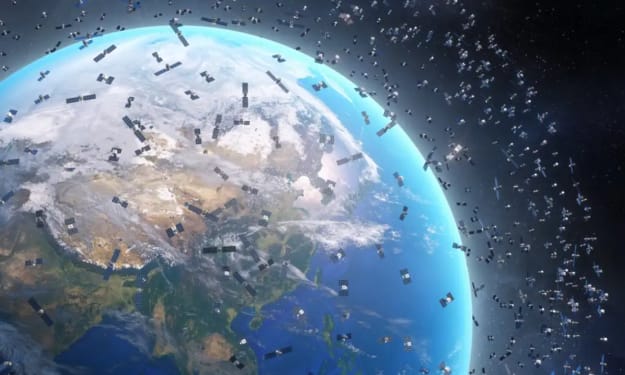
China has submitted an astonishing application to the International Telecommunication Union (ITU) to launch 200,000 satellites over the coming years. To put this into perspective, the entire world currently operates far fewer than this number. Even SpaceX’s Starlink project, one of the largest satellite networks globally, has plans for around 42,000 satellites. China’s proposal signals an unprecedented escalation in space activity and raises important questions: what are these satellites for, and what implications do they hold for global technology, security, and the environment? The Purpose Behind the Numbers At first glance, launching 200,000 satellites may seem excessive, but China’s goals are strategic and multifaceted. Experts suggest that these satellites could serve several purposes: 1. Global Internet Coverage China is aiming to build a massive low-Earth orbit (LEO) satellite network, similar to Starlink and OneWeb. By positioning thousands of satellites closer to Earth, they can provide high-speed internet to remote regions, rural areas, and even ships or aircraft in the oceans. This could help China expand its digital influence globally, offering connectivity in areas where traditional internet infrastructure is weak or non-existent. 2. Enhanced Military and Surveillance Capabilities A satellite network of this scale is also a game-changer for defense and surveillance. Satellites can monitor troop movements, track ships, and provide early warning systems. China’s military has been investing heavily in space-based technology, and these satellites could be a crucial part of modernizing its intelligence, surveillance, and reconnaissance (ISR) capabilities. 3. Scientific Research and Earth Observation Some of these satellites may be dedicated to Earth observation, collecting data on climate, agriculture, natural disasters, and urban development. With thousands of satellites constantly orbiting the planet, China could achieve near real-time monitoring of environmental changes and resource management, giving scientists and policymakers an unprecedented level of insight. 4. Competition in the Commercial Space Sector China’s plan is not purely for government use. The commercial potential of satellite networks is massive, from providing satellite internet services to supporting the burgeoning space economy. Companies under Chinese state and private ownership could leverage this infrastructure to offer services domestically and internationally, challenging Western tech giants in global space markets. The Scale of the Ambition Launching 200,000 satellites is not just ambitious; it’s historic. If approved and executed, China would operate more satellites than all other countries combined, fundamentally reshaping how space is utilized. However, there are serious logistical challenges. Manufacturing, launching, and maintaining hundreds of thousands of satellites requires enormous resources, advanced technology, and careful orbital planning to avoid collisions. China has made major progress in its space launch capacity, with frequent missions through the Long March rocket family and ongoing developments at the Wenchang and Jiuquan Spaceports. Yet, sustaining such a colossal fleet will test even the most advanced space programs. Global Implications The potential consequences of China’s satellite plan are profound, both technologically and geopolitically. 1. Space Traffic Management A network of 200,000 satellites could drastically increase the risk of collisions in orbit. Space debris is already a growing concern, and introducing tens of thousands of new satellites may exacerbate this problem. International cooperation and sophisticated traffic management systems will be essential to prevent catastrophic accidents in space. 2. Geopolitical Tensions China’s space ambitions may intensify global rivalry in space technology, particularly with the United States, Europe, and other spacefaring nations. Control over satellite networks can translate into strategic advantages, from military surveillance to dominance in global communications infrastructure. This may lead to a new phase of space competition reminiscent of the Cold War’s space race. 3. Impact on Astronomy Astronomers have already expressed concern over satellite mega-constellations interfering with observations. Thousands of bright satellites moving across the night sky can distort telescope images and hinder research into deep space phenomena. If China proceeds with 200,000 satellites, the challenge to professional and amateur astronomers will be enormous. 4. Global Connectivity Revolution On the positive side, if managed responsibly, China’s satellite network could revolutionize global connectivity, bringing internet access to millions of people who currently have none. It could accelerate digital development in underserved regions, support education, and foster global commerce in unprecedented ways. Regulatory Hurdles The ITU regulates global satellite usage, including frequency allocation and orbital slots. For China to launch 200,000 satellites, it must secure approval from the ITU, which evaluates whether such an immense network could interfere with other countries’ satellites or violate international agreements. This is not a mere formality—approval for a project of this scale could take years and may require negotiations with multiple nations. Conclusion: A Bold Step Toward the Future China’s application to launch 200,000 satellites is a bold statement about the future of space and global technology. It reflects the country’s ambition to dominate in digital infrastructure, military capability, and commercial space enterprise. While challenges abound—from space debris and regulatory hurdles to geopolitical tensions—the potential benefits are significant, particularly for connectivity and scientific advancement. As the world watches China’s next steps, one thing is clear: the age of satellite mega-constellations is here. How humanity navigates the risks and rewards of this new frontier will shape the future of communication, security, and our presence in space for decades to come.
By Muhammad Hassan5 days ago in Earth
My New Book is Finally Here
My poetry collection Beautiful and Brutal Things is done. It's actually done and finally published over 270 pages. Over a year of my life went into this book. More than a year, really. Long days at my computer, sometimes seven days a week because I couldn't stop even when I probably should have. Then two months of editing that felt harder than the writing itself. But it's finished, and I'm still standing, and the book is real.
By Tim Carmichael3 days ago in BookClub



Comments
There are no comments for this story
Be the first to respond and start the conversation.