
Achieving Food Security in Africa
Challenges and Solutions


Food security is a fundamental concept that encompasses the availability, accessibility, utilization, and stability of food for individuals and communities. It ensures that all people have access to sufficient, safe, and nutritious food to meet their dietary needs and lead healthy, active lives. However, achieving food security is a complex task, particularly in Africa, where numerous challenges intersect with the impacts of climate change. In this article, we explore the concept of food security, examine its specific challenges in Africa, and discuss potential solutions to overcome these obstacles.
Understanding Food Security
Food security comprises four key dimensions:
- Availability: Sufficient quantities of food must be produced or imported to meet the population's needs. This includes sustainable agricultural practices, adequate infrastructure, and functioning markets.
- Accessibility: People should have physical and economic access to food, including income, transportation, and social safety nets. Accessibility is influenced by factors such as poverty levels, market structures, and distribution systems.
- Utilization: Individuals must have the knowledge and resources to utilize food effectively for a healthy and active life. This includes access to clean water, sanitation, healthcare, and education on proper nutrition and food preparation.
- Stability: Food security requires stability in the availability, access, and utilization of food over time. It involves mitigating risks and shocks, such as natural disasters, political instability, and price volatility.
Food Security Challenges in Africa
Africa faces numerous challenges that impede its path towards achieving food security:
- Population Growth: The continent's rapidly growing population places increasing pressure on food production and distribution systems, exacerbating existing vulnerabilities.
- Climate Change: Africa is particularly vulnerable to the impacts of climate change, with rising temperatures, changing rainfall patterns, and more frequent extreme weather events. These factors disrupt agricultural productivity, exacerbate land degradation, and affect water availability.
- Land Degradation: Soil erosion, deforestation, and improper land management practices contribute to land degradation, reducing agricultural productivity and compromising long-term food security.
- Limited Agricultural Infrastructure: Inadequate rural infrastructure, including irrigation systems, storage facilities, and transportation networks, hinders agricultural productivity, post-harvest management, and market access.
- Poverty and Inequality: High poverty rates and income inequality limit people's purchasing power, making food inaccessible to many vulnerable populations.
- Conflict and Political Instability: Armed conflicts, political instability, and displacement disrupt agricultural activities, trade, and access to food, exacerbating food security challenges in conflict-affected regions.
Solutions for Achieving Food Security
Addressing food security in Africa requires comprehensive strategies and collaborative efforts:
- Climate-Smart Agriculture: Promote sustainable agricultural practices that integrate climate change adaptation and mitigation techniques. This includes agroforestry, conservation agriculture, crop diversification, and precision farming to enhance productivity, conserve natural resources, and build resilience to climate change impacts.
- Investment in Rural Infrastructure: Improve rural infrastructure, such as irrigation systems, storage facilities, and transportation networks, to enhance agricultural productivity, reduce post-harvest losses, and ensure efficient market access.
- Strengthening Agricultural Research and Extension Services: Invest in agricultural research and extension services to develop and disseminate climate-resilient farming practices, high-yielding crop varieties, and appropriate technologies tailored to local conditions.
- Social Protection and Safety Nets: Implement social protection programs, such as cash transfer schemes, targeted food assistance, and nutrition programs, to support vulnerable populations during times of crisis and ensure access to nutritious food.
- Sustainable Land Management: Promote sustainable land management practices, including afforestation, soil conservation, watershed management, and reforestation initiatives, to combat land degradation, preserve biodiversity, and enhance ecosystem services.
- Enhancing Market Systems: Strengthen market institutions, improve value chains, and support smallholder farmers' access to credit, markets, and storage facilities to enable fair prices, reduce post-harvest losses, and enhance market participation.
- Policy and Governance Reforms: Implement supportive policies, regulations, and governance frameworks that prioritize food security, sustainable agriculture, and equitable access to resources. This includes land tenure reforms, climate change adaptation strategies, and investment in agricultural research and development.
Achieving food security in Africa is a multifaceted challenge that requires concerted efforts at local, regional, and global levels.
About the Creator
Chela Kikwai
Passionate about climate action and sustainability, I raise awareness and promote climate education through my articles. Read, Learn, Follow, Tip and Share
Keep reading
More stories from Chela Kikwai and writers in Earth and other communities.
Understanding Climate Vulnerability
As man-induced climate changes continue to escalate, the frequency and severity of disasters are on the rise. The Global Assessment Report 2019 for Disaster Risk Reduction reveals that a climate crisis occurs every single week, with hurricanes, storm surges, floods, droughts, and other extreme weather events wreaking havoc worldwide. While the direct connection between these events and climate change may be debated, it is undeniable that the number of such events has significantly increased over the last three decades. Africa, in particular, faces significant climate vulnerability and must take decisive steps to reduce its susceptibility to these impacts.
By Chela Kikwai3 years ago in Earth
Smart Textile Market Analysis: The Fabric of the Future Is Now Digital
Introduction: When Fabric Meets Intelligence The global textile industry is undergoing one of its most transformative revolutions in history. What was once a sector focused on comfort, aesthetics, and durability is now becoming a high-tech ecosystem of sensors, data, connectivity, and responsiveness. At the heart of this transformation lies the smart textile market—a rapidly evolving space where fabrics can sense, react, and communicate with their environment and the human body.
By jaiklin Fanandishabout 14 hours ago in Earth
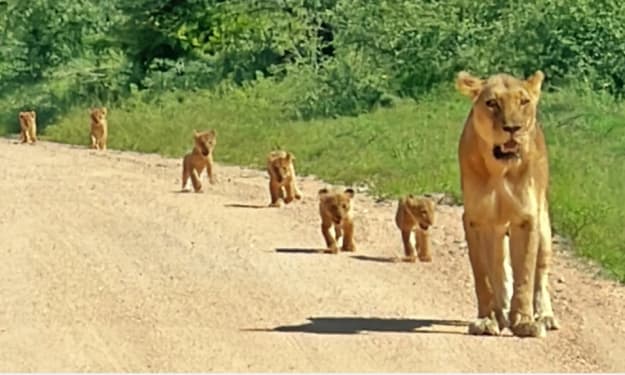
Tiny Lion Cubs Struggle To Keep Up With Mom
In the heart of the African savannah, life is a constant lesson for young animals. Few scenes are as endearing — or as heartwarming — as tiny lion cubs trying to keep pace with their mother. These little bundles of fur face a world full of challenges, from learning to hunt to avoiding dangers, all while depending on the guidance and protection of their experienced mom. Watching cubs wobble and tumble as they attempt to keep up with their mother reminds us that growing up, even in the wild, is a journey full of struggle, determination, and adorable missteps. The Early Days of Lion Cubs Lion cubs are born blind and helpless, usually in litters of two to six. For the first few weeks, they rely entirely on their mother for warmth, food, and safety. Even after opening their eyes and beginning to explore, the cubs are far from independent. The first months are crucial. Cubs learn social cues, hunting basics, and survival skills simply by watching their mother and the pride. But as anyone who has observed them knows, there’s often a huge gap between observation and action. Tiny cubs often struggle to match their mother’s pace, especially when she moves through long stretches of savannah or leads the family on patrols. A Mother’s Role in the Wild For a lioness, raising cubs is a full-time commitment. She hunts, defends her territory, and teaches her young, all while staying alert to predators such as hyenas, leopards, and even rival lions. The cubs, meanwhile, attempt to mimic her every move — often with clumsy yet charming results. A mother lion’s patience is remarkable; she frequently slows down, nudges them along, or stops to ensure no cub is left behind. These moments, while stressful for the tiny cubs, are vital learning opportunities. Struggling to Keep Up: Why It’s So Hard There are several reasons why tiny lion cubs have trouble keeping pace with their mother: Short Legs, Big Steps: Lion cubs’ legs are tiny and their coordination is limited, making it difficult to cover the same distance as an adult lioness. Curiosity: Cubs are naturally curious. A single butterfly or rustling bush can distract them, leaving mom to pause repeatedly. Energy Levels: Young lions tire quickly. Even with frequent naps, the cubs’ stamina is far lower than their mother’s. Learning Through Play: Play is not just fun; it teaches hunting, balance, and social skills. Running off to pounce on a sibling or chase an insect is all part of their education. Despite these challenges, the cubs’ determination to keep up demonstrates their resilience and growing understanding of the wild world. Lessons in Teamwork and Survival Every cub struggling to keep up is also learning crucial survival skills. The journey across the savannah is more than a test of speed — it’s a lesson in: Coordination: Cubs learn how to move efficiently across different terrains. Patience: They begin to understand the rhythms of adult life and the pace required for survival. Social Skills: Staying with the group teaches cubs how to interact with siblings and the pride, which is essential for their future roles. Observation: By following their mother, cubs study hunting techniques, territorial behavior, and predator awareness. Even the moments when cubs stumble or lag behind are essential for their development. These experiences prepare them for independence, which comes sooner than many might expect. The Cutest Moments in the Wild Anyone who has watched tiny lion cubs knows that their struggles are often irresistibly cute. Video clips from wildlife reserves frequently show cubs toddling along, tumbling over each other, or getting distracted mid-step. Observers often comment that these little stumbles reveal personality, determination, and playfulness, making them one of nature’s most heartwarming spectacles. While their mother is serious and focused, the cubs inject a sense of humor and lightness into life on the savannah. Why This Matters The struggles of lion cubs aren’t just adorable — they’re vital for understanding wildlife behavior. Conservationists and animal behaviorists use these moments to study growth patterns, social structures, and survival strategies in lion populations. These observations also highlight the importance of preserving natural habitats. Cubs must learn in a safe environment to survive; habitat loss, poaching, and climate change make these early struggles even more dangerous. Protecting the African savannah ensures that future generations of lions can experience the same lessons and playful tumbles. The Road to Independence Within a year, these tiny cubs will be more agile, faster, and more confident. By the time they reach two to three years old, males may begin to leave the pride, while females often stay and become caretakers themselves. Every misstep, tumble, and lagging moment is part of the journey toward strength, coordination, and independence. Watching them now gives us a glimpse of the challenges they will overcome, and the survival skills they will carry for life. A Celebration of Motherhood Ultimately, these scenes remind us of the incredible bond between mother and cubs. Her patience, vigilance, and teaching are the foundations of their future. The cubs’ struggles highlight the trials of growing up, while their determination showcases the resilience and beauty of wildlife. For those observing, it’s a powerful lesson in care, guidance, and perseverance, not just in lions but in the natural world as a whole. Final Thoughts Watching tiny lion cubs try to keep up with their mother is both entertaining and enlightening. It’s a story of growth, struggle, and resilience — a reminder that even the fiercest creatures start small, learning step by step. These little lions capture hearts while teaching life lessons: patience, determination, teamwork, and the importance of guidance. As they tumble and waddle across the savannah, they show us that growth is a process, one adorable misstep at a time. For wildlife enthusiasts, animal lovers, and anyone enchanted by nature, these tiny cubs are proof that even in the wild, love, care, and persistence are universal truths.
By Aarif Lashari7 days ago in Earth
📢 Raise Your Voice Thread: 01/22/2026
Our “Raise Your Voice Threads” are hosted most alternating Thursdays at 12PM ET to offer creators more avenues to uncover exceptional stories on Vocal. As we are continuously searching for fresh creators and inspiring stories, this thread provides an opportunity to exchange and discuss the stories that have moved and motivated us on Vocal.
By Raise Your Voice by Vocal4 days ago in Resources



Comments
There are no comments for this story
Be the first to respond and start the conversation.