
A World Without Us: The Story of Earth’s Resilience
A Deep Dive into Our Planet's Future
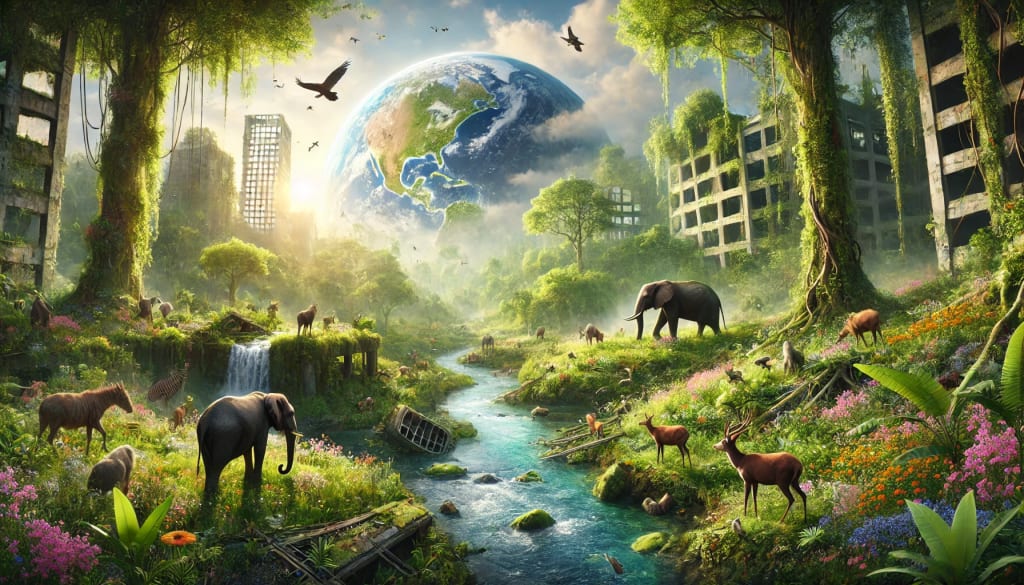
A sudden silence
Imagine waking up one day to a world where humanity has vanished. The bustling cities, the honking cars, the chatter of people—all gone in an instant. This is not just a thought experiment; it is a glimpse into what could happen if humans were to suddenly disappear from the Earth. As we embark on this journey through time, let’s explore how our planet would transform in the absence of its most complex inhabitants.
Chapter 1: The First Days of Silence
In the initial days following humanity's extinction, the world would be enveloped in an eerie silence. No longer would the sounds of construction and commerce fill the air; instead, a profound stillness would settle over cities and towns. Birds, once silenced by the din of urban life, would reclaim their rightful place in the skies. The first notes of their songs would echo through empty streets, heralding a new era for Earth.
As days turn into weeks, nature would begin its slow but steady reclamation. In cities like New York and Tokyo, where concrete and steel dominate the landscape, plants would push through cracks in sidewalks and roads. Vines would creep up buildings, wrapping them in a green embrace. What once was a bustling metropolis would transform into a wild garden, where nature asserts its dominance over human creation.
Chapter 2: The Urban Wilderness
Fast forward to one year after human extinction, and the transformation would be nothing short of miraculous. Parks that once required constant maintenance would flourish into lush ecosystems. Trees would grow taller, their branches stretching towards the sun as if reaching for a long-lost friend. Flowers would bloom in vibrant colors, attracting bees and butterflies that had been driven away by urban sprawl.
Wildlife that had adapted to living on the fringes of human civilization would now thrive without fear. Deer would wander down what were once busy streets, nibbling on grass that had overtaken parking lots. Raccoons and foxes would explore neighborhoods that had been their hunting grounds before humans imposed barriers between them and their natural habitats.
In this new urban wilderness, animals would reclaim their territory with confidence. Squirrels would dart across power lines, while hawks circled overhead, searching for prey in a landscape transformed by time and absence.
Chapter 3: Nature’s Healing Touch
As we look beyond the cities, vast landscapes previously marred by human activity would begin to heal. Fields once dominated by monoculture crops—corn and soybeans—would revert to diverse ecosystems teeming with life. Native grasses and wildflowers would flourish again, providing habitats for insects and small mammals.
Rivers that had been choked with pollution from factories and runoff would start to clear up as nature takes over. Fish populations that had dwindled due to overfishing and habitat destruction could begin to rebound. The waters might sparkle under the sun once more, reflecting a vibrant ecosystem rather than a lifeless expanse.
In this narrative of rebirth, we can almost hear the whispers of ancient forests as they breathe new life into the land. Without logging or land clearing for agriculture, these forests could expand into areas previously stripped bare by human hands. Over decades, they might evolve into biodiverse sanctuaries where countless species find refuge.
Chapter 4: The Return of Megafauna
As we continue our journey through this transformed world, we come upon a fascinating possibility: the return of megafauna. Imagine woolly mammoths roaming across tundra landscapes or giant ground sloths lumbering through lush forests—creatures that once thrived on this planet before human activity led to their extinction.
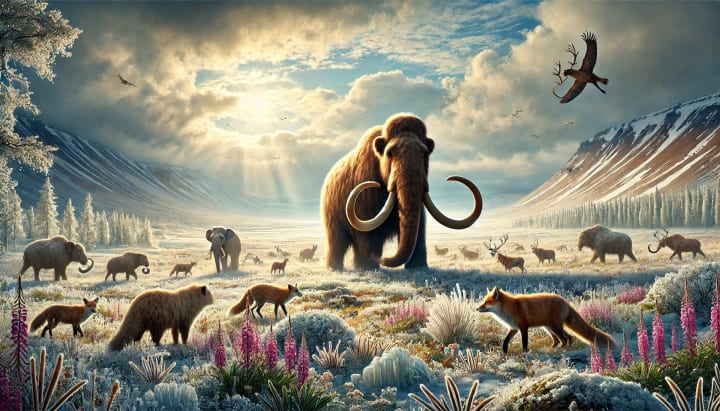
While this scenario may seem far-fetched, it highlights an important point: ecosystems are resilient and capable of remarkable recovery when given the chance. In a world without humans, large herbivores could thrive once more, playing crucial roles in maintaining ecological balance by grazing on vegetation and dispersing seeds.
The presence of these majestic creatures could reshape landscapes in ways we can only begin to imagine—creating open spaces where sunlight reaches the forest floor and allowing diverse plant species to flourish.
Chapter 5: A Different Perspective—The Human Element
While it’s captivating to envision Earth flourishing without humans, it’s essential to recognize our potential for positive change during our time here. Humanity has not only been a force of destruction but also one of restoration and stewardship.
Throughout history, countless individuals have dedicated their lives to conservation efforts aimed at protecting endangered species and restoring damaged ecosystems. Organizations around the globe work tirelessly to rehabilitate environments affected by industrialization or agriculture. Initiatives like reforestation projects and wildlife corridors demonstrate that we can coexist with nature rather than merely exploit it.
Consider the story of Yellowstone National Park—once overrun by elk due to the absence of natural predators like wolves. After wolves were reintroduced in 1995, a remarkable transformation occurred: elk populations stabilized, vegetation recovered, and biodiversity flourished once more. This story serves as a testament to humanity’s ability to learn from past mistakes and implement solutions that allow both people and wildlife to thrive.
Chapter 6: Embracing Our Role as Stewards
As we reflect on our journey through this imagined world without humans, it becomes clear that our relationship with nature is complex. While we have caused significant harm through pollution and habitat destruction, we also possess an incredible capacity for healing and restoration.
In today’s world, there are numerous examples of communities coming together to protect their local environments—from beach clean-ups to urban gardening initiatives aimed at promoting biodiversity within city limits. These efforts remind us that we are not separate from nature; rather, we are part of an intricate web of life that depends on balance.
Epilogue: A Call for Coexistence
So what does it mean for us as humans? The question isn’t whether Earth would be better off without us; rather, it should be how we can work towards a future where both humanity and nature thrive together.
As we face pressing environmental challenges—climate change, habitat loss, pollution—it is vital that we embrace our role as stewards of this planet. By prioritizing sustainability and conservation efforts today, we can ensure that future generations inherit a vibrant Earth—a place where both people and wildlife coexist harmoniously.
In this story of resilience and recovery lies hope for our planet’s future—a future where instead of imagining what life might be like without us, we actively shape a world where humanity contributes positively to the tapestry of life on Earth. It is within our power to forge this path forward; all it takes is a commitment to coexistence with the natural world around us.
About the Creator
mayta emily
Hi! I'm a curious explorer of science, earth, politics, and fiction. I delve into scientific discoveries, complex ecosystems, and political dynamics, while also weaving speculative tales that challenge perspectives and spark imagination.
Keep reading
More stories from mayta emily and writers in Earth and other communities.
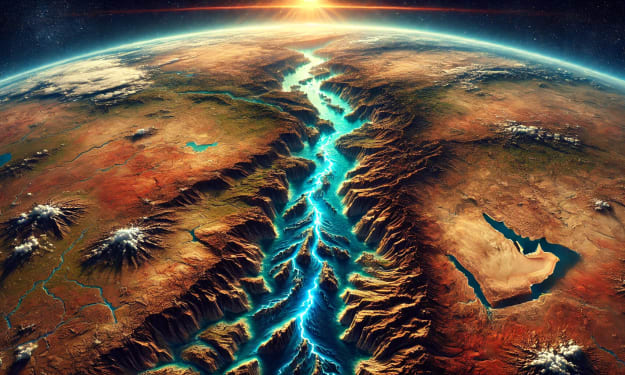
The Birth of a New Ocean: Africa's Geological Transformation and Its Implications
The African continent is on the brink of a monumental transformation, driven by the dynamic forces of tectonic activity. The East African Rift System, a vast network of geological faults stretching from Mozambique to the Red Sea, is undergoing rapid changes that could lead to the formation of a new ocean. This article delves into the implications of this geological upheaval, exploring both the scientific significance and the potential socio-economic impacts on the region.
By mayta emilyabout a year ago in Earth
“Make America Go Away”: Spoof MAGA Caps Soar in Popularity Amid the Greenland Crisis
Political slogans have always been powerful, but in today’s hyper-connected world, they often take on a life of their own. In recent weeks, a new phrase has been popping up across social media, protests, and online marketplaces: “Make America Go Away.” Printed boldly on red caps that closely resemble the iconic MAGA hats, the slogan is a pointed parody—and it’s rapidly gaining popularity amid renewed tensions surrounding Greenland and U.S. foreign policy rhetoric.
By Aarif Lashari5 days ago in Earth


Comments
There are no comments for this story
Be the first to respond and start the conversation.