
A Tale of Science and Humanity
Exploring the Nexus of Discovery: Humanity's Journey Through Science and the Natural World

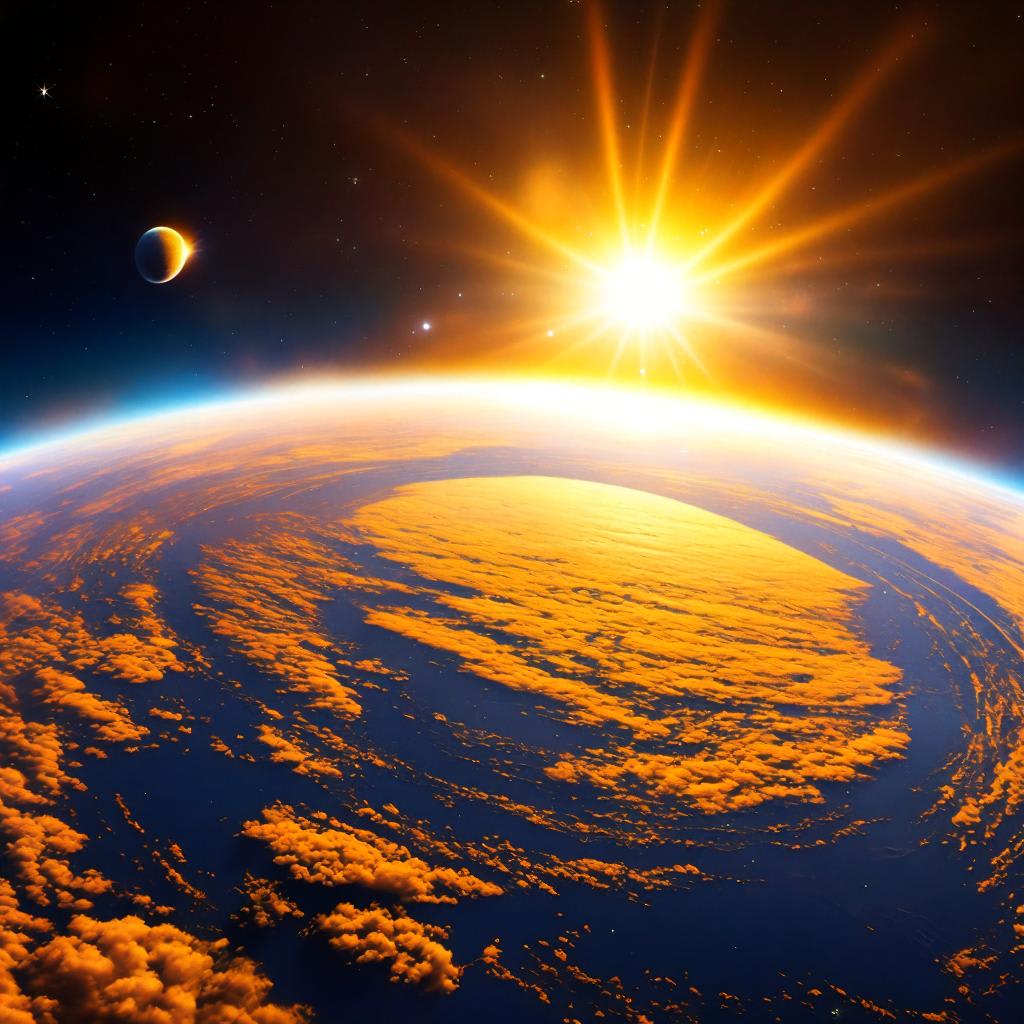
In the vast expanse of the cosmos, amidst the swirling galaxies and shimmering stars, there exists a tiny blue jewel—Earth. It is a planet teeming with life, a harmonious symphony of ecosystems, each playing its unique part in the grand orchestration of existence.
At the heart of this symphony lies the intricate dance between science and humanity—a story of exploration, discovery, and the profound connection between our species and the world we inhabit.
In the annals of history, there have been pivotal moments where humanity's insatiable curiosity and thirst for knowledge have intersected with the forces of nature, shaping the course of our collective journey.
One such moment occurred centuries ago when ancient astronomers gazed upon the heavens, seeking to unlock the mysteries of the cosmos. Through careful observation and meticulous calculation, they charted the movements of celestial bodies, laying the foundation for the science of astronomy.
As centuries passed, humanity's understanding of the universe deepened. Scientists peered through telescopes, deciphering the secrets of distant galaxies and unraveling the cosmic tapestry of space and time.
Meanwhile, on Earth's surface, a parallel journey of discovery unfolded. From the craggy peaks of towering mountains to the murky depths of the ocean abyss, intrepid explorers ventured forth, uncovering the rich tapestry of life that blankets our planet.
In the 19th century, Charles Darwin embarked on a voyage that would forever change our understanding of life on Earth. His observations aboard the HMS Beagle led to the development of the theory of evolution by natural selection, a cornerstone of modern biology.
But it wasn't just the natural world that captivated humanity's imagination. Beneath the surface of Earth's crust lay a hidden realm of molten rock and searing heat—a realm that held the key to understanding the planet's turbulent history.
Through the pioneering work of geologists like James Hutton and Charles Lyell, the concept of deep time emerged—a concept that challenged humanity's perception of its place in the universe. The realization that Earth's landscapes were shaped by gradual processes spanning millions of years sparked a revolution in the earth sciences.
Fast forward to the 20th century, and humanity stood on the brink of a new era of exploration—the space age. In 1969, millions around the world held their breath as Neil Armstrong took humanity's first steps on the lunar surface—a testament to our species' boundless ingenuity and spirit of adventure.
As we ventured beyond the confines of our home planet, our perspective shifted, and we began to see Earth not as an infinite resource to be exploited but as a fragile oasis in the vastness of space—a sanctuary that must be cherished and protected.
In recent decades, the specter of climate change has cast a long shadow over the future of our planet. Rising temperatures, melting ice caps, and extreme weather events serve as stark reminders of the urgent need for action.
Yet, in the face of adversity, humanity has shown resilience and determination. Scientists around the globe are working tirelessly to develop sustainable solutions to combat climate change, from renewable energy technologies to innovative conservation strategies.
But perhaps the most powerful weapon in our arsenal is education. By inspiring future generations to embrace the wonder of science and the beauty of our natural world, we can foster a global community united in its commitment to preserving the precious gift of life on Earth.
And so, the story of Earth continues—a story of science and humanity, of exploration and discovery. As we stand on the threshold of a new era, let us remember that we are not just passive observers of the symphony of life but active participants, each playing a vital role in shaping the destiny of our planet and ensuring a brighter future for generations to come.
As humanity journeyed deeper into the 21st century, the intertwined narratives of science and society took on new dimensions. Technological advancements fueled an era of unprecedented exploration, with missions to Mars and beyond capturing the imagination of people worldwide.
In 2021, the James Webb Space Telescope, a marvel of engineering and scientific ingenuity, was launched into orbit, promising to unveil the secrets of distant galaxies and shed light on the origins of the cosmos. Its powerful gaze pierced through the veil of space, offering glimpses of worlds beyond our own and igniting a sense of wonder and curiosity among all who beheld its images.
Meanwhile, back on Earth, the effects of climate change continued to intensify, prompting a global awakening to the urgent need for action. From grassroots movements to international accords, the call for sustainability and environmental stewardship reverberated across continents, transcending political divides and cultural barriers.
In the corridors of power, leaders grappled with the daunting challenge of balancing economic growth with ecological preservation. Innovators and entrepreneurs rose to the occasion, pioneering green technologies and pioneering initiatives aimed at mitigating the impact of human activity on the planet.
But perhaps the most profound shift occurred within the hearts and minds of individuals—a growing recognition of our interconnectedness with the natural world and a renewed sense of responsibility for its well-being.
In classrooms and lecture halls, educators imparted not only knowledge but also a sense of awe and reverence for the beauty and complexity of life on Earth. Students became stewards of change, advocating for sustainability in their communities and driving forward the movement towards a greener, more sustainable future.
As the years passed, the story of Earth unfolded in myriad ways—a tapestry woven from the threads of scientific discovery, human endeavor, and the eternal dance of life. From the depths of the ocean to the farthest reaches of space, humanity's journey continued, guided by the twin beacons of knowledge and compassion.
And so, as we look to the horizon of possibility, let us remember that the story of Earth is not just a tale of science and humanity but a testament to the resilience of life itself. In the face of adversity, let us draw inspiration from the countless generations that have come before us, and let us strive to leave a legacy of stewardship and sustainability for the generations yet to come.
For in the end, the true measure of our success will not be found in the monuments we build or the wealth we amass but in the harmony we create with the world around us—a harmony that echoes through the ages, a symphony of Earth.
About the Creator
Clement Boabeng
I possess passion for scientific knowledge, facts and also motivation and takes great pleasure in sharing intriguing scientific facts, as well as other stories to inspire others.
Keep reading
More stories from Clement Boabeng and writers in Earth and other communities.
The Symphony of Earth: A Tale of Nature's Harmony
Once upon a time, in the heart of a lush forest, where the sun kissed the leaves and the breeze whispered through the trees, there existed a wondrous symphony of nature. This was not just any forest; it was a sanctuary of life, where every creature, big and small, played a vital role in the grand orchestra of existence.
By Clement Boabeng2 years ago in Earth
The Problem with Invasive Plants: Identification and Responsible Removal
This scenario plays out in gardens across the continent. Many invasive plants started as intentional garden introductions, valued for their beauty, vigor, and ease of growth. Those same qualities—rapid spread, adaptability, and resilience—make them ecological threats when they escape cultivation.
By Emma Wallace5 days ago in Earth




Comments
There are no comments for this story
Be the first to respond and start the conversation.