
A law of physics that reveals desperate truths, says scientist: I'd rather it hadn't been discovered
A law of physics that reveals the facts of despair


Marx once said that "technology" is a real productive force that not only drives human cultural progress and civilization forward but is also the material force that transforms the world.
In fact, in the course of tens of thousands of years of human development, science and technology have, as Marx said, occupied an irreplaceable and important position.
The invention of technology in ancient times liberated mankind from the obscurity of drinking hair and blood and being unclothed. The birth of natural science and the rise of the industrial revolution in modern times have, in turn, enabled mankind to move from a backward agricultural society to a relatively developed industrial one.
It is fair to say that as civilization developed, science and technology became an increasingly important part of the overall economy, and its dominant and decisive role became more pronounced.
However, as we continue to explore the world and the unknown, science has helped and led us in the direction of development, but it has also taught us many theoretical laws that have overturned our perceptions and even caused us to despair, such as the one that many scientists say outright: they would rather not have discovered it - the "law of entropy The Law of Incremental Growth".
Why are some scientists so terrified of this law of physics? And what is it about it that makes people despair? To find out the answer to these questions, we need to know what the Law of Entropy is.
Also known as the 'second law of thermodynamics, the law of increasing entropy was developed by the German physicist Rudolf Clausius in the 19th century to describe the irreversible flow of heat from a high object to a low object in an isolated system.
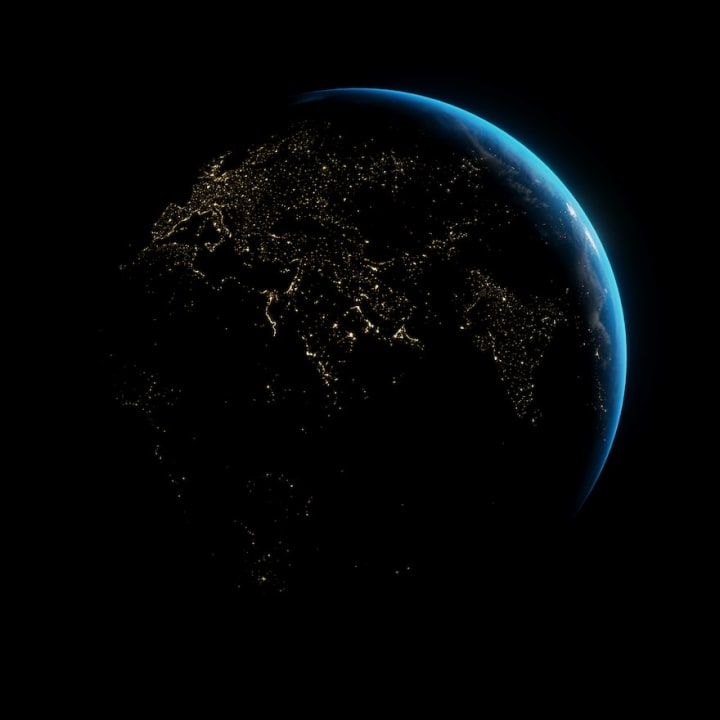
From a thermodynamic perspective, 'entropy' is a measure of the degree of disorder in a system. Simply put, the more disorganized a system is, the higher its entropy value.
As mentioned above, in an isolated system, 'entropy' is constantly increasing and irreversible, and when it reaches its maximum value, the system becomes severely disordered and then dies.
So what is the maximum level of disorder? The answer is - macroscopic equilibrium. In layman's terms, this is the point at which all of the infrastructures of the system have let themselves go.
Like an underground carriage in the evening rush hour, when all the passengers have their place in the car, that is when macro-equilibrium is reached.
To give a more graphic and intuitive example, an unoccupied empty room will get dirtier and dirtier because every speck of dust will spontaneously fall to the floor and then accumulate and eventually spread out into a whole layer, at which point the entropy reaches its maximum, i.e. macro-equilibrium.
Many of you may say if all the dust in the room is cleaned up at this point, wouldn't the entropy in the room be reduced? Why is it still said that entropy increase is an irreversible process?
The fact that you have this doubt proves that you still do not understand the law of entropy increase. In the isolated system of a room, the action of 'cleaning' requires energy to drive it, and the conversion of energy inevitably generates excess heat, which, together with the 'work' done by cleaning, is greater than the reduction in disorder caused by cleaning the dust. This excess heat, together with the 'work' done by cleaning, is greater than the reduction in disorder caused by cleaning the dust so the entropy of the room as a whole has increased.
The law of entropy was not only difficult for ordinary people to understand, but also for some of the greatest scientists to understand at the very beginning.
In 1871, for example, the famous physicist Maxwell conceived a very interesting experiment to prove that there was a 'loophole' in the law of entropy: a box was divided into two areas by a wooden board with a trapdoor, and a genie guarded the trapdoor and used his gift to measure the speed of molecular motion.
For molecules coming from the right, if they were fast, the elf would let them go, and if they were slow, he would close the flap and prevent them from entering the box. The opposite is true for molecules coming from the left: the slower ones are released and the faster ones are blocked.
After some time, the molecules on the left will be moving very fast and on the right very slowly, which also creates a temperature difference, and this in turn shows that the disorder inside the box is decreasing and entropy is decreasing, thus proving that the entropy increase is not irreversible.
Although many people knew that Maxwell's experiment was implausible, no one could give evidence that it was implausible, so it left many scientists scratching their heads.
It was only 60 years later that this experiment, known as Maxwell's Demon, was cracked by Hungarian nuclear physicist Leo Sillard.
The genie observed that the movement of molecules must consume energy and that energy consumption must cause an increase in entropy that is no less than the decrease in entropy from the movement of molecules, so this seemingly infallible isolated system still obeys the second law of thermodynamics.
Returning at this point to the question at the beginning of the article, why does the law of increasing entropy strike fear into the hearts of people? It is actually because everything on Earth, and indeed in the universe, is constantly consuming energy.
The universe is an isolated system, so to speak, and the consumption of energy means that the "entropy" of the system is increasing, and so is the degree of disorder.
According to the law of entropy, when a system reaches its maximum level of disorder, that is when it will die out. So this means that the universe will one day die out (thermal silence theory), and as creatures living in the universe, of course, they will feel fear and despair - after all, no one wants to become a pile of disordered particles.
If we look at it from a smaller perspective, human civilization is a closed system, so according to the entropy theory, it will one day die out too.
Even if we could "anti-entropy" by doing something, it would be futile, but it would only slow down the rate of extinction and would not change the end.
Of course, even if the law of entropy were to apply to the universe now, or everything around us, it remains to be seen whether it will still apply in the future.
One day it will be found to be "flawed" and forgotten, just as the centuries-old view of space-time was kicked into the dustbin by the theory of relativity, after all, the universe has so many "surprises" for mankind.
About the Creator
Mccord Kosmatka
A so-called genius is simply someone who spends all the time other people spend drinking coffee on their work.
Keep reading
More stories from Mccord Kosmatka and writers in Earth and other communities.
A herb that tones both yin and yang, tonifies yang without harming yin, in just one small cup a day! It will make you fall flat on your face!
A delicious wild fruit from childhood, raspberries are also known as raspberries. It is popular for its sweetand sourr taste highnutritionall valueu,,e and its brain-boosting, kidneyunifyingn,,g and aphrodisiac effects. It is found in Jiangsu, Zhejiang, Anhui, Fujian, Jiangxi and Guangxi. Many growers also want to grow it. So what are the prospects and economic benefits of growing raspberries? And what kind of nutritional value do raspberries have?
By Mccord Kosmatka3 years ago in Lifehack
Banyan tree
Early one morning, the forest was alive with an unusual commotion. Birds were chirping frantically, rabbits darted across the undergrowth, and monkeys climbed down from the trees, looking anxiously around. News had spread like wildfire: the oldest and kindest tree in the forest, the venerable Grandpa Banyan, was weak and frail, and it was on the verge of falling.
By Sudais Zakwanabout 14 hours ago in Earth
“Are You Dead?”: A New App Reflects the Loneliness of Young Chinese Living Alone
In China’s rapidly changing cities, living alone is no longer unusual—especially among young adults pursuing education, careers, and independence. But as solo living increases, so do concerns about isolation, safety, and what happens when no one is around to check in. Against this backdrop, a new app with a blunt, unsettling question—“Are you dead?”—has captured public attention and ignited debate. Despite its shocking name, the app is not designed to provoke fear. Instead, it aims to address a practical and emotional gap in modern urban life: how to ensure the well-being of people who live alone, and how technology is stepping in where traditional community networks have weakened. The Rise of Solo Living in China China has witnessed a dramatic shift in household structures over the past two decades. Urbanization, delayed marriage, rising housing costs, and changing cultural values have contributed to a growing number of single-person households, particularly among people in their 20s and 30s. For many young Chinese professionals, living alone represents freedom and self-reliance. It allows flexibility, privacy, and independence from family expectations. Yet this independence often comes with trade-offs: fewer daily social interactions, weaker neighborhood ties, and limited support in emergencies. In megacities like Beijing, Shanghai, and Shenzhen, it is increasingly common for neighbors not to know each other at all. In this environment, concerns about what happens if someone becomes ill, injured, or simply disappears from daily routines have become more pronounced. What the App Actually Does Despite its provocative name, the app’s purpose is surprisingly simple. It functions as a digital check-in system. Users set regular times to confirm they are okay—by tapping a notification or completing a brief check-in. If the user fails to respond after a certain period, the app automatically alerts designated contacts, such as friends, family members, or emergency responders. The stark question, “Are you dead?”, is intentionally designed to grab attention and prompt action. Developers argue that softer language is often ignored, while blunt phrasing cuts through digital noise and encourages consistent use. In essence, the app acts as a safety net, especially for people who live alone and may not have daily contact with others. Why Young People Are Downloading It The app’s popularity reflects deeper anxieties among young adults navigating modern life. Many users say they downloaded it not because they fear the worst every day, but because it provides peace of mind—both for themselves and for loved ones. For parents living far from their children, the app offers reassurance without constant phone calls. For users, it creates a sense of being quietly watched over, without sacrificing independence. Some users have also described the app as a form of emotional comfort. Even a routine notification can feel like a reminder that someone, somewhere, would notice if they vanished from daily life. A Name That Sparked Debate The app’s name has been its most controversial feature. Critics argue that the phrase “Are you dead?” is unnecessarily harsh and reflects a growing desensitization in digital culture. Others worry that such language could amplify anxiety rather than reduce it. Supporters, however, see the name as a reflection of reality rather than a provocation. In densely populated cities where people can go unnoticed for days or weeks, the question is uncomfortable—but relevant. They argue that avoiding blunt language does not eliminate the underlying problem of isolation. The debate highlights a broader tension in tech design: Should apps prioritize emotional sensitivity, or practical effectiveness—even if it makes people uncomfortable? Technology Filling a Social Gap The rise of this app points to a larger issue: technology increasingly compensates for weakened social structures. In the past, extended families, close-knit neighborhoods, and workplace communities naturally checked in on individuals. Today, those informal safety nets are often absent. Apps like this one are not just tools; they are symptoms of a society where digital solutions are replacing human presence. While convenient, this raises questions about whether technology is addressing the root causes of loneliness—or simply managing its consequences. Still, for many users, the app is not a replacement for relationships, but a supplement to modern life realities. Living Alone Does Not Mean Wanting to Be Alone An important takeaway from the app’s success is that living alone is not the same as wanting isolation. Many young Chinese adults value independence but still crave connection, security, and acknowledgment. The app’s routine check-ins, though minimal, provide a structured moment of contact. In a fast-paced, high-pressure environment, even small gestures of recognition can matter. This trend also reflects changing attitudes toward mental well-being and personal safety. Younger generations are more open to discussing vulnerability and using tools that previous generations might have dismissed. What This Says About Modern Urban Life The popularity of an app that asks such a stark question speaks volumes about the realities of contemporary urban living—not just in China, but globally. As cities grow larger and lives become more individualized, people are searching for new ways to ensure they are seen, remembered, and protected. The app’s success suggests that people are willing to engage with uncomfortable ideas if they address real needs. It also underscores the importance of designing technology that is honest about modern challenges, rather than masking them with euphemisms. Conclusion: A Wake-Up Call, Not a Warning While the phrase “Are you dead?” may sound alarming, the app behind it is less about fear and more about care. It reflects a generation navigating independence in a world where traditional support systems no longer function as they once did. Rather than signaling a morbid obsession, the app serves as a quiet reminder of something deeply human: the need to be noticed. In that sense, its blunt question is not about death at all—but about presence, connection, and the reassurance that someone would check if you were gone. As solo living continues to rise, tools like this app may become less shocking and more commonplace—symbols of how society adapts to changing ways of life in the digital age.
By Muhammad Hassan5 days ago in Earth
Smart phones, Humans and Aliens.
WARNING. I will be tapping into one of your favorite creative tensions: The absurdity of humans worshipping their glowing rectangles as if they were tiny oracles. There’s something deliciously poetic about that contradiction, and it lends itself beautifully to an instructive proviso.
By Novel Allen4 days ago in Poets


Comments
There are no comments for this story
Be the first to respond and start the conversation.