
7 Powerful Reasons Why Biodegradable Food Containers Are Taking Over 2025
Discover why biodegradable food containers are reshaping sustainable packaging in 2025. Explore key benefits, real-world data, and future trends.
Introduction
In the battle against plastic pollution, biodegradable food containers are emerging as a game-changing solution.
As environmental regulations tighten and consumer demand for sustainable alternatives soars, businesses and individuals alike are embracing eco-friendly food packaging at an unprecedented rate.
Recent research shows that the global market for biodegradable packaging is projected to grow by 17% annually, reaching over USD 140 billion by 2030.
In this article, we'll explore seven powerful reasons why biodegradable food containers are not just a trend but a transformative force in sustainable living and commerce.
1. Biodegradable Containers Significantly Reduce Environmental Impact
Unlike traditional plastic containers, biodegradable food packaging is designed to decompose naturally into non-toxic elements.
Materials such as bagasse, cornstarch, PLA (polylactic acid), and wheat straw break down within 90–180 days under composting conditions, returning nutrients to the soil without leaving harmful microplastics behind.
According to a study published in Environmental Science & Technology, conventional plastics can take up to 500 years to decompose.
By switching to biodegradable alternatives, we can dramatically shorten this timeline and reduce landfill overflows.
2. They Meet Growing Regulatory Requirements
Governments worldwide are enacting stringent bans on single-use plastics.
From the European Union’s Single-Use Plastics Directive to U.S. state-level initiatives like California's compostable packaging mandates, businesses must adapt or risk penalties.
Biodegradable food containers easily comply with these new laws, making them not just an ethical choice but also a legal necessity for foodservice providers, retailers, and packaging manufacturers.
3. They Cater to Eco-Conscious Consumers
Today’s consumers are highly informed and environmentally sensitive.
In a 2023 Nielsen survey, 73% of global respondents stated they would pay more for sustainable packaging.
Brands that adopt biodegradable food containers demonstrate genuine commitment to sustainability, building stronger customer loyalty and enhancing their brand image.
In competitive markets like food delivery, catering, and retail, this environmental credibility often becomes a deciding factor for buyers.
4. They Offer Versatile, High-Performance Options
Modern biodegradable containers are not only green but also practical.
Advances in material science have created products that are:
- Microwave and freezer safe
- Leak-resistant and durable
- Available in multiple sizes and designs
- Suitable for both hot and cold foods
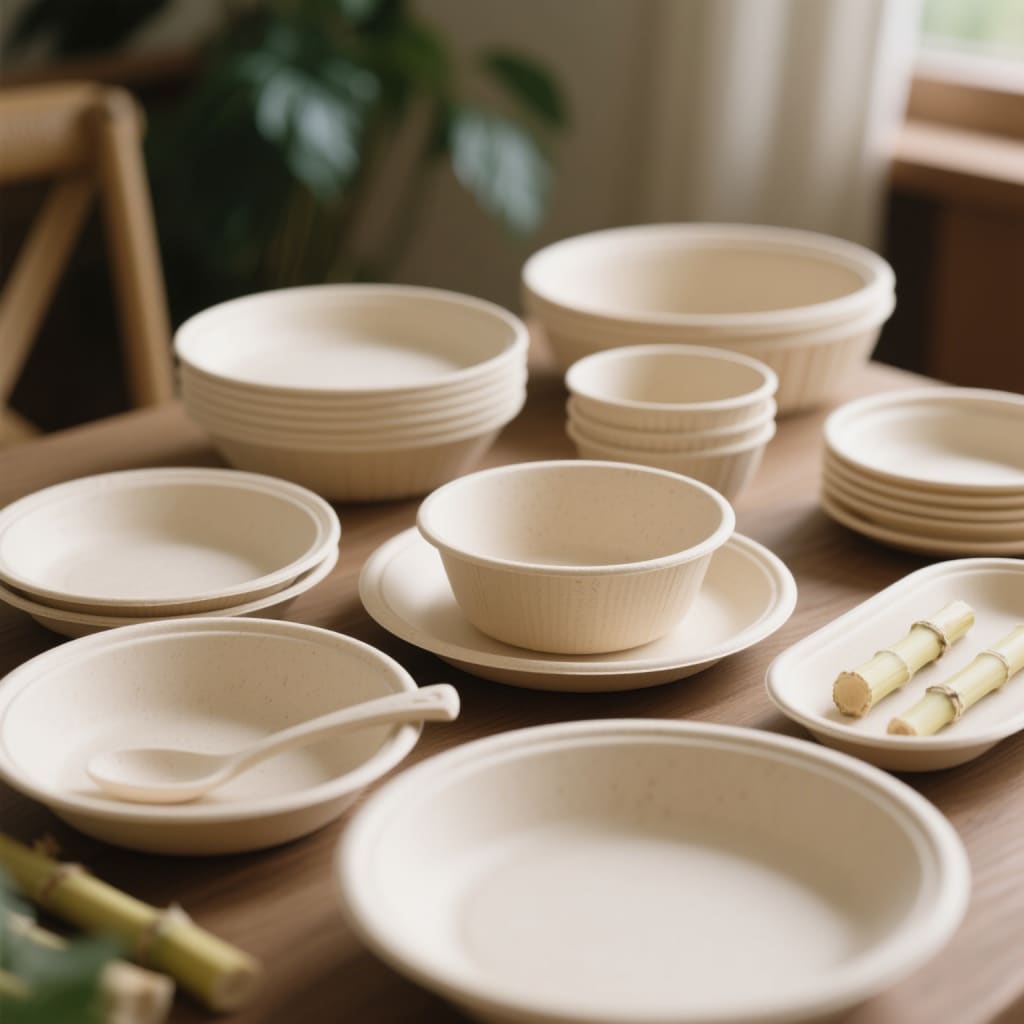
Materials like bagasse (sugarcane fiber) offer strength and heat resistance, while PLA-based containers provide crystal-clear visibility for premium food presentation.
This versatility ensures that eco-friendly options no longer compromise on functionality or aesthetics.
5. They Promote Circular Economy Practices
Biodegradable containers align perfectly with the principles of the circular economy—an economic system aimed at minimizing waste and maximizing resource use.
By choosing plant-based, renewable materials that return to the ecosystem at the end of their lifecycle, companies and consumers participate in a regenerative model rather than a wasteful linear one.
Incorporating biodegradable packaging supports broader sustainability initiatives like carbon footprint reduction, zero-waste programs, and green supply chain management.
6. They Help Mitigate Climate Change
The production of biodegradable food containers typically emits 50–60% fewer greenhouse gases compared to traditional plastic manufacturing.
Using agricultural byproducts such as corn starch or bagasse not only reduces fossil fuel consumption but also promotes carbon sequestration through crop cultivation.
In a report by the United Nations Environment Programme, transitioning to bio-based packaging could prevent the release of up to 1.2 billion metric tons of CO₂ equivalents by 2035.
By simply replacing plastic containers with biodegradable alternatives, food businesses can make a measurable contribution toward mitigating climate change.
7. They Inspire Innovation Across Industries
The rise of biodegradable packaging is catalyzing innovation across multiple sectors:
- Food delivery services now offer fully compostable meal kits.
- Retail brands are redesigning product lines around eco-packaging.
- Event organizers promote plastic-free, zero-waste gatherings.
- Hospitality industries are revamping room service and catering practices with biodegradable solutions.
Startups are emerging with smart innovations such as biodegradable smart packaging that can track food freshness while composting after use.
As this ecosystem grows, we can expect even greater breakthroughs in material sciences, manufacturing efficiencies, and sustainable packaging designs.
Case Study: Bagasse Containers Transforming the Food Industry
One notable example is the widespread adoption of bagasse tableware in the catering sector.
Bagasse, a fibrous byproduct from sugarcane, has excellent thermal properties, is grease-resistant, and decomposes naturally without industrial composting.
Companies like GreenWare and BioLeaderpack report that switching from plastic to bagasse packaging led to over 60% reductions in operational waste disposal costs and significantly improved customer satisfaction scores related to environmental responsibility.
This success underscores the real-world business case for adopting biodegradable food containers.
Future Outlook for Biodegradable Food Containers
Looking ahead, trends suggest that:
- Home-compostable packaging will become more widespread.
- Hybrid materials combining plant fibers and new biopolymers will enhance durability.
- Government subsidies for sustainable packaging innovation will increase.
- Consumer education campaigns will close the composting knowledge gap.
By 2030, biodegradable food containers are expected to dominate foodservice, retail packaging, and hospitality sectors, replacing a large portion of conventional plastics.
Conclusion
Biodegradable food containers are no longer just an eco-friendly alternative—they are fast becoming the new standard for responsible businesses and conscious consumers.
Their environmental benefits, regulatory compliance, consumer appeal, versatility, and role in mitigating climate change make them a powerful force in reshaping the future of packaging.
As innovation accelerates and composting infrastructure expands, these containers will lead the way toward a cleaner, healthier, and more sustainable world.
Choosing biodegradable today is choosing a better tomorrow.
About the Creator
Tea of Silence
The snow had covered the hills for days, turning the land into a quiet white world where sound seemed afraid to exist. On the highest of these hills, beneath a dry, leafless tree, a young man sat alone. The tree had long ago lost its strength, its branches thin and broken, but it still stood, as if refusing to disappear. The young man chose this place often, not because it was comfortable, but because it was honest.
By Bilal Mohammadi6 days ago in Earth
Microbiota, microbiome or microflora: how to speak correctly and why it is for health.
You've probably heard the phrase, "We are what we eat." But modern science says more precisely: we are also those who live in us. Until 2016, it was believed that there are many times more bacteria in our body than our own cells. The latest calculations by mathematicians show that we divide the body with our microorganisms by about 50/50: about 30 trillion of our cells versus 38 trillion bacterial ones.
By Yaroslav Gorohov2 days ago in Earth




Comments (1)
Informative and well written!!!