
5 Amazing scientific discoveries of the previous decade
mind blowing discoveries

The last decade was undeniably one of the richest periods of scientific discovery ever. Researchers across all disciplines tested hypotheses found proves and visited places that have made us rethink our understanding of not only our own planets but of the entire universe. It was the decade when we finally begin to understand one of the greatest challenges humankind has ever faced and we're learned far more than ever before about some of the most destructive objects in existence.
So let's take a look at 5 of the most amazing scientific discoveries of the 2000.
5. PLUTO
Despite having been unceremoniously downgarded from being a fully fledged planet in 2006. That year also saw the launch of the New Horizons spacecraft that was destined to travel to the farthest reaches of our solar system to study the dwarf planet. It finally reached its destination in july of 2015. In the images and data that were sent back were astonishing. Far from being the boring frozen rock that some had expected, it was found to have moving glaciers, floating ice mountains and a huge frozen sea made of solid nitrogen. The ice is constantly moving but at a slow rates because it is warmed by the pressure above it to rise. The constant replenishment of the top layer of ice creates a surface structures that no one had expected and that has given a new introduction and understanding to what happens on the mysterious dwarff planets at the edge of our solar system.
4. THE HIGGS BOSONS
It took the construction of the world's largest machine at the cost of just under 5 billion dollors but in 2012 it was finally announced that the mysterious Higgs Bosons also known as the god particle have been discovered at the Large Hadron Collider in Cern, Switzerland. The particle had first been theorized in 1964 and is one of the most influential pieces of the standard model of physics and unfamiliar ones such as quarts doesn't actually explain why objects have mass? The answer though is the elusive Higgs boson particle which exists in the Higgs field and due to its interaction with other particles it's the reason why mass exists. It's discovery was the confirmation of the last unknown part of the standard model of physics and now researchers are able to repurpose the LHC to begin investigating even stranger phenomenon.
3. KEPLER
For thousands of years humans have looked to the skies wondering What's up there? As astronomical devices were invented we learned that countless stars existed throughout the universe and that there are other planets in our own solar system but it was impossible to learn how common it is for planets to orbit stars. This all changed in 2009 with the launch of the first kepler probe which was used to study distant stars and measured the amount of light they emit. Fluctuations in their brightness can be used to determine whether any objects are orbiting them and the results have been unbelievable. By the end of the last decade more than 4055 exoplanets have been discovered including a few that are potentially habitable and this number is only expected to increase as we enter a new decade. The more we look the more common our own solar system seems to be and you can only imagine what else is out there to be found?
2. THE WORLD'S CLIMATE
Throughout the earth's history the climate has changed drastically. There have been periods of extreme heat and extreme cold and there's no doubt that things are noticeably changing again during our lifetimes. What's different this time though is that the changes are largely due to human behaviour. Something that became clearer than ever in the last decade and we've begun to understand the extent to how it's affecting the planet. In 2012, 400 billion tons of ice was lost from Greenland and more than 252 billion tons of ice has been lost from Antarctica. Every year throughout the decade this is an increase of almost 6 times the amount being lost just 30 years earlier and at the current rate the world's sea levels are expected to rise by 3 feet by the year 2100. This would directly effect the homes and lives of at least 630 million people. but the consequences are far further reaching. Human activity has meant that 40% of all Amphibian species, more than 33% of marine mammals and 10% of insect species are endangered and things continue to get worse. While the last decade was the time where the extent of the problem was beginning to be fully realized. Let's hope that the next decade is when the solution is finally found.
1. BLACK HOLES
Black holes have long been some of the most mysterious objects in the universe but thanks to researchers dedicating their efforts for studying the phenomena, we've uncovered far more about them and they are much more intresting than we may think. Black holes are typically formed by large stars at the end of their lives and when all the material collapses in on itself to create an unbelievably dense structure and because of their intense gravity causes some very unusual things to happen. In 2016, black holes were detected colloiding into one another which confirmed the prediction made by einstein in 1916. Whereby they created ripples in space-time known as gravitational waves. This amazing discovery wasn't the biggest black hole revelation of the last decade. However as a team working with the event horizon telescope managed to capture the first ever image of a singularity it's a massive black hole that lies at the centre of the Messier 87 galaxy about 54 million light- years away from us. His mass is so big that it is equivalent to 6.5 billion of our Suns. Blackholes like those are thought to be at the centre of every galaxy and their gravitational poles are the reason why so many billions of stars orbit them in such large structures. The 2010 were an incredible time for scientific discoveries and we've learned so much about the world and universe all around us.
About the Creator
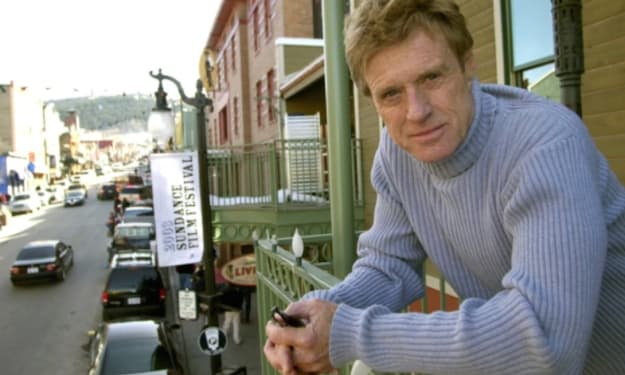
Robert Redford Remembered for His Mentorship of New Filmmakers at Sundance Gala
At this year’s Sundance Film Festival gala, the spotlight turned to Robert Redford, not only as a legendary actor and filmmaker but as a mentor who nurtured countless emerging talents. Attendees, including directors, producers, and actors, shared heartfelt stories about how Redford’s guidance transformed their careers and inspired a new generation of filmmakers. A Legacy Beyond Acting Robert Redford’s career in Hollywood spanned decades, with iconic roles in films like Butch Cassidy and the Sundance Kid, All the President’s Men, and The Sting. However, his impact extends far beyond the screen. As the founder of the Sundance Institute, Redford created a platform that championed independent voices, giving filmmakers the opportunity to explore creative freedom without the constraints of major studios. At the gala, festival director Tabitha Jackson remarked, “Redford didn’t just make films; he made futures. He believed in new voices long before they had a platform.” This sentiment resonated with many in attendance who credited their breakthroughs to Redford’s mentorship. Mentorship Through the Sundance Institute Founded in 1981, the Sundance Institute was born out of Redford’s vision to support independent filmmaking. Over the years, the institute has: Offered labs, workshops, and grants to new filmmakers. Provided mentorship from established directors and industry professionals. Created a global platform for storytelling through the Sundance Film Festival, now recognized as one of the premier venues for independent cinema. Several filmmakers who attended the gala recounted how Redford personally encouraged them to take creative risks, even when their ideas seemed unconventional. His approach emphasized storytelling authenticity over commercial considerations, a principle that has influenced countless careers. Voices From the Gala Emerging filmmakers at the event shared touching memories of Redford’s influence: Director Maya Johnson recalled how Redford reviewed her early short film and offered constructive advice, helping her refine her narrative voice. Producer Alex Chen highlighted Redford’s commitment to inclusive storytelling, encouraging him to amplify underrepresented voices in cinema. Actor Lila Martinez reflected on the actor-director’s ability to instill confidence in new talent, reminding them that their perspective mattered. These personal testimonies painted a portrait of Redford not only as an industry icon but as a guiding presence committed to cultivating the next generation of storytellers. Redford’s Philosophy on Filmmaking Redford often spoke about the importance of creativity, authenticity, and collaboration in filmmaking: Creativity over commerce: He encouraged filmmakers to prioritize artistic integrity. Mentorship as legacy: Redford believed sharing knowledge was key to sustaining the art form. Risk-taking: He frequently reminded young directors that innovation comes from challenging norms and exploring new perspectives. These principles remain at the heart of the Sundance Institute and the broader independent film community. The Global Influence of Sundance Thanks to Redford, Sundance has become a global platform for independent cinema, with programs reaching filmmakers in Europe, Asia, Africa, and Latin America. Through labs, festivals, and initiatives, Redford’s influence extended far beyond the U.S., helping shape a diverse, international community of filmmakers. Sundance alumni have gone on to create films that have won Oscars, Golden Globes, and international awards, underscoring Redford’s impact on the global film industry. Honoring Redford’s Legacy The gala featured a tribute montage highlighting Redford’s contributions as an actor, director, and mentor. Clips included moments of him guiding young filmmakers, presenting awards, and reflecting on his own journey in the industry. Many attendees emphasized that Redford’s greatest legacy may not be his iconic films, but the careers he helped launch. Festival director Jackson noted, “Every filmmaker here carries a piece of Robert’s wisdom. His mentorship continues to ripple through every frame of independent cinema.” Redford and the Future of Independent Filmmaking As the independent film landscape evolves—with streaming platforms, AI tools, and global collaboration becoming more prevalent—the foundations laid by Redford and Sundance remain vital. His mentorship model demonstrates that investing in people and ideas creates lasting cultural impact, ensuring that independent voices continue to thrive. Emerging filmmaker Jordan Reyes commented, “Redford taught me that every story has value. That lesson shapes how I create and support others in my community today.” Personal Reflections and Anecdotes Many festival attendees shared anecdotes reflecting Redford’s humility, approachability, and passion for storytelling: Despite his fame, he would sit in small discussion circles with young filmmakers, offering advice and encouragement. He often hosted informal gatherings at his homes or lodges, creating spaces where filmmakers could network, learn, and experiment. His presence at Sundance was consistently an inspiration to those navigating the challenges of independent filmmaking, providing mentorship that was practical, emotional, and motivational. These stories underscored that Redford’s mentorship was not just professional—it was personal and transformative. Final Thoughts Robert Redford’s remembrance at the Sundance gala served as a celebration of mentorship, vision, and the power of independent cinema. Beyond the accolades and cinematic achievements, his enduring legacy lies in the careers he nurtured, the voices he amplified, and the creative risks he inspired. The festival’s message was clear: while Redford may no longer be present in every Sundance discussion, his influence lives on through the filmmakers he mentored, ensuring that independent storytelling continues to thrive, evolve, and inspire future generations. For the community of filmmakers, audiences, and cinema lovers worldwide, Redford’s legacy remains a beacon of mentorship, creativity, and dedication to storytelling.
By Muhammad Hassan5 days ago in Earth



Comments
There are no comments for this story
Be the first to respond and start the conversation.