
10,000 years ago, human ancestors made a mistake, causing mosquito genetic mutation to bite like crazy
How did the first mosquitoes target humans?

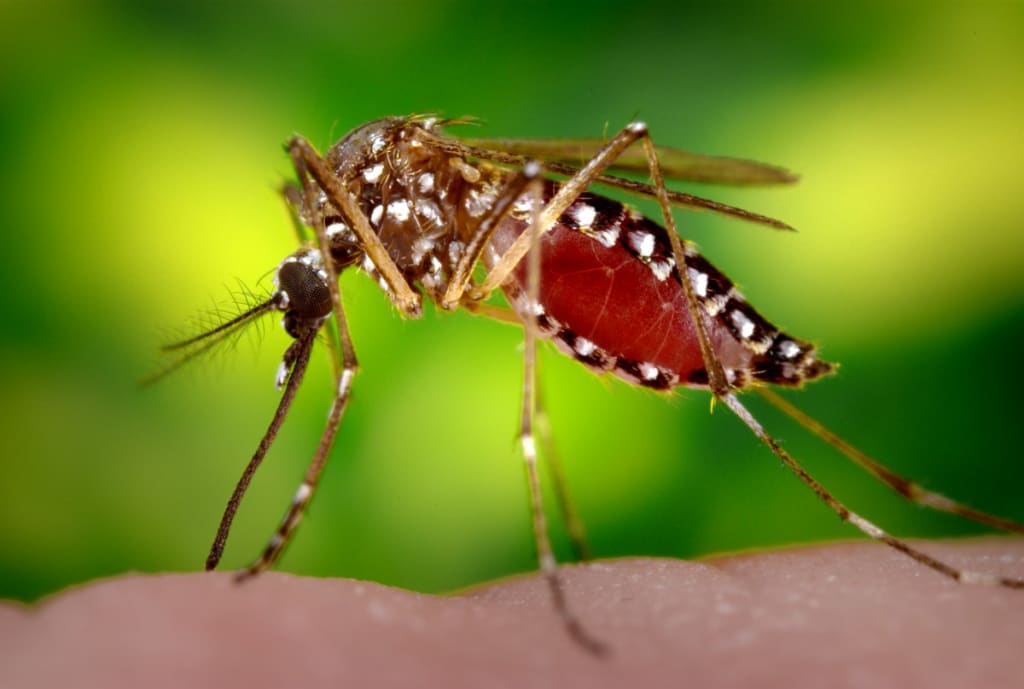
In China, whenever summer is approaching, the residents of the south have to face a problem, that is, mosquitoes. Mosquitoes are almost everywhere, and as long as there is a sanitary dead corner in the home, there can be a breeding ground for mosquitoes. Mosquitoes are annoying when they fly to people's ears and buzz, but what they fear most is the harmful bacteria and viruses they carry. It is precisely because of its ability to transmit many deadly diseases that mosquitoes are listed as "one of the four public enemies of mankind".
In daily life, if you observe carefully, you will find that mosquitoes that appear in the home generally only bite people, and they hardly attack pets. Even outdoor mosquitoes, as long as they detect humans through heat source induction, humans cannot avoid being entangled by mosquitoes. Why are these mosquitoes so entangled with humans? Some time ago, "Current Biology" published a research paper, the paper pointed out that the human habitation lifestyle makes mosquitoes like to bite people.
How did the first mosquitoes target humans?
There are more than 3,000 kinds of mosquitoes in the world, but there are only more than 100 kinds of mosquitoes that like to bite people. Other mosquitoes either rely on the sap of plants to maintain their lives, or they rely on the blood of animals to maintain their lives. But the study pointed out that the early mosquitoes were not just against humans, they were interested in any wild vertebrate. But then humans developed agriculture and animal husbandry, and some species of mosquitoes began to target humans.
Early humans engaged in a life of picking and hunting, so they were very passive in terms of survival. Later, in order to strive for more survival opportunities, humans began to learn to grow crops, domesticate wild animals into livestock and raise them in captivity. These changes in social production occurred in the process of more and more people living together. The development of agriculture requires water sources, and many fields need to dig ditches to introduce water sources, and these water sources have become breeding grounds for early mosquitoes.
Mosquitoes like relatively still waters, so they can lay their eggs in them, and the survival rate of the eggs is relatively high. Farmers walk around the fields every day, and they're a natural target for mosquito bites. Over time, mosquitoes living in and near human settlements began to adapt to the life of sucking human blood as a source of nutrition. This tendency seems to be passed on to the offspring of mosquitoes like genes, causing the offspring to appear obvious to humans. Tendency to bite.
The earliest agricultural development led to farmers becoming the target of mosquito bites, and herdsmen galloping on the grasslands were also targeted by mosquitoes. Research suggests that the earliest mosquitoes living in grasslands may have been feeding on the sap of plants, and later herdsmen and livestock herds appeared on the grasslands, and they began to try to suck the blood of animals. This process is a process of active evolution. After comparing animal blood and plant juice, mosquitoes find that human blood can provide more nutrients and energy, so they tend to suck animal blood, especially human blood. .
How to prove the target tendency of mosquitoes in different regions?
You might think that this is just a speculation by the researchers, that the mosquitoes that like to bite people start biting animals very early, and they bite humans indiscriminately, which does not prove that some mosquitoes show a clear tendency to bite humans. To demonstrate that different targeting propensities exist in mosquito populations, the research team that published the paper captured different species of mosquitoes from southern Africa for experiments.
One group of mosquitoes came from the wild environment, and the other group came from human settlements, and then the experimenters began to conduct a series of comparative experiments. First, in the first experiment, they prepared two transparent glass containers with only one air vent on the top of the container, and then put a guinea pig in each of the containers, and then put different batches of mosquitoes in each to observe the mosquitoes biting the guinea pigs. The results showed that both mosquitoes from the wild and those from human settlements liked to bite guinea pigs.
In the second experiment, they still prepared two glass containers and put two different batches of mosquitoes and guinea pigs in advance. Then the volunteers exposed their arms and placed them on the top of the containers, and the experimenters observed the mosquito bites on the volunteers' arms. The experimental results showed that the containers placed in the wild mosquitoes bit both the human arm and the guinea pig, while the container placed in the colony mosquitoes only bit the human arm.
The experimental phenomenon shows that mosquitoes living in human settlements do show a significant tendency to bite humans, and the researchers believe that there are several reasons behind this phenomenon. First, mosquitoes in colonies are familiar with human odors, so they tend to choose humans when they smell humans. Secondly, mosquitoes in the settlement area live in a high temperature and humid climate for a long time, which is conducive to the reproduction and survival of mosquitoes.
What harm can mosquitoes cause?
The three types of mosquitoes that cause the greatest harm to humans are Anopheles, Culex and Aedes. They are distributed all over the world. The residents of southern China are most familiar with Aedes. These mosquitoes have some common characteristics in reproduction, such as like to breed in large numbers in warm and humid seasons, habitually laying their eggs in water, and the larvae can become mosquitoes after two weeks of development. The greatest harm that mosquitoes bring to humans is the transmission of diseases.
The spread of disease occurs when a mosquito bites a person. Mosquitoes use their mouthparts to pierce the surface of the human skin, and then suck out the blood, and pathogens often enter the human body at this time. A mosquito has already sucked the blood of other animals before transmitting the pathogen, causing the virus in the animal to enter the mosquito, and the mosquito then sucking the blood of the human, causing the virus in the animal to enter the human body.
In this whole process, animals do not need to be in direct contact with humans to complete the transmission of pathogens, and mosquitoes are an important medium for this phenomenon. So how many diseases can mosquitoes transmit? The main diseases that have been discovered so far are dengue fever, malaria, Japanese encephalitis, etc., among which dengue fever is the most "notorious". Dengue fever is an acute infectious disease caused by the dengue virus. Patients usually experience symptoms such as high fever, skin rash, and muscle, bone and joint pain.
Severe cases can even lead to death, so defending against dengue fever has become a battle that humans need to fight every summer. Malaria is a communicable disease with an infection rate second only to dengue fever. This disease has a long epidemic history in my country, and its main transmission vector is the Anopheles mosquito. Anopheles mosquitoes are active in tropical jungle areas, and the breeding situation of the population reaches its peak in summer and autumn, so summer and autumn are also high incidence periods of malaria. Malaria patients may suffer from fatigue, headache, anorexia and other symptoms in mild cases, and in severe cases, it will lead to an imbalance of body temperature regulation and cause huge losses to human health.
Florida passed a special program to control mosquitoes
In addition to posing a threat to human health and safety, mosquitoes can also cause infectious diseases among livestock, and Florida, located in the tropical and subtropical regions of the United States, has long been infested by Aedes aegypti. In May of last year, the U.S. Environmental Agency passed a resolution authorizing the Florida government to implement a large-scale mosquito eradication program. It is understood that the plan will release 750 million transgenic male Aedes mosquitoes into the wild, and then use them to disrupt and destroy the reproduction of female Aedes mosquitoes.
In Florida, where Aedes aegypti mosquitoes are almost ubiquitous, they are not only the main vector of dengue and Zika viruses, but also resistant to pesticides, so the local government is looking for new ways to carry out large-scale mosquito eradication operations In the end, they chose the plan of Oxitec, a British biotechnology company, to release 750 million male mosquitoes. After they combine with the female mosquitoes, the female mosquitoes will not be able to reproduce normally, and even if they can produce offspring, the offspring will not survive.
This year, Florida will continue to promote this mosquito control project, but due to the impact of the epidemic, the local government has not yet set a clear implementation time. After the U.S. Environmental Agency passed this resolution, some scientists in the United States voiced their opposition. They believed that genetically modified mosquitoes may achieve a certain effect in the initial stage, but later they will cause genetic pollution and lead to the emergence of super genetic mosquitoes, which will aggravate the eradication. Mosquito burden.
Why Can't Humans Kill Mosquitoes?
Even if the Florida government eventually implements a genetically modified mosquito eradication program, it will not be able to eliminate all Aedes aegypti mosquitoes in the state, mainly because the mosquito's ability to survive and reproduce is beyond human control. From the perspective of ecological balance, it is reasonable for humans to kill pests such as Aedes, Anopheles, and Culex mosquitoes. and innocent".
Because some species of mosquitoes in nature do not bite people or animals, such mosquitoes usually do not transmit disease and can also help pollinate plants. Secondly, mosquitoes occupy a certain ecological niche in the food chain. Many animals feed on mosquitoes, the most common being frogs. Once the mosquitoes are eliminated, the mosquito's ecological niche will be vacated, and other insects will make up for it, which may not have much impact on ecological stability.
But we can't be sure that the insect that replaces the mosquito is harmless, nor can we guarantee that it will be better controlled than the original mosquito. Furthermore, human beings currently do not have the ability to drive out all the mosquitoes on the earth. It takes a huge amount of manpower and material resources to achieve a little effect, but the mosquito swarm will soon be revived. Therefore, the human war against mosquitoes will be protracted, and there may not even be a winner or loser.
About the Creator
Vicky
The world is so wonderful, let's get to know the world together!
High-Speed Train Crash in Southern Spain Leaves at Least 21 Dead
A devastating high-speed train crash in southern Spain has left at least 21 people dead and dozens injured, shocking the nation and triggering a major emergency response. The incident, which occurred on a busy rail route connecting key southern cities, has reignited concerns over railway safety, infrastructure maintenance, and emergency preparedness in one of Europe’s most advanced rail networks.
By Aarif Lashariabout 2 hours ago in Earth
Icy Chaos in Central and Eastern Europe
Winter has unleashed its fury across central and eastern Europe, leaving travelers frustrated and transport networks struggling to keep up. Over the past few days, freezing rain and ice have wreaked havoc on airports, train stations, and highways — forcing flight diversions, delaying trains, and making roads treacherously slippery. From Vienna to Budapest, Prague to Bratislava, this icy grip has brought travel to a near standstill. Let’s take a closer look at what’s happening, how it’s affecting people on the move, and what it tells us about winter travel in Europe. A Sudden Winter Blow A sudden wave of freezing rain swept across the region, coating runways, rail tracks, and roads with a dangerous layer of ice. Major airports in Austria, Hungary, Slovakia, and the Czech Republic were particularly affected. At Vienna International Airport, operations were temporarily suspended when runways became too slick for flights to land safely. Travelers already in the air had to divert to alternative airports in Munich, Frankfurt, and Venice. Meanwhile, Budapest’s Ferenc Liszt International Airport paused all arrivals and departures, and Prague’s Václav Havel Airport continued operating but at limited capacity. Trains Crawling Through Ice Rail networks weren’t spared. Across Austria, Hungary, and the Czech Republic, ice on tracks and power lines caused delays and cancellations. Austria’s national rail operator, ÖBB, urged passengers to postpone non-essential journeys. In the Czech Republic, travelers at Prague’s main station faced long waits as trains struggled to maintain schedules. Hungary’s tram and suburban rail services were temporarily suspended due to ice buildup on power lines. This combination of black ice, frozen switches, and heavy snowfall has tested the limits of winter infrastructure in Europe. Roads Turn Into Skating Rinks The icy weather didn’t just affect public transport — roads became treacherous, too. Authorities in Slovakia and the Czech Republic warned residents to avoid non-essential travel as highways turned into slippery skating rinks. Accidents and minor collisions were reported, and emergency services were busy responding to dozens of injuries from slips and falls. Even schools weren’t immune: parts of Romania shifted to online learning, keeping children safe during the extreme temperatures, which dropped to around -13°C in some areas. Why This Weather Is So Disruptive Meteorologists point to several factors that made this storm particularly severe: Freezing rain on top of existing snow creates an icy layer that’s extremely hard to clear. Rapidly refreezing surfaces make conditions unpredictable. Temperatures hovering around freezing prevent efficient melting during the day. This “perfect storm” scenario underscores just how vulnerable transport systems are to extreme weather. Even well-prepared airports and rail networks can struggle when weather transitions from snow to freezing rain. Voices From the Ground Passengers took to social media to express their frustration: Crowded airports as travelers scrambled to rebook flights. Train stations packed with delayed commuters, unsure when the next train would depart. Warming centers opened to provide shelter and hot drinks for stranded travelers. For many, a simple trip turned into a test of patience and resilience. Tips for Traveling in Freezing Conditions If you must travel during winter storms, experts recommend: Check flight and train schedules regularly, as delays can change quickly. Allow extra time for travel to avoid missing connections. Consider travel insurance that covers weather-related disruptions. If driving, carry winter essentials: blankets, food, water, and check road conditions before departure. Most importantly, prioritize safety over schedules — icy conditions can change rapidly, making travel risky. A Reminder From Winter This recent chaos in central and eastern Europe serves as a stark reminder of how interconnected transport systems are, and how vulnerable they can be to extreme weather. Flights grounded, trains stalled, and highways turned icy show that winter can bring travel to a halt — sometimes with very little warning. As Europe continues to face volatile winter conditions, travelers and authorities alike are reminded: preparation and flexibility are key. Sometimes, the weather truly has the final say. ❄️🛫🚆
By Muhammad Hassan4 days ago in Earth
Center Stage with Paul Stewart
*** I'm keen to republish the interviews I did for my series with Vocal creators. It's been a few years and I thought it might be nice to revisit these wonderful conversations. I'll be releasing them one at a time for a few weeks/months.
By Heather Hubler3 days ago in Interview



Comments
There are no comments for this story
Be the first to respond and start the conversation.