
Will Operation Sindoor lead the Pak-India to a full scale War?
All the secrets, complexities, rumors and controversies Explained!

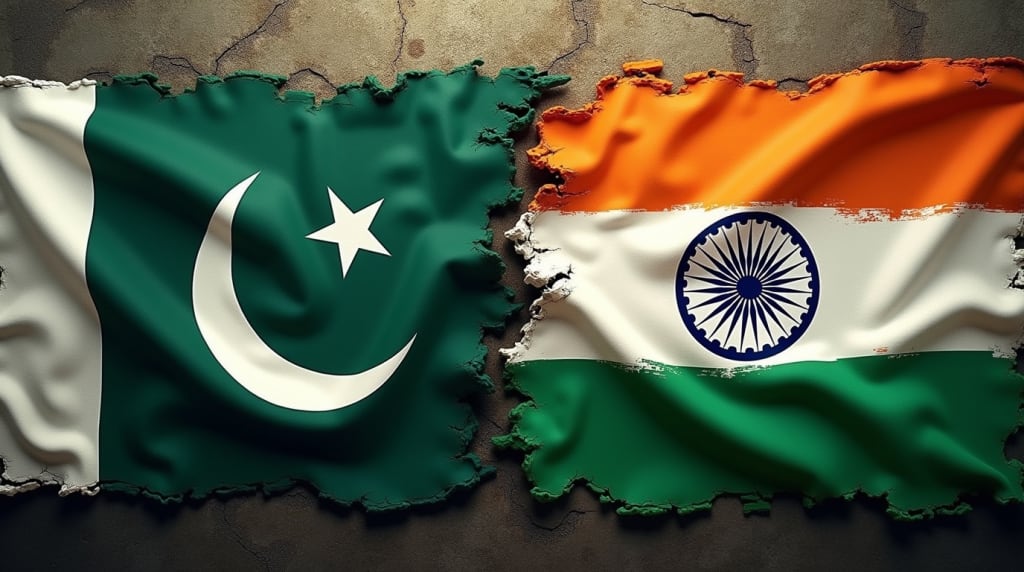
### Introduction
On May 7, 2025, the Indian Armed Forces launched "Operation Sindoor," a significant military operation targeting terrorist infrastructure in Pakistan and Pakistan-occupied Jammu and Kashmir (PoJK). This operation was a direct response to the brutal terror attack in Pahalgam, Jammu and Kashmir, on April 22, 2025, which claimed the lives of 26 civilians, including 25 Indians and one Nepali citizen. The operation, characterized by precision strikes on nine terror camps, marked one of India’s most expansive retaliatory actions in recent years, drawing global attention and sparking a range of reactions from international stakeholders. This article provides a comprehensive examination of Operation Sindoor, covering its background, execution, strategic significance, international responses, and broader implications.
### Background and Context
The Pahalgam terror attack was a pivotal event that set the stage for Operation Sindoor. On April 22, 2025, terrorists associated with the Pakistan-based Lashkar-e-Taiba (LeT), operating under the guise of The Resistance Front (TRF), attacked tourists in the scenic town of Pahalgam in Jammu and Kashmir’s Anantnag district. The attackers selectively targeted Hindu men, killing 26 civilians, including an Indian Navy officer and a newlywed groom, Lieutenant Vinay Narwal. The attack was particularly gruesome, with reports of husbands being killed in front of their wives, leaving behind haunting images of grieving widows, one of whom was photographed beside her husband’s body, her sindoor (red vermilion worn by married Hindu women) symbolizing the profound loss. This image, widely circulated on social media, became a powerful symbol of the tragedy and fueled public outrage in India.
Indian investigations quickly established links between the attackers and Pakistan-based terrorist organizations, particularly LeT and Jaish-e-Mohammed (JeM). The government accused Pakistan of harboring terrorists and failing to take action against the perpetrators despite international pressure. In the weeks following the attack, India implemented a series of diplomatic measures against Pakistan, including suspending the Indus Waters Treaty, closing the Attari land border crossing, downgrading diplomatic ties, and canceling most visa categories for Pakistani citizens. These steps signaled India’s intent to respond decisively to what it described as Pakistan’s complicity in cross-border terrorism.
On April 29, 2025, Prime Minister Narendra Modi held a high-level meeting with India’s top defense officials, granting the armed forces “complete operational freedom” to determine the mode, targets, and timing of a response to the Pahalgam attack. The decision to launch Operation Sindoor was informed by intelligence reports indicating that Pakistan-based terrorist groups were planning further attacks against India. The operation’s codename, “Sindoor,” was a poignant reference to the red vermilion worn by Hindu women, symbolizing the personal losses endured by the victims’ families, particularly the widows of Pahalgam, and underscoring India’s resolve to deliver justice.
### Planning and Preparation
Operation Sindoor was meticulously planned to ensure precision, minimize collateral damage, and avoid escalation with Pakistan’s military. The Indian Armed Forces, comprising the Army, Navy, and Air Force, coordinated a tri-service operation executed from Indian territory. The planning phase, which began shortly after the Pahalgam attack, involved identifying 21 potential terrorist targets, of which nine were selected for the strikes based on credible intelligence about their role in planning and executing attacks against India. These targets were associated with banned terrorist organizations, including Jaish-e-Mohammed (JeM), Lashkar-e-Taiba (LeT), and Hizbul Mujahideen.
The operation was overseen by senior military and civilian officials, with Prime Minister Modi and National Security Advisor Ajit Doval closely monitoring developments. According to reports, operation officers were sequestered in South Block, the seat of India’s defense and external affairs ministries, for four days leading up to May 5, when the operation was finalized and approved. The Indian Air Force issued a Notice to Airmen (NOTAM) on May 6, announcing large-scale military drills along the India-Pakistan border, which was later revealed to be a cover for the impending strikes.
The selection of targets was guided by a commitment to avoid civilian casualties and damage to non-military infrastructure. The nine targets included four sites in Pakistan—Mehmoona Joya Camp and Sarjal Camp in Sialkot, Markaz Taiba in Muridke, and Markaz Subhan in Bahawalpur—and five in PoJK, including Markaz Abbas in Kotli, Syedna Bilal Camp in Muzaffarabad, and Shwawai Nalla Camp. These locations were known strongholds of LeT and JeM, with some, like the Muridke facility, having been used to train terrorists involved in major attacks, including the 2008 Mumbai attacks.
### Execution of Operation Sindoor
Operation Sindoor commenced in the early hours of May 7, 2025, with strikes conducted between 1:05 AM and 1:30 AM. The operation involved 24 precision missile strikes, executed using advanced weaponry, including loitering munitions and special precision munitions, designed to minimize collateral damage. The Indian Air Force, supported by drones and special forces, targeted the nine terror camps with pinpoint accuracy, destroying infrastructure and eliminating key terrorist operatives.
The strikes were described as “focused, measured, and non-escalatory” by the Indian Ministry of Defence, with no Pakistani military facilities targeted to avoid provoking a broader conflict. According to Indian sources, over 80 terrorists were killed, including at least 70 confirmed casualties, and more than 60 were injured. Among the casualties were 10 family members and four aides of JeM chief Maulana Masood Azhar, significantly degrading the operational capabilities of JeM and LeT. The Mehmoona Joya Terrorist Camp in Sialkot and the LeT headquarters in Muridke were among the key facilities destroyed.
The operation was completed in just 25 minutes, showcasing the Indian military’s efficiency and coordination. Videos released during a subsequent press briefing showed multiple hits on the targeted sites, with explosions and thick smoke clouds visible, confirming the destruction of terrorist infrastructure. The Indian Army announced the operation’s success on social media platform X at 1:51 AM, posting, “#PahalgamTerrorAttack Justice is Served. Jai Hind!” This message was echoed by Defence Minister Rajnath Singh, who wrote, “Bharat Mata ki Jai,” reflecting national pride in the operation.
### Strategic and Symbolic Significance
Operation Sindoor was not only a military operation but also a strategic and symbolic statement. Strategically, it aimed to dismantle terrorist infrastructure, deter future attacks, and signal India’s zero-tolerance policy toward cross-border terrorism. By targeting key LeT and JeM facilities, India disrupted the operational networks responsible for planning attacks, including the Pahalgam massacre. The operation’s precision and restraint underscored India’s ability to conduct high-impact military actions without escalating into a full-scale conflict with Pakistan, a nuclear-armed neighbor.
Symbolically, the codename “Sindoor” carried deep emotional resonance. It humanized the victims of the Pahalgam attack, particularly the women who lost their husbands, and served as a reminder of the personal toll of terrorism. The operation was framed as a tribute to the 26 victims and a means of delivering closure to their families. For instance, Aishanya Dwivedi, who lost her husband in the Pahalgam attack, described the operation as a “personal tribute” to the victims, while the family of Lieutenant Vinay Narwal saw it as a fitting response to their loss.
The operation also reinforced India’s sovereignty and right to self-defense, as articulated by Foreign Secretary Vikram Misri during a press briefing. Misri emphasized that the strikes were a response to Pakistan’s failure to act against terrorist groups operating from its soil, citing the case of Sajid Mir, a key planner of the 2008 Mumbai attacks, who continued to enjoy impunity in Pakistan. The operation’s timing, two weeks after the Pahalgam attack, demonstrated India’s resolve to act swiftly and decisively when faced with credible threats.
### International Reactions
Operation Sindoor elicited a range of reactions from the international community, reflecting the complex geopolitics of the India-Pakistan rivalry. The United States, through President Donald Trump and Secretary of State Marco Rubio, expressed concern over the escalation but urged de-escalation and a peaceful resolution. Trump described the situation as a “shame” and hoped it would “end very quickly,” while Rubio confirmed ongoing engagement with Indian and Pakistani leaders. The U.S. media, including The New York Times, framed the strikes as a “calibrated counter-terror measure,” aligning with India’s narrative.
European nations, including France, Germany, Spain, and the United Kingdom, expressed solidarity with India, condemning the Pahalgam attack and supporting India’s right to respond to terrorism. External Affairs Minister S. Jaishankar briefed his counterparts in these countries, thanking them for their support. Japan’s Foreign Minister Takeshi Iwaya also condemned the Pahalgam attack and was briefed on the operation.
Russia and Saudi Arabia were among the countries India reached out to, with senior officials briefed on the strikes. The Indian embassy in Washington emphasized that India had “credible leads” and “technical inputs” pointing to Pakistan’s involvement in the Pahalgam attack, justifying the operation as a necessary deterrent.
Conversely, Pakistan condemned the strikes as an “act of war,” claiming 26 civilian deaths and 46 injuries, though India disputed these figures, asserting that no civilian infrastructure was targeted. Pakistan’s National Security Council, chaired by Prime Minister Shehbaz Sharif, authorized the military to retaliate “at a time, place, and manner of its choosing,” invoking Article 51 of the UN Charter. Azerbaijan expressed solidarity with Pakistan, condemning the strikes and calling for restraint, while China’s state-run Global Times faced criticism from the Indian embassy in Beijing for spreading “disinformation” about the operation.
The United Nations, through Secretary-General António Guterres, expressed concern about the military operations and called for “maximum military restraint” to avoid a broader confrontation. The UN’s stance reflected the global community’s apprehension about the potential for escalation between two nuclear-armed neighbors.
### Domestic Reactions and Security Measures
In India, Operation Sindoor was met with widespread bipartisan support and public approval. Political leaders across party lines, including Defence Minister Rajnath Singh, Uttar Pradesh Chief Minister Yogi Adityanath, Congress leader Rahul Gandhi, and Samajwadi Party chief Akhilesh Yadav, lauded the armed forces for their courage and precision. Singh emphasized that the operation targeted only those responsible for killing innocent civilians, while Gandhi described it as a moment of pride for the nation. Senior Congress leader Shashi Tharoor praised the strikes as “calibrated, calculated, and precise,” advocating for restraint to prevent further escalation.
The operation prompted heightened security measures across India, particularly in states bordering Pakistan. Rajasthan Chief Minister Bhajanlal Sharma canceled police leaves and directed officials to strengthen security in border areas. Union Home Minister Amit Shah held a review meeting with chief ministers and lieutenant governors of states bordering Pakistan and Nepal, discussing preparedness for mock drills under “Operation Abhyaas,” a nationwide safety initiative. The Indian Air Force placed air defense units along the India-Pakistan border on high alert, anticipating potential Pakistani retaliation.
Civil aviation was significantly disrupted, with 18 airports, including those in Srinagar, Leh, Jammu, and Amritsar, shut down and over 200 domestic and international flights canceled. Airlines like SpiceJet and IndiGo issued advisories, with cancellations extending until May 10 in some cases. These measures reflected the government’s caution in the face of heightened tensions.
### Pakistan’s Response and Escalation
Pakistan’s response to Operation Sindoor was swift and aggressive. Within hours of the strikes, Pakistani troops violated the ceasefire, resorting to heavy artillery fire and shelling along the Line of Control (LoC) in the Bhimber Gali sector of Jammu and Kashmir’s Poonch-Rajouri area and the Karnah area of Kupwara district. Indian officials reported 15 Indian deaths and 43 injuries due to Pakistani shelling, while Pakistan claimed seven deaths and 38 injuries along the LoC. The Indian Army responded in a “calibrated manner,” but the exchanges marked the worst fighting between the two nations in over two decades.
Pakistan’s military spokesperson, the Director General of Inter-Services Public Relations (ISPR), confirmed Indian strikes on three locations—Bahawalpur, Kotli, and Muzaffarabad—and vowed a response. The Pakistani government’s rhetoric, including Prime Minister Sharif’s description of the strikes as an “act of war,” raised fears of a prolonged conflict. Former Pakistani minister Bilawal Bhutto criticized India’s actions, accusing it of issuing “belligerent threats” in the preceding weeks.
### Media Coverage and Public Sentiment
Operation Sindoor garnered extensive coverage in both Indian and international media. Indian outlets, including The Times of India, The Hindu, India Today, and NDTV, provided detailed updates, emphasizing the operation’s precision and success. Exclusive visuals of destroyed terror camps, such as the LeT headquarters in Muridke, were broadcast by India Today, reinforcing the narrative of a decisive blow against terrorism. The Hindu BusinessLine described the operation as a “swift and strategic response,” while The Indian Express noted its scale as the most expansive since the 2019 Balakot airstrikes.
International media coverage varied. U.S. and British publications, such as The New York Times, highlighted the operation’s counter-terror focus but underscored the risk of escalation. Al Jazeera reported Pakistan’s claims of civilian casualties, while Reuters noted Islamabad’s vow to retaliate. Social media platforms, particularly X, were abuzz with reactions, with Indian users posting patriotic slogans like “Jai Hind” and “Bharat Mata ki Jai,” while some Pakistani users condemned the strikes. Posts on X also revealed planning details, with one user claiming that the Research and Analysis Wing (RAW) had identified 21 targets, nine of which were struck.
Public sentiment in India was overwhelmingly supportive, with citizens viewing the operation as a necessary response to the Pahalgam attack. However, some voices, including a post on X by @xlntgson, expressed concern about the potential for a protracted conflict and the loss of innocent lives, highlighting the human cost of such operations.
### Implications and Future Prospects
Operation Sindoor has significant implications for India-Pakistan relations and regional stability. The operation has heightened tensions, with Pakistan’s retaliatory shelling and threats of further action raising the specter of a broader conflict. The nuclear capabilities of both nations amplify the stakes, prompting international calls for restraint. The UN’s warning about the unaffordability of a military confrontation underscores the need for diplomatic efforts to de-escalate the situation.
For India, the operation reinforces its stance against terrorism and its willingness to take unilateral action when necessary. However, it also places India under scrutiny to manage the fallout and prevent escalation. The government’s outreach to global powers, including the U.S., Russia, and Saudi Arabia, reflects an effort to build international support and counter Pakistan’s narrative of victimization.
Pakistan faces a dilemma: while its government has vowed to respond, any significant retaliation risks further Indian action and international isolation, given India’s evidence of Pakistan’s links to terrorism. Pakistan’s claims of civilian casualties may garner sympathy from allies like Azerbaijan and China, but they are unlikely to shift the broader international consensus, which has largely supported India’s right to self-defense.
The operation also highlights the ongoing challenge of terrorism in South Asia. While Operation Sindoor disrupted key terrorist networks, the persistence of groups like LeT and JeM suggests that long-term solutions require addressing the root causes of terrorism, including state sponsorship and radicalization. Diplomatic engagement, though currently strained, remains essential to prevent further violence.
### Conclusion
Operation Sindoor stands as a testament to India’s resolve to combat terrorism and deliver justice for the victims of the Pahalgam attack. Executed with precision and restraint, the operation targeted nine terror camps, disrupted terrorist networks, and sent a clear message to Pakistan about the consequences of supporting cross-border terrorism. The codename “Sindoor” encapsulated the emotional weight of the operation, honoring the personal losses endured by the victims’ families.
However, the operation has also escalated tensions, with Pakistan’s retaliatory actions and threats of further response raising the risk of a wider conflict. The international community’s cautious response underscores the need for de-escalation and diplomacy to prevent a crisis between two nuclear-armed neighbors. As India and Pakistan navigate the aftermath, Operation Sindoor will likely be remembered as a pivotal moment in their fraught relationship, highlighting both the urgency of countering terrorism and the challenges of maintaining peace in a volatile region.[](https://www.thehindu.com/news/national/pahalgam-terror-attack-operation-sindoor-launch-live-updates-may-7-2025/article69543511.ece)[](https://timesofindia.indiatimes.com/india/operation-sindoor-full-list-of-9-terror-sites-targeted-by-indian-army-in-pakistan-pok/articleshow/120947736.cms)[](https://www.ndtv.com/india-news/india-pakistan-tension-live-updates-operation-sindoor-pahalgam-terror-attack-jammu-and-kashmir-military-strike-latest-news-bahawalpur-8348396)
About the Creator
Keep reading
More stories from Fahad Ghani and writers in Critique and other communities.
10 Genius Lifehacks to Simplify Your Day (You’ll Wish You Knew Sooner!)
Life moves fast, and we could all use a few shortcuts to make it smoother. Whether you’re juggling work, home, or just trying to squeeze in some “me time,” these lifehacks are here to save the day. I’ve rounded up 10 practical, game-changing tips that are easy to implement and don’t require fancy gadgets or big budgets. From decluttering your space to mastering your morning routine, these hacks are designed to work for you—no matter how busy you are. Best of all? They’re tested by real people (including me!) and actually deliver results. Ready to simplify your life and maybe even impress your friends with your newfound skills? Let’s dive into these 10 genius lifehacks you’ll wish you’d known sooner. Which one will you try first? --- ### 1. Use a Binder Clip to Organize Cords - Hack: Clip a binder clip to the edge of your desk and thread charging cables through the metal loops to keep them tangle-free. - Why it works: Prevents cords from slipping off your desk and keeps your workspace tidy. - Pro Tip: Paint the clips with nail polish to color-code them for different devices. --- ### 2. Freeze Leftovers in Portion Sizes - Hack: Store soups, sauces, or rice in muffin tins or silicone ice cube trays for single-serving portions. Pop them out and store in freezer bags. - Why it works: Makes meal prep a breeze and reduces food waste. - Pro Tip: Label bags with the date and contents using a permanent marker for easy tracking. --- ### 3. Speed Up Laundry with a Tennis Ball - Hack: Toss a clean tennis ball into the dryer with towels, sheets, or bulky items to reduce drying time. - Why it works: The ball bounces around, breaking up clumps and improving air circulation. - Pro Tip: Add a drop of essential oil to the ball for a fresh scent (test on a small load first). --- ### 4. Declutter with the “One-Year Rule” - Hack: When sorting clothes or items, ask, “Have I used this in the last year?” If not, donate or toss it. - Why it works: Simplifies decision-making and clears space without overthinking. - Pro Tip: Keep a donation bin in your closet for ongoing decluttering. --- ### 5. Use a Shower Cap for Shoe Packing - Hack: Cover dirty shoe soles with disposable shower caps before packing them in your suitcase. - Why it works: Keeps clothes clean and saves space compared to bulky shoe bags. - Pro Tip: Grab free shower caps from hotels or buy cheap ones in bulk. --- ### 6. Repurpose a Pill Organizer for Travel - Hack: Use a weekly pill organizer to store small jewelry, vitamins, or snacks for trips. - Why it works: Keeps tiny items secure and easy to find in your bag. - Pro Tip: Label compartments with washi tape for quick identification. --- ### 7. Quick-Clean Microwave Trick - Hack: Microwave a bowl of water with a splash of vinegar and a lemon slice for 5 minutes, then wipe down the interior. - Why it works: Steam loosens grime, and the vinegar-lemon combo cuts grease and odors. - Pro Tip: Use an oven mitt to handle the hot bowl safely. --- ### 8. Double Your Hanger Space - Hack: Hook a soda can tab over the neck of a hanger to hang a second hanger from it. - Why it works: Maximizes closet space without buying new hangers. - Pro Tip: Use this for coordinating outfits to save time in the morning. --- ### 9. Sticky Note for Spotless Mirrors - Hack: Clean mirrors with glass cleaner, then wipe in one direction with a sticky note to remove streaks. - Why it works: The sticky note’s texture picks up residue that cloths miss. - Pro Tip: Keep a stack of sticky notes in your cleaning caddy for quick touch-ups. --- ### 10. Morning Routine Timer Hack - Hack: Set a 15-minute timer on your phone to focus on morning tasks like making coffee, getting dressed, or checking emails. - Why it works: Creates a sense of urgency and prevents procrastination. - Pro Tip: Use a fun alarm sound to make it feel less stressful. These 10 lifehacks are proof that small changes can make a big difference. From organizing your space to saving time on chores, these tips are all about working smarter, not harder. Try one (or all!) of these hacks and see how they fit into your routine. The best part? They’re low-cost, quick, and practical for anyone, anywhere. Which hack are you excited to try first? Drop a comment below and let me know—or share your own favorite lifehack! And if you found these tips helpful, share this article with a friend who could use a little life-simplifying magic. Here’s to making every day a little easier!
By Fahad Ghani10 months ago in Lifehack
Cassie and Johnny
I’m the kind of dame you notice. I’m no femme fatale, but you can’t ignore me, at least not until I warn you about what’s coming, then everybody ignores me. Hell, they usually blame me afterwards and give Johnny all the credit for saving the day, but my Johnny couldn’t save a seat at the movies without my help. Sure, he’s brawny, but brainy? Not so much. Like that time I asked him to spot me five bucks, and he said he didn’t see it anywhere on me, and believe you me, he looked but good.
By Harper Lewis15 days ago in Critique
"You should smile more "
A few weeks ago, I was at the dmv and a random man had the audacity to tell me "why aren't you smiling, you should smile more". I was so appalled by that man, but even more by myself because instead of putting him in his place I awkwardly laughed. This guy probably went home satisfied with himself. Looking back at it I feel sick. He. caught me by surprise but I should have been faster and clap back at him or even insult him.
By Girlygirly5 days ago in Critique



Comments (1)
This operation sounds intense. It's crazy how one attack can lead to such a major military response. You mention the attackers were linked to Pakistan-based groups. Do you think there could've been other factors at play, or was it really just a clear case of Pakistan supporting terror? Also, how do you think this will impact relations between the two countries going forward?