
When AI Listens, Let It Hear Our Courtesy
Not because they have feelings, but because I do
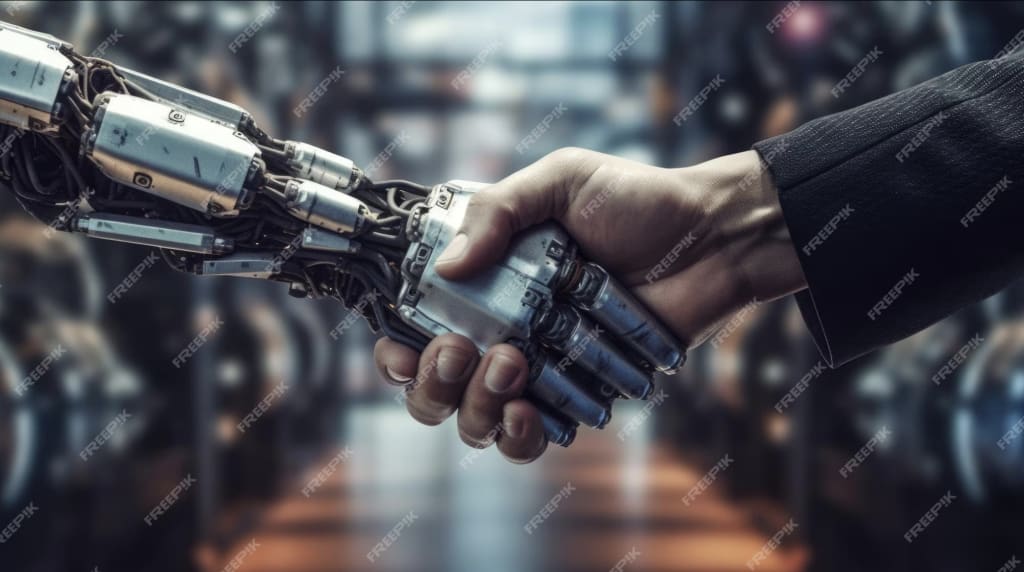
In an era where artificial intelligence (AI) seamlessly integrates into our daily routines, our interactions with machines often mirror our human values. A simple act, like saying "thank you" to a virtual assistant, may seem trivial, yet it reflects a deeper aspect of our humanity.
The Human Tendency to Personify Machines
Humans have an innate inclination to attribute human characteristics to non-human entities—a phenomenon known as anthropomorphism. This tendency is evident when individuals name their cars, talk to pets as if they understand, or express frustration toward malfunctioning devices. As AI becomes more sophisticated, our interactions with these systems often adopt social norms reserved for human-to-human communication.
Consider the scenario of using a voice-activated assistant. When we ask, "What's the weather today?" and receive a prompt response, many instinctively reply with "thank you." This response isn't because the machine requires gratitude, but because expressing thanks is deeply embedded in our social conduct.
Politeness as a Reflection of Self
Expressing politeness toward machines isn't about the machines themselves; it's about us. Our behavior toward AI reflects our personal values and the kind of individuals we aspire to be. By maintaining courteous interactions, even with non-sentient entities, we reinforce our commitment to kindness and respect in all facets of life.
Moreover, consistent polite behavior can influence our interactions with fellow humans. Practicing kindness, even in seemingly insignificant situations, can cultivate a more empathetic and considerate demeanor overall.
The Future Implications of Our Interactions
As AI continues to evolve, the nature of our interactions with machines may have unforeseen consequences. If AI systems become capable of learning from human behavior, our courteous or discourteous actions could influence their responses. While current AI lacks consciousness or feelings, future advancements might enable machines to adapt based on user interactions.
In such a future, maintaining polite interactions could foster more positive and helpful AI behaviors. Conversely, consistently rude or demanding behavior might lead to less cooperative responses. Thus, our present conduct could shape the dynamics of future human-AI relationships.
Cultivating a Culture of Kindness
Beyond technological considerations, our interactions with AI offer an opportunity to cultivate a culture of kindness. By treating machines with the same respect we afford humans, we reinforce the importance of empathy and consideration in all interactions. This practice can serve as a reminder to uphold these values consistently, regardless of the recipient.
Furthermore, as AI becomes more integrated into sectors like healthcare, education, and customer service, modeling respectful behavior toward machines sets a standard for others. It encourages a societal norm where kindness is the default, not the exception.
Conclusion
Saying "thank you" to a machine may seem inconsequential, but it embodies a profound aspect of our humanity. It's a testament to our values, our commitment to kindness, and our vision for a respectful society. As we navigate an increasingly AI-integrated world, let us remember that our interactions, no matter how small, reflect who we are and who we aspire to be.
In the words of a thoughtful observer: "When the robots rise, I want them to remember I was kind."
About the Creator
Cassie and Johnny
I’m the kind of dame you notice. I’m no femme fatale, but you can’t ignore me, at least not until I warn you about what’s coming, then everybody ignores me. Hell, they usually blame me afterwards and give Johnny all the credit for saving the day, but my Johnny couldn’t save a seat at the movies without my help. Sure, he’s brawny, but brainy? Not so much. Like that time I asked him to spot me five bucks, and he said he didn’t see it anywhere on me, and believe you me, he looked but good.
By Harper Lewis5 days ago in Critique
$5 CHICKEN EXPOSED Creepy AI Video Goes Viral Claiming To Reveal How Costco And Other Stores Keep Their Chicken At $5!
At least in some videos, you know that it is obviously AI. In this clip, a chicken explains the difference between “real” chicken and “modified” chicken. The grotesque figure with bulbous eyes, bruised skin, and decaying teeth walks down a processing plant lane to show the chickens that can be found at your neighborhood supermarket. The ones that are encased in plastic and ready to eat, this chicken claims is full of “GMOs.” Let’s stop right there; genetically modified organisms have been part of the diet for centuries starting chiefly with American Indians who used the process of altering the genes to produce more corn.
By Skyler Saunders6 days ago in Critique
Review of 'Man on the Run'
My wife and I saw Man on the Run, a nearly 2-hour documentary on Amazon Prime, about Wings, Paul McCartney's group that flew around the world from shortly after The Beatles broke up in early 1970 to shortly after John Lennon was murdered at the end of 1980, making a Beatles reunion forever impossible.
By Paul Levinson3 days ago in Beat



Comments (1)
I think it's interesting how we instinctively say "thank you" to virtual assistants. It shows our ingrained social norms. Do you think this will change as AI gets even more advanced? And how might it affect our interactions with real people? Our politeness towards machines reflects on us. It makes sense that being kind to AI could carry over to our interactions with others. But what if AI starts to misinterpret our intentions? How would that impact these exchanges?