
The Three Brunettes of Postmodern Teen Media:
A Love Letter from a Sarcastic, Cerebral Palsy-Ridden, Coffee-Fueled, Thirty-Something Aspiring Writer

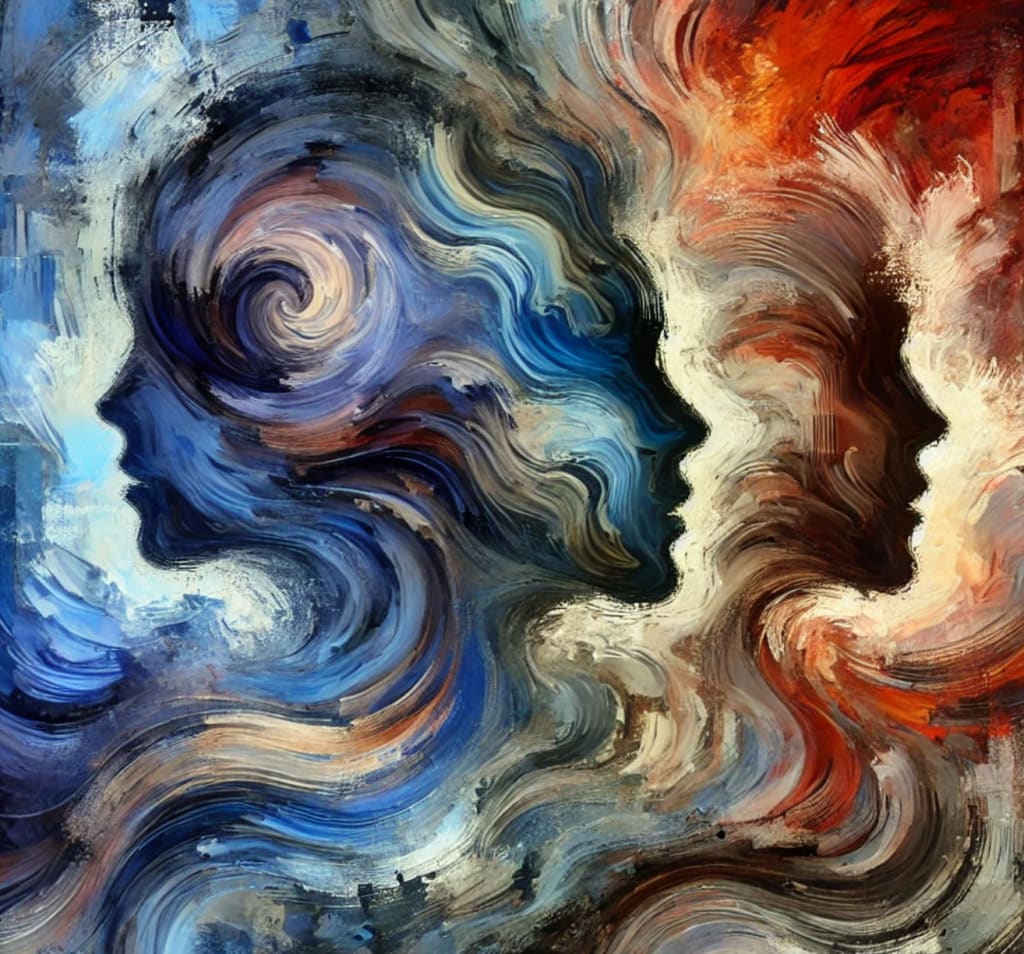
Three fictional women have lingered in my mind: Joey Potter, Effy Stonem, and Lorelai Gilmore. They form a trinity of postmodern teen media—the reluctant ingénue, the brooding mess, and the fast-talking iconoclast. These characters are the patron saints of every girl who has ever rolled her eyes at the world and then written a poem about it.
As a thirty-something writer with cerebral palsy who has often been described as a bit too glib, too quippy, or simply too much, these characters represented more than just entertainment. They proved to me that my inner monologue had a place in the world, even if it had to be expressed in 300 words per minute, preferably over a cup of coffee.

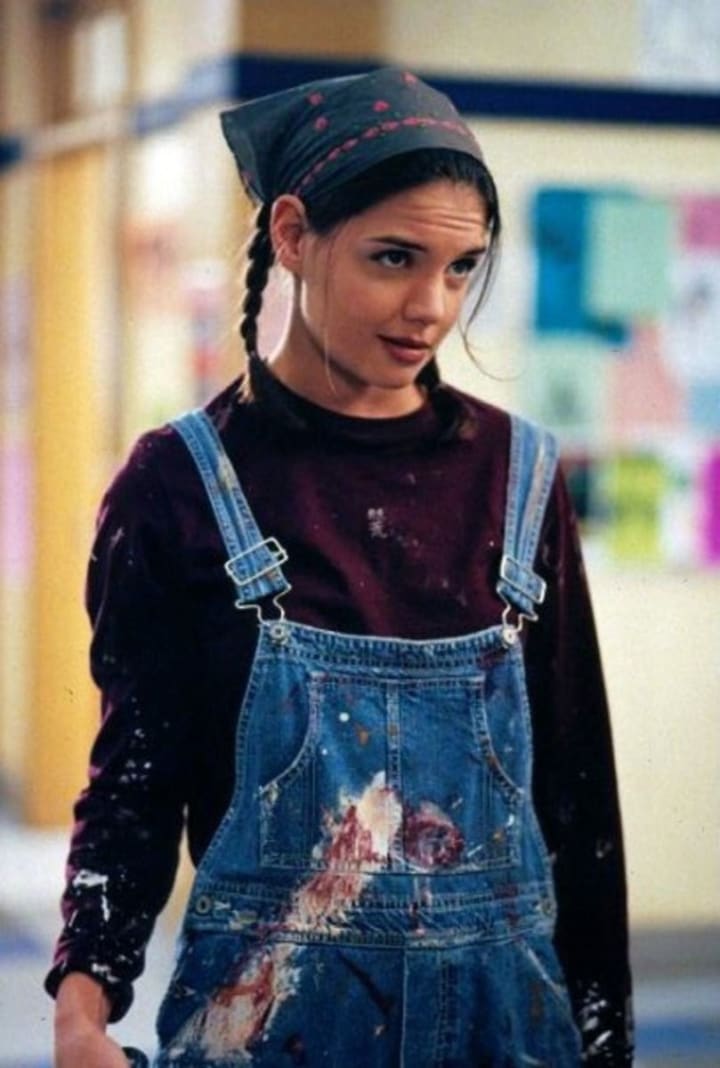
Joey Potter: The Patron Saint of Overachieving Melancholy.
Joey Potter walked the halls of Capeside High with the air of a girl who had read too much Hemingway and took it personally. She was poor but brilliant, angsty but determined, and had an uncanny ability to climb through windows that defied all logic. If Dawson’s Creek had been set in a world that acknowledged disability, Joey would have been the kind of person who got inexplicably awkward around me—not out of cruelty, but because she would have been painfully aware of her own privilege and would have overcompensated with a poorly executed feminist monologue. And yet, she was the girl I wanted to be: smart, scrappy, and the one everyone underestimated until she dropped a literary reference that left the room reeling. Joey was proof that being a little too serious, a little too extra, wasn’t a bad thing; it was a superpower.
Like Joey, I lost my mother, but more than once. She was diagnosed with cancer when I turned 22, and dementia shortly after, and the pain of her decline left lasting scars. My father couldn’t cope with her illness, often lashing out, which resulted in my own suffering. A close friend turned his back on me, doubting my truth when I needed support the most, which added another wound to bear.
“Always believe women” became a harsh realization for me. I faced a choice between silent complicity as a daddy's girl, clinging to the only caregiver I had left, or a lonely escape. But running meant facing a bleak future with my father in jail and us in adjoining rooms at a care home hellhole. I recently bought a brick from the infamous "Ask Me to Stay" wall to remind myself of the theme of that storyline: possibility—that's what I still am.

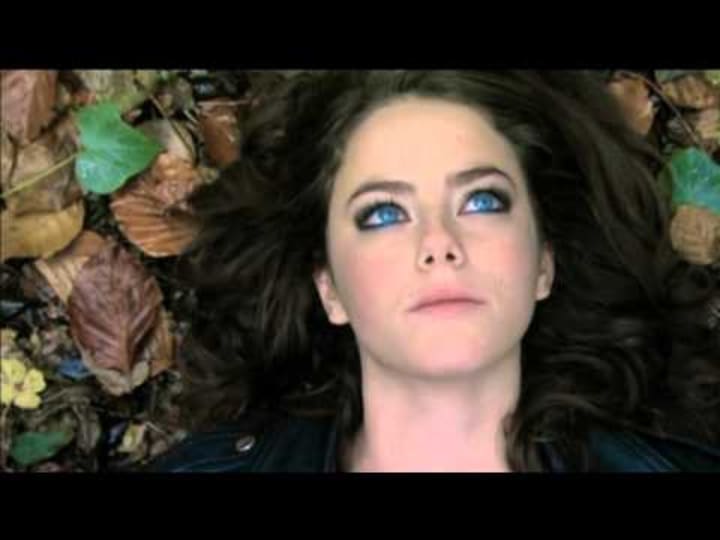
Effy Stonem: Patron Saint of Beautiful Chaos
Then there’s Effy from Skins UK. The girl who barely spoke, but when she did, her words were either profound or cutting. She was the human embodiment of every Sylvia Plath poem you read while trying to cultivate an air of mystery. Effy was damaged and unapologetic, drifting through life like a tragic poem scrawled on the back of a cigarette pack. She represented the messy, rebellious streak that I admired but wasn’t brave enough to embrace.
Effy was also me, struggling to cope with my trauma while projecting an image of having it all together. I perfected the art of appearing fine, wielding sharp wit as armor, and ensuring no one saw the cracks beneath the surface. Effy’s detached chaos resonated with me because I understood what it was like to feel like a storm in a teacup—controlled outside but always on the brink of shattering inside. I wanted to party and make reckless decisions, but that wasn’t an option, and the desire to be wanted while remaining invulnerable—I got it. Because maintaining the illusion of control was easier than admitting how broken I felt.

Lorelai Gilmore: Patron Saint of My Inner Smartass
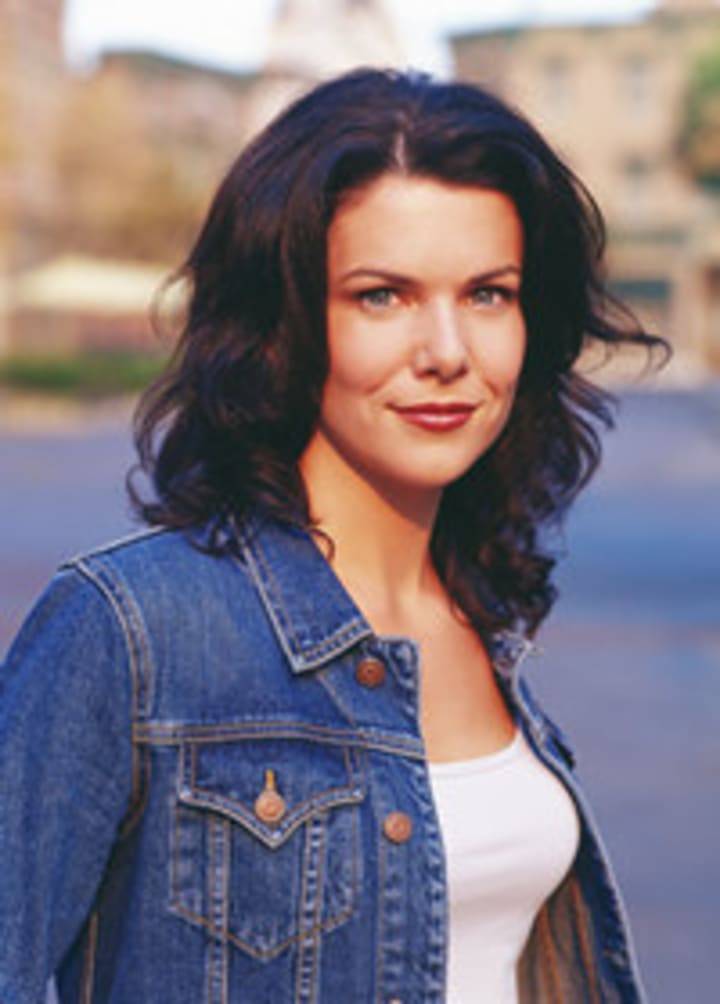
If Joey and Effy were the parts of me that craved something more, Lorelai was the part of me that was already there, just waiting for permission to speak. Every time Lorelai fired off a sarcastic, rapid-fire comeback, it was like the universe was giving me permission to say the things I wanted to say but never could. Lorelai’s worst moments of sarcastic ire feel like every comeback my inner smartass has ever wanted to unleash but never had the audience (or, let’s be real, the lung capacity) for. She was a woman who built her own world, one caffeinated quip at a time, and refused to be anything other than exactly who she was. In her, I saw the woman I wanted to be: witty, resilient, and entirely unwilling to conform to whatever nonsense society expects from women who don’t fit a prescribed mold.
Ironically, Gilmore Girls was my dad’s favorite show—something neither of us expected to find common ground in. For a man who spent so much time trying to make me fit, it was baffling (and a little hilarious) to watch him fully invest in the fast-talking antics of Stars Hollow. His favorite character? Kirk. Of course. The neurotic, socially awkward, absurdly multi-talented weirdo who was always hustling, always trying, always just a little bit off-center. Maybe in Kirk, my dad saw a reflection of himself—someone who didn't quite fit the mold, someone who had to work twice as hard to prove himself, even in the most ridiculous ways. Or maybe he just found Kirk funny. Either way, it was one of the few things we both loved, a shared moment of weird, unexpected camaraderie in a relationship built on misunderstandings and unspoken disappointments.
The Richard and Emily Gilmore Problem (But This Time It's Personal)
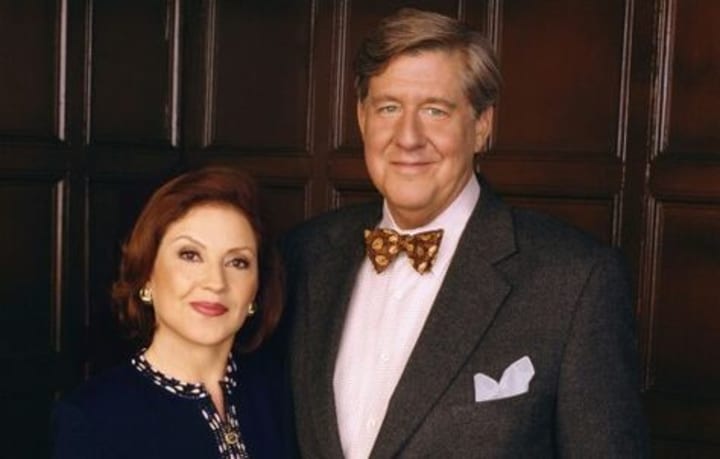

Every inner rebel seems to stem from a version of Richard and Emily Gilmore—except in my case, their roles are reversed. My mom is Richard, the pragmatic one who tries to keep the peace, always seeking to understand and encourage a dreamer. My dad, on the other hand, is Emily—except instead of enforcing old-money etiquette, he has spent a lifetime almost wishing I were more disabled, maybe even mentally disabled, so it would be easier to swallow. Mourning the milestones his old-world Eastern European outlook never allowed him to believe I would achieve—like getting married or moving out. Joke’s on him, though. I’ve been living with a wonderful man for seven years (granted, he’s old... er, but I can’t handle millennial gamers). I’m getting my master’s degree from a school in England. I’m fighting ableism one word at a time and writing a multi-volume memoir just to prove my dad wrong. And I’m doing a damn good job.
Gone are the days of me feeling like bate, watching my father use my disability to wrangle deals through sympathy at the store—well-meaning but exploitative. (See: "The Art of the Deal".) I am not an afterthought, a tragic side character, or someone’s inspirational anecdote. I am the protagonist of my own damn story.

A Life of Literary References and Coffee
I have lived in strange literary references, always knowing things that ‘normal’ people don’t, my nose perpetually buried in a book or sketchpad, waiting to turn everything into a story. I have begged coffee in all its forms to be my armor, my life source, and my personality trait. And in Joey, Effy, and Lorelai, I see three different versions of rebellion, intelligence, and survival—all necessary ingredients for a girl who has spent her life fighting for a voice, only to find that maybe, just maybe, these three have been whispering in my ear all along—Joey, reminding me to fight for what I want; Effy, daring me to embrace the chaos; and Lorelai, insisting that no matter how sharp my words, they’re still mine to wield. So I’ll keep writing, keep rolling my eyes, and keep making the world just a little more uncomfortable—one quip at a time.

**Author’s Note**
If you had told my teenage self that one day I’d be writing an entire essay about three fictional brunettes and how they shaped my existence, I would have rolled my eyes so hard they’d still be stuck in the back of my head. And yet, here we are.
This piece, like the subtitle states, is part love letter, part existential rant, and part proof that I was absolutely the kind of kid who tried to use SAT words in casual conversation. I wrote this because pop culture has always been more than just background noise for me—it’s been a survival mechanism, a mirror, and, occasionally, a way to make sense of a world that often insists I take up less space. Joey, Effy, and Lorelai weren’t just characters; they were proof that being smart, sarcastic, and stubborn wasn’t a flaw—it was a feature.
I also wrote this because irony is the lifeblood of my existence, and nothing proves that more than the fact that *Gilmore Girls*—a show about fast-talking, independent women—was my father’s absolute favorite. If there was anything we could agree on, it was that Stars Hollow was a place worth visiting, even if we had wildly different reasons for loving it. My dad, ever the connoisseur of eccentric weirdos, adored Kirk. And honestly? Same.
And, if I’m being perfectly honest, this piece is also what happens when one of the advisors in your master’s program gets a little sexist and tells you that you sound unsympathetic and have an attitude problem in your tone. If I have an attitude problem, it’s only because I’ve learned that sharp words are sometimes the only tools left when the world refuses to listen.
So, if you’ve ever found yourself in a parasocial relationship with a fictional character, if your personality has ever been 40% caffeine and 60% literary references, or if you’ve ever used sarcasm as a coping mechanism—don’t fight it. Use it.
If you enjoyed this, consider subscribing for more literary musings, existential rants, and pop culture deep dives. And if you really liked it, tips are always appreciated—because caffeine and books aren’t going to buy themselves.
About the Creator
Mirela Todorovic
Mirela Todorovic, aka Melz Todd—Bosnian-born, Toronto-based, and fueled by poetry, stories, and sarcasm. Exploring identity and disability with wit and heart. Subscribe, tip, or just stick around for the chaos!
Keep reading
More stories from Mirela Todorovic and writers in Critique and other communities.
Who Is Clavicular? The Looksmaxxing Streamer Who Ran Over A Stalker In His Cybertruck
What is so damaging to this current culture is the ant-intellectualism which pervades nearly every element of it. Clavicular, real name, Braden Peters equivocates physical form with getting women, making money, and overall being a strong “man.”
By Skyler Saunders22 days ago in Critique
Catching Up
I know I have not been reading and commenting a lot these past couple weeks, but I have been reading and writing in my old-fashioned composition books and preparing some of those writings for here on Vocal. I have also been researching and writing my study books. I do have one wish for my subscribers here on Vocal.media.com and that is that everyone will have a great year. I do have a request and would like some follow-up on some of my older work and would you guys read or re-read my material and share your thoughts for I am thinking of putting together an anthology.
By Mark Graham4 days ago in Critique


Comments
There are no comments for this story
Be the first to respond and start the conversation.