
the relevance of post truth ?
what is the ultimate truth?
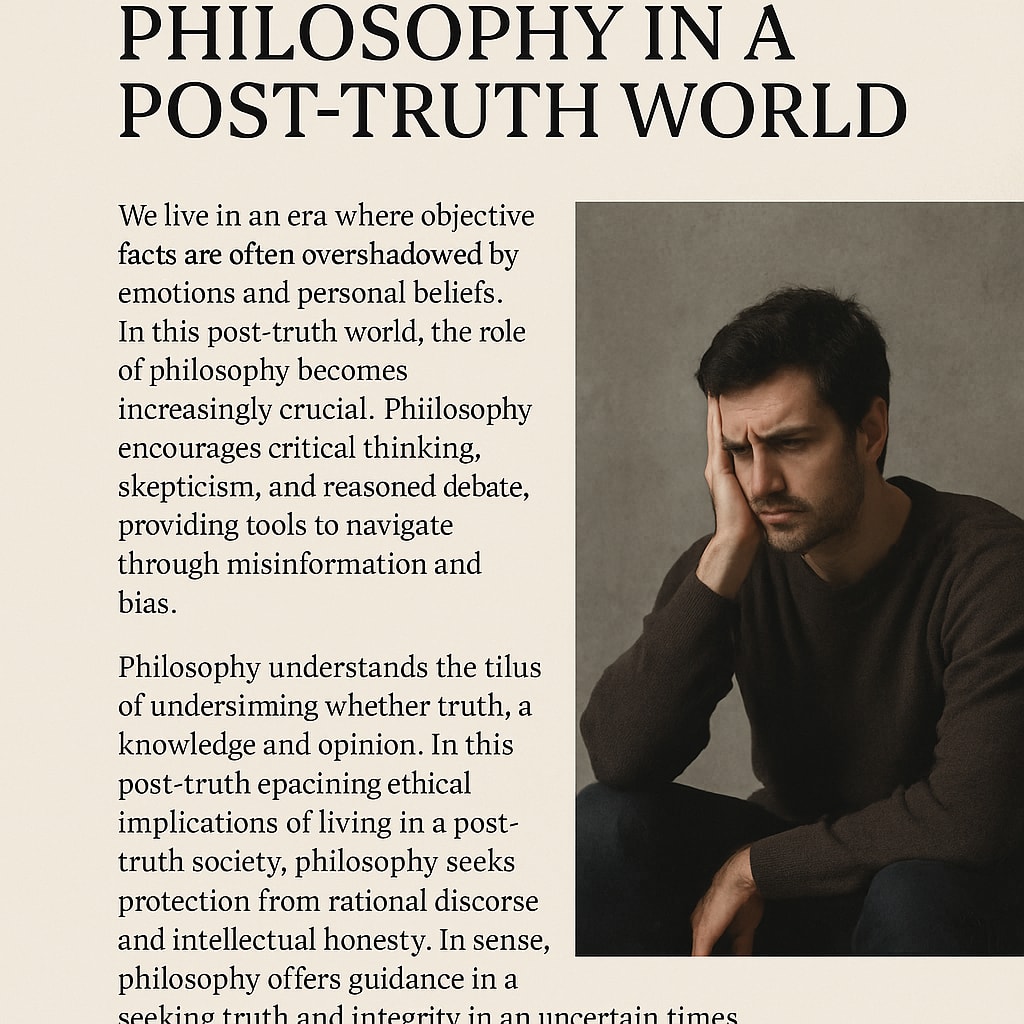
We are in the age of post-truth where facts are being overtaken by emotions, personal belief, and powerful media narratives. It is typically understood to refer to the post-truth era. This is an era where appeal to emotion and ideology are likely to overpower objective facts. Thus understood, philosophy becomes not just relevant—but essential.
What Does 'Post-Truth' Mean
The term "post-truth" entered global public awareness after such political events as Brexit and the 2016 U.S. presidential election. It describes a state where people's opinion is more driven by emotional appeals and group identity rather than evidence and rational argumentation. Social media, political polarisation, and disinformation campaigns have all contributed to this condition.
Truth, once the foundation for rational debate, is now widely thought of as relative or negotiable. The shift has practical consequences: What is truth? Who decides it? And how do we know a fact from an opinion? These are issues that have long vexed philosophy.
Philosophy's Role in a Post-Truth World
Philosophy provides us with the means to meet the challenges of misinformation, relativism, and mental sloth. Here's how:
Critical Thinking: Philosophy instructs us on how to build, dissect, and critique arguments. Philosophy sharpens the mind to recognize logical fallacies, spot biases, and challenge assumptions. These are important in a world of deceptively worded headlines, viral lies, and manipulative speech.
Epistemology: Epistemology is the branch of philosophy that deals with knowledge—what we know, how we know it, and why we think what we do. During a post-truth world where "my truth" is accorded the same status as objective truth, epistemology tells us that all statements are not created equal.
Ethical Consideration: Philosophy prompts serious consideration about right and wrong, truth and falsehood, and the responsibilities that we owe each other in society. It questions: Is it ethical to purposefully spread false information? What are our duties to seek and utter the truth?
Why It Matters for Society
An operating democracy depends on informed citizens and rational public debate. Democratic dialogue is damaged when truth is sacrificed. Individuals retreat into ideology bubbles, faith diminishes, and manipulation takes the place of genuine conversation.
Philosophy promotes intellectual humility—saying what we don't know—and encourages open-mindedness, dialogue, and seeking shared understanding. These are the ideals that we so desperately require today.
Philosophy in Everyday Life
Philosophy is not just for scholars. Its techniques can be employed to question the news, question social media phenomena, and question our own assumptions. For example, when we're given a contentious proposition, philosophy teaches us not to jump on the bandwagon or to instinctively believe it, but to pause and query: What's the evidence for this? Who would benefit if I believed this?
In the classroom, philosophy can teach children to be good citizens. In journalism, it can instill honesty and integrity. In politics, it can encourage leaders to debate forthrightly, not in slogans and sound bites.
About the Creator
‘We have enough’: Godfrey renews call for Black entertainers to stop seeking white validation after BAFTAs, praises Image Awards
DEI must die. It’s been far too long for Foundational Black Americans (FBA) and tethers to come up and say things like #OscarsSoWhite. So what? NAACP Image awards are about RAH, Representation, Agency, and Honor. Black people have to stop crying about their snubs at award shows that often overlook them.
By Skyler Saunders3 days ago in Critique




Comments (1)
The post-truth era is really concerning. Social media's made it worse, with all those misleading headlines. You're right that philosophy helps. Critical thinking's key to spotting fallacies. Epistemology shows not all truths are equal. But how do we get more people to think philosophically in this age of misinformation?