
The Power of Poetry
Why It Is More Effective Than History and Philosophy
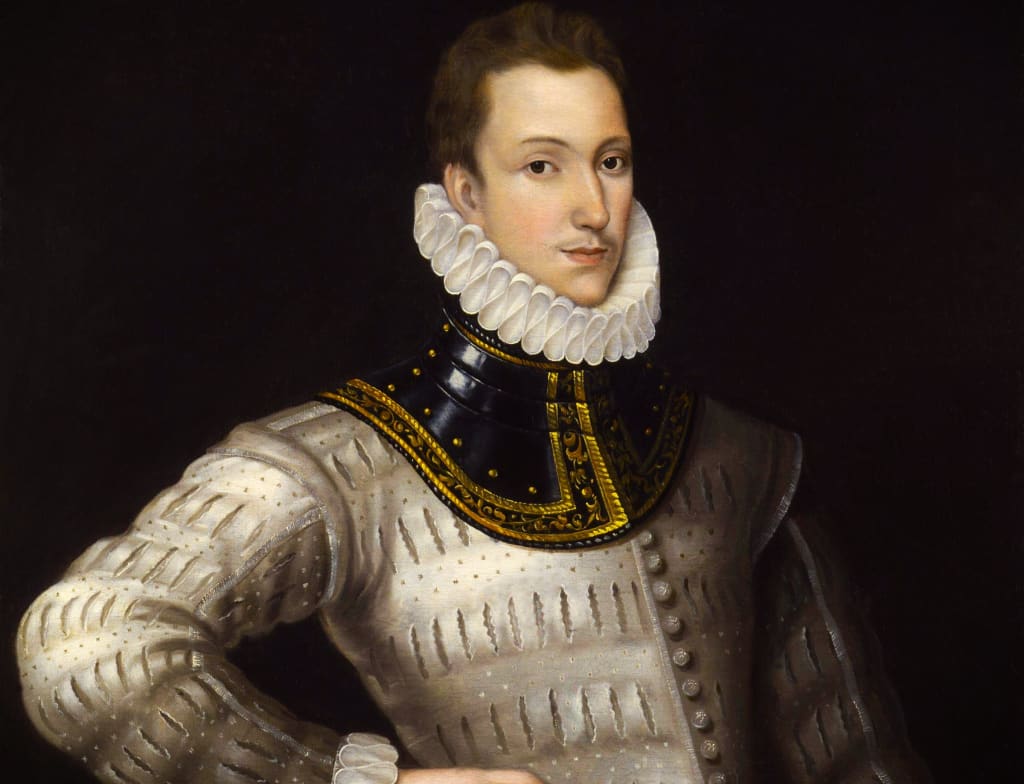
Philip Sidney’s “An Apology for Poetry” reveals the power of poetry to inspire virtue. He sees learning as a way to improve both mind and character. Poetry, for Sidney, connects feelings and will to this improvement, healing music for the soul.
He criticizes philosophy for its obscure language and its lack of practice. He contrasts history for its biased and limited stories. He praises poetry for its creative and universal appeal. Poets use various methods to make virtue attractive and persuasive.
Sidney defends poetry as a strong and timeless art. He invites us to enjoy its beauty and wisdom, to face life’s challenges with virtuous grace.
Learning as Self-Improvement
Sidney argues that learning is not just about facts, but about self-improvement. He claims that learning can cleanse, enrich, sharpen, and broaden our minds and souls. He wants us to learn how to be good, not just how to know good. He argues that learning can heal our souls, which are wounded by sin. He also argues that learning can move our hearts and our wills, not just our brains.
Sidney’s vision of learning is comprehensive and transformative. He rejects the idea that learning is dull and pointless. He shows how learning can be enjoyable and beneficial, especially through poetry. He admires poetry for its power to persuade both reason and emotion, to instruct and to create, to imitate and to invent. He asserts that poetry is the best way of learning because it can motivate us to be virtuous. He defends poetry against the accusations of being false, immoral, or trivial, by demonstrating how it can convey truth, morality, and excellence. Sidney’s essay is a forceful defense of poetry as a superior way of learning that can lead us to a virtuous and satisfying life.
The Limitations of Philosophy
Sidney challenges philosophy, the realm of abstract thoughts and ideas, which teaches us about virtue and its opposites: vice and passion. He faults its obscure and harsh nature, calling philosophers too serious and unappealing to ordinary people. He points out their hypocrisy, as they may lecture against anger but fall prey to it. Sidney claims that philosophy gives rules, but fails to give examples to motivate virtuous action.
Sidney thinks that philosophy is too detached and impractical for living well. He urges philosophy to focus on the real and the specific and to show us virtuous people to follow. He also urges philosophy to reach out to the common people and to write in a more lively and convincing style.
Sidney’s critique of philosophy is still valid today. Many people see philosophy as too vague and irrelevant, and they wonder how it can improve their lives. Sidney’s plea for a more useful and approachable philosophy is still worth listening to.
The Constraints of History
Sidney also contrasts history with poetry. History is the record of real events that happened in the past. It shows us the deeds and achievements of noble people who came before us. It teaches us how they dealt with problems, overcame obstacles, and reached greatness. By studying history, we can follow their examples and copy their virtues.
But Sidney also exposes some flaws and weaknesses of history as a way of learning. He argues that history is not always trustworthy or precise, because it relies on the sources that historians use to write their stories. These sources may be based on gossip and speculation, not on firsthand witness or solid proof. They may also be twisted or tainted by the motives and goals of the writers or the rulers. So history may not tell us the truth, but only a version of the truth.
Besides, Sidney argues that history is not always useful or relevant, because it focuses on specific cases rather than on general rules. It tells us what happened in certain times and places, but it does not tell us what could or should happen in different situations. It gives us examples, but it does not give us principles or directions. So history may not help us to act well, but only to know well.
Sidney ends by saying that history is worse than poetry in fulfilling the goal of learning: to inspire good action. He says that poetry can make up imaginary examples that are more helpful and convincing than real examples of history. Poetry can also express universal truths that are more valuable and suitable than the specific facts of history. Poetry can teach and please us better than history can.
The Triumph of Poetry
Sidney glorifies poetry as the peak of learning, a domain where imagination and creativity merge to create fascinating worlds that both teach and delight. Unlike the limits of abstract philosophies and historical facts, poetry explores the unknown land of virtue’s potential, showing not only the current reality but also the realms of possibility and aspiration.
Sidney reveals the poet’s tools, showing the methods of representation, imitation, and invention. While representation portrays reality with enhanced beauty, imitation borrows from various sources to add novelty, and invention creates entirely new worlds. This dynamic mix, Sidney implies, gives poetry the unique power to surpass visual arts, as its words ignite sensory and intellectual harmonies, arousing deep emotions.
But Sidney’s praise goes beyond creativity. He argues that poetry outshines philosophy and history in its ability to spark virtuous action. Closing the gap between reason and emotion, poetry blends rules and examples into a smooth fabric, both persuading the mind and moving the heart. Sidney’s praise ends in his defense of poetry’s value, destroying common criticisms with the claim that poetry, in its captivating charm, carries the transforming power to improve, enlighten, and inspire moral excellence.
To conclude, Sidney defends poetry as a valuable way of learning. He rejects the criticisms that it is wasteful, false, or immoral. He shows how poetry can teach us about life's complexity and morality. He praises great poets like Homer, Virgil, and Dante for their artistic excellence. He hopes his 'apology' will inspire readers to appreciate and learn from poetry.
About the Creator
Keep reading
More stories from Humyra Anjum Maliha and writers in Critique and other communities.
In Defense of Shakespeare
Dr. Samuel Johnson's critique of William Shakespeare's works has undeniably sparked thought-provoking discussions over the years. However, it is essential to address and challenge some of the assertions Johnson made in his analysis. While Johnson identified certain faults within Shakespeare's writings, it is equally important to consider the larger context of Shakespeare's contributions and the complexities of his craft.
By Humyra Anjum Maliha3 years ago in Critique
Cassie and Johnny
I’m the kind of dame you notice. I’m no femme fatale, but you can’t ignore me, at least not until I warn you about what’s coming, then everybody ignores me. Hell, they usually blame me afterwards and give Johnny all the credit for saving the day, but my Johnny couldn’t save a seat at the movies without my help. Sure, he’s brawny, but brainy? Not so much. Like that time I asked him to spot me five bucks, and he said he didn’t see it anywhere on me, and believe you me, he looked but good.
By Harper Lewis18 days ago in Critique



Comments
There are no comments for this story
Be the first to respond and start the conversation.