
Thank you, 'Paris, Texas (1984)'
From the bottom of my heart!

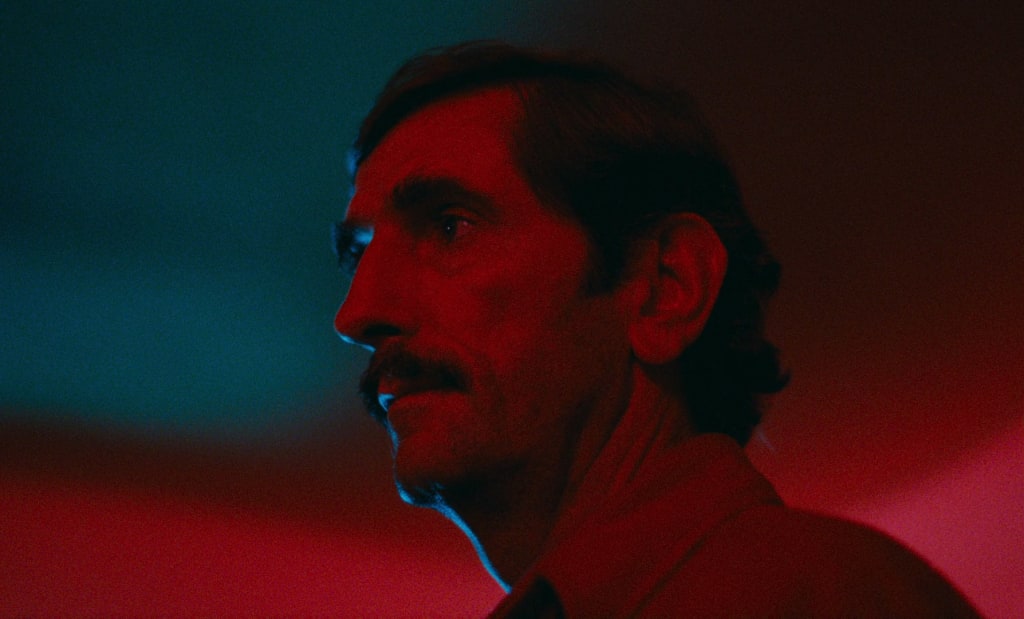
Nearly two months ago, I had the privilege of watching 'Paris, Texas' by Wim Wenders for the first time. Before anybody comes at me for not watching it earlier, I humbly concede the fact that I didn't possess the sensitivity to appreciate something as poignant until recently.
Throughout my formative years, my parents and maternal uncle instilled in me a strong love for movies. Thanks to them, I have been fortunate enough to have watched all kinds of films, regardless of genre or language. The scale of films has always mesmerized me, but I guess, somewhere along the way, the 'magic of movies' started fading. As years passed (and I started making short films and documentaries), my interest grew more in the technical and ancillary aspects of filmmaking.
Thus, when a film made 15 years before I was born manages to give me goosebumps even after the umpteenth viewing of its climax, I am bound to try and put into words my affection for what might possibly be my favorite film of all time.
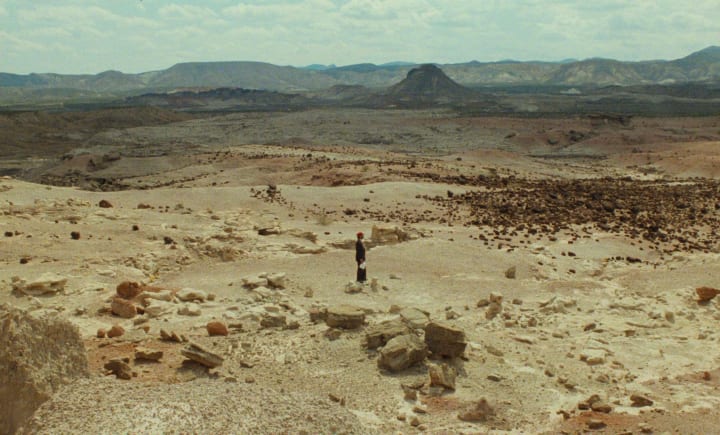
Before I delve into the pathos of this masterpiece, I'd be ignorant in not acknowledging the heavy lifting done by the cinematography of 'Paris, Texas.' To be honest, no amount of praise or criticism from my end will have any impact on Robby Müller's legacy. The world is well aware of his genius. However, it's quite brilliant that even a nobody like me with limited knowledge can acknowledge the artistic command Müller played with. Not everybody is capable of that.

The opening wide-angle establishing shots, the framing of Travis and Walt when they visit Paris, Texas, the head positions of Travis and Anne when he's looking onto Los Angeles through his binoculars (notice the arc their heads form from the top right corner to the bottom left), when Walt, Anne, Travis, and Hunter watch the old Super 8 home videos together, the distance between Hunter and Travis as they walk back from school, the framing of the freeway when Travis and Hunter decide to look for Jane, Travis being unable to look at Jane despite her not being able to see him, their faces aligning on the glass panel, Jane turning away before she can completely open up — these frames add so many layers to the overall story that one cannot help but take notice. These scenes I've mentioned barely scratch the surface when it comes to exploring the film's aesthetics. I am aware of the cliche, but this film truly lives up to the phrase, "Every frame has a story to tell."

When the credits began rolling for the first time, I was overwhelmed with an unprecedented concoction of emotions. I hadn't felt this way in years. I'd be lying if I said I didn't have tears in my eyes by the end.
A lot of people emphasize the beauty of the film's treatment of loneliness. I believe the beauty lies in the film's honesty in its expression of love and loss.
God, that climax sequence when Travis visits Jane for the second time! I get goosebumps EVERY SINGLE TIME thinking about it.
Throughout the film, Travis' journey guides us. The film maintains an ambiguous perspective on Jane until we meet her, reflecting Travis' emotions for her. In fact, there are certain moments in the beginning when one could be led to subconsciously antagonize Jane.
Thus, Jane admitting that she asked Anne to stop sending photos of Hunter as she couldn't imagine missing out on his childhood is such an eye-opener to who Jane really is that it immediately grabs ahold of you. In that moment, Travis finally comes to realize that his actions from the past (along with the emptiness Jane felt) were the biggest reasons Jane was away from Hunter. Of course, we know Jane sends money for Hunter, but for her to explicitly say it makes it that much more real. It's heart-wrenchingly beautiful to hear her surprised tone when she asks, "He wants to see me?" She was so burdened by her guilt of abandoning her child, she couldn't imagine him ever wanting to see her.

When Travis narrates their story while on the phone (before Jane recognizes him), at one point, he says, "He knew he had to support her… but he couldn't stand being away from her either." Travis' admission of his obsession with Jane is expressed with such purity that you feel nothing but sympathy for him. True love is not a rational emotion. It doesn't necessarily align with Darwin's concept of 'survival of the fittest'. Compassion, empathy, and love, while being integral aspects of the complete human experience, are relatively newer, complex evolutionary developments. There is no benefit from feeling these emotions and they are what separate us from our barbarian predecessors. So, when we find out about how Travis' irrationality begins to get to Jane and the practical complications of 'not knowing when the next check comes in,' I am left in awe of how humanely Sam Shepard and L. M. Kit Carson convey the complexities of Travis' mental state, his relationship with Jane, his internal struggle with his obsession for her, and his despondency in just a few sentences.
Nevertheless, nothing, and I mean nothing, comes close to the moment Jane brings the speaker close to her mouth and says, "I… I used to make up long speeches to you after you left. I used to talk to you all the time, even though I was alone."

What follows is one of the most honest confessions of loneliness resulting from a broken heart. Anyone who has suffered the loss of a dear one owing to a failed relationship or life itself can acknowledge the rawness of the dialogue in this scene.
Jane's monologue stands out to me particularly because only a few moments ago in the film, Travis narrates how trapped Jane felt by his obsession, especially after Hunter was born. The juxtaposition of their mutual love in the face of their tragic separation is done with such honesty that the impact is undeniable. They loved each other too much for their own good, especially Travis.

In the end, when Travis watches Jane and Hunter reuniting before driving away, we are privy to the final few moments before Travis drowns in his isolation once again. He smiles/cries as he knows he has finally let Jane be free this time. He'll no longer appear at the end of her nightmares, stopping her from 'running away.'
I think I could spend my whole life talking about 'Paris, Texas'. Words always seem to fall short when I try to articulate my love for it. I have never felt so satiated by a single movie, let alone a single scene.
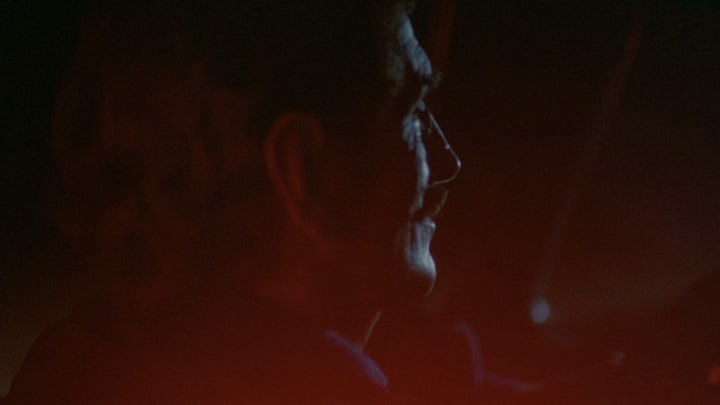
Personally, I doubt I'll ever watch another movie that evokes such strong emotions in me. I doubt it, as I don't think movies like 'Paris, Texas' will ever be made again. I pray that I'm wrong, but I believe we no longer possess the empathy and vulnerability required to make and appreciate films like 'Paris, Texas' in today's day and age.
Thank you, Sam Shepard!
Thank you, L. M. Kit Carson!
Thank you, Robby Müller!
Thank you, Harry Dean
Thank you, Nastassja Kinski!
Thank you, Dean Stockwell!
Thank you, Aurore Clément!
Thank you, Hunter Carson!
And to the man who brought it all together, thank you, Wim Wenders, for creating one of the most beautiful pieces of art to ever exist (at least in the opinion of this nobody)!
About the Creator
Gourav Bhattacharya
We are emotional beings and our emotions mold us into what we finally become. From time to time, I tap into them to pen down stories and anecdotes that are close to my heart.
Keep reading
More stories from Gourav Bhattacharya and writers in Critique and other communities.
The Unspoken Conversation
The lights dimmed. Everybody was at their seat with their phones in hand. Some texting, some on calls, while the rest were busy clicking selfies with their camera’s blinding flash. Usually, I prefer the aisle seat. You could say there’s a weird sense of freedom associated with it, even though we’re all stuck in the same aluminum vessel for the next few hours. Today I am stuck by the window, trapped between strangers and a view I have long grown tired of. Flying regularly does that to people, I guess. The plane, guided by the runway lights, begins taxing, preparing for takeoff. The air hostess makes her way down the aisle, instructing everyone to switch off their phones or keep them on airplane mode. Once she leaves, I call my mom. “Yeah, I am at my seat. No, don’t worry. I’ll take a cab home from the airport.” Mom’s been sick for some time. Had I been a better child, I probably would’ve flown out much earlier.
By Gourav Bhattacharya3 years ago in Fiction
‘We have enough’: Godfrey renews call for Black entertainers to stop seeking white validation after BAFTAs, praises Image Awards
DEI must die. It’s been far too long for Foundational Black Americans (FBA) and tethers to come up and say things like #OscarsSoWhite. So what? NAACP Image awards are about RAH, Representation, Agency, and Honor. Black people have to stop crying about their snubs at award shows that often overlook them.
By Skyler Saunders4 days ago in Critique

Comments
There are no comments for this story
Be the first to respond and start the conversation.