
Questioning Science
To what extent is science used to naturalize social inequalities?

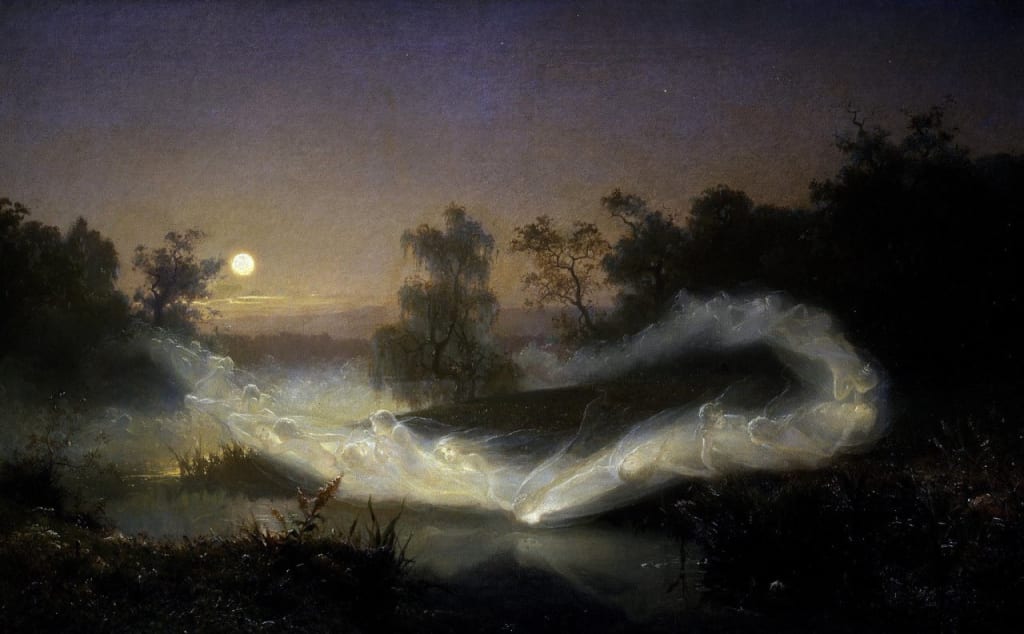
Questioning Science: To what extent is science used to naturalize social inequalities?
Human beings perceive nature through observation, but the understanding of nature comes from an interpretative process — one that generates a convergence between language and the society in which the individual is inserted. In other words, our understanding of what is “natural” is inevitably shaped, or even “infected,” by the limits of our language and the social structures around us.
This process of interpreting nature is what we call science. However, if science uses tools from language and society to construct its knowledge, then it is not a neutral or impartial process. Science is partial. It has an ideological foundation and often serves a specific objective. This leads us to a crucial question: is this ideological foundation based on inclusion — or exclusion?
I understand science as a social artifice — a mechanism often used to reinforce, validate, and give “natural truth” to things that were, in reality, constructed within society. One of these constructions is the marginalization and exclusion of parts of the population — especially minorities. Prejudice, systemic racism, sexism, and other mechanisms of power often gain a false legitimacy when science is invoked to explain or “justify” them.
To what extent, then, is science used to provide a foundation of truth to constructs that were designed to maintain power imbalances among social groups? Since science is also an interpretation — and every interpretation carries ideology — it may, consciously or not, serve the interests of dominant groups. By “scientifically proving” certain assumptions, it risks solidifying them as natural and unchangeable truths, even when they are deeply rooted in cultural and social biases.
In many cases, science is confused with nature itself. But science is not nature — it is an interpretation of nature. And when science is treated as a neutral mirror of the natural world, it becomes a powerful tool for solidifying social norms, including mechanisms of oppression. What is socially constructed ends up being seen as biologically determined.
Moreover, language — our primary tool of thought and communication — limits our perception of reality. We do not perceive pure reality, but only what can be translated into the codes of language. These codes shape, limit, and define what we can understand about the world. Therefore, we will never reach an absolute, unfiltered view of nature. Science, then, becomes a specific — and narrow — way of understanding nature, one that could be broader, more diverse, and more inclusive.
We are born into a world where the interpretations of nature made by others are already crystallized as “truth.” These truths are taught to us from a young age, often without question. We grow up learning to see nature not as it is, but through the lenses of social, linguistic, and scientific interpretations. And these lenses may reflect the dominant ideologies of a given time — not objective reality.
Science, in its effort to organize the world, simplifies reality. It divides and classifies. But what is the foundation of this division? Exclusion. Everything that does not fit within a certain framework is labeled as deviant or abnormal. Coincidentally — or not — these “abnormalities” often align with the identities of minority groups.
In nature, there are no rules, and therefore no “outside the rules.” There is no inherent abnormal or normal — only variation, in greater or lesser frequency. The idea of normality is a construct — and it arises from the interaction of society, language, and science.
Thus, science is often used to naturalize and produce a sense of “truth” around social mechanisms designed to distribute power unequally. The exclusion of minorities begins in society — but it is reinforced and legitimized by science.
About the Creator
Flowerboy
I’m creating myself
Cassie and Johnny
I’m the kind of dame you notice. I’m no femme fatale, but you can’t ignore me, at least not until I warn you about what’s coming, then everybody ignores me. Hell, they usually blame me afterwards and give Johnny all the credit for saving the day, but my Johnny couldn’t save a seat at the movies without my help. Sure, he’s brawny, but brainy? Not so much. Like that time I asked him to spot me five bucks, and he said he didn’t see it anywhere on me, and believe you me, he looked but good.
By Harper Lewis17 days ago in Critique


Comments
There are no comments for this story
Be the first to respond and start the conversation.