
Nurses Strike in New York City Hospitals
Nurses Strike in New York City Hospitals

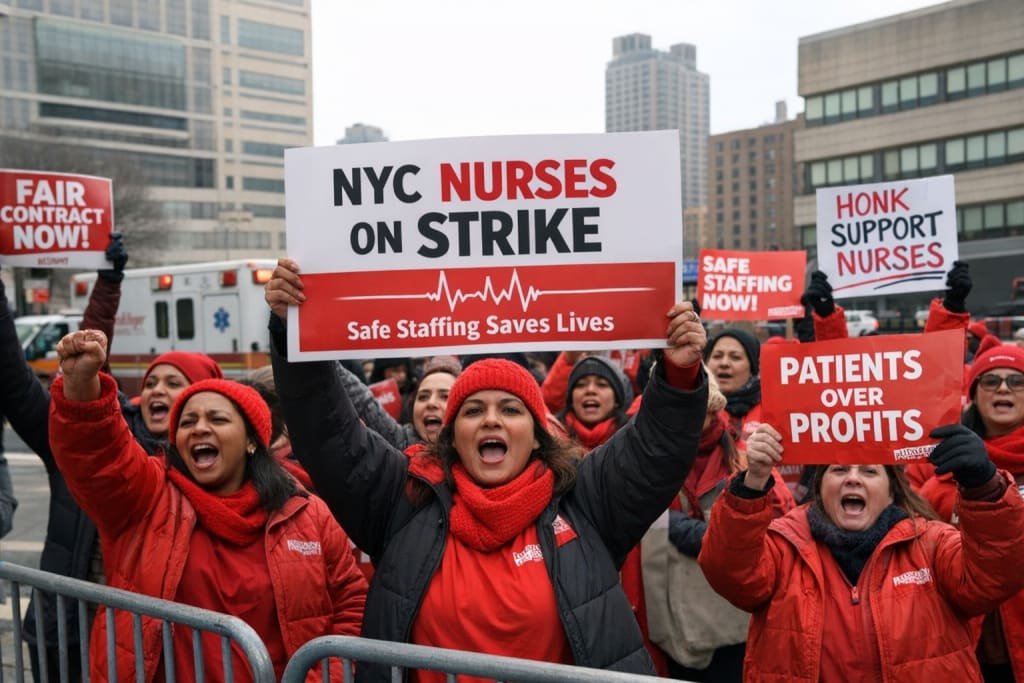
**Nurses Strike in New York City Hospitals**
A large-scale strike by nurses has taken place in New York City, drawing national attention to the challenges facing the healthcare system. Thousands of registered nurses working in major hospitals across the city decided to walk off the job after negotiations with hospital management failed to reach an agreement. The strike reflects deep concerns about working conditions, patient safety, and fair treatment for healthcare professionals who are considered the backbone of hospital care.
The action is being described as one of the most significant labor movements in New York’s healthcare sector in recent years. Nurses argue that the issues they are fighting for are not only about their own rights, but also about the quality of care patients receive every day inside hospitals.
**Why Did Nurses in New York Go on Strike?**
The main reason behind the strike is chronic understaffing in hospitals. Nurses say they are regularly assigned too many patients at once, making it difficult to provide safe and effective care. Overcrowded shifts increase the risk of medical errors, delays in treatment, and emotional and physical burnout among nurses.
In addition to staffing issues, nurses are demanding better wages, stronger health benefits, and improved protections against workplace violence. Many nurses report facing verbal and physical abuse on the job without sufficient security or institutional support. They believe hospital administrations have ignored these problems for too long.
**Which Hospitals Are Impacted by the Strike?**
The strike affects several major private and nonprofit hospitals across New York City, including large medical centers in Manhattan and the Bronx. These hospitals serve millions of residents each year and play a critical role in emergency care, surgeries, and long-term treatment. While some hospitals reached agreements with nurses before the strike began, others were unable to do so, leading to widespread walkouts.
Despite the strike, hospitals remain open and operational, though services may be limited in certain areas.
**What Are Nurses Demanding in the New Contracts?**
Nurses are calling for enforceable safe staffing ratios to ensure that each nurse is responsible for a manageable number of patients. They are also asking for fair salary increases that reflect inflation and the high cost of living in New York City. Another key demand is fully funded healthcare coverage, so nurses are not forced to sacrifice their own health while caring for others.
Additionally, nurses want stronger workplace safety policies, including measures to prevent violence and protect staff during high-stress situations in emergency rooms and intensive care units.
**How Are Hospitals Responding to the Strike?**
Hospital administrators argue that they are committed to patient care and financial stability. To maintain operations during the strike, many hospitals have hired temporary nurses and agency staff. Hospital leaders claim that some union demands could create long-term financial strain, but they have expressed willingness to continue negotiations.
Hospitals have also implemented contingency plans to prioritize emergency services and critical care, while postponing some non-urgent procedures.
**Will Patients Be Affected by the Strike?**
While hospitals remain open, patients may experience longer wait times, especially for non-emergency services. Elective surgeries and routine appointments may be delayed as hospitals focus on urgent and life-threatening cases. Emergency departments are still operating, and patients are encouraged to seek care when necessary.
Healthcare officials stress that patient safety remains a priority, even as staffing challenges continue during the strike.
**What Is the Government’s Role in the Situation?**
State and city officials are monitoring the strike closely. Government leaders have emphasized the importance of reaching a fair agreement that protects both patients and healthcare workers. Emergency measures have been discussed to ensure hospitals have the resources needed to continue functioning safely while negotiations are ongoing.
The strike has also renewed political discussions about staffing laws, labor rights, and the future of healthcare funding in New York.
**How Long Could the Strike Last?**
The duration of the strike is uncertain. It could end quickly if both sides reach a compromise, or it could continue if negotiations remain stalled. Previous nurse strikes in New York have lasted several days, but the scale of this action means its impact could be longer-lasting.
Both nurses and hospital administrators have signaled that talks may continue, leaving open the possibility of a resolution.
**What Does This Strike Mean for the Future of Healthcare?**
The New York nurses strike highlights broader issues facing healthcare systems across the United States, including worker shortages, burnout, and rising costs. Many see the strike as a turning point that could lead to stronger protections for nurses and better standards of patient care.
For New Yorkers, the strike is a reminder of the essential role nurses play in hospitals and the importance of addressing the challenges they face to ensure a safer, more effective healthcare system for everyone.
About the Creator
America today
Breaking news, political insights, real-time analysis, U.S. politics, global politics, elections, government policies, international relations, diplomacy, political debates, trending political stories, expert commentary, factual reporting,.
Keep reading
More stories from America today and writers in Critique and other communities.
Report on the Rumor of a Fire at the Grand Egyptian Museum
Report on the Rumor of a Fire at the Grand Egyptian Museum In recent days, news spread rapidly claiming that a major fire had broken out at the Grand Egyptian Museum, located near the Giza Pyramids. These reports caused widespread concern across media platforms and social networks. However, official authorities later confirmed that these stories were false and that the museum remains fully operational, with no incidents reported. This report explores what actually happened, how the authorities handled the rumors, and why verifying news before sharing it is essential.
By America today 2 months ago in Critique
Who Is Clavicular? The Looksmaxxing Streamer Who Ran Over A Stalker In His Cybertruck
What is so damaging to this current culture is the ant-intellectualism which pervades nearly every element of it. Clavicular, real name, Braden Peters equivocates physical form with getting women, making money, and overall being a strong “man.”
By Skyler Saunders20 days ago in Critique
Center Stage with Paul Stewart
*** I'm keen to republish the interviews I did for my series with Vocal creators. It's been a few years and I thought it might be nice to revisit these wonderful conversations. I'll be releasing them one at a time for a few weeks/months.
By Heather Hublerabout 12 hours ago in Interview



Comments
There are no comments for this story
Be the first to respond and start the conversation.