
'Lady in the Water' Ventures into the Mythopoeia Genre
M. Night Shyamalan's story within a story

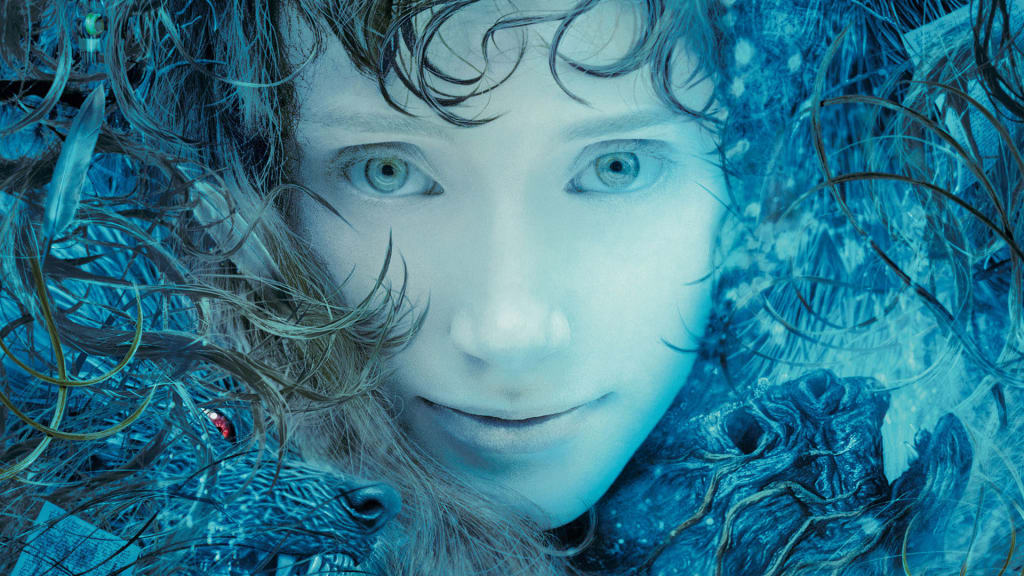
It began with a pool. Imagine the black sky, the crickets singing, and you’re about to snuggle into your bed until you hear little splashes in your pool. You look out your window and realize how deep and inconspicuous your pool is at night. You get startled because something just moved in the water, in a panic you rush downstairs to your front door; by the time you’ve reached the pool you see nothing there, nothing but a lock of hair floating in the water. M. Night Shyamalan created this bedtime story for his daughters just by looking at his pool, little did he know this bedtime story would be retold in a motion picture.
Storytellers are known for transporting us into their world, one that is not real, not quite like our own, but is strangely familiar. Most storytellers are inspired by myths; myths can be defined as fictional stories, a story with a moral but is not real, or lies meant to convince us they are real. However, J.R.R Tolkien disagreed that myths are just stories made up of lies and believed that myths contain deep truths that we give them credit for, so he coined the genre mythopoeia based on his poem of the same title. Mythopoeia is a literary genre that is also used in cinema where writers use myths in their fictional stories and become “myth-makers’’ by creating their own myths that were derived from earlier folktales. Shyamalan’s Lady in the Water is in the realm of mythopoeia, it’s essentially a story within a story, an homage to the fantastical, and the magic of storytelling.

We first see Shyamalan employ mythopoeia in Lady during the opening sequence when we are introduced to the world of man and the magic world. When the animation sequence perceives itself to be cave-like drawings, we get a sense that this is a mythical story. In this myth, there was a time when humans and “those in the water” (narfs) shared a relationship in which the narfs would inspire men and foretold their futures; this myth is similar to Hesiod’s Theogony in which the speaker in the poem was inspired by Greek mythological Muses to write about the birth of the gods. At the beginning of Lady in the Water (2006), Shyamalan offers what Tolkien would call “a Secondary World". In Lady’s case, the “Secondary World” is the Blue World, this is the “magic world” that the narrator talks about in the opening sequence, the world where the narf species (sea-nymphs) live in an underwater kingdom. This sequence is very much like a bedtime story, only Shyamalan wants us to know that it's more than just a “story”; most stories often contain a type of truth or were inspired by ‘the physical’ which we call real. C.S Lewis brought his Christian faith, his truth, into Narnia, and both Lewis and Shyamalan’s mythic stories were inspired by the physical, nature. For Lewis, it was the snow that created the famous image of a faun carrying an umbrella through the snowy woods, and for Shyamalan, it was the water that gave him the image of a nymph-like creature swimming in our pools.
While Lady in the Water is a mythopoeia genre it contains many elements from other genres such as fantasy, and the most common fantasy story is a hero on a quest. We see fantastical moments in Lady when Shyamalan creates unique archetypal characters, where each character plays a role in Story’s journey to find the writer. These characters all live in a complex building and are asked to help Story on her quest, the reason why they help her is for the same reason why characters in a story help fight with the hero because they believe they are special. Story’s power to awaken their innate gifts gives them hope to believe in something greater than themselves, and that’s what Shyamalan wants his viewers to feel. The power of storytelling in Lady in the Water lies in the power of believing.
Not only does Shyamalan want us to think like storytellers, he wants us to know that storytelling is fundamental for humankind. The keyword in Lady in the Water is ‘inspire’, that’s what narfs do, inspire humans to embrace their innate gifts that they didn’t know they had. And while Story does inspire Vick (the writer) to finish his ‘story’, her power reaches beyond inspiring people to do what they most love, she also inspires people to be their best selves. We see this when Heep stops stuttering once he’s around Story, and towards the end of the film, he revives Story by restoring his faith in God. Her presence has not only impacted Heep to be his better self but, all the other tenants who band together to fight against the scrunt. This longing for the extraordinary has become a part of the fantasy genre, where the spectator is enraptured by the film’s ability to persuade us that there is magic in the world.
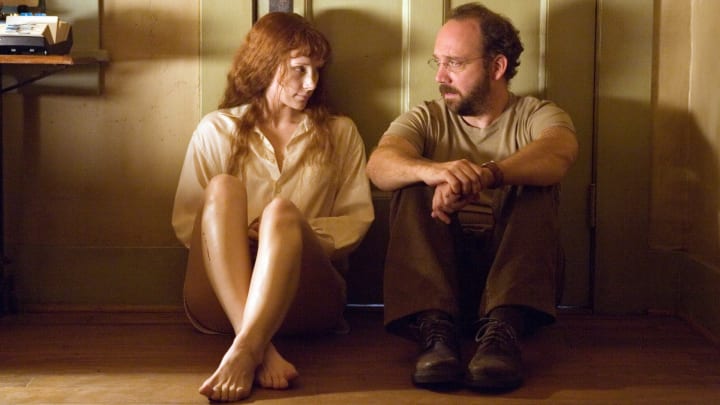
Of course, this belief in magic is child-like, which is why Lady in the Water has a fantastical atmosphere that feels fit for a child to believe in; but many mythopoeic writers like J.R.R Tolkien and C.S Lewis would disagree that fantasy belongs only to children. Stories that make us desire to possess magic or to live in a world of magic reach not just young minds, but adults too. Most of us feel that way when we watch a superhero movie and wish we could be like them; the hero represents courage and this desire of wanting to be a superhero tells us that we want our self-ideal to be brave. Watching Lady in the Water as a child, our minds are already open to the possibility of magic, watching the film as an adult we’re skeptical like the characters are, but Shyamalan brings out our inner child because we’ve realized all our life, we all at one point wanted something magical to happen to us.
About the Creator
Semoy Booker
I'm a Buddhist, Elizabeth Bishop fan, film enthusiast, and all things that make storytelling magical.
Reader insights
Outstanding
Excellent work. Looking forward to reading more!
Top insights
Expert insights and opinions
Arguments were carefully researched and presented
Heartfelt and relatable
The story invoked strong personal emotions
On-point and relevant
Writing reflected the title & theme
Keep reading
More stories from Semoy Booker and writers in Critique and other communities.
5 Cerebral Gore Films Featuring Women: When Slasher Meets Women's Horror
Horror has a long history of murdering its woman characters. This happens because horror films uphold the gender ideology that women are far less superior to men. One might argue that the lack of a woman’s gaze or relatable women characters leads many women spectators to not fall in love with the slasher genre. While Carol Clover’s coined Final Girl trope might make women pumped up about seeing a woman survive a horror film, that doesn’t mean all women would identify with the Final Girl (especially if she’s written stereotypically). I’ve discovered that there’s a new horror genre: a genre that combines slasher, cerebral (psychological horror), or women’s horror that is often directed, written, produced, and/or starring women. Coined by Amy Jane Vosper comes a new hybrid horror genre: cerebral gore.
By Semoy Booker 2 years ago in Horror
Cassie and Johnny
I’m the kind of dame you notice. I’m no femme fatale, but you can’t ignore me, at least not until I warn you about what’s coming, then everybody ignores me. Hell, they usually blame me afterwards and give Johnny all the credit for saving the day, but my Johnny couldn’t save a seat at the movies without my help. Sure, he’s brawny, but brainy? Not so much. Like that time I asked him to spot me five bucks, and he said he didn’t see it anywhere on me, and believe you me, he looked but good.
By Harper Lewis18 days ago in Critique
Babbling Dixie
The short form of tomorrow is never the whole story. Abbreviations mean nothing when we are born to die and we all are aren't we? Being spoken for before birth is something we're not supposed to remember like some kind of karma after effect. Still here we are spending our lives looking for each other.
By Canuck Scriber Lisa Lachapelleabout 7 hours ago in Fiction


Comments (1)
Hi we are featuring your excellent Top Story in our Community Adventure Thread in The Vocal Social Society on Facebook and would love for you to join us there