
Jurassic World: A Promising Rebirth or a Familiar Rehash?
Win or Flop?

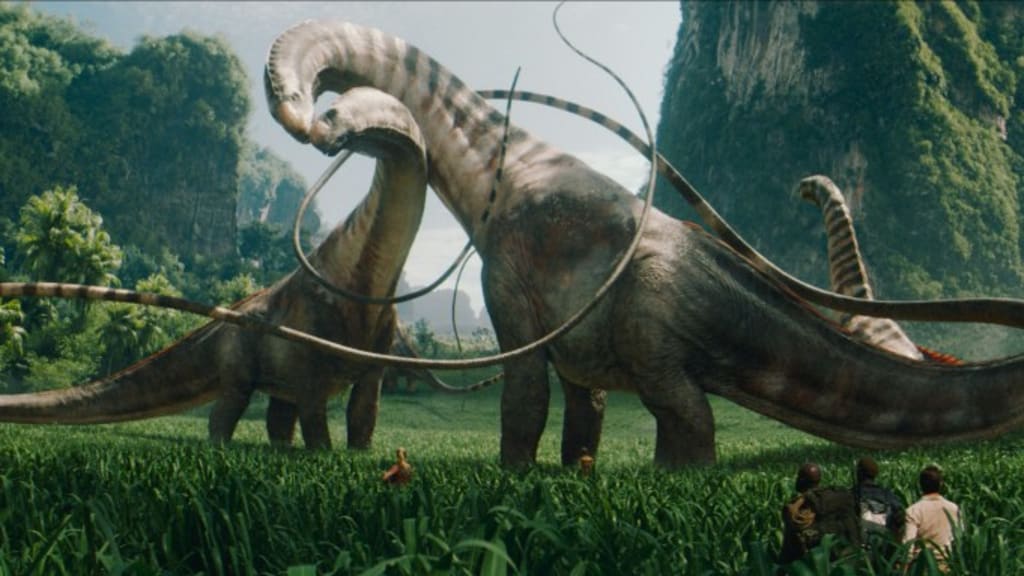
When the Jurassic World: Dominion credits rolled, a collective sigh of relief and, for many, a sense of finality was palpable. The trilogy had concluded, but the dinosaur saga, now a global phenomenon, felt more apathetic than ever. Enter Jurassic World Rebirth, a title that, from its inception, promised to revitalize a franchise bogged down by its own ambition. With the return of original Jurassic Park scribe David Koepp and the visually masterful Gareth Edwards at the helm, the hype was undeniable. The question, however, remained: could this film live up to its name, or was it destined to be another echo of a bygone era? The answer, as it turns out, is a complicated mix of both.
The film wastes no time in establishing its new, somewhat grim world order. Five years have passed since the events of Dominion, and the planet’s climate has proven largely inhospitable for the dinosaurs. As a result, the majority of the remaining de-extinct species are confined to a few isolated equatorial regions. It is within this changed landscape that a familiar, yet entirely new, narrative unfolds. A pharmaceutical company, ParkerGenix, believes the DNA of the three largest remaining prehistoric creatures—a colossal Titanosaurus, a terrifying Mosasaurus, and a majestic Quetzalcoatlus—holds the key to a cure for a global heart disease. To this end, they recruit a covert team of operatives led by the stoic Zora Bennett (Scarlett Johansson) to venture to the long-abandoned Île Saint-Hubert, a research facility where InGen once conducted its most grotesque experiments. This is where the plot begins its uneasy dance between the innovative and the uninspired.
Edwards’s direction is, without a doubt, the film's greatest strength. The man who gave us the breathtaking scale of Godzilla and the visceral tension of Rogue One brings a much-needed gravitas to the franchise. He understands that the true terror of dinosaurs lies not in a chaotic CGI frenzy, but in the suspense of their presence. The set-pieces here are expertly crafted, prioritizing atmosphere and dread over sheer spectacle. A standout sequence involving the Titanosaurus is less about its immense size and more about the suffocating feeling of being hunted by an animal so large it operates as a force of nature. Similarly, a scene in a cliffside nesting ground provides a genuine sense of peril and height, a reminder of the franchise's capacity for claustrophobic terror. Edwards’s use of light and shadow, particularly during a nighttime hunt with the six-limbed "Distortus rex," is a cinematic triumph, restoring a sense of genuine horror that has been absent for decades.
Unfortunately, Edwards’s brilliant execution is often let down by a script that feels less "reborn" and more "recycled." The plot structure is, at its core, a simple fetch quest—collect three DNA samples, fight the monster, escape the island. This "video game" feel, as some critics have noted, makes the narrative feel perfunctory, serving as a series of checkpoints between dinosaur attacks. This is further exacerbated by the introduction of a shipwrecked family, whose purpose in the grand scheme of the narrative feels less like a necessary plot device and more like a crutch to inject a dose of predictable "human drama." The A-list cast, including the talented Scarlett Johansson, Mahershala Ali, and Jonathan Bailey, is regrettably given very little to work with. Their characters are paper-thin, their motivations switching from cynical greed to noble self-sacrifice with little believable transition. While their presence provides some watchability, it’s not enough to overcome the frustrating lack of character depth.
The film's most glaring missed opportunity lies in its titular promise. While it successfully returns to the stylistic and tonal roots of the original, it fails to advance the series' core themes in any meaningful way. The discussion of corporate greed versus the greater good feels like a retread of a theme handled more deftly in previous films, and the central conflict never truly resonates as a fresh or impactful new direction for the franchise. The "Rebirth" suggested by the title is, for the most part, a visual and directorial one, not a narrative one. It's a testament to what the series could be if it truly committed to a new path, but it ultimately settles for being a well-made and highly entertaining, albeit familiar, thrill ride.
In conclusion, Jurassic World Rebirth is a step in the right direction, a long-awaited return to the suspenseful roots of the original trilogy. Gareth Edwards's masterful direction and the stunning visuals make it an enjoyable and often exhilarating watch. However, it's a film that exists in a strange paradox: a technical and stylistic rebirth with a fossilized, rehashed plot. While it's a noticeable improvement over its predecessors, it remains tethered to a formulaic narrative that prevents it from truly fulfilling its potential. Fans of the franchise will find much to love in its thrilling set-pieces and respectful tone, but those hoping for a genuine new era will have to wait for the next chapter.
About the Creator
MarqueeNarrative
Marquee Narrative
Keep reading
More stories from MarqueeNarrative and writers in Critique and other communities.
Oscar Winner Kevin Spacey receives Lifetime Achievement Award at the Septimius Awards 2025
On the evening of September 4, 2025, the gilded halls of the Koninklijk Theater Tuschinski in Amsterdam—widely regarded as one of the most beautiful cinemas in the world—served as the backdrop for a significant moment in contemporary film history. Kevin Spacey, the two-time Academy Award-winning actor, stood before an international audience to receive a Lifetime Achievement Award at the 2025 Septimius Awards.
By MarqueeNarrativeabout a month ago in Geeks
Who Is Clavicular? The Looksmaxxing Streamer Who Ran Over A Stalker In His Cybertruck
What is so damaging to this current culture is the ant-intellectualism which pervades nearly every element of it. Clavicular, real name, Braden Peters equivocates physical form with getting women, making money, and overall being a strong “man.”
By Skyler Saunders23 days ago in Critique
Catching Up
I know I have not been reading and commenting a lot these past couple weeks, but I have been reading and writing in my old-fashioned composition books and preparing some of those writings for here on Vocal. I have also been researching and writing my study books. I do have one wish for my subscribers here on Vocal.media.com and that is that everyone will have a great year. I do have a request and would like some follow-up on some of my older work and would you guys read or re-read my material and share your thoughts for I am thinking of putting together an anthology.
By Mark Graham5 days ago in Critique



Comments