
JOKER A Neurodiverse Analysis
Failed love, mothers, and worn-out stereotypes
Introduction
Directed by Tod Philips, who earned three Academy Award nominations thanks to this film, Joker has gained much fame, criticism, and honors. Joaquin Phoenix, received several Oscars and accreditations based on this particular movie, and it is one of the top-rated movies on IMDb. This essay takes insights as to the ways cinematic framing and content are absorbed by society and individuals and its impact on culture (Marsena and Angjaya, 2022, p. 37) (Nelson et al., 1997) (Brader, 2005). The aim of this essay is not to assume the intentions of the directors and cast, nor is it to criticize the movie, as it is impossible without the knowledge of Phillips’ intentions, but to offer a nuanced neurodiversity perspective on a highly rewarded and well-viewed film. Nonetheless, there have been huge discussions online about how accurate the depictions of negative mental health were in the film.
Short Summary
Joker is a film about a man who dreams of becoming a stand-up comedian and works as a clown. He is diagnosed with an uncontrollable laughter "disorder" and potentially has other unnamed conditions for which he takes seven different medications to "not feel so bad anymore" (Phillips, 2019, 00:07:09). The film depicts an imaginary relationship he has with his neighbor and also explores his relationship with his mother, whom he takes care of daily. The movie implicitly addresses class issues and the United States’ health and economic systems.
The film takes a violent and arguably anarchist turn, portraying a revolution against the "system" and class differences. Considering the historical background of the Joker in cinema, the film’s intentions cannot be reduced to merely creating an image centered on class and mental health, as these themes are intertwined. Furthermore, films are often meant to be discerning and thought-provoking and should not be passively interpreted as negative. This analysis of the film, then, probes how it was received and reflects societal perspectives on a broader scale. This paper also critically examines how films and media set the tone to shape ideologies or reinforce existing patterns of thought.
Increasing Stigma?
Poulgrain and his colleagues conducted a study in 2022 aimed at identifying an increase in prejudice and the harmful effects of Joker on people’s views of mental illness. They hypothesized that the film would increase people’s desire to distance themselves from individuals with mental illnesses and heighten fear and stigma around neurodivergent traits (Poulgrain et al., 2022, p.1). While this theory is not unreasonable, the hypothesis could also take a different direction. Arthur Fleck, the main character of the film, expresses his frustration at not being heard, being ignored, and facing discrimination in an unjust society. With this in mind, it would be logical to assume that the audience could develop a greater understanding of the everyday and structural issues people face. As this paper will discuss, the movie’s instances of violence reflect a stereotypical understanding of mental illness that is problematic. At the same time, these actions could also be interpreted as a reasonable response to Arthur’s life and circumstances.
The study found that after watching the film, people had a greater tendency to want to control mental illness, thereby reinforcing a medical model that aims at identifying, treating, and controlling the problem. Researchers highlight that while this is the case, there was no significant change in malevolence toward people with mental disorders, as the film is more likely “to generate sympathy towards people with mental illness, which may, in turn, diffuse any potential feelings and beliefs related to malevolence” (Poulgrain et al., 2022, p.7). Similarly, Scarf and his colleagues conducted another study, which found that viewing the film could potentially not only lead to higher prejudice against people with mental illness but also “may exacerbate self-stigma for those with a mental illness, leading to delays in help-seeking” (Scarf et al., 2020, p.2). Nonetheless, there was still a short-term increase in stigmatizing thoughts toward mental illness after its debut. The researchers could not assume that this had a long-term effect, but that could very well be the case.
While criticizing the overuse of violence in films depicting mental illnesses, it is important to note that violence is more likely to occur among people with mental illnesses when there are also financial constraints that propel individuals toward dangerous behaviors and risky coping mechanisms. This can include increased substance abuse, stealing resources, and heightened exposure to violence. Joker’s main emphasis on poverty highlights this complex juxtaposition, but the association of violence with mental illness should nonetheless be considered seriously. On the contrary, psychiatrist Kamran Ahmed writes that the film did not link violence with mental illness but more with Arthur’s personality. Secondly, he also argues that the narration of Arthur’s life allows, for once, that he neither be villainized nor laughed at, instead viewers can “empathize” with him (Ahmed, 2019). Ahmed also highlights the importance the film places on government funding and society’s need to understand and help people with mental illness.
Audience Perception of Joker
When the film was aired, a shocking number of people immediately tried to give Arthur Fleck a diagnosis. The film, perhaps intentionally, does not name specific mental disorders or illnesses. The potential consequences and positive effects of this are a complicated debate that should be analyzed according to the director’s intent. This section will look at online forums such as Reddit, Quora, and personal blogs, exploring how people have offered their diagnoses and perspectives on the film. Most importantly, however, the fact that there is such debate about the character’s diagnosis is significant to unpack. Why does he need a diagnosis? Does it reassure the spectators? If neurodiversity is about understanding differences in everyone, then this innate need to categorize individuals does not leave a favorable impression of the current cultural mindset. Is the movie perhaps encouraging society to take a step back and reflect on the concept of normalcy?
The Desire to Diagnose
Skryabin wrote a short paper on his methodology for diagnosing Arthur, concluding that he has narcissistic disorder, antisocial personality disorder, and emotional incontinence. This was a refreshing understanding of Arthur, who is often assumed to have depression and/or schizophrenia. However, this paper does not critique the DSM or engage critically enough with what diagnosing entails in this context. The author identifies that reducing Arthur solely to his mental disorders, and reducing his actions to cause-and-effect relationships stemming from social circumstances and upbringing, is overly simplistic. His mental illness exists to exacerbate the other factors he is experiencing, but identities and social divisions are not so black-and-white. One could argue that trying to diagnose Arthur only reinforces individualistic modes of medical shaming and isolation, which the film seems to oppose. It could also be argued that the specific diagnosis is irrelevant; what matters is that anyone outside the norm could suffer in similar ways, especially when compounded by financial instability in the United States.
Multiple Reddit users have diagnosed Arthur with “antisocial personality disorder,” “psychopathy,” “narcissistic personality disorder,” “bipolar,” “pseudobulbar,” “empiricist,” “sociopathy,” “borderline personality disorder,” “intermittent explosive disorder,” “dysthymia” (persistent depressive disorder), “schizophrenia,” and “schizoid personality disorder” (LeCheffre, 2021; Fastjack_2056, 2021; PoorlyDrawnBeagle, 2021; Equalsnil, 2021). Most of these assumptions are based on previous Joker films, hints from the film itself, or personal opinions. Others have described him as simply “evil” (ScoreTechnical5397, 2021) or possessing “super sanity” (fifdimension, 2021), though this remained unexplained. Similarly, Quora posts echoed these diagnoses, with antisocial personality disorder frequently mentioned on both platforms. Pseudobulbar affect and narcissism were also common suggestions. One user proposed PTSD, the only user found on either forum to suggest this (Hardy, 2020). Quora posts additionally mentioned depression, bipolar disorder, anxiety, and suicidal ideation (Sinha, 2020; Desiree, 2020). Very few comments questioned the need for diagnosis, with most adamant that Arthur had multiple mental illnesses, and their notions about these disorders were notably similar.
Online Discussion
Interesting Reddit conversations have shown conflicting perspectives on the films. WhiskeyManX wrote that they liked the film and that it hit too close to home. He also counter-claimed the idea that violence is badly associated with mental illness: “I don’t think it’s fair to say, ‘it makes mentally ill people look like criminals.’ Well, this one is about a criminal; it wouldn’t make sense to have it any other way.” In another discussion post, two other accounts have negatively critiqued the film for superficially and contradictorily blanketing over the healthcare system in the US. One wrote, “Arthur Fleck is just a flat-out troubled individual, and the film tries to raise sympathy by critiquing an uncaring society” (ThatRedditScribbler, 2021).
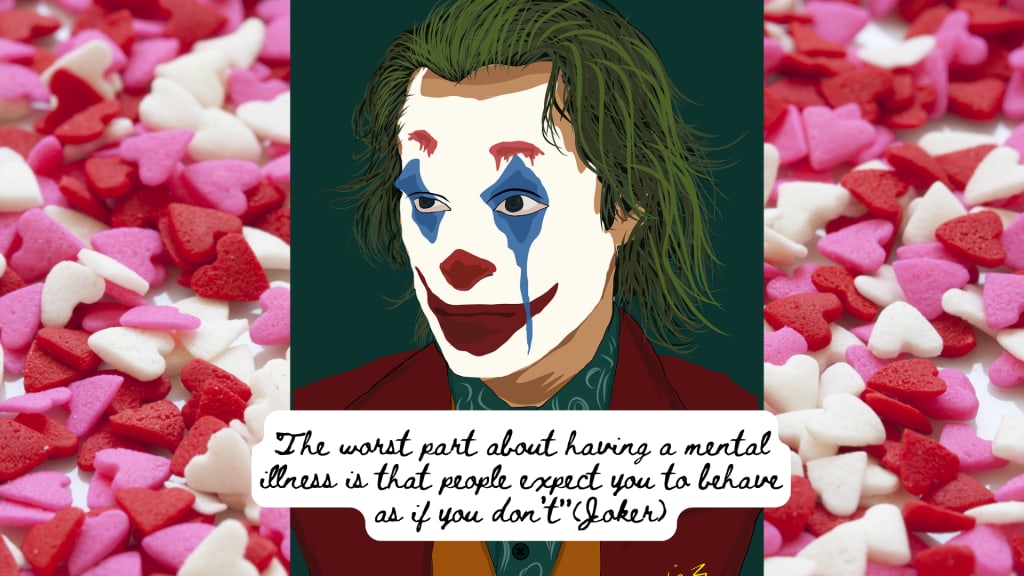
The idea that having a mental illness is to hide it from society was brought up frequently online. It is one of the quotes of the film that seemed to be circulating the most. On a different note, user r/CharacterRant was one of the few Reddit users who appreciated the mental illness depictions of Joker. He wrote it was a good analysis of how the system and people were piled on top of Arthur. It places him as a villain but a victim nonetheless. The user’s description of the film’s outlook inherently described how this film was going away from the mainstream psychology that emphasizes the individual rather than the social systems. Others in the comments agreed with this but critiqued the focus on the rich as the problem, arguing that poor people were also mean in the film and added to the problem, yet Arthur did not blame them (Akainu14, 2023). This particular discussion post sparked a debate on the utility and truth of psychology as a field.
Interestingly, Quora users were more sympathetic to the film than Reddit users, who were more critical of it. Many users argued that the film did not inherently incite violence but sympathy and that one should simply not emulate the character (Roy, 2020). This user also proposed that this sympathy induces societal changes: “We shouldn’t be scared to sympathize with characters like Arthur, but we should use these feelings to propel change. Reform prison systems, stop criminalizing addictions, eliminate mental health stigmas, reach out to men with mental health concerns, reconsider the American gun fetish, and tone it back just a smidge” (Sneddon, 2020).
User Kenny Nguyen argues that the film is very similar to societal representations. He compares the film to the Brock Turner case as well as to the media reactions to the Oscar the film won. This was based on an article expressing fear that the film would lead to Incel violence, as Arthur seems to share the same traits as them (Bundel, 2019). Other responses showed that the film reflected how people today want to hear only their truths and not others. This user shared their frustration with Donald Trump and the Kardashian reality TV show (Santiago, 2020), which links back to a bigger issue in the US that is a polarizing one, noticeable in the film between the normal vs. abnormal, rich vs. poor, and the other.
Quora and Reddit are both big forums and to yield any systematic and significant data from them would require more research. However, there seem to be unquestioned tendencies to personally diagnose Arthur and many discussions around the accuracy of the film regarding the ‘real’ societies of today.
Dangerous Stereotypes: The Mother
Little is discussed about the cliché role of the mother in Arthur’s upbringing. This is made clear near the end of the film, emphasizing a causal connection that compels us to realize that Arthur is the way he is because his mother was abusive.
This gives a sense of pity or sympathy that is not entirely positive but enhances a gap between what is deemed abnormal and normal. It also reinforces an outdated psychoanalytical model of looking at mental illness, which blames the mother in her ability to create the “normal” child (Waltz, 2020, p.18-19).
Speaking on individual scopes, however, Knafo’s paper explains how her experience as a psychotherapist has shown that indeed rage and other strong emotions are intrinsic to some malignant mother relationships (Knafo, 2020, p.1515). Three of her patients have identified with the emotions Arthur lives through due to his parents, which reveals lots of understanding of these patients’ psyche. In her psychoanalysis of her patients and Joker, she was able to identify connections with parental figures who had symbiotic relations with their children, all the while maintaining lots of resentment for that mother.
Byers and Collins beautifully lay out how mothers are the scapegoat of villains used to stir empathy and leniency with ‘evil’ in narratives. Their work focuses on the series Mindhunter but can be easily applied to many novels, films, and other media that constantly invoke the “pathological mother” (Byers and Collins, 2022, p.468). Their work highlights a culture that extends outside the scope of films, whereby there is contradictory blame on mothers when it is useful for white men to escape their responsibilities, and a societal judgment of women when they play the victim card themselves.
In Joker, the movie is framed so that Arthur’s violence, which in itself is a hot topic in mental illness discussions, is excused due to his mother’s neglect of him as a child. This is important in the discussion of this film’s representation of class, outcasts, mental illness, and violence. It is without doubt that this film reflects an issue with poverty and the higher economic class system, yet this emphasis on the mother contradicts this message. It is simply reinforcing that Arthur is a mentally ill individual who, after being laid off from his pills and discovering his traumatic abuse by his mother, acts out against the world (Phillips, 2019, 01:21:20).
This places class as an underlying issue, even though the film finishes with anarchist discourse against the class system of the nation. It could be argued further that it also places neurodivergence as another unimportant factor in the film, simply as a result of his environment and not the cause of violence. This would mean that violence and mental illness are not as closely linked as culture assumes, yet it does no better than to reinforce the mother’s blame in this narrative, as it is linked back to the creation of a “normal” child, which is what one would think the film is trying to frame as a societal issue.
“Whatever the specifics of each case, the mother is presented as bearing the responsibility for failing to provide the middle-class, cishet household the killer believes he deserved in childhood and/or adulthood” (Byers and Collins, 2022, p.472). This discussion of motherhood representation in films is created by society but is also reinforced by the media. It reflects a bigger issue that was not addressed as an ‘issue’ in the film.
White Men
The discussion of motherhood, class, and blame leads to another inevitable intersected issue with the film: white men. To be clear, being a white man is not the issue, but the replication of the white man being the only identity representing any complex neurodivergent trait is. This, as Byers and Collins argued, is a side effect of mother blaming. If the villain or violent man has everything that is normative, everything that is ‘desired’ in today’s society, then the only blame can be on the mother. These idealized identities are being white, male, and straight.“Because the serial killer (believes he) has everything necessary for social success, it is the lack of nurturance emerging from a normative family structure that he imagines creates the monster ‘within’” (Byers and Collins, 2022, p.472). Other media that aim to positively open discussions around neurodivergent people are often criticized for this all-too-common white male representation, e.g., Atypical, The Good Doctor, A Beautiful Mind, Sherlock, The Imitation Game, Split, Fight Club, etc.
Eighty percent of films and 69% of TV shows talking about mental health use white people as representatives (Smith et al., 2019, p.2). The issue of racial disparities in the media is alarming and also reflects an alarming health disparity across the world. Too much research has shown the ways in which health affects different people differently and the ways it is more stigmatized and biased for certain people than for others (Rethink Mental Illness, Perzichilli, 2020, American Psychiatric Association, 2017).
This reinforcement of the white heterosexual man in movies with mental health topics creates less space for awareness and creates a narrative where it is only okay to have neurodivergent traits when one is a certain way. Stories such as Black children being sent to juvenile detention for the same behaviors as white children who get sent to psychiatrists show the urgent need for a change in this narrative on a social scale (Horton, 2020).
Kondo claimed, “The greatest fallacy of mental illness purported by the film industry is that there is a direct link between mental illness and violence” (Kondo, 2008, p.250). She rightfully highlights that the media can be the only source of knowledge for people, so those who have little experience with mental illnesses can absorb their knowledge from the media. She comically ends her ‘speaking out’ article by emphasizing that, in reality, “the majority of people living with mental illness are completely ordinary. Understandably though, their stories would not make as riveting a film” (Kondo, 2008, p.252).
Violence, Villains, and Ableism
As this paper has superficially implied, there is controversy with the film’s reliance on violence. The reinforcement of violence is linked to abnormal psychological functioning in Joker. However, that is somewhat debated as the character is supposed to be a violent man in a DC Comics narrative, a company known for adventure, action, and superhero narratives. Nonetheless, violence is reoccurring in most media depictions of mental illnesses (Poulgrain et al., 2022, p.2). Forty-six percent of film and TV show characters with mental illness commit violent acts (Smith et al., 2019, p.4).
There is a tendency to diagnose Arthur with schizophrenia, the disorder most associated with violence within and outside media (Sampietro, 2010, p.115). Sampietro’s review of media associations with violence and mental illness concluded that although there is a general tendency to pair mental illness presentations with violence, this is not the case all the time. Unfortunately, Joker is part of the films that have cemented a link, even if it is a complex one, between mental illnesses and violence.
Fazel and their colleagues have found that the risks of violence in schizophrenic patients, based on the finding that 13.2% of patients had at least one violent record, are often due to substance abuse rather than the disorder itself (Fazel et al., 2009). Psychologist Elbogen stated similarly that violence and mental illness are not directly linked but occur due to substance use or other factors: “While perpetrating violence is relatively uncommon among those with serious mental illness, when it does occur, in many cases it is intertwined with other issues such as co-occurring substance use, adverse childhood experiences, and environmental factors” (DeAngelis, 2021).
While adverse childhood experiences and environmental factors go hand in hand with the enactment and sustainment of mental health, they should not be used to create a causal relationship between violence and mental illness.
Preston and Rath-Paillé illustrate the link between disabled bodies, disgustingness, and the mentally ill villain. There seems to be a proneness in cinematographic strategies to showcase a broken mind with a broken body. “As with the criminal characterization, these visible traits express disfigurement of personality and deformity of soul. Once again, disability may be represented as the cause of evildoing, punishment for it, or both” (Preston and Rath-Paillé, 2023, p.4).
This works by placing normal bodies against disabled bodies, creating a negative association with bodies, behaviors, and the mind. Arthur's body and movements are framed and depicted curiously. Flood’s response to the film demonstrates how this works. She writes that his body is presented in a way that viewers do not adhere to Arthur’s character personally so as not to incite violence inspired by Joker. “Fleck’s body, by contrast, is a grotesque object of disgust. His skinny form as it contorts and writhes is difficult to watch, and we also witness black bruises, snot dripping from his nose... we want to turn away from this man, not become like him” (Flood, 2019). One wonders why he is made out to be skeleton-like, a physical attribute that is depicted explicitly throughout the film in emphatic ways (Phillips, 2019, 00:15:26, 00:22:50, 00:26:20, 00:38:33, 01:00:07, 01:00:24). Was it starvation as a child? Lack of food due to poverty? Is it a side effect of smoking cigarettes? Or is it a purposeful enactment of a different “freaky” body in order to frame him as the villain (Preston and Rath-Paillé, 2023, p.5)? It is a slippery slope to use this juxtaposition within Joker, as the main character, in all the previous makings of Batman and Joker, is supposed to be a clown, or a ‘joker.’
This should not be confused with making Arthur out to be a professional freak, but it is ambiguous nonetheless, and his makeup is what makes him stand out, especially in the first scenes of the film. This introduction to the character shows him in bright colors on a busy street, with very extravagant clown makeup and accessories, such as bright green hair. He is soon made fun of in a scene where the bullies, music, and scenery places him on center stage of a freak show (Phillips, 2019, 00:01:55). While the film could be reinforcing a link between freaks and outcasts, it is also pushing for empathy towards this situation. If viewers realize he is being painted as a freak, it is most likely because society is already depicting differences as freakiness.
Love
As the previous critiques of Joker demonstrate, the film is inclined to replicate stereotypical ideas of neurodivergent people, one of which is an inability to love romantically or be loved. This is not surprising if they end up being portrayed as dangerous, bizarre, or even worse, as freaks. Preston and Rath-Paillé have argued that Arthur’s and previous Jokers’ sexual desires are painted “as toxic in nature, excessive, and out of control, and it poses an enormous risk to those who become the object of his desire” (Preston and Rath-Paillé, 2023, p.10). Arthur almost had a romantic relationship with his neighbor, but this was all imagined. This not only showcases that he had no romantic partners, but also that his desires were dangerous as he later breaks into her apartment and her fear is made evident in the scene.
In his imaginary relationship, Arthur sees himself as caring and normal, which suggests he has the capacity to love, but not the best approach to coming onto people—for example, breaking into his neighbor’s apartment. In the scene that Preston is depicting, where he is seen as a menace to his neighbor, I would argue he went to see her to connect with her and make a relationship, not to harm the person. Yet, the end of the movie could lead one to think that he killed her through his bloody footsteps. This was either a coincidence or the film is reemphasizing his ‘dangerous’ traits.
Although there are indeed many movies that show loving relationships with mental illnesses, such as A Beautiful Mind,there is not enough criticism of the lack of ability to be loved and desired in depictions of mental illnesses. Similarly, there is a lack of analysis on the significance of love in mental health and media within academia.
Rich Interpretation of Capitalism and Neoliberalism
The film highlights the social constraints and current policymaking in the US that infringe upon and stigmatize people in marginalized communities. One could argue this is a film that demonstrates a modern neoliberal/capitalist world where the individual is at fault, and the norm is to strive for money and power. I would argue that the character’s madness and hatred towards the system are not meant to turn him into a villain but as an extension of the system as flawed. The entire film, although there is much emphasis on the mother’s blame, is constructed to show that he is a victim of society, which makes him more accessible to the general public. Viewers soon realize that he is not the only one experiencing this hatred, as many people come to the streets in protest with him.
A social equality approach has shown that it touches on many forms of structural discrimination. The film illustrates the harsh reality of hierarchy at work, a lack of government initiative, and funding for mental health (Marsena and Angjaya, 2022, p.42-43). The film also targets phrases that are reciprocated in today’s discourse in more nuanced or more direct ways. For example, “Until those kinds of people change for the better, those of us who have made something of our lives will always look at those who haven’t as nothing but clowns” (Phillips, 2019, 00:39:27). This phrase sparked outrage not just within Arthur, but also with viewers among the participants from the study. This quote, I believe, unlike Marsena’s and Angjaya’s understanding of it, emphasizes a framework of individual expectations; it is one’s fault if they are at the bottom of the food chain, not the system’s fault. The response to this speech was outrage at his actions as political and began a violent riot. In this article, social psychologists and protests are framed to show that it was criticizing a sort of neoliberalism, capitalistic system.
Senesi asks an impactful question: “Do we tend to consider violence less important when the characters direct it towards themselves?” (Senesi, 2020, p.9). Her analysis of neorealism in Joker is compared to two other films featuring similar plots of individuals who are products of their class and social system, unable to move forward with their dreams and aspirations. The main difference is that violence is not as poignant in the two films, and when it is, it is directed at the characters and not at the world. This question aims to critique our response to violence in Joker as perhaps romanticizing certain forms of violence in movies and ignoring the complexity behind other kinds of violence. Senesi’s central claim is the way that artworks such as films target the idea that capitalism is the best system (Senesi, 2020, p.11).
Others have articulated compelling cases that this film is a psychological one and not a political one. “The depiction of this process is so in line with psychological research that I found myself wondering if Todd Phillips had consulted the psychological literature on deindividuation when he was writing the film.” (Pomerantz, 2019) Deindividuation occurs when people forge one identity amongst a common goal instead of having individual thoughts, opinions, and experiences. This article argued that Arthur did not commit any political acts, other than trying to survive and respond to immediate threats. Yet it was a society that appropriated his actions as political and began a violent riot. In this article, social psychologist Pomerantz argued that the discomfort viewers had after watching the film was because the line between the clear evil villain and ordinary people became blurred.
Conclusion
Not indicating a diagnosis can open up questions about what makes a diagnosis concrete. It invites us to question whether there is mental illness or whether society makes us mentally ill, which questions the entire medical model. It would be a reaching claim to suggest that Arthur does not have an illness; however, the movie opens up some discussions on what disorders, illnesses, and differences truly mean and if they are truly to blame. A capitalistic ideology, as Marx would say, is not that people are the problem but that the whole world is problematic and turned upside down. “Ideology is now less a matter of reality becoming inverted in the mind, than of the mind reflecting a real inversion. It is no longer primarily a question of consciousness at all but is anchored in the day-to-day economic operations of the capitalist system” (Augoustinos, 1999, p. 305). Augoustino’s analysis of the current practices of mainstream psychology aims to re-center the discussions toward society rather than on the individual, a necessary societal shift reflected in Joker.
The film does frame social workers, psychiatric hospitals, and pharmaceutical companies in a negative light. The social worker or designated psychological counselor for Arthur is shown as a passive, distant, and cold woman who does not respond to nor aid Arthur. This is not entirely her fault, as it is also a symptom of the US medical system, which is not neglected in the film. To say that this film was shot with a neurodiversity paradigm would overshadow the many contradictory interpretations possible of the film, as well as the stereotypical stigma that is involved in the script and craftsmanship of the film. Ultimately, Joker does not advocate for a particular view of neurodiversity or mental illness, but rather, it challenges the viewer to confront the complexities of these issues and the societal forces at play. It critiques the oversimplification of mental health into categories of good and evil, reinforcing that true understanding requires looking beyond surface-level diagnoses and acknowledging the intricate interplay between the individual and their environment.
Reference
Ahmed, K. (2019, October 25). As a psychiatrist, I was blown away by the latest joker. The Sydney Morning Herald. https://www.smh.com.au/culture/movies/as-a-psychiatrist-i-was- blown-away-by-the-latest-joker-20191024-p5340p.html
Akainu14. (2023). I feel like the focus on class and "eat the rich" distracted from the underlying problem of cruelty, elitism, unwillingness. [Comment on the online forum post Joker (2019) is better at portraying mental illness than I first realized]. Reddit. https://www.reddit.com/r/CharacterRant/comments/1134gh4/joker_2019_is_better_at_port raying_mental_illness/
Brader, T. (2005). Striking a Responsive Chord: How Political Ads Motivate and Persuade Voters by Appealing to Emotions. American Journal of Political Science, 49(2), 388–405. https://doi.org/10.2307/3647684
Augoustinos, M. (1999). Ideology, False Consciousness and Psychology. Theory & Psychology, 9 (3), 295–312. https://doi-org.proxy.aup.fr/10.1177/0959354399093002
Bundel, A. (2019). “Joker,” starring Joaquin Phoenix, sparked an incel controversy because it’s Hopelessly Hollow. NBCNews.com. https://www.nbcnews.com/think/opinion/joker- starring-joaquin-phoenix-sparked-incel-controversy-because-it-s-ncna1062656
Byers, M., & Collins, R. (2022). The dead and the abhorred: Mindhunter and the persistence of mother-blame. Crime, Media, Culture, 18(3), 466–481. https://doi- org.proxy.aup.fr/10.1177/17416590211031282
DeAngelis, T. (2022). Mental illness and violence: Debunking myths, addressing realities. Monitor on Psychology, 52(3). https://www.apa.org/monitor/2021/04/ce-mental-illness
Desiree, B. (2020). I’d say he probably had bipolar depression, anxiety, suicidal ideation, among other things. His entire life was a fuck up. [comment on the online forum post What mental illness did Arthur Fleck have in the movie Joker (2019)? ]. Quora. https://www.quora.com/What-mental-illness-did-Arthur-Fleck-have-in-the-movie-Joker- 2019/answer/Becca-Desiree
Division of Diversity and Health Equity and Division of Communications. (2017). Mental health disparities: Diverse populations. American Psychiatric Association. Retrieved May 7, 2023, from https://www.psychiatry.org/psychiatrists/diversity/education/mental-health- facts
Equalsnil. (2021). His evil is pathetic. It's contemptible. That doesn't make him weak, but he's not heroic by any metric either. He’s. [Comment on the online forum post [DC] What specific mental illness does the Joker have?]. Reddit. https://www.reddit.com/r/AskScienceFiction/comments/nt9h94/dc_what_specific_mental_ illness_does_the_joker/
Fastjack_2056. (2021). That's a tricky question. Most people we assign to that case start by assuming a flavor of antisocial personality disorder. [Comment on the online forum post [DC] What specific mental illness does the Joker have?]. Reddit. https://www.reddit.com/r/AskScienceFiction/comments/nt9h94/dc_what_specific_mental_ illness_does_the_joker/
Fazel, S., Långström, N., Hjern, A., Grann, M., & Lichtenstein, P. (2009). Schizophrenia, substance abuse, and violent crime. JAMA, 301(19), 2016–2023. https://doi.org/10.1001/jama.2009.675
Fifdimension. (2021). It may be some kind of super sanity [Comment on the online forum post [DC] What specific mental illness does the Joker have?]. Reddit. https://www.reddit.com/r/AskScienceFiction/comments/nt9h94/dc_what_specific_me
Flood, M. (2019). Joker makes for uncomfortable viewing – it shows how society creates extremists. The Conversation. https://theconversation.com/joker-makes-for-uncomfortable- viewing-it-shows-how-society-creates-extremists-124832
Hardy, W. (2020). Arthur Felck would/will later and will come to be known as the joker displays strong traits associated with Cluster. [comment on the online forum post What mental illness did Arthur Fleck have in the movie Joker (2019)?]. Quora. https://www.quora.com/What-mental-illness-did-Arthur-Fleck-have-in-the-movie-Joker- 2019/answer/Wayne-Hardy-6
Hernán María Sampietro. (2010). Mental Illness and Violence in the Media. An Illicit Association? Cuadernos de psicología (Bellaterra, Barcelona), 12(1). https://doi.org/10.5565/rev/qpsicologia.739
Horton, A. (2020). How a 6-year-old was taken from school to a mental health facility - without her mother's consent. The Washington Post. Retrieved May 7, 2023, from https://www.washingtonpost.com/education/2020/02/16/nadia-king-florida-baker-act/
IMDb.com. (2023). Top 250 movies. IMDb. Retrieved May 4, 2023, from https://www.imdb.com/chart/top/?sort=nv%2Cdesc&mode=simple&page=1
Knafo, D. (2020). Film, psychotherapy, and the taming of rage at the mother. Journal of Clinical Psychology, 76(8), 1514–1519. https://doi-org.proxy.aup.fr/10.1002/jclp.23003
Kondo, N. (2008). Mental illness in film. Psychiatric Rehabilitation Journal, 31(3), 250–252. https://doi.org/10.2975/31.3.2008.250.252
LeCheffre. (2021). Depends on which version. The recent film version fits the criteria for psychopathy and narcissistic personality disorder, as well as. [Comment on the online forum post [DC] What specific mental illness does the Joker have?]. Reddit. https://www.reddit.com/r/AskScienceFiction/comments/nt9h94/dc_what_specific_mental_ illness_does_the_joker/
Marsena, J., & Angjaya, S. (2022). Exposing Social Inequality from The Mentally Ill Representation in Todd Phillip’s Joker. Lire Journal (Journal of Linguistics and Literature), 6(1), 37-52. https://doi.org/10.33019/lire.v6i1.135
Nelson, T. E., Clawson, R. A., & Oxley, Z. M. (1997). Media framing of a civil liberties conflict and its effect on tolerance. American Political Science Review, 91(3), 567+. https://link- gale-com.proxy.aup.fr/apps/doc/A20046244/AONE?u=aupl&sid=bookmark- AONE&xid=45aa2b52
Nguyen, K. (2020). So, Joker was just nominated for Best Actor, Best Screenplay, Best original score, and more so I am going on. [comment on online forum post What does the Joker get "right" about society in the 2019 film "Joker"?]. Quora. https://www.quora.com/What-does-the-Joker-get-right-about-society-in-the-2019-film-Joker/ answer/Kenny-Nguyen-44
Perzichilli, T. (2020). The historical roots of racial disparities in the Mental Health System. Counseling Today. Retrieved May 7, 2023, from https://ct.counseling.org/2020/05/the- historical-roots-of-racial-disparities-in-the-mental-health-system/
Phillips, T. (Director). (2019). Joker [film]. Warner Bros. Entertainment Inc.
Pomerantz, A. (2019). Joker, individualism, and the dangers of cultural narratives. FEE Freeman Article. https://fee.org/articles/joker-individualism-and-the-dangers-of-cultural-narratives/
PoorlyDrawnBeagle. (2021). Difficult to generalize. He shows some symptoms of intermittent explosive disorder (mood swings, hyper aggression) as well as antisocial personality disorder. [Comment on the online forum post [DC] What specific mental illness does the Joker have?]. Reddit.https://www.reddit.com/r/AskScienceFiction/comments/nt9h94/dc_what_specific_mental_ illness_does_the_joker/
Poulgrain, John William, Niquaila May Bremner, Hannah Zimmerman, Chia-Wei Jao, Taylor Winter, Benjamin Charles Riordan, Boris Bizumic, John Hunter, and Damian Scarf. (2022). “Why So Serious? An Attempt to Mitigate the Short-Term Harmful Effects of the Film Joker on Prejudice toward People with Mental Illness.” Behavioral Sciences (2076- 328X) 12 (10): N.PAG. doi:10.3390/bs12100384
Preston, J., & Rath-Paillé, L. (2023). How He Got His Scars: Exploring Madness and Mental Health in Filmic Representations of the Joker. Societies, 13(2), NA. https://link-gale- com.proxy.aup.fr/apps/doc/A743378950/AONE?u=aupl&sid=bookmark- AONE&xid=890fbbd9
r/CharacterRant. (2023). Joker (2019) is better at portraying mental illness than I first realized. [Online forum post]. Reddit. https://www.reddit.com/r/CharacterRant/comments/1134gh4/joker_2019_is_better_at_port raying_mental_illness/
Rethink Mental Health Organization. (n.d.). Black Asian and minority ethnic mental health. Black Asian and Minority Ethnic (BAME) mental health. Retrieved May 7, 2023, from https://www.rethink.org/advice-and-information/living-with-mental-illness/information- on-wellbeing-physical-health-bame-lgbtplus-and-studying/black-asian-and-minority- ethnic-mental-health/
Rosqvist, H., Chown, N., Stenning, A., & Waltz, M. (2020). The production of the normal child Neurodiversity and the commodification of parenting. In Neurodiversity studies: A new critical paradigm (1st ed., pp. 15–26). essay, Routledge. Retrieved from https://doi.org/10.4324/9780429322297
Roy. (2020). Well of course this answer will go deep into the story and so CONTAINS SPOILERS Please don’t go on if. [comment on the online forum post Can you explain what was delusion and what was real in Joker (2019 movie)?]. Quora. https://www.quora.com/Can-you-explain-what-was-delusion-and-what-was-real-in-Joker-201 9-movie/answer/Roy-947
Santiago, A. (2020). We live in a society. ‘everybody just yells and screams at each other. Nobody’s civil anymore. Nobody thinks what it’s. [Comment on the online forum post What does the Joker get "right" about society in the 2019 film "Joker"?]. Quora.https://www.quora.com/What-does-the-Joker-get-right-about-society-in-the-2019-film- Joker/answer/Angel-Santiago-8
Scarf D, Zimmerman H, Winter T, et al. (2020). Association of Viewing the Films Joker or Terminator: Dark Fate with Prejudice Toward Individuals with Mental Illness. JAMA Netw Open. doi:10.1001/jamanetworkopen.2020.3423
ScoreTechnical5397. (2021). nothing he is ok he is just evil. [Comment on the online forum post [DC] What specific mental illness does the Joker have?]. Reddit. https://www.reddit.com/r/AskScienceFiction/comments/nt9h94/dc_what_specific_mental_ illness_does_the_joker/
Senesi, L. (2020). Swept Away by Inequality: Joker as neorealism. Film International (16516826), 18(1), 7–11. https://doi-org.proxy.aup.fr/10.1386/fint_00002_1
Sinha, K. (2020). There are several mental conditions. But according to few experts (Source: First, we make the beast beautiful) most of the. [comment on the online forum post What mental illness did Arthur Fleck have in the movie Joker (2019)?]. Quora. https://www.quora.com/What-mental-illness-did-Arthur-Fleck-have-in-the-movie-Joker- 2019/answer/Kshitiz-Sinha-2
Skryabin, V. (2021). Analysing Joker: An attempt to establish diagnosis for a film icon. BJPsych Bulletin, 45(6), 329-332. doi:10.1192/bjb.2020.146
Smith, S. L., Choueiti, M., Choi, A., Pieper, K., & Moutier, C. (2019). Mental health conditions in film & TV Portrayals that dehumanize and Trivialize characters. University of Southern California Annenberg Inclusion Initiative. Retrieved May 7, 2023, from https://assets.uscannenberg.org/docs/aii-study-mental-health-media_052019.pdf
Sneddon, D. (2020). I love questions like these, because they tend to show a common problem in how people perceive their relationship with. [comment on the online forum post Is it wrong to sympathize with the Joker in the 2019 movie Joker?]. Quora. https://www.quora.com/Is-it-wrong-to-sympathize-with-the-Joker-in-the-2019-movie- Joker/answer/Drury-Sneddon?no_redirect=1
ThatRedditScribbler. (2021). This is one of the biggest problems I had with this film and why I wasn't so crazy about it. [ Comment on the online forum post Joker (2019) and the mental health system]. Reddit. https://www.reddit.com/r/TrueFilm/comments/m5jl9v/joker_2019_and_the_mental_health _system/
WhiskeyManX. (2020). The worst part of having a mental illness is people expect you to behave as if you don't, I personally. [Comment on the online forum post How do you feel about the way 'Joker' tackled the subject?]. Reddit. https://www.reddit.com/r/neurodiversity/comments/juq38r/how_do_you_feel_about_the_ way_joker_tackled_the/
About the Creator
Keep reading
More stories from Marion Aubry and writers in Critique and other communities.
A Foucauldian Approach to Obstetrical Violence
A historical analysis of medical practice and the creation of medical knowledge has shown that violence, while it has often not been labeled as such, is intrinsic to the current modes of medicine. Medical discoveries, such as the pill, gynecology, or many pharmaceutical advancements are made through structured violence, whether coerced or by a lack of consent. While obstetrical violence is in itself gendered, links between the law, autonomy, and power relations show that the cases of OV cannot be tackled through women-centered programs, or the law solely, but through power discourse. Medicalized violence is enacted due to medical professions’ authoritarian positioning and patients pathologizing, infantilizing, and victimizing positions. While much-medicalized violence has often occurred on the marginalized, which are often women of color, disabled, and or queer people. Men are also victims of this violence, unfortunately, possibly more than is accounted for due to fears of speaking out (Sable et al, 2006, p.160; NCADV, 2015). Misconceptions, stereotypes, and the framing of women are also impacting the ways pregnant people receive care, but the focus on sexism and discrimination may not be the most yieldable to end obstetric violence. Through a critique of the current studies on obstetrical violence in the United States and Europe, it may be shown how violence is not only enacted because of the perception of social categories, but due to an overmedicalized power relation reflected in the law and pathologizing medical paradigms of today.
By Marion Aubry12 months ago in Humans
Who Is Clavicular? The Looksmaxxing Streamer Who Ran Over A Stalker In His Cybertruck
What is so damaging to this current culture is the ant-intellectualism which pervades nearly every element of it. Clavicular, real name, Braden Peters equivocates physical form with getting women, making money, and overall being a strong “man.”
By Skyler Saunders23 days ago in Critique
Catching Up
I know I have not been reading and commenting a lot these past couple weeks, but I have been reading and writing in my old-fashioned composition books and preparing some of those writings for here on Vocal. I have also been researching and writing my study books. I do have one wish for my subscribers here on Vocal.media.com and that is that everyone will have a great year. I do have a request and would like some follow-up on some of my older work and would you guys read or re-read my material and share your thoughts for I am thinking of putting together an anthology.
By Mark Graham5 days ago in Critique



Comments
There are no comments for this story
Be the first to respond and start the conversation.