
"It's like someone remade Rain Man and actually put some effort into it."
An autistic movie lover reviews Ezra, the latest Hollywood movie about autism.


The earliest known movie with an autistic character was the 1969 Elvis Presley movie Change of Habit, which included child actress Lorena Kirk as an autistic girl named Amanda. When most people think of the earliest depictions of autism, however, they often think of Dustin Hoffman's Oscar-winning performance as the titular character in 1989's Rain Man. This was the first mainstream movie about autism, and it introduced the condition to a wider audience. Despite being so groundbreaking at the time, the movie's depiction of autism hasn't aged well. This isn't due to its accuracy; it's due to the fact that countless movies have taken Rain Man's premise and beaten it like a dead horse. Far too many filmmakers have taken the generic plotline of a white autistic male character trying to navigate in a neurotypical world and have run it to the ground. While some movies like 1994's What's Eating Gilbert Grape? have managed to find success in their time, others like 2021's Music (which actually switches out a white boy for basic white girl Maddie Ziegler) are a complete disgrace to the autistic community. With all of these copycats, it seems as though Hollywood can never get autistic representation right. Fortunately, things could be changing.
As an autistic woman who wishes to be a strong voice for the community, I initially had my doubts when I saw the trailer for Ezra, the latest movie directed by Tony Goldwyn (yep, the star of Friday the 13th Part 6: Jason Lives and Tarzan). It follows a comedian who's trying to do what's best for his autistic son as he goes through a divorce. Ultimately, he kidnaps his son and takes him on a road trip as they develop a stronger father-son relationship. I took one look at it and thought, "Oh look. Another movie about an autistic boy surrounded by neurotypicals who don't understand him. How original." Before I scrolled away, I decided to look up some information on the movie. Surprisingly, this project had more involvement from the autistic community than the ones that came before it. Not only did the movie take the casting of an autistic actor as Ezra seriously, but several autistic crew members were on set for every scene to make sure everything was accurate. After asking some of my autistic friends and followers on Instagram if I should watch the movie and write a review, I went to the movies on a Sunday morning.
The first half of the review will be as spoiler-free as possible, and I will add a warning before I get to the spoiler section. Now, with all of that out of the way, let's dive right in!
Casting- In order to make the movie believable, the movie sought after autistic actors for the role of Ezra. 15-year-old William Fitzgerald sent in an audition tape because he wanted some experience before starting a YouTube channel. Although I've yet to find any content from him on YouTube, he clearly has the comedic timing. I don't know how much of the character he has in common with, especially since screenwriter Tony Spiridakis mostly based the character on his own son, but he certainly makes the character his own. Unlike the titular characters in Rain Man and Music, Fitzgerald did some things that actually made me laugh, and that's because I actually related to those things. Bobby Cannavale and Rose Byrne play Max and Jenna, Ezra's parents who are going through a divorce as they try to raise their kid. They have different methods for how to handle Ezra's autism, and I love how the actors handled the subject matter. Cannavale’s Max is more carefree in his approach to life, and yet there's this frustration that he's trying to control. As for Byrne, she's no stranger to playing concerned mothers given her performance in Insidious. You can tell that Jenna loves her son and wants him to care for himself, but she relies on other people's suggestions because she just doesn't know what to do. All three actors are convincing as a family that's just trying to make things work. Max's dad, Stan, is played by Robert De Niro. Despite the fact that the Oscar winner had defended an anti-vaccination documentary back in 2016, he accepted the role because he has an autistic son. Fair warning, his character uses the r-word at one point. However, it makes sense for Stan to use it because he's fighting a bit of ableism. He's also trying to redeem himself for the way he raised his son after his wife left them, and you can tell that he feels remorse. The cast also includes director Tony Goldwyn as Jenna's lawyer boyfriend Bruce, Whoopi Goldberg as Max's manager Jane, Rain Wilson as Max's friend Nick, and Vera Farmiga as Max's old friend Grace. Funnily enough, I loved how Ezra commented on how Grace's house looked like "a demon movie just waiting to happen", only for us to meet Lorraine Warren herself (ok, the real Lorraine is dead. You know what I meant). Everyone in the cast knew how important the story meant to the screenwriter, and they all delivered. Whether they played allies or people who were unfamiliar with autism, they understood the assignment.
Autism Accuracy- As I've mentioned in the beginning, the filmmakers knew that they had to cast an autistic actor in the titular role in order to make this work. Unlike most movies that are supposedly centered on autism, this one actually managed to find an autistic actor. In fact, Goldwyn stated on the Today Show that they found Fitzgerald three weeks before filming started. Goldwyn also stated that his best friend, Tony Spiridakis, based the script on his own experience with his autistic son when his marriage was on the rocks. Obviously, it was important to both men that this movie was treated with care. One of the associate producers, Alex Plank, is an autistic actor who makes an appearance in the movie as a doctor. Plank co-created Wrong Planet, an online community for neurodivergents. Since then, he has served as a consultant for The Bridge, which has an autistic lead character, and he has guest starred in Season 2 of The Good Doctor, which I still refuse to watch. Along with some autistic crew members, he was onset for just about every scene to make sure that everything stayed accurate. Even some of the cast members had autistic relatives, sharing their experiences in order to add another layer to the film. To top it all off, the movie also went through different screen tests with autistic audiences to ensure that everything looked right. I don't know how many tests they went through, but it certainly paid off. Aside from all of that, I find the movie accurate for a few reasons. For one, Ezra does some things that remind me of my younger self. For instance, there's a scene where Ezra wants to wear his dinosaur costume on his first day at a special needs school, and his mom won't let him. When I was five, I attended a special needs school in Singapore (long story), and I wanted to wear a pig costume for my first day back. They actually allowed me to wear it for a little bit before I ultimately had to change back into my uniform. I also relate to Ezra because we break out of our comfort zones without completely changing who we are. I don't relate to every autistic character I see, even my headcanons, but I related to Ezra a bit. Heck, I haven't seen The Big Lebowski like Ezra, but I also like to dress up as my favorite characters like the low budget cosplayer I am, and I practically speak in movie quotes around my family and friends. Out of all the overlook autistic details that this movie gets right, it addresses the fact that autistic kids are always listening, even when you think they're not. If you're not going to listen to them, then you might as well watch what you say about them, because they'll never forget it.
Plot-Obviously, there's only so much of the plot that I can share in the spoiler-free section, but I'm going to do my best. To best explain it, imagine Ezra as a remake of Rain Man, but actually good. If you've read the review I made on Rain Man three years ago on here, then you know that I was bored as sh*t during it. In that movie, Tom Cruise finds out that he has an autistic brother named Raymond, or "Rain Man" as he pronounced it, and he basically takes him out of a mental institution to find a way to get the inheritance that was left to the brother he never knew he had...I think. I drifted in and out of interest on my couch. In Ezra, a comedian named Max kidnaps his autistic son Ezra to save him from being sent to a special needs school. Unlike Tom Cruise, Max isn't taking his son away entirely for his own personal gain. Yes, he lands a guest appearance on a talk show, and he sees Ezra as his good luck charm, but he's actually concerned about his son's future. As Max bonds with his son and understands what Ezra needs, he also rediscovers himself and grows as a person. Unlike Tom Cruise, Max doesn't rely on his autistic relative as a prop, and he also patches things up with his own dad as a way to grow. Granted, Tom's character couldn't do the same because his dad is dead, but Max still makes more of an effort. Ezra actually comes across as a person with his own story and goals, and he even breaks out of his shell without shedding his autistic characteristics. Both father and son have their own struggles. There are some moments where they rely on each other for help, but they ultimately figure out how to solve their own problems without assistance. I have yet to see this kind of thing in an autism movie, and I've found it refreshing. I also found it refreshing that the movie didn't rely on overstimulated scenes to depict autistic meltdowns and overloads (I'm looking at you, Sia). Whenever there is an edited scene that is meant to represent overstimulation, it only lasts for a few seconds and doesn't take away from the movie. Overall, this unofficial Rain Man remake appeals to both autistic and non-autistic audiences. Autism parents can certainly relate to both Max and Jenna as they find different ways to navigate parenthood. While not all autistic people are the same, plenty of autistic viewers can relate to Ezra on some level. For once, this movie does something new and effective.
Final Thoughts-Overall, this movie might just be the best autism movie that I've seen since 2020's Come Play, which was my favorite autism movie to review until now. It gets major points for actually including the autistic community and making itself watchable for autistic viewers. While some scenes might possibly trigger some memories for some autistic viewers, whether it's the mention of medication or how Ezra occasionally has meltdowns in public, it is nowhere near as dehumanizing as Music, which I happily tore apart in my review. While I still don't think that anything can hold a candle to the autistic representation that we get from Quinni in Netflix's Heartbreak High reboot, this movie is one of the best things I've seen in recent years. However, there is one little thing that keeps me from giving it a perfect score; it's yet another movie that focuses on a white male autistic character. Yes, it sounds a little nitpicky, and I know that the screenwriter based Ezra on his own son, but we've been seeing this for years. We could've had a female character, a non-white character, or even possibly a member of the LGBTQ+ community. After all, Sia was inspired by an autistic male fan from Africa to make her movie Music, and she decided to cast Maddie Ziegler as an offensive caricature who blackfishes in her nightmare of an autistic mind. Seriously, I don't think rewatching that movie with drugs or alcohol will make it better. If anything, I hope that people will recognize Ezra’s strengths and will feel inspired to make even better movies. It feels similar to what we've seen before, but it still knocks all of those movies out of the park. Sorry for knocking off half a point, but even though Ezra does so many new things, I'm still looking for something completely new.
Score: 4.5/5
SPOILER SECTION
This is shorter than I had planned, but I really wanted to share my thoughts on this one particular moment from the movie. Near the end of the film, Max gets to rehearse for his appearance on Jimmy Kimmel with Ezra watching in the front row. Without any warning, the FBI shows up to arrest Max for kidnapping Ezra. As Jenna tries to comfort her son, someone pins Max down and tries to handcuff him. At first, I got uncomfortable because Max was having a prone restraint performed on him, and this outdated technique has injured and even killed autistic people. Just when I thought that things were going to get worse, Ezra pushes the agent or cop (I don't remember) off of his dad. Prior to this scene, it was established that Ezra doesn't like eye contact or hugs. However, Ezra looks his dad in the eye and tells him to look at him as a way to calm him down. He then offers a hug for the first time in his life, bringing Max to tears. In any other autism movie, this would've been played as a "miracle scene" in which an autistic character does something they normally wouldn't do and is "miraculously cured". However, this scene doesn't go in that direction. We had previously seen Ezra break out his shell with Grace's daughter, but this was the moment in which he makes his own decision to break out even more in order to do something that he knew would work on his dad. It was like he thought, "If our roles were reserved, with me being the dad and my dad being the son, how would I calm him down?" What makes it even better is that Ezra doesn't completely break out of his characteristics, given how he begrudgingly accepts a hug from his dad in the final scene. They address that he's making progress, but he doesn't have to mask his autism. It reflects how Spiridakis realized that his son's autism didn't need to be fixed at all. It was a moment that I didn't see coming, and it made me want to cry tears of joy.
About the Creator
Cat the Autist
I'm just your everyday Autistic Artist.
Keep reading
More stories from Cat the Autist and writers in Critique and other communities.
Cassie and Johnny
I’m the kind of dame you notice. I’m no femme fatale, but you can’t ignore me, at least not until I warn you about what’s coming, then everybody ignores me. Hell, they usually blame me afterwards and give Johnny all the credit for saving the day, but my Johnny couldn’t save a seat at the movies without my help. Sure, he’s brawny, but brainy? Not so much. Like that time I asked him to spot me five bucks, and he said he didn’t see it anywhere on me, and believe you me, he looked but good.
By Harper Lewis13 days ago in Critique
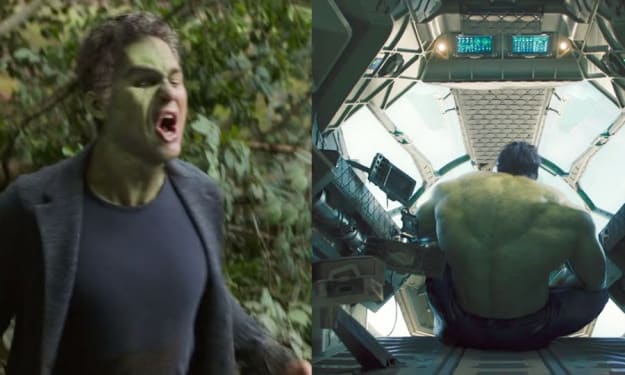
The reason Hulk refused to fight Thanos
The Real Reason Hulk Refused to Fight Thanos 🚨 Most people think that in Avengers: Infinity War, Hulk refused to fight Thanos because he was scared. After all, this was the first time anyone had seen the Green Goliath genuinely overwhelmed in hand-to-hand combat. But the truth might be much deeper than simple fear.
By Literary fusion2 days ago in Critique



Comments
There are no comments for this story
Be the first to respond and start the conversation.