
Eroding Trust: Kenya’s Governance Challenges
A Comparative Analysis of Leadership Failures and Citizen Disillusionment

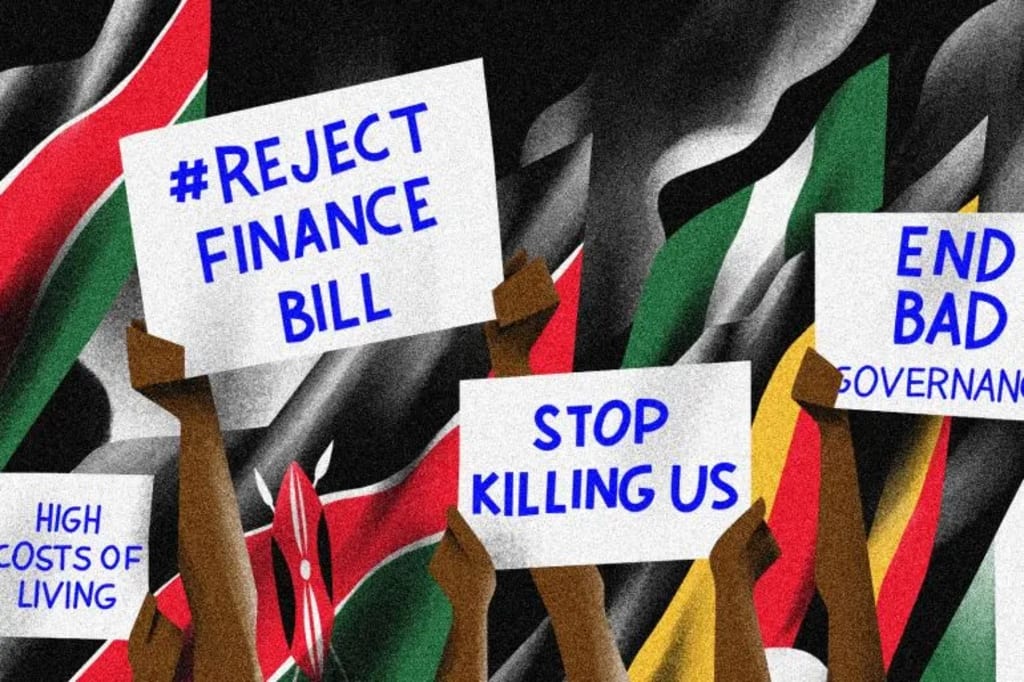
Political disillusionment is not unique to any one country. Across continents, citizens are losing faith in leadership as corruption, authoritarian tendencies, and mismanagement take center stage. South Korea’s recent political turmoil following the controversial imposition of martial law echoes frustrations felt in Kenya, where governance has seemingly prioritized elite interests over the people's well-being. Both cases highlight a deepening crisis of leadership, corruption, and eroded trust, underscoring the urgent need for systemic reform.
South Korea: Democracy Undermined by Authoritarian Moves
South Korea’s President Yoon Suk Yeol recently invoked martial law under the guise of addressing security threats, only for it to be swiftly revoked by Parliament. The move, coupled with mass resignations of senior officials, left the nation reeling from the shadow of its authoritarian past. Protesters flooded the streets, fearing a regression to the days of military rule, and political divisions deepened.
Amid these developments, South Koreans voiced concerns about the government prioritizing power consolidation over addressing pressing issues like economic instability and geopolitical tensions with North Korea. The crisis has weakened public trust in institutions that should safeguard democracy, leaving citizens questioning the direction of their nation.
Kenya: Governance Lost in Corruption and Manipulation
While South Korea grapples with authoritarian tendencies, Kenya faces a different, yet equally damaging, governance crisis. The Kenyan government, under President William Ruto, has been accused of co-opting the opposition and creating a political system devoid of checks and balances. Parliament, which should serve as the people's voice, is perceived as a rubber stamp for the executive's decisions.
The situation has alienated ordinary citizens, who feel sidelined by a government embroiled in corruption scandals and unfulfilled promises. Among the most glaring issues:
- Corruption in Churches: President Ruto’s weekly donations of KES 50 million to churches have raised eyebrows. Critics, including the Catholic Church, have labeled the funds "fruits of corruption," leading to divisions within religious institutions. The National Council of Churches of Kenya (NCCK) has gone as far as banning politicians from addressing congregations, a move welcomed by frustrated citizens.
- Economic Inequality: Despite campaign promises to uplift the underprivileged, the government’s policies have exacerbated the cost of living crisis. Public funds are allegedly diverted into the hands of a few, leaving many Kenyans struggling to make ends meet.
- Trust Erosion: Just as South Koreans question the motives behind martial law, Kenyans have lost faith in a government that appears to serve its own interests rather than those of its people.
Shared Themes of Citizen Disillusionment
Abuse of Power:
In South Korea, martial law was a blatant overreach, justified as necessary for security but widely seen as a move to stifle dissent.
In Kenya, the executive’s dominance and manipulation of Parliament undermine democracy, leaving citizens without a voice.
Corruption as a Catalyst:
South Korea’s scandals include allegations of financial mismanagement and erosion of democratic norms.
Kenya’s pervasive corruption affects every sector, from politics to religion, creating widespread disillusionment.
Economic Mismanagement:
The Korean won’s historic lows against the dollar reflect economic instability exacerbated by political uncertainty.
Similarly, Kenya’s growing debt and inflation have left citizens struggling, with many questioning the government's fiscal priorities.
The Role of Civil Society
Both nations have seen civil society step up where governments have failed. In South Korea, mass protests against martial law demonstrated citizens' commitment to democratic principles. Meanwhile, in Kenya, institutions like the NCCK have taken a stand against corruption by rejecting political donations and barring divisive rhetoric in churches.
These efforts highlight the critical role of grassroots movements in holding leaders accountable and advocating for systemic change. However, the impact of such actions is often limited without structural reforms and international pressure to uphold democratic norms.
The Way Forward: Lessons from Shared Struggles
While South Korea and Kenya face different contexts, their challenges underscore universal truths about governance and the fragility of public trust. To move forward:
Strengthen Institutions:
Both nations must invest in independent institutions that can act as checks on executive overreach and corruption.
Promote Transparency:
Transparency in governance is essential to rebuilding trust. Whether through public audits in Kenya or parliamentary oversight in South Korea, accountability mechanisms must be prioritized.
Empower Citizens:
Encouraging citizen participation in governance and policymaking can help bridge the gap between governments and their people.
Regional and Global Pressure:
The international community should leverage diplomatic channels to support democratic reforms and denounce authoritarian practices.
Conclusion: A Call for Accountability
South Korea and Kenya exemplify the consequences of governance failures rooted in power consolidation and corruption. While the contexts differ, the underlying issues of citizen disillusionment, economic inequality, and erosion of trust are alarmingly similar.
For both nations, the path to redemption lies in embracing accountability, fostering inclusivity, and prioritizing the needs of their citizens. Until then, the shadow of discontent will continue to loom over their democracies, serving as a stark reminder of what happens when leaders prioritize power over people.
About the Creator
Bryan Wafula
Storyteller focused on current events and cultural dynamics. I explore global narratives, challenging media perspectives, advocating for humanitarian safety, and highlighting resilient voices—particularly in conflict zones.
Keep reading
More stories from Bryan Wafula and writers in Critique and other communities.
Cassie and Johnny
I’m the kind of dame you notice. I’m no femme fatale, but you can’t ignore me, at least not until I warn you about what’s coming, then everybody ignores me. Hell, they usually blame me afterwards and give Johnny all the credit for saving the day, but my Johnny couldn’t save a seat at the movies without my help. Sure, he’s brawny, but brainy? Not so much. Like that time I asked him to spot me five bucks, and he said he didn’t see it anywhere on me, and believe you me, he looked but good.
By Harper Lewis4 days ago in Critique
SHEESH Customer Gets Knocked Out With An Uppercut!
What in the name of Freaky London is this?! A man at a restaurant has all the words but no action in this quick clip. A black man has a disagreement with a smaller man of less build. He continually speaks down to the brown man. Finally, the yellow man puts his hands to the side and with a surprising upper cut, knocks the tall black man off his feet.
By Skyler Saunders7 days ago in Critique
A Historic Declaration
We the People of the Husbands of the United States of America, in Order to form a more perfect Union, and I mean you...with me...establish Justice, insure domestic Tranquility, provide for the common defence, promote the general Welfare, and secure the Blessings of Liberty to ourselves, after Puberty, do ordain and establish this Declaration of Co-Dependence.
By Gerard DiLeo5 days ago in Humans



Comments
There are no comments for this story
Be the first to respond and start the conversation.