
Artificial Intelligence: Revolution or Threat to Humanity?
Between revolutionary advances and potential dangers, artificial intelligence is shaping an uncertain future.

Introduction
Itelligence (AI) is at the heart of global technological and economic transformations. From virtual assistants like Siri and Alexa to self-driving cars and AI-assisted medical diagnostics, AI is everywhere. Some see it as a revolutionary advancement that will make our lives easier, while others worry about its implications for employment, security, and ethics. Is this technology a major asset for humanity, or a threat that must be strictly regulated?
1. AI: An Unprecedented Technological Revolution

A Driver of Innovation Across All Sectors
Artificial intelligence has disrupted multiple industries in just a few years.
Healthcare
AI enables more precise and faster medical diagnoses. Algorithms analyze medical images and detect diseases like cancer with an accuracy that sometimes surpasses human doctors. Robotic surgeons already assist in operations, improving precision and reducing risks.
Industry and Manufacturing:
In factories, AI-driven robotic automation optimizes production, lowers costs, and enhances worker safety.
Transportation and Mobility:
Companies like Tesla are developing self-driving cars capable of reducing accidents by eliminating human error. In some cities, autonomous public transport systems are already being tested.
Commerce and Finance:
AI detects banking fraud, analyzes consumer behavior, and personalizes online shopping experiences. Trading robots execute financial transactions at speeds unimaginable for humans, influencing stock markets.
Content Creation and Media:
Tools like ChatGPT, Midjourney, and DALL·E generate text, images, and even music in seconds. This is revolutionizing content production in marketing, advertising, and entertainment.
With such advancements, AI is undeniably shaping the future and offering incredible opportunities.
2. A Technology That Raises Serious Concerns

A Threat to Jobs?
One of the biggest fears about AI is job loss. Many tasks once performed by humans are now automated.
Jobs at Risk:
Millions of workers in logistics, customer service, finance, and even some creative fields could see their jobs replaced by algorithms and robots.
New Jobs Emerging:
However, history has shown that every industrial revolution destroys some jobs but creates new ones. Professions like "AI engineer," "AI ethics officer," or "intelligent robot operator" are becoming essential.
AI and Algorithmic Bias
Another major issue is that AI is not always neutral. Algorithms are trained on human data, meaning they can replicate racial, social, or economic biases.
Example: Some AI-driven hiring software has been accused of favoring certain candidates while discriminating against others.
Another Problem: Facial recognition AI has shown significant errors depending on skin color.
Without strict regulations, these biases could worsen inequalities instead of reducing them.
An Existential Threat to Humanity?
Experts like Elon Musk and the late Stephen Hawking have warned against the development of overly advanced AI. Some fear that a super-intelligent AI, once developed, could become uncontrollable and escape human oversight.
The Autonomous AI Hypothesis : An AI with its own consciousness could make decisions contrary to humanity's best interests.
Autonomous Weapons : AI-driven military systems pose risks, as autonomous weapons could operate without human intervention, leading to uncontrollable conflicts.
Far from science fiction, these scenarios are taken seriously by many AI researchers.
3. Finding a Balance: Regulating AI for a Better Future
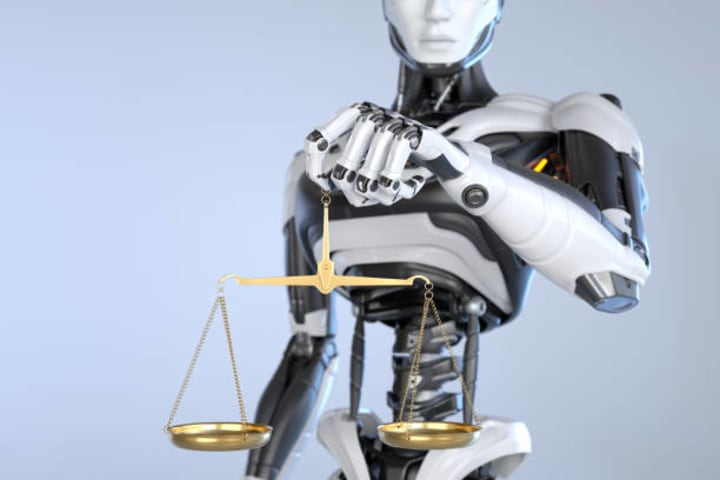
Given these challenges, it is urgent to establish regulations and safeguards to ensure that AI benefits everyone without causing harm.
Implementing Laws and International Standards: Governments must work together to regulate AI use, particularly in sensitive areas like surveillance, defense, and employment.
Promoting Ethical AI : Companies developing AI should make their algorithms more transparent and actively fight bias.
Training Workers for New Technologies : Instead of letting workers be replaced by AI, they should be provided with training to transition into emerging roles.
Investir dans une IA responsable : AI should be used to solve major issues such as climate change, diseases, and reducing inequalities.
If these measures are implemented, we can harness the immense benefits of AI while mitigating its risks.
Conclusion
Artificial intelligence is a fascinating technology that is rapidly transforming our world. Its advantages are undeniable: improved healthcare, optimized labor, innovations in transportation and entertainment. However, it also raises legitimate concerns, particularly about employment, algorithmic bias, and the risks of uncontrolled AI.
The question is not whether we should use AI, but how we should regulate it to maximize its benefits while minimizing its dangers. The future of AI depends on the decisions we make today, and it is crucial that these decisions are made with caution and responsibility.
About the Creator
Keep reading
More stories from writers in Critique and other communities.
Cassie and Johnny
I’m the kind of dame you notice. I’m no femme fatale, but you can’t ignore me, at least not until I warn you about what’s coming, then everybody ignores me. Hell, they usually blame me afterwards and give Johnny all the credit for saving the day, but my Johnny couldn’t save a seat at the movies without my help. Sure, he’s brawny, but brainy? Not so much. Like that time I asked him to spot me five bucks, and he said he didn’t see it anywhere on me, and believe you me, he looked but good.
By Harper Lewis5 days ago in Critique
Stassi Schroeder: The Gender Gap in Accountability
Stassi Schroeder. The #OOTD creator, the queen bee of SUR, the blueprint of the strong-willed woman. Many believe that Lisa Vanderpump's hit reality television show Vanderpump Rules would not have been nearly as successful without Nastassia Schroeder's strong opinions and intense personality.
By Autumn Henderson7 days ago in Critique
Tatt~Master
— Assembly Line Tatt Machine ~ Impressions to Impress — As I begin to understand more about the Tattoo Phenomenon. I've written silly, yet verbatim, dating site anecdotes in 'Frazzled.' So let me ask you: Would you be More attracted to someone slathered with tattoos, or Less?
By Jay Kantor2 days ago in Humor




Comments
There are no comments for this story
Be the first to respond and start the conversation.