
Who killed St. Frederick of Utrecht?
A medieval murder mystery nearly 1200 years old.

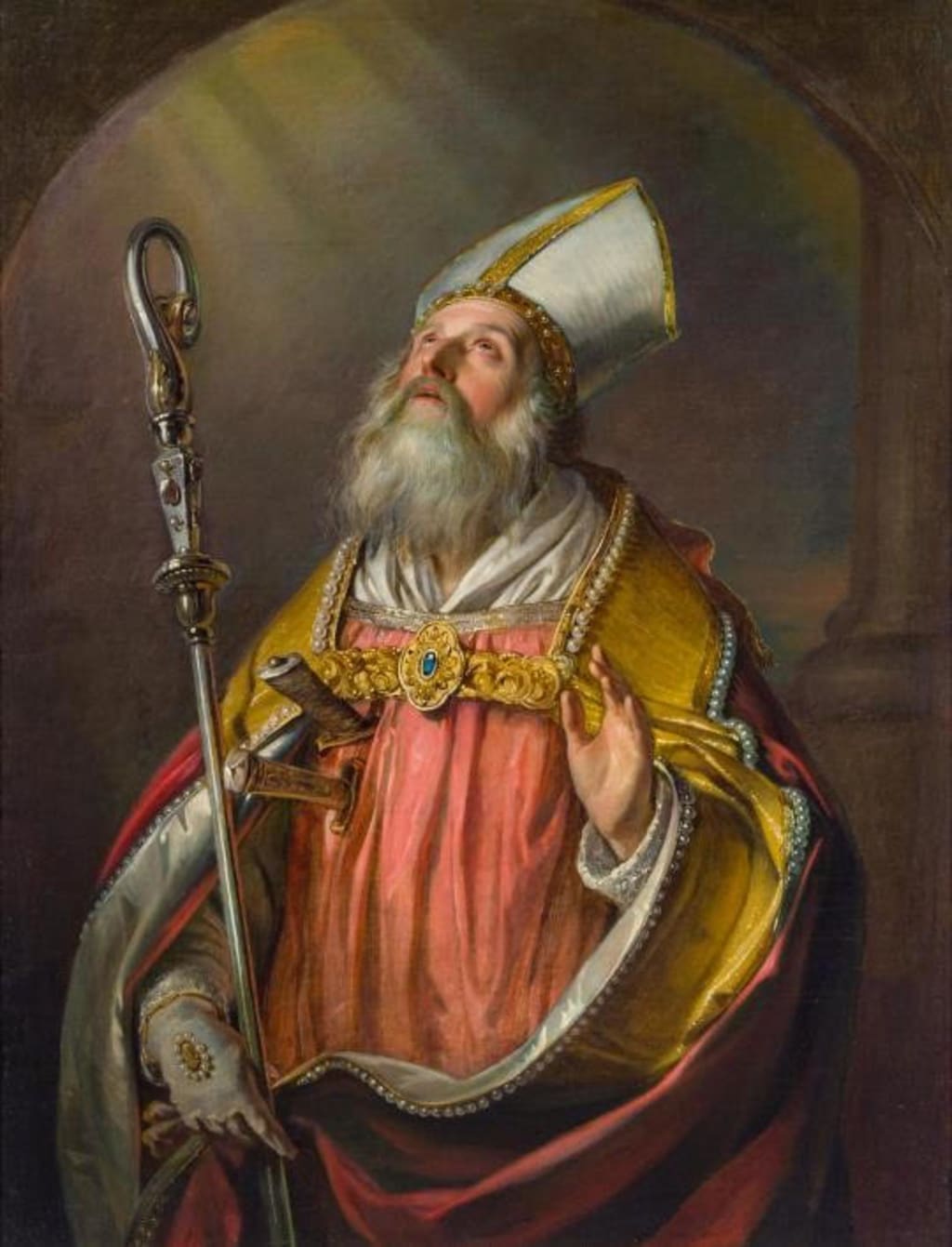
His enemies were numerous. He had gained the ire of the Empress by criticizing her incestuous affairs and political scheming. He was despised by the pagan kings of Frisia for preaching against the human sacrifices they engaged in. St. Frederick knew his mission on Earth was to not permit evil but rather to cut it down with the sharpness of his tongue and pierce through it with the power of prayer.
Who was St. Frederick of Utrecht?
St. Frederick was born around 780 A.D. to a family of Frisian nobility. His grandfather was King Radbon, the last independent king of Frisia (the lands in modern-day northern Netherlands and northwestern Germany). His grandfather was able to hold out the longest against the Frankish armies. You could say St. Frederick inherited his grandpa's rebellious zeal.
St. Frederick would be educated by monks in his hometown of Utrecht, Netherlands. He quickly gained notoriety for his knowledge and piety and was assigned to catechizing new converts. It wasn't before long that he was appointed Bishop of Utrecht.
Friction with Frisian Pagans
As Bishop of Utrecht, St. Frederick began a campaign to convert the Frisian pagans that lived in the northern part of his diocese. Missionaries, including St. Odulf, were sent to evangelize these communities living in the northern woodlands. For reference, this trek is 32 hours by foot today. The most troubling of these pagan tribes was located in the town of Walcheren. This required St. Frederick to deal with personally.
The Frisians were engaged in many customs that were in direct conflict with Christian moral teaching. Incestual marriage was common amongst the Frisian pagan tribes. The Frisians, similar to Germanic pagans, also participated in ancestral worship, animal sacrifice, and occasional human sacrifice. St. Frederick openly and fervently preached against these pagan customs and began his zealous campaign to win these souls in the name of Christ. And for his evangelization efforts, he gained the fury of the pagan tribal chiefs.
An Enemy in the Empress
Frisian tribes were not the only ones who grew to despise St. Frederick. The Empress of the Holy Roman Empire, Judith of Bavaria took issue with St. Frederick's increasing involvement in royal politics. St. Frederick was a spiritual advisor of Emperor Louis the Debonair. In this position, he criticized Empress Judith, lambasting her for her adulterous affairs. Empress Judith was accused of having an affair with Louis the Debonair's godson and trusted advisor, Bernard of Septimania. There were also accusation of Judith's involvement in soothsaying and witchcraft. The accusations were so severe that Judith was forced into an Italian nunnery. For this, Judith held a resentment towards St. Frederick until her death in 843.
A Medieval Murder
On July 18th, 838, St. Frederick was offering thanksgiving after Mass when he was stabbed by two assassins. His attackers drove two daggers into his chest while he was praying Psalm 144. The final words to leave his lips were "I will praise the Lord in the land of the living". There's something divinely ironic about this.
In the aftermath the response was the church was swift, proclaiming Frederick a martyr and saint. However, no attacker was brought to justice. Did Empress Judith hire two assailants to silence the outspoken bishop? Some 11th and 12th century writers point the finger to her, however many of these accusations were political in nature.
Most sources accuse the Frisian pagans of Walcheren of murdering St. Frederick. This is the also conclusion of church historian Cesario Baronio, citing the hostility towards Christians in Walcheren.
St. Frederick's remains are buried at St. Salvator's Church in Utrecht. To this day, nobody knows for certain who the murderers were. It might as well be a murder mystery lost to time. Nonetheless, his death serves as a powerful testament unwavering piety and discipline even if it means upsetting the powers at-be.
St. Frederick of Utrecht, pray for us.
About the Creator
The Global Penitent
Unfiltered faith. Underground Stories. Catholic + Orthodox journalism that punches through the noise. Tradition, truth, and the margins - no fluff, no fear.
Keep reading
More stories from writers in Criminal and other communities.
AIR FORCE ONE INCIDENT WHY A TECHNICAL ISSUE TURNED A ROUTINE FLIGHT INTO A GLOBAL HEADLINE
AIR FORCE ONE INCIDENT WHY A TECHNICAL ISSUE TURNED A ROUTINE FLIGHT INTO A GLOBAL HEADLINE Air Force One is more than just a presidential aircraft. It is a flying symbol of American power, political stability, and national security. That is why any incident involving it instantly captures global attention. A recent technical issue that forced Air Force One to alter its flight plans quickly became a major news story, raising questions about safety, politics, and the future of presidential aviation.
By America today 4 days ago in Criminal



Comments