
Two Men's Determination to Solve the Green River Murders
The police are the voice of the victims.

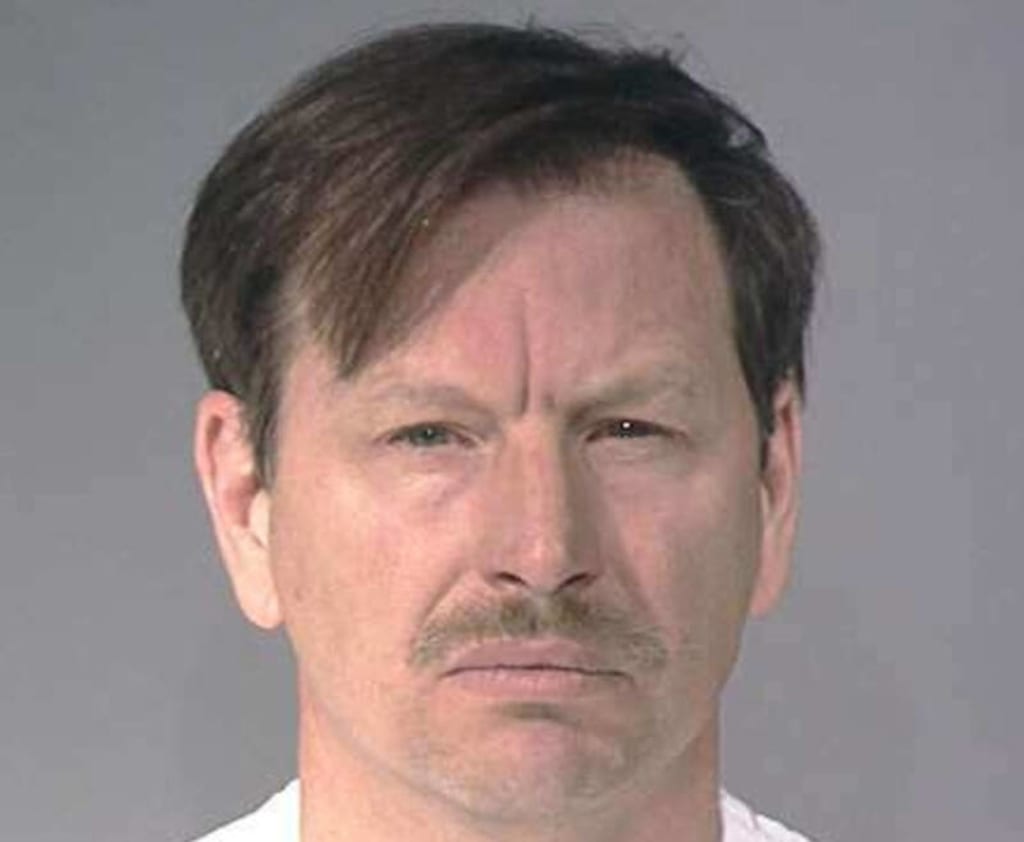
Tom Jensen had one case during his career in homicide; it is a case he was not prepared to let go of. Finally, after twenty years, his hard work yielded a result; he caught the Green River Killer. Gary Ridgway claimed the lives of up to ninety women before he was apprehended. For a man who killed more than Ted Bundy, Ridgway is less well known. If it hadn’t been for the determination of the police chasing him, he may have walked free.
The Green River Killer
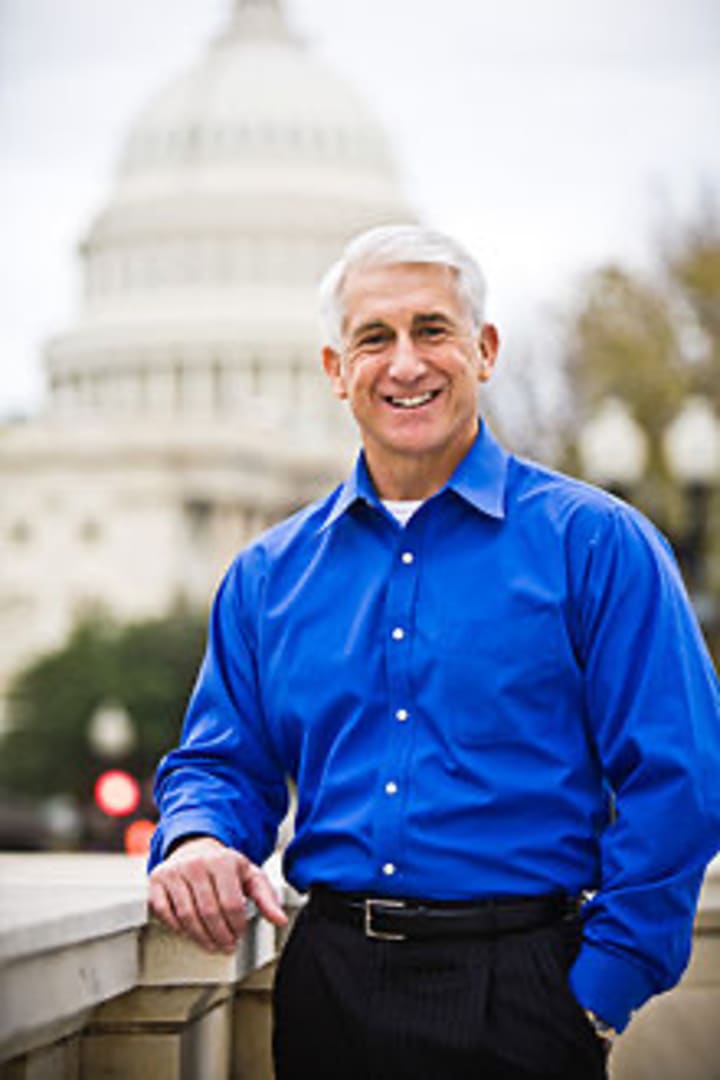
On 15th August 1982, Dave Reichert attended a crime scene where two naked female bodies were discovered. The women had both been strangled and left close to each other. As he walked the crime scene, he discovered a third body in similar circumstances; this took the victims to five, two already having been found. The police force clearly had a serial killer in their midst. Dave Reichert was made head of the task force assigned to catch the Green River Killer, a nickname given due to the locations of the bodies.
Forensics examined the bodies; some contained semen. Despite this, technology had not advanced to where police could search for a match. What was needed was traditional police work. Officers were drafted in from other departments to help with the search. One of those officers was Fae Brooks, who came from sex crimes. Dental records and fingerprints had led to some of the victims being identified as prostitutes, one that Brooks had met previously. The task force decided to concentrate on The Strip, an area in Seattle where prostitutes frequented.
Melvyn Foster
One name kept coming up as they worked The Strip: Melvyn Foster. Foster was in his 40s, a cab driver who had previously phoned in a fake tip to the task force. When they examined his background, they discovered although he lived some distance away, he drove his cab along The Strip. The FBI profile had said that he would become involved with the case, so he fitted the profile. Incidentally, the profile was compiled with help from Ted Bundy, who had committed similar serial murders.
Foster appeared to be the Green River Killer. When he failed a polygraph, the police felt sure they had found the perpetrator. Without enough evidence to hold him, Foster was released on surveillance. By 1983, thirteen bodies had been discovered over eighteen months.
Detective Tom Jensen

With the mounting body count, extra officers were brought in. One officer that impressed Reichert was Tom Jensen. He was known to be meticulous in his work and have an eye for detail. Jensen was a former navy officer who had worked in burglary and larceny before transferring to homicide. He spent his first months on the task force studying the evidence regarding Foster. It was then that he noticed several of the women had gone missing whilst Foster had been surveilled. It was clear he was not their killer; the police were back to the start with their investigation. Pressure mounted from the public to find the killer; questions were asked if the victims would have been treated differently had they not been prostitutes.
On 21st March 1984, Jensen attended his first murder scene; it was a moment that changed the course of his life. Even now, he has trouble speaking about it.
When a farmers dog returned with what looked like a human bone, the police were called. An area of woods was indicated, which was where Jensen found the skeletal remains of a female between twelve and eighteen years of age. As the remains failed to be identified, they were labelled simply as bones 10. The next day bloodhounds tracked the scent of blood to find a second victim. The killer had now claimed twenty victims in twenty-one months. To help the case, they appealed to the public and offered a $100000 reward.
Gary Ridgway
Following the appeal, a woman calling herself Rebecca walked into the offices and reported an assault she thought might be relevant. Some years prior, a man who said he worked for Kenworth Trucking had hired her; they had gone into the woods where he started to choke her. She fought him off and fled the scene. The task force searched the records of men known for using prostitutes; something seemed familiar about Rebecca’s story. They remembered a man they had looked at who had worked for Kenworth Trucking; they found a mugshot of him and showed Rebecca. She identified Gary Ridgway as her attacker.

Gary Leon Ridgeway was born on 18th February 1949 in Salt Lake City, Utah. He had been raised in Seattle Pacific Highway, a poor, deprived neighbourhood. His father was a bus driver and his mother a sales clerk. Later Ridgway would accuse his mother of sexual assault; he stated he fantasised about killing her. Having been in trouble with the police for stabbing a boy at fifteen, when he left school, Ridgway joined the Navy, serving a tour in Vietnam. Ridgway was married three times, the first two unsuccessfully, although the second yielded a son.
Once he left the Navy, Ridgway joined Kenworth trucking as a painter; he worked there for thirty years. Ridgway had been arrested previously for attempting to strangle a prostitute. He had also been stopped soliciting a prostitute named Kelly McGuiness; McGuiness was missing. The police obtained a search warrant for his house and person; samples were taken for DNA purposes.
The Case Dies
The house search provided no evidence and the forensic scientists were unable to get a blood type to compare the DNA from the semen. Therefore, there was no evidence that proved Ridgway was the Green River Killer. At this point, the sheriff decided that it was time to cut the spending on the task force, as it cost too much. All officers were assigned other cases, except one man who would not give up, Tom Jensen. He refused to be taken away from the case.
The case remained dormant for many years. Then, in 1997, Dave Reichert was elected sheriff and now had control of the budget. He decided to put a small task force back together to find the Green River Killer. Jensen suggested they look at the science again to see if the advancements could help them. This time the DNA provided a match to Ridgway. Jensen worked on the Green River case for nineteen years and never gave up hope.
Justice at last
Ridgway was arrested on 30th November 2001; initially, he denied the charges but changed his plea to guilty to avoid the death penalty. He also agreed to take the police to the sites of other victims. In December 2003, Ridgway was convicted of killing over forty women; he received a life sentence with no possibility of parole.
Ridgway had been killing for sixteen years. Although the majority of killing was carried out in 1982 and 83, he killed up until 1998. It is thought that he killed less when he was in his third marriage as he was more content; he was still married when he was arrested.
In 2013, Ridgway reported that he had killed nearly ninety women. Detectives are unsure whether this is a true confession or him further craving attention. Ridgway is seventy-two and lives a solitary life at Washington State Penitentiary.
Jensen retired from the police in 2012; however, he could not let the case rest and went back to the force as a volunteer. He felt there was unfinished business as three of the victims were still unidentified.
In 2020, the youngest victim and the first Jensen found was identified. Bones 10 was Wendy Stephens, who had run away at age fourteen; it was thirty years after being murdered that she was identified. Jensen states he will carry on working until all the victims are identified.
You’ve got to send these girls home retired — Tom Jensen
It has been said that the police are the voice of the victims; it is fair to say that the victims of Gary Ridgway could have done a lot worse than have Detective Tom Jensen and Dave Reichert fighting their case.

If you enjoyed this article, please subscribe to my writing, share it and give it a heart. As a writer tips and pledges mean a great deal to me, so a massive thank you if you send one.
About the Creator
Sam H Arnold
Fiction and parenting writer exploring the dynamics of family life, supporting children with additional needs. I also delve into the darker narratives that shape our world, specialising in history and crime.
Keep reading
More stories from Sam H Arnold and writers in Criminal and other communities.
The Inspiring Story of the Convicted Man Who Became an Actor
Danny Trejo is famous for his characters in Con Air and Heat. What is less well known is that Trejo was a convicted drug dealer before his acting career and served over ten years, nearly dying in San Quentin prison. His life would have been different if Robert Rodriguez, determined to hire a Hispanic actor, hadn’t taken one look at him and cast him in From Dusk to Dawn and Desperado.
By Sam H Arnold4 years ago in Criminal
Minneapolis ICE Shooting Updates
In recent weeks, Minneapolis has found itself at the center of a growing legal and political controversy following a shooting involving Immigration and Customs Enforcement (ICE) agents. What initially appeared to be a straightforward federal use-of-force investigation has evolved into a broader dispute between state authorities and federal officials, raising serious questions about transparency, jurisdiction, and accountability. The most significant development so far is the state’s claim that it has been denied access to key evidence related to the incident. As public attention intensifies, the case is no longer just about what happened during the shooting. It is increasingly about who controls the facts, who gets to investigate them, and how justice is supposed to function when federal and state systems collide. What We Know About the Minneapolis ICE Shooting The shooting occurred during a federal immigration enforcement operation in Minneapolis. ICE agents were reportedly conducting official duties when gunfire erupted, resulting in injuries and immediate emergency response. Federal authorities confirmed the incident and stated that internal protocols were activated, including an automatic review by federal oversight bodies. From the beginning, details were limited. Officials cited the ongoing nature of the investigation and concerns about officer safety. This lack of information, while not unusual in federal cases, quickly became a point of friction for Minnesota state authorities, who argued that the public deserved clarity and that the state had a legal role to play in examining the incident. State Authorities Push for Transparency Minnesota state officials, including investigators and legal representatives, formally requested access to evidence connected to the shooting. This evidence reportedly includes body camera footage, surveillance recordings, forensic reports, and internal communication logs from the operation. According to state representatives, these requests were either delayed or denied outright. The state has since gone on record stating that it cannot independently assess the legality of the shooting without full access to the materials. This denial has fueled concerns that federal agencies are operating without sufficient external oversight, especially in incidents involving potential civilian harm. State leaders emphasized that their position is not adversarial by default. Rather, they argue that cooperation between federal and state agencies is essential to maintain public trust, particularly in communities already wary of immigration enforcement. Federal Response and Jurisdictional Limits Federal officials, for their part, maintain that the investigation falls squarely under federal jurisdiction. ICE operates as a federal agency, and shootings involving federal officers are typically reviewed internally and, when appropriate, by federal prosecutors or inspectors general. In statements released following the controversy, federal representatives cited legal restrictions that limit the sharing of evidence during an active investigation. They also stressed that premature disclosure could compromise witness testimony or investigative integrity. This explanation, while legally grounded, has done little to ease state frustrations. Critics argue that “ongoing investigation” has too often been used as a blanket justification for withholding information, even in cases where transparency could prevent misinformation and public unrest. Community Reaction and Public Trust The Minneapolis community has responded with a mix of concern, anger, and fatigue. For many residents, particularly in immigrant and marginalized communities, the shooting has reopened long-standing fears about aggressive enforcement tactics and lack of accountability. Community leaders and advocacy groups have called for the immediate release of non-sensitive evidence, arguing that transparency is a prerequisite for trust. Peaceful demonstrations and public forums have highlighted a broader demand: that no law enforcement agency, federal or otherwise, should be beyond scrutiny. Local officials echoed these concerns, noting that Minneapolis has spent years attempting to rebuild trust between residents and law enforcement. The perception that evidence is being withheld threatens to undermine that progress. Legal Implications of Denied Evidence From a legal standpoint, the state’s inability to access evidence raises complex questions. While federal agencies do have authority over their operations, states also have a responsibility to investigate deaths or injuries occurring within their borders. Legal experts suggest that this dispute could set a precedent. If states are routinely blocked from reviewing evidence in federal use-of-force cases, it may limit their ability to pursue independent inquiries or bring charges under state law when applicable. Some analysts believe the issue could ultimately be resolved in court, with judges determining whether the state has a legal right to access certain materials. Such a ruling could have national implications, influencing how future federal-state conflicts are handled. Political Dimensions of the Case The Minneapolis ICE shooting has also taken on a political dimension. Immigration enforcement remains a deeply divisive issue, and incidents like this tend to amplify existing ideological divides. State officials critical of federal immigration policies view the denial of evidence as symptomatic of a larger lack of accountability. Meanwhile, supporters of strict federal enforcement argue that state interference could hinder effective operations and put officers at risk. This political tension complicates the path forward. What might otherwise be a procedural disagreement risks becoming a symbolic battle over immigration, law enforcement authority, and states’ rights. What Happens Next? As of now, the investigation continues under federal oversight, while the state explores its legal options. Negotiations between state and federal officials have reportedly not been ruled out, suggesting that a compromise could still be reached. Potential next steps include limited evidence sharing under confidentiality agreements, congressional inquiries, or judicial review. Each option carries its own risks and consequences, both legally and politically. What remains clear is that public pressure is unlikely to fade. Minneapolis residents, like many Americans, are demanding clarity, fairness, and accountability in cases involving law enforcement use of force. A Broader Conversation About Accountability The Minneapolis ICE shooting is no longer just a single incident under investigation. It has become a lens through which broader issues are being examined: the balance of power between federal and state authorities, the limits of transparency, and the role of public oversight in a democratic society. Whether or not the state ultimately gains access to the evidence, the controversy has already sparked an important conversation. How that conversation translates into policy, practice, or reform remains to be seen, but its impact will likely extend far beyond Minneapolis. In the end, accountability is not only about assigning blame. It is about ensuring that systems function openly and fairly, especially when lives are affected. The outcome of this case may help determine how well those principles are upheld in the future.
By Saboor Brohi 6 days ago in Criminal
Federal Law Enforcement Shooting in Minneapolis Sparks National Debat
## **Federal Law Enforcement Shooting in Minneapolis Sparks National Debate** In early 2026, a serious incident unfolded in Minneapolis when federal law enforcement officers shot a civilian during a large-scale operation in the city. The event immediately drew public attention and ignited widespread discussion about the role of federal agencies, public safety, and accountability. The shooting occurred in a residential area, creating fear and confusion among residents and prompting strong reactions from local leaders and community groups.
By America today 7 days ago in Criminal


Comments
There are no comments for this story
Be the first to respond and start the conversation.