
The Unsolvable Case of Death Part 3: meetings
meetings with an unknown person and what happened during them


In the waning days of October and into early November, she took up residence at the Hotel Neptune in Bergen. During this time, she moved frequently between Bergen and Stavanger, but for a stretch of five days, she remained in Bergen. One evening, a woman working in the hotel restaurant caught sight of her sitting alone at a table.
There was an air of quiet sadness about her. The following evening, however, she returned, but this time not alone. An older man with gray hair sat across from her. The hotel staff member believed he might have been Norwegian, a detail she noted, for the woman was known to converse with the hotel staff in German.
What struck the waitress most was the eerie stillness between the two. Neither spoke a word throughout their time together. The man sat, absorbed in reading a sheet of paper, while the woman remained motionless, her expression cold and serious. The staff member, watching this peculiar scene unfold, remarked that it did not feel at all like a romantic dinner.
It was clearly some form of meeting, though why neither of them spoke remained a mystery. The hotel worker later relayed this curious detail to the police during questioning, yet strangely, no mention of the gray-haired man appeared in any of the official reports. There was, however, another oddity surrounding her stay at the Neptune.
A maid, who had encountered the woman several times during her visit, recalled a peculiar detail: the woman had two suitcases. But the truly unsettling part of the story came when the maid described a small table, which the woman had placed under the window of her room. For reasons unknown, the woman took the table out of the room, turned it upside down, and set it in the hall.
A few weeks later, in Bergen, a strange couple wandered into a home furnishings store. They lingered for an unusually long time, searching for a wall mirror. They spoke in a language that the shop workers couldn't quite place, but judging by their accents and appearance, the workers speculated they were from somewhere other than Norway.
The couple's language could have been either German or Eastern European, but neither of them seemed to speak a word of English. The woman’s description closely aligned with that of the "Isal woman," yet one detail seemed off—this woman’s hair was untamed and curly, whereas the Isal woman had been known for her neatly styled appearance. Still, this discrepancy might have been explained by one of the wigs later discovered in her suitcase.
This detail also raised further questions: why was she shopping for a mirror while staying in hotels? And why, despite her apparent interest in the item, did no one else recall seeing her with it?
Earlier, I mentioned that the final hotel she checked into in Bergen was on the 19th of November, even though she had departed Stavanger the day before, on the 18th, by boat. This curious timing was because she had first checked into another hotel nearby—the Hotel Rosenkrantz. That night, she stayed in room 426.
It was customary for maids at the time to make up the beds in the evening rather than just in the morning. One early evening, as the maid approached room 426, she noticed there was no "Do Not Disturb" sign on the door. Assuming the room was empty, she knocked lightly and entered without hesitation. To her surprise, the woman was lying in bed, and a young man with blonde hair, dressed in a gray suit, was seated across the room in a chair.
The maid, startled, quickly apologized and asked if it was alright to make the bed. In response, the woman silently rose from the bed and stepped away, distancing herself further. The maid, feeling increasingly uneasy, hurriedly completed her task, apologizing once more before leaving the room. What struck her as particularly strange, however, was the unsettling silence that filled the space. Neither the woman nor the man spoke a single word to her; they simply watched in quiet observation until she finally left.
Yet again, the police chose not to include this encounter in their reports. When they made public their information about the "Isal woman," none of the men who had been present in the room came forward to claim any connection to her.
The following morning, the Isal woman checked out of the hotel and moved to another, just a short distance away—the Hotel Henman. There, she registered under a different name, attempting to disguise her handwriting. She took a room at the corner of the hotel, one that offered a perfect view of both streets leading up to the building.
The staff noted a peculiar detail about her: a very strong, almost spicy perfume that seemed to cling to the air wherever she went. During her stay, the housekeeper found herself largely forbidden from entering the room, with a "Do Not Disturb" sign hanging from the door almost continuously.
This time, the maid did not attempt to enter the room, though on occasion she would go in to tidy up. The Isal woman exhibited a particularly odd habit whenever she was absent from her room: she would move the armchair from inside the room out into the hallway.
Yet, whenever she was about to leave, she would return the chair to its original place inside. The maid, puzzled by this strange routine, found the woman’s behavior overall quite peculiar. Combined with her unusual appearance, the Isal woman seemed to stand apart from everyone else, as many others had noted.
On the 23rd, the Isal woman checked out of the Hotel Henman. She hailed a taxi, her two suitcases in tow, and made her way to the train station, where she checked in her luggage. After that, she vanished. No one saw her again, until, one week later, her charred body was found in a valley, burned beyond recognition.
About the Creator
ADIR SEGAL
The realms of creation and the unknown have always interested me, and I tend to incorporate the fictional aspects and their findings into my works.
Keep reading
More stories from ADIR SEGAL and writers in Criminal and other communities.
The bone Collector
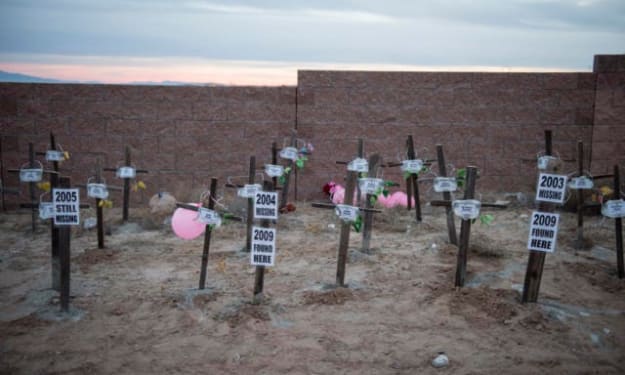
The Terrifying Case of West Mesa: A Documentary Investigation The events that unfolded in 2009 in Albuquerque, New Mexico, captured global attention and continue to intrigue many to this day. The story of the "West Mesa Bone Yard" is marked by a battle between law enforcement, a lack of leads, and the hopelessness
By ADIR SEGALabout a year ago in Criminal
Michigan Synagogue Shooting: Fear, Faith, and Survival
Places of worship are meant to feel safe. People gather there to pray, reflect, and share quiet moments with their community. For many families, a synagogue is more than a building. It is where children learn traditions, where people celebrate holidays, and where comfort is found during difficult times.The michigan synagogue shooting shattered that sense of safety in an instant. What began as an ordinary day quickly turned into confusion and fear. Families inside the building suddenly faced a situation no one expects in a place meant for peace.
By Muqadas khan2 days ago in Criminal
Top tipple tricks
Been thinking a lot about drinking, lately. Not least because of a recent episode of over-indulgence and the inevitable after effects. Some readers may recall the earlier articles I wrote about beating the booze. Here I set out an experiment in techniques for cutting down on my alcohol intake. The experiment was successful, the techniques worked, and I have armed myself with an arsenal of weapons in the war against the demon drink. I have yet to fire the first round however. It's all a question of timing (perhaps procrastination).
By Raymond G. Taylor7 days ago in Psyche



Comments
There are no comments for this story
Be the first to respond and start the conversation.