
The Twisted Tale of Leopold and Loeb: Brilliant Minds Turned Murderous in 1920s Chicago
In 1920s Chicago, Nathan Leopold and Richard Loeb, two brilliant and privileged young men, believed they could commit the perfect crime and get away with murder.
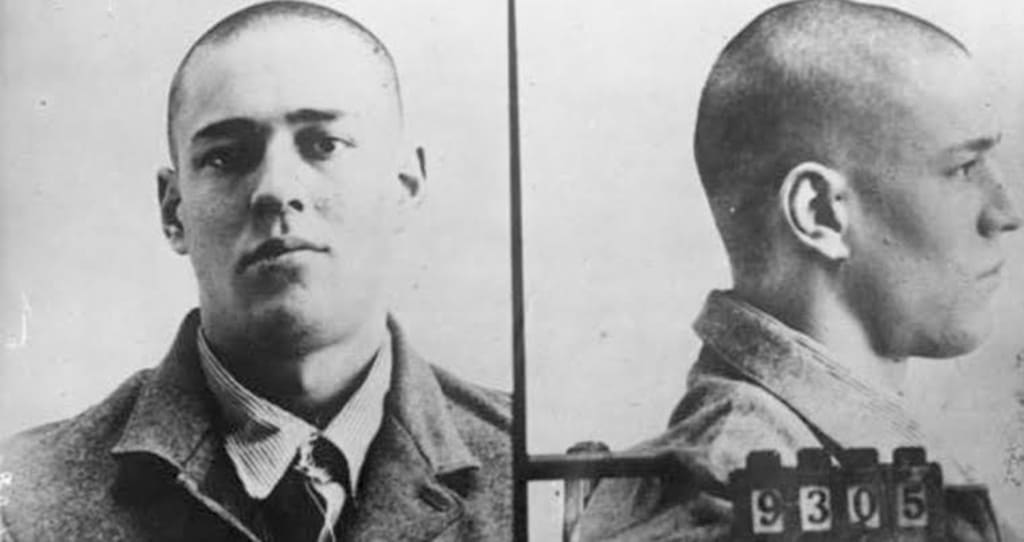
In the roaring 1920s, Chicago was a city of energy and excess, a place where opportunities abounded, and the bright lights of progress shone brightly. Amid this vibrant backdrop, two young men, Nathan Leopold and Richard Loeb, emerged as the epitome of intellect and privilege. However, their brilliance took a dark and malevolent turn as they became convinced they could commit the perfect crime and get away with murder.
Nathan Leopold and Richard Loeb were born into families of affluence, both possessing prodigious intellects that set them apart from their peers. Their families provided them with every opportunity for success, ensuring they received the finest education money could buy. As they grew into adulthood, it seemed the world was at their feet, ready to embrace their brilliance and accomplishments.
But beneath the facade of respectability and academic achievements, a sinister desire lurked. Leopold and Loeb believed they were intellectually superior to the rest of society, including its laws. Their insatiable thirst for excitement and a craving to prove their extraordinary capabilities led them down a path that defied all notions of morality.
In May 1924, their malevolence manifested in a cruel and heinous act that sent shockwaves through the city. The duo hatched a sinister plan to commit the perfect crime: kidnapping and ransoming a victim for an exorbitant amount. They targeted 14-year-old Bobby Franks, a distant cousin of Loeb, whom they lured into their car on a seemingly ordinary day.
What started as a plan for financial gain took a horrifying turn when Leopold and Loeb bludgeoned young Bobby to death with a chisel. The viciousness of the act left the entire community in disbelief and fear. The darkness that resided within these brilliant minds had now been unleashed, and there was no turning back.
Despite their supposed intelligence, the young murderers made grave mistakes that ultimately led to their capture. A pair of eyeglasses found near the crime scene pointed investigators toward them, and under intense police scrutiny, Leopold and Loeb confessed to their monstrous crime. The city was aghast at the revelation that two young men, who seemed destined for greatness, had committed such a heinous act.
The trial that followed became a nationwide sensation. Defense attorney Clarence Darrow took on the seemingly impossible task of sparing Leopold and Loeb from the gallows, arguing against capital punishment. Darrow's impassioned plea convinced the judge, and the two young men received life imprisonment instead.
Behind bars, Leopold and Loeb's twisted minds were subjects of fascination and study. Psychologists sought to understand the motives behind their malevolence. Some pointed to their warped fascination with Nietzschean philosophy, while others speculated that their sense of superiority had bred an entitlement to commit evil deeds. The relationship between the two men was also a topic of interest, with some suggesting they fueled each other's darker impulses.
As the years passed, public interest in the case waned, but the legacy of Leopold and Loeb endured. Nathan Leopold was eventually released on parole in 1958 after over three decades in prison. He attempted to distance himself from his past, seeking education and a quiet life.
Tragically, Richard Loeb's life ended violently in 1936 when he was murdered by a fellow inmate. The once brilliant and privileged young man met a brutal demise, forever buried alongside his malevolent past.
The tale of Leopold and Loeb serves as a haunting reminder of the darker potential that exists within the human psyche. It stands as a cautionary tale, showcasing the devastating consequences when brilliance becomes tainted by malevolence and the sense of invincibility. The 1920s Chicago murder remains a chilling chapter in criminal history, a testament to the destructive power of misguided brilliance. The city's gilded age was forever tarnished by the twisted minds of Leopold and Loeb, two young men who believed they could escape the consequences of their wicked deeds.
About the Creator
Keep reading
More stories from Kure Garba and writers in Criminal and other communities.
Angela Maher
Angela Maher, a vibrant and ambitious young woman, was on the cusp of a new chapter in her life. As she prepared to begin her senior year at Creighton University, she looked forward to a year of academic achievements and exciting opportunities. However, fate had something else in store for Angela and her family as a seemingly joyous occasion turned into a night of tragic irony.
By Kure Garba2 years ago in Criminal
The Facebook Marketplace of Horrors: Inside the groups where bones are traded like baseball cards.
It Wasn't the Dark Web When we hear about the illegal sale of human body parts, we imagine the "Dark Web"—encrypted Tor browsers, Bitcoin wallets, and shadowy Russian servers. The terrifying reality of the Jonathan Gerlach case is that he wasn't hiding in the digital shadows. He was hiding in plain sight.
By Sunshine Firecracker5 days ago in Criminal
The Mayor’s Silence: Thomas Reinhold, Jonathan Gerlach, and Ephrata's 'House of Skulls'
The Promotion to Failure Thomas G. Reinhold isn’t a newcomer to Ephrata’s power structure; he is its architect. After spending over a decade (2012–2025) as Council President—rubber-stamping police budgets and prioritizing quick, unanimous meetings over deep scrutiny—Reinhold finally ascended to the Mayor’s office in January 2026.
By Sunshine Firecracker4 days ago in Criminal


Comments
There are no comments for this story
Be the first to respond and start the conversation.