
The True Story Behind the Smiley Face Murders Theory
The True Story Behind the Smiley Face Murders Theory

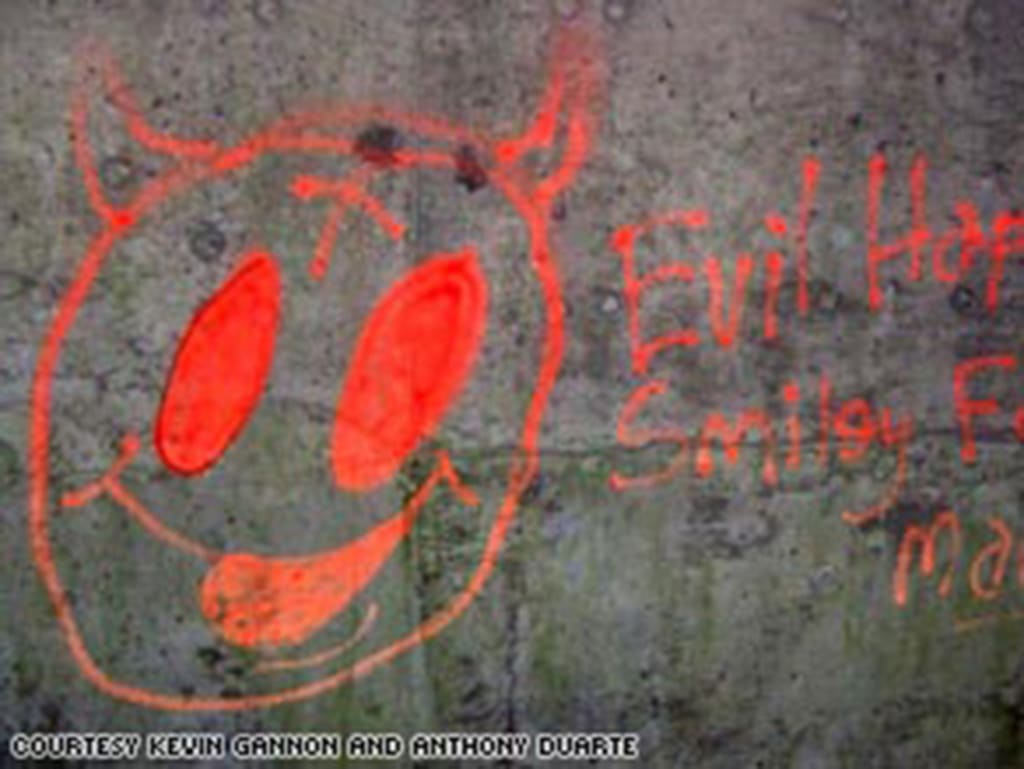
The "Smiley Face Murder" theory, popularized by retired NYPD detectives Kevin Gannon and Anthony Duarte, proposes a sinister connection between a series of drowning deaths of young men across the United States. They believe these deaths are not accidental but rather the work of a serial killer or a group of killers, often referred to as the "Smiley Face Killers."
The theory is based on the alleged discovery of smiley face graffiti near the locations where the bodies were found. Gannon and Duarte argue that these symbols are a signature of the killer or killers, indicating a ritualistic element to the crimes. However, many experts and law enforcement agencies have dismissed this theory as unfounded.
The majority of law enforcement agencies and forensic experts have concluded that the deaths in question were accidental drownings, often linked to alcohol intoxication or drug use. They argue that the smiley face graffiti is a coincidence or a hoax, and there is no credible evidence to support the theory of a serial killer or killers targeting young men.
The Smiley Face Murder theory has been widely criticized for its lack of scientific evidence and its reliance on circumstantial evidence. Many experts have pointed out the inconsistencies in the theory, such as the varying locations of the deaths, the lack of a consistent modus operandi, and the absence of any physical evidence linking the cases.
Despite the overwhelming evidence against the Smiley Face Murder theory, it continues to attract attention and generate controversy. While the theory may be intriguing, it is important to rely on facts and evidence, rather than speculation and conjecture.The Smiley Face Murder theory, popularized by retired NYPD detectives Kevin Gannon and Anthony Duarte, has gained significant attention and controversy despite its lack of substantial evidence. The theory posits that a series of drowning deaths of young men across the United States are linked to a serial killer or killers who leave smiley face graffiti at the crime scenes.
While the theory has captured the public's imagination, it has been widely criticized by law enforcement agencies, forensic experts, and mental health professionals. Many experts have pointed out the lack of scientific evidence to support the theory, arguing that the deaths in question are likely accidental and unrelated.
The smiley face graffiti, often cited as evidence of a sinister connection, has been dismissed as coincidental or even hoaxed. There is no consistent pattern or modus operandi linking the cases, and the locations of the deaths are geographically diverse.
Despite the overwhelming evidence against the Smiley Face Murder theory, it continues to persist in popular culture. The theory has been featured in numerous documentaries, true crime shows, and online forums. However, it is important to approach such theories with a critical eye and to rely on evidence-based analysis.
It's crucial to remember that sensationalized theories, while intriguing, can often overshadow the real tragedies behind individual deaths. While the Smiley Face Murder theory may be captivating, it is important to focus on the facts and avoid jumping to conclusions.
The enduring appeal of conspiracy theories, such as the Smiley Face Murder theory, often lies in their ability to offer simple explanations for complex events. By attributing a series of seemingly unrelated deaths to a single, malevolent force, the theory provides a sense of order and understanding in a world often characterized by chaos and uncertainty.
However, it's important to critically evaluate such theories and to rely on evidence-based analysis. In the case of the Smiley Face Murder theory, there is a significant lack of concrete evidence to support the claims made by its proponents. Many of the deaths attributed to the theory have been thoroughly investigated by law enforcement agencies and determined to be accidental.
Furthermore, the theory relies heavily on anecdotal evidence and speculation. The smiley face graffiti, often cited as a key piece of evidence, has been dismissed by experts as coincidental or even hoaxed. The absence of a consistent pattern or modus operandi across the cases further weakens the theory.
While it's natural to seek answers and explanations for tragic events, it's essential to avoid sensationalism and to rely on credible information. By promoting critical thinking and evidence-based analysis, we can prevent the spread of misinformation and conspiracy theories.
About the Creator
Keep reading
More stories from zafer qubeer and writers in Criminal and other communities.
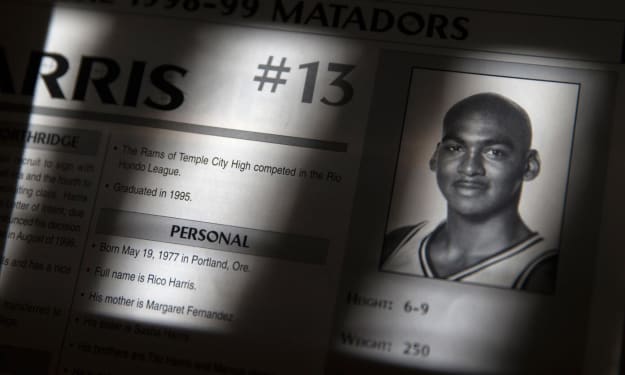
The Odd Circumstances Surrounding Rico Harris’s Disappearance
The disappearance of Rico Harris, a former Harlem Globetrotter, in 2014 remains an unsolved mystery. His case has captivated the public's attention due to the peculiar circumstances surrounding his vanishing.
By zafer qubeerabout a year ago in Criminal
From Chatroom to Grave: The Sharon Lopatka Murder
The case of Sharon Lopatka stands as one of the most chilling and pioneering examples of how the early internet could transform dark fantasies into irreversible reality. In 1996 the 35-year-old internet entrepreneur from Hampstead Maryland led a double life that shocked her community and highlighted the emerging dangers of online anonymity.To those who knew her in person, Sharon Rina Lopatka (née Denburg, born September 20, 1961) appeared utterly ordinary. Classmates and neighbors described her as normal as you can get—a seemingly typical suburban woman who ran her own small online business selling crafts digital services, and other internet-related offerings. Married and living a conventional life in Carroll County, she gave no outward indication of the extreme desires simmering beneath the surface. Yet online, under the alias Nancy Carlson Sharon immersed herself in the shadowy corners of the web, exploring BDSM, sadomasochism, and increasingly violent fantasies. She frequented fetish chat rooms and forums where participants discussed bondage, torture, and even death-related erotica—topics too taboo for mainstream spaces.
By Kure Garba3 days ago in Criminal
Review of 'Man on the Run'
My wife and I saw Man on the Run, a nearly 2-hour documentary on Amazon Prime, about Wings, Paul McCartney's group that flew around the world from shortly after The Beatles broke up in early 1970 to shortly after John Lennon was murdered at the end of 1980, making a Beatles reunion forever impossible.
By Paul Levinson6 days ago in Beat


Comments
There are no comments for this story
Be the first to respond and start the conversation.