
The Setagaya Family Murders: He left behind baffling evidence
A Japanese family brutally murdered in their home in Tokyo; the killer stayed in the house for hours afterward and left behind baffling evidence.

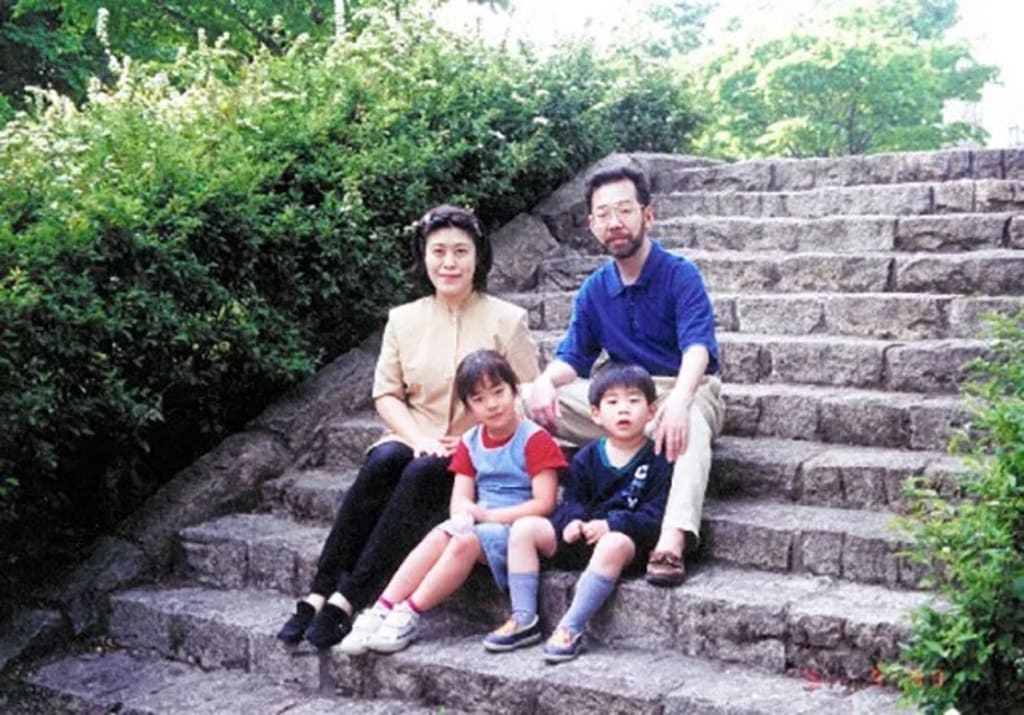
On the night of December 30, 2000, in a quiet suburban neighborhood in Setagaya, Tokyo, a family of four was brutally murdered in their own home. The Setagaya family murders remain one of Japan’s most puzzling and unsettling unsolved cases, with the killer leaving behind an eerie trail of evidence, a crime scene that seemed to tell a strange story, and a haunting sense of mystery that has yet to be unraveled.
The victims were the Miyazawa family: Mikio Miyazawa, a 44-year-old businessman; his wife, Yasuko, 41; their two children, Niina, 8, and Rei, 6; and the family’s pet dog. The family had been living peacefully in their modest two-story home in a quiet neighborhood in the Setagaya district of Tokyo. They were well-liked by their neighbors, and there was no indication that they had any enemies or reason to be targeted. Their deaths shocked the entire city and left a deep scar on the local community.
The murder was discovered the following day, New Year’s Eve, when Mikio’s mother, who lived nearby, went to visit the family. She noticed that the house seemed oddly quiet, and after receiving no response to knocking on the door, she grew concerned. Inside, she found a scene of horrific violence.
The entire family had been murdered in cold blood. Mikio and Yasuko were both found in their bed, stabbed to death. The two children were discovered in separate rooms, also stabbed to death. The family’s pet dog, a small Pekingese, had been killed as well, found strangled with a piece of clothing. The sheer brutality of the murders, combined with the fact that the entire family was wiped out in a single night, immediately led investigators to believe that this was not a random act of violence.
What made the crime even more perplexing was the fact that the killer seemed to have spent an extensive amount of time inside the house after committing the murders. The crime scene was unlike any other. The killer had taken a shower in the Miyazawas’ bathroom, eaten food from the family’s fridge, and even used the family’s computer. In fact, one of the most unsettling aspects of the case was the discovery of the killer’s footprint inside the house, which suggested that the murderer had remained in the home for several hours after the killings, as if the brutal act had been almost casual.
The police also found evidence that the killer had stolen a few items from the home, but there was no clear motive for the murders. There was no sign of a forced entry, and nothing of significant value seemed to have been taken. It was as if the killer had not been after money or revenge, but something more sinister. Despite the horrific violence, nothing seemed to be out of place — there was no indication that this was a robbery gone wrong, nor was there any sign of a personal vendetta against the family.
One of the most disturbing elements of the case was the security footage from a nearby CCTV camera. The video showed a man, who appeared to be in his 20s, walking in the neighborhood on the night of the murders. He was dressed in a jacket, hat, and glasses, his face partially obscured, but the camera managed to capture clear images of him. The footage was released to the public in hopes that someone might recognize the man, but despite extensive efforts, no one was ever able to identify him. The man’s identity remains a mystery to this day.
Over the years, various theories have emerged about the identity of the killer. Some have speculated that the murders were the result of a personal grudge or a dispute that escalated into violence. Others have suggested that the murders were part of a larger, more calculated crime spree, possibly linked to organized crime or a serial killer. There have even been theories that the killer was a stranger who had some sort of psychotic fixation on the Miyazawa family. But despite the many theories, the truth remains elusive.
In the years since the murders, the case has remained unsolved, and the investigation has been one of the most high-profile criminal cases in Japan. The police have examined every possible lead, from DNA evidence to eyewitness testimonies, but no substantial progress has been made. In 2009, authorities officially declared that they were no longer actively investigating the case, though the investigation is still technically open. To this day, the killer has never been caught, and the Miyazawa family’s deaths remain a tragic, unresolved mystery.
In 2021, the case was revisited when new forensic techniques were applied to the evidence, but there has been no breakthrough yet. The police have speculated that the killer may have been a local resident, familiar with the neighborhood, but this theory has not led to any viable suspects.
The Setagaya family murders are a haunting reminder of the vulnerability we all face and the darkness that can sometimes lurk behind ordinary lives. Despite the many questions that remain, the one thing that is certain is that a family’s lives were cut short in the most brutal way imaginable. Their murders remain an open wound in Japanese society, a case that continues to haunt the minds of those who lived through it, and a chilling reminder of just how little we may truly know about the darkness that can exist in our own neighborhoods.
As the years go by, the killer’s identity remains a mystery, and the Miyazawa family’s untimely deaths continue to cast a long shadow over the community of Setagaya.
Thank you for reading!
If you find this piece interesting, please leave a heart, comment, or even subscribe! Your support means a lot to me!
About the Creator
Victoria Velkova
With a passion for words and a love of storytelling.
Keep reading
More stories from Victoria Velkova and writers in Criminal and other communities.
The Mysterious Death of Cindy James: A Case That Defies Explanation
Cindy James was a vibrant, kind-hearted nurse living in Richmond, British Columbia, when her life took a dark and mysterious turn. For nearly seven years, Cindy claimed to be the target of relentless harassment and stalking. Her tormentor seemed to operate in the shadows, leaving cryptic notes, making threatening phone calls, and even physically attacking her. On June 8, 1989, Cindy’s body was found in a chilling scene that only deepened the mystery surrounding her life and death.
By Victoria Velkova12 months ago in Criminal
The Mayor’s Silence: Thomas Reinhold, Jonathan Gerlach, and Ephrata's 'House of Skulls'
The Promotion to Failure Thomas G. Reinhold isn’t a newcomer to Ephrata’s power structure; he is its architect. After spending over a decade (2012–2025) as Council President—rubber-stamping police budgets and prioritizing quick, unanimous meetings over deep scrutiny—Reinhold finally ascended to the Mayor’s office in January 2026.
By Sunshine Firecrackera day ago in Criminal
The $1 Deed: Did Jonathan Gerlach Transfer His Ephrata Property to Hide Assets?
The Paper Trail While the investigation into the Mount Moriah Cemetery grave robberies was quietly building, Jonathan Gerlach was already making moves to separate himself from his most valuable asset.
By Sunshine Firecracker2 days ago in Criminal


Comments
There are no comments for this story
Be the first to respond and start the conversation.