
The Psychology of a Criminal Mind
Understanding What Drives People to Break the Law

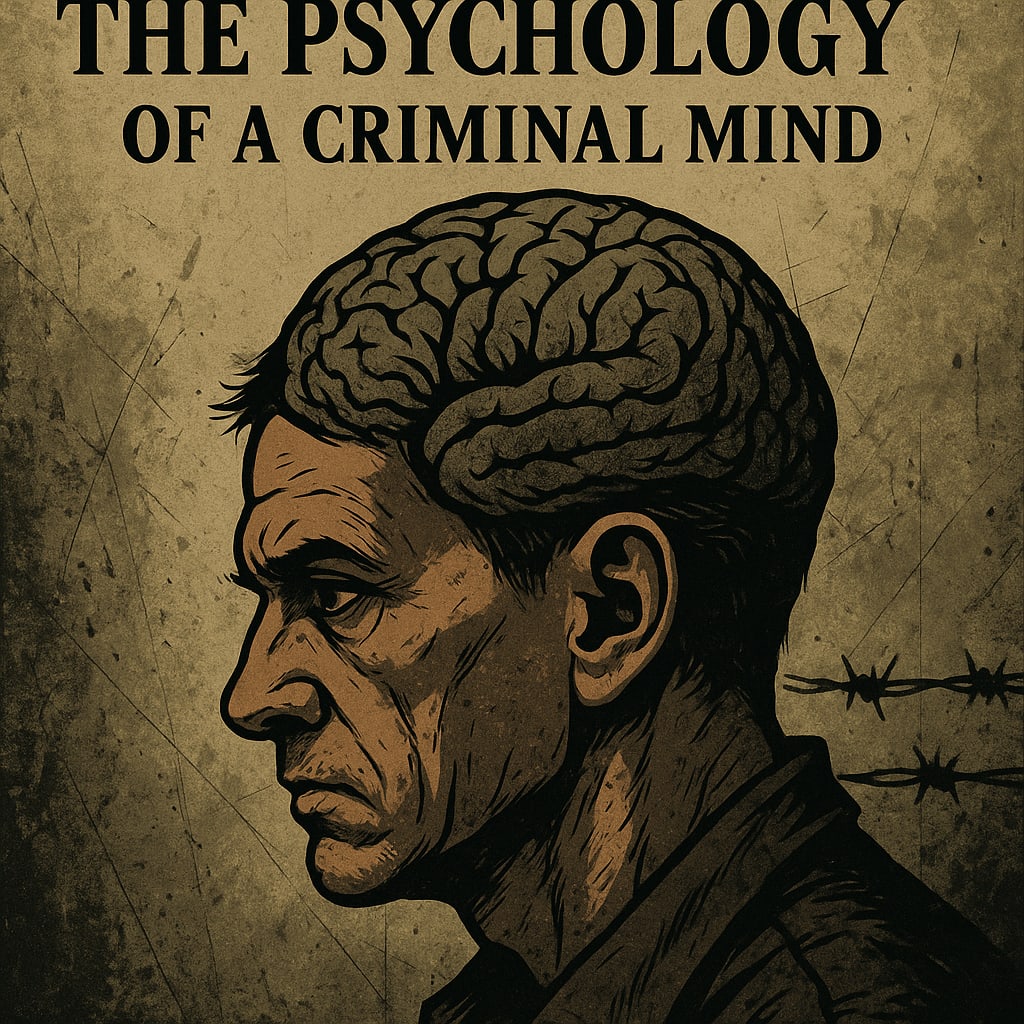
Crime has always been a part of human society, but understanding why people commit crimes is not easy. The psychology of a criminal mind helps us look deeper into the thoughts, feelings, and reasons that lead someone to do something illegal or harmful. It is not always about bad people doing bad things — sometimes, it is about broken people reacting to a broken world.
---
Childhood and Environment
Many criminals do not start off as bad people. Their behavior often begins in childhood. A child who grows up in a violent home, surrounded by abuse, fear, or neglect, may start to see the world as a dangerous place. This environment can affect how their brain grows, how they control anger, and how they relate to others.
For example, if a child sees their parents solving problems with violence, they may learn to do the same. If a child feels unloved or unwanted, they might turn to crime as a way to get attention or feel powerful. Not all children from bad homes become criminals, but many who do commit crimes have faced these kinds of early-life problems.
---
Personality and Mental Health
Some people have certain personality traits that make them more likely to break the law. These traits might include a lack of empathy (not caring about others' feelings), impulsiveness (acting without thinking), or narcissism (thinking only about themselves).
In more serious cases, criminals may suffer from mental disorders. Conditions like antisocial personality disorder or borderline personality disorder can make it hard for people to follow rules or feel guilt. Others may suffer from untreated depression, trauma, or addiction, which can cloud their judgment and lead to bad decisions.
Mental health does not excuse crime, but it can help explain why a person may act in harmful or dangerous ways.
---
The Role of Society
Sometimes, society itself plays a role in creating criminal minds. Poverty, lack of education, and limited job opportunities can push people toward crime. When a person feels trapped or hopeless, they may believe that crime is the only way to survive or succeed.
Gang culture is one example. In poor neighborhoods, gangs often promise power, money, and a sense of belonging. Young people who feel ignored or powerless may join gangs to feel important. Over time, they may get used to crime as a normal part of life.
---
The Thrill and Control
For some, crime is not just about money or survival. It’s about the thrill — the rush of doing something forbidden. These individuals may enjoy taking risks or controlling others. This is often seen in serial criminals who plan their crimes carefully and take pride in not being caught.
This kind of criminal behavior is more dangerous because it comes from a deep psychological need, not just a situation or mistake. These criminals may even become addicted to the feeling of power they get from breaking the law.
---
Can a Criminal Mind Be Changed?
The big question is: Can someone with a criminal mind change?
The answer is yes — but it’s not easy. With therapy, education, and strong support, many people can leave crime behind. Programs in prisons that focus on mental health, job training, and emotional healing have helped many former criminals start new lives.
However, the deeper the damage in the mind, the harder it is to repair. People who commit crimes out of habit, emotion, or desperation may have a better chance to change than those who plan crimes for fun or power.
---
Final Thoughts
Understanding the psychology of a criminal mind does not mean we excuse their actions. But it helps us understand why crime happens — and what we can do to stop it. If we focus on healing broken people, fixing broken systems, and giving everyone a fair chance, we may create a world where fewer people feel the need to turn to crime.
Crime is not just a police problem. It is a human problem — and the mind is where it often begins.
About the Creator
Keep reading
More stories from Hamza Tahir and writers in Criminal and other communities.
The Dark Web: Where Crime Hides in Plain Sight
When you open your browser and search on Google, read the news, or shop online, you're only exploring a small part of the internet. Beneath this familiar surface lies a hidden world called the Dark Web—a part of the internet that cannot be accessed by regular search engines. It is a place where criminals trade in silence, and illegal activities flourish beyond the reach of most people and even some governments.
By Hamza Tahir8 months ago in Criminal
Push To Prevent Catapults Being Bought By Children
MP’s have been warned to put new legislation in place that will help to close a loophole in the law which allows people including children to legally buy weapons which is capable of killing wildlife. The alert was issued during a briefing in parliament which set out growing evidence that catapults were being misused against animals and to damage other people’s private property. The Naturewatch Foundation who hosted the session expanded on their message that at the moment there is a completely unregulated system where people of any age can buy weapons and there are no meaningful controls on sale or power.
By Ashish Prabhu5 days ago in Criminal
The First Rainbow Baby
Pitter-patter, pitter-patter. The rain fell in rhythmic splatters, slowly slowing, but still constant. Mira rolled onto her side pulling the blanket tight against her ears, but still she could hear chitter-chatter and scurrying feet of the creatures that refused to sleep in the lower decks.
By A. J. Schoenfelda day ago in Fiction


Comments (1)
Very interesting story I read ever