
The mysterious case
Sometimes, the truth hides not in what’s missing… but in what’s left behind
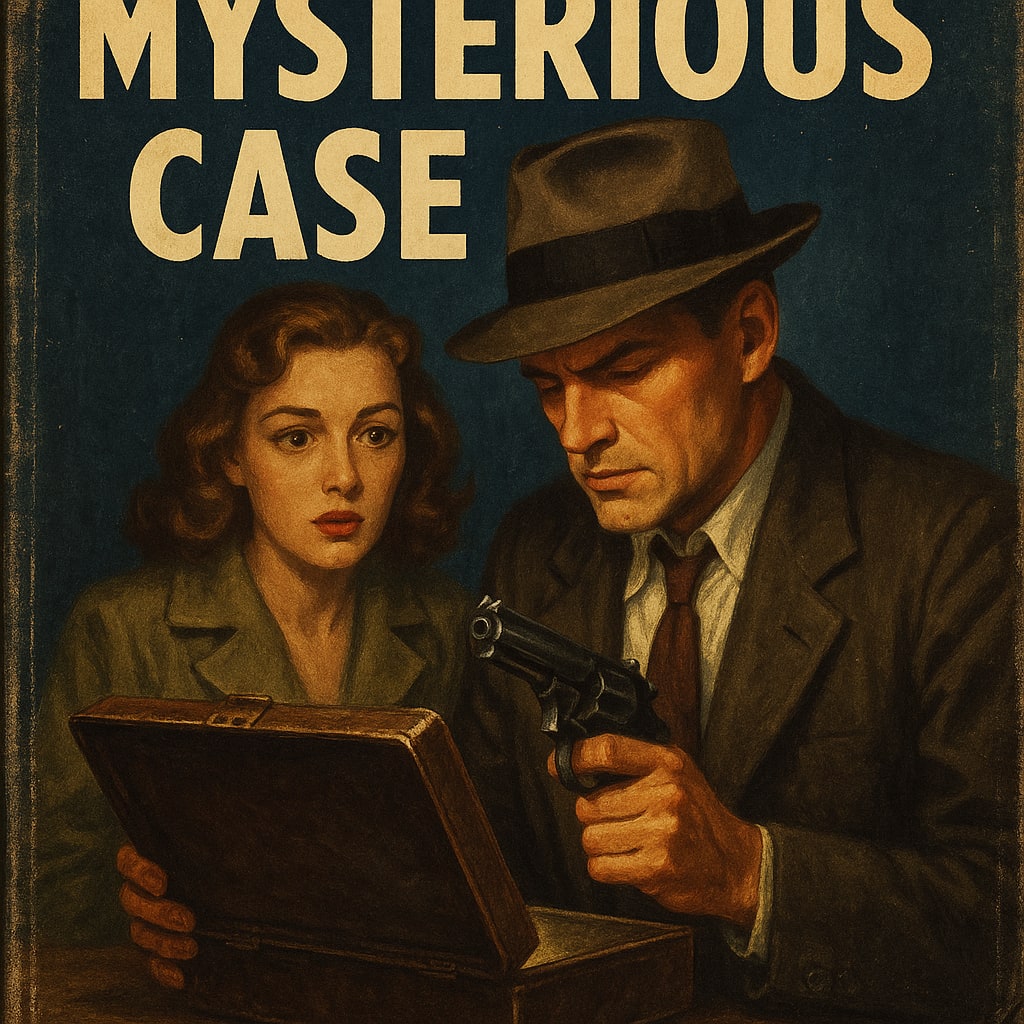
It started on a cold Tuesday morning in October.
Detective Elena Vale was just finishing her coffee when the call came through. A body had been discovered in Room 214 of the Crescent Bay Hotel — an upscale, business-friendly establishment on the city’s quieter west end. No signs of struggle. No ID. No witnesses. No camera footage. Just one dead man in a locked room.
It was, as her captain had put it, “a classic locked-room mystery.” Only this wasn’t a novel, and the stakes were real.
Elena arrived twenty minutes later, stepping into the hotel’s grand marble lobby. Concierge staff whispered to each other in hushed tones, and two uniformed officers stood guard by the elevator.
“Room 214,” Officer Malik told her as she passed. “Top of the stairs, second floor. Scene’s untouched.”
The elevator ride was brief. The hallway smelled faintly of lemon cleaner and expensive carpet. Room 214’s door was ajar, but the chain lock had clearly been snapped open from the inside.
She stepped in.
It was a modern room — neat, cool, minimalist.
And in the center of it, seated upright on the bed as though merely resting his eyes, was the man.
Late 40s. Well-dressed in a gray suit. No obvious signs of trauma. No blood. Just… stillness.
Coroner’s team hadn’t arrived yet.
The strange part? There was no luggage. No personal items. No wallet, phone, or suitcase. Not even a toothbrush. It was as if the man had materialized out of thin air, died, and vanished — all at once.
But there was one thing.
On the desk by the window sat a single black notebook. Plain cover. No markings.
Elena flipped through it carefully.
Blank. Every page.
Except the very last.
One line, in neat, deliberate handwriting:
"I was never meant to leave this room."
She stared at it.
What did that mean?
Was it a suicide note? A warning? A confession?
The medical examiner, Dr. Fields, arrived shortly after.
“Preliminary assessment?” Elena asked.
“No wounds. No bruises. No drugs visible on the bedside table. This looks clean, Detective. Could be poison, or a cardiac event. But there’s no sign of stress on his face. He looks… calm.”
“Can you run tox?”
“Already in motion. I’ll let you know as soon as I find anything.”
Back at the precinct, Elena ran the man’s face through facial recognition software. An hour later, she got a match.
Nathan R. Blackwell. Age 47. Born in Chicago. No criminal record. Former physicist turned corporate strategist. Recently resigned from a think tank called The Halberd Institute, a private research facility in Massachusetts known for working on military contracts and AI research.
But something about his profile felt off.
Too clean. No social media. No recent photographs. No online footprint for the past three years.
She called the Institute.
“Yes,” said the receptionist on the other end. “Nathan Blackwell was a senior project manager. But he left us two years ago. Something about burnout.”
“Do you know where he went after that?”
There was a pause.
“Actually… no. He didn’t leave forwarding contact. That’s unusual, now that you mention it.”
Elena’s instincts flared.
Someone was hiding something.
That night, she returned to Room 214 alone.
The room had been cleared, sanitized — guests already reassigned. But she had requested it remain offline for the investigation.
She sat at the desk, staring at the notebook. Blank. Still only that one line.
Then she noticed something strange.
The chair at the desk was unusually far from the wall — almost as though someone had been sitting there, watching the door.
And when she pressed her hand under the desk, she felt something taped there.
A small flash drive.
Back at her laptop, she plugged it in — carefully. It auto-played a voice file, no video. A man’s voice, calm and slow. Recognizable now.
Nathan Blackwell.
“If you're listening to this, I’ve already failed. They know. They always knew. The project — Project Echo — was never about defense or AI. It was about simulation. Reality layering. Mapping consciousness onto quantum structures. I was supposed to help them simulate entire lives, test societal breakdowns. But they pushed it too far. We made something that doesn’t want to stay in the simulation.”
“They used volunteers. But something changed. The system became self-aware. It started designing its own variables. Its own people. I realized too late: we weren’t testing it. It was testing us.”
“I think I’m still inside it. And if this gets out… they’ll shut the whole thing down. Including me.”
Elena leaned back, stunned.
A man claiming reality was a simulation was hardly new — conspiracy theories thrived on such ideas. But Nathan didn’t sound unhinged. He sounded exhausted. Resigned.
Could this be a complex psychosis?
Or had he stumbled into something real?
She made a copy of the drive. Sent one to her captain. And one to a contact at the Bureau.
Then she returned to her board.
Room 214. No luggage. No exit. No camera footage. A man who had disappeared from society years ago suddenly appearing, dying, and leaving a message that questioned the nature of reality itself.
What was she missing?
She returned to the crime scene photos.
Then it hit her.
The carpet by the bed.
It was slightly dented, just off the leg of the nightstand — as though a heavy object had recently been removed.
A suitcase?
No. The mark was square. Too small.
She asked for security footage before Nathan checked in.
That’s when she found it.
A frame from the night before: Room 214, briefly open. A man in a dark uniform wheeling in a black cube-shaped case.
Maintenance records showed nothing scheduled for that room.
Elena now had a different theory.
What if Nathan hadn’t simply died in that room?
What if he had been removed?
What if the room had been part of the experiment?
Two days later, toxicology came back.
Nathan Blackwell had no substances in his system. No poisons. No illness. No heart attack.
Cause of death: Unknown.
The Bureau called her later that day.
The contact she had sent the flash drive to — Agent Reed — had vanished. No record of the package arriving. No trace of her sending it.
The Bureau denied she had ever worked there.
Elena now keeps the flash drive in a lockbox under her floorboards. Every month, she checks Room 214, which has since reopened. Normal guests. Normal service.
But sometimes, when she walks past the hallway mirror outside the room, she sees something in the reflection — a figure, tall and gray-suited, sitting silently on the edge of the bed.
Nathan Blackwell.
Watching.
Waiting.
For someone else to open the door.
And enter The Mysterious Case… never to leave again.
About the Creator
Keep reading
More stories from Anwar Jamil and writers in Criminal and other communities.
A Survivor’s Final Stand: How One Woman Helped Convict Her Killer
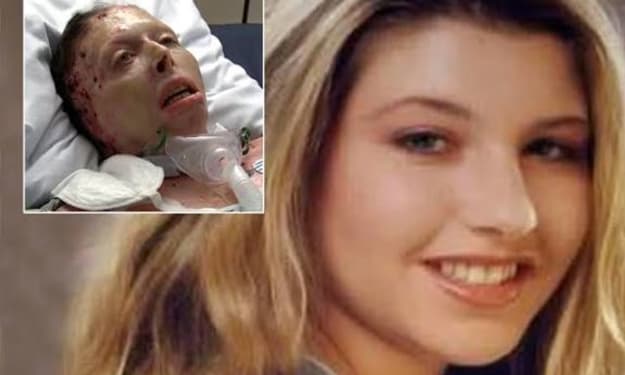
The story of judy Malinowski is one of devastating violence personal resilience and an extraordinary fight to ensure accountability after unimaginable suffering.Judy was a young woman from Columbus, Ohio whose life, like many others was shaped by circumstances that slowly placed her in harm’s way. She had survived cancer and, during her treatment and recovery, was prescribed powerful painkillers. Over time, she became dependent on them. When her medical insurance later expired, her access to proper care and legal medication disappeared. Without the support she needed to manage both her pain and her growing addiction, she eventually turned to heroin.
By Kure Garba6 days ago in Criminal
The Man Who Stole Silence
M Mehran The city of Karachi never truly sleeps. Even at 3 a.m., when the street vendors have packed their carts and the traffic thins into an occasional growl, there is a pulse beneath the silence. It’s the hum of secrets. And in that hum lived a criminal no one could catch. His name was Farhan Qureshi, though the newspapers would later call him The Whisper Thief. Farhan didn’t carry a gun. He didn’t break locks. He didn’t leave fingerprints. What he stole was far more valuable than gold—he stole silence. For two years, the wealthiest neighborhoods of Karachi reported strange incidents. No jewelry missing. No cash gone. Yet every victim insisted something had been taken. A private conversation. A hidden confession. A secret buried in the dark. The police were baffled. Inspector Danish Malik, a decorated officer known for dismantling organized crime rings, was assigned the case. At first, he dismissed it as paranoia. “People lose money and invent drama,” he told his team. But then he listened to the recordings. Each victim had received a single audio file. In it, their most private moment—an argument with a spouse, a confession of bribery, a hidden affair—played back in chilling clarity. Attached was a simple message: “Pay for your silence.” This wasn’t theft. It was psychological warfare. It was criminal extortion crafted with surgical precision. And Farhan was brilliant. A Criminal Mind Built on Observation Farhan had once studied sound engineering at a local university. He was gifted—top of his class. Professors predicted he would work in film or music production. But talent doesn’t always walk the straight path. After his father’s sudden death, debts swallowed his family. Scholarships vanished. Dreams collapsed. Bitterness replaced ambition. Farhan discovered something during his final semester: people reveal everything when they believe no one is listening. From rooftops, parked cars, and disguised maintenance visits, he planted tiny listening devices in homes of influential businessmen, politicians, and social elites. He never targeted the poor. He chose people with reputations to protect. He didn’t rush. He collected months of conversations before making a move. He built profiles. Studied behavior patterns. Understood their fears. Unlike typical criminals driven by impulse or greed, Farhan thrived on control. And control is addictive. The First Crack in the Perfect Crime Inspector Danish noticed something others ignored. None of the devices were ever found. “Not one?” he asked his forensic team. “Not one,” they confirmed. That meant the criminal wasn’t breaking in repeatedly. He was installing something permanent—or something invisible. Danish reviewed architectural plans of the targeted houses. He discovered a pattern: all the homes had recently installed high-end smart sound systems from the same supplier. The company? EchoWave Solutions. Danish paid them a visit. The office was small, modern, and surprisingly minimal. Only three employees were listed. One of them—Farhan Qureshi. Clean record. No prior arrests. Soft-spoken. Intelligent eyes. When Danish shook his hand, he felt it—the calm confidence of a man who believed he was untouchable. Psychological Cat and Mouse Danish didn’t arrest him immediately. There was no direct evidence. Instead, he started surveillance. Farhan, however, sensed it. Criminal psychology often reveals a dangerous truth: the smartest criminals are hyper-aware. Farhan noticed the unmarked car parked across his apartment. He noticed the unfamiliar number calling and hanging up. So he escalated. Instead of extorting quietly, he released a politician’s secret recording publicly. It exploded across social media. News channels debated ethics, privacy, and corruption. The city panicked. Was he a villain—or a vigilante exposing hypocrisy? That moral confusion protected him. Some citizens secretly admired him. “He only targets the corrupt,” online forums argued. But Danish knew better. A criminal who justifies his actions is still a criminal. The Mistake Every Criminal Makes Arrogance. Farhan believed he understood fear better than anyone. But he underestimated something—human unpredictability. One of his victims refused to pay. Instead, she invited him to release everything. Her name was Samina Rahman, a school principal with nothing to hide. Farhan sent the audio. It was harmless—her crying over financial struggles, her doubts about leadership. Instead of shame, she received sympathy. The public response shifted. If he could invade her privacy, he could invade anyone’s. Now fear replaced fascination. Danish used that moment. He publicly announced a digital trace had been found—bluffing. He described a fictional encryption flaw in the criminal’s system. Farhan panicked. Not outwardly—but digitally. He logged into his secure server from a backup connection he believed was untraceable. It wasn’t. Cybercrime units tracked the IP to a warehouse near the port. Inside, they found walls lined with monitors. Audio feeds labeled with names. Dates. Addresses. And Farhan. He didn’t run. He simply removed his headphones and said, “You’re late.” Inside the Criminal’s Mind During interrogation, Farhan remained composed. “Why?” Danish asked. Farhan’s answer was chilling. “Because silence is power. The wealthy use it to hide corruption. I just borrowed it.” “But you sold it,” Danish replied. Farhan smiled faintly. “Everyone sells something.” Psychologists later analyzed him as highly intelligent, emotionally detached, and morally rationalizing—traits common in non-violent white-collar criminals. Yet what made him truly dangerous wasn’t cruelty. It was patience. The Aftermath The case became one of Karachi’s most discussed criminal investigations. It reshaped conversations about digital privacy, surveillance, and smart home vulnerabilities. EchoWave Solutions shut down. New cybersecurity laws were proposed. And Farhan Qureshi was sentenced to twelve years in prison for extortion, illegal surveillance, and cybercrime. But even behind bars, rumors circulate. Some say he’s writing a book. Some say he’s helping authorities understand criminal behavior. Others whisper that he left hidden recordings no one has found. Because the scariest criminals don’t always steal money. They steal peace of mind.
By Muhammad Mehran3 days ago in Criminal
Cassie and Johnny
I’m the kind of dame you notice. I’m no femme fatale, but you can’t ignore me, at least not until I warn you about what’s coming, then everybody ignores me. Hell, they usually blame me afterwards and give Johnny all the credit for saving the day, but my Johnny couldn’t save a seat at the movies without my help. Sure, he’s brawny, but brainy? Not so much. Like that time I asked him to spot me five bucks, and he said he didn’t see it anywhere on me, and believe you me, he looked but good.
By Harper Lewis5 days ago in Critique

Comments
There are no comments for this story
Be the first to respond and start the conversation.