
The Marcia and Terry Thompson Story
A Deep Dive into the Turbulent Marriage That Ended in a Fatal Shooting

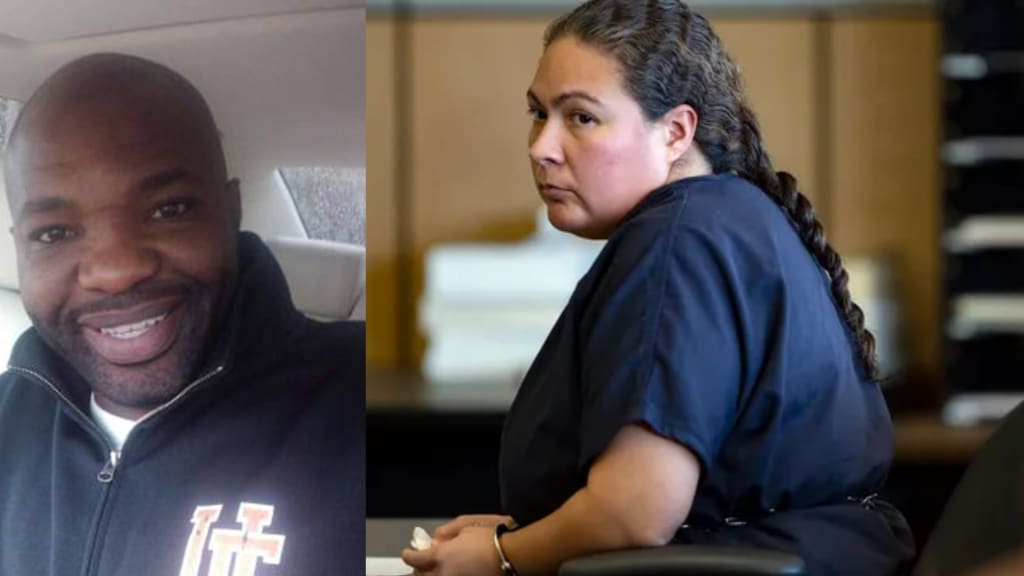
Marcia Thompson killed her husband and went free.
This is the kind of case that splits a courtroom and shakes a jury. It’s the story of a woman who lived in fear for nearly two decades, and when she finally snapped, the question wasn’t just about guilt or innocence it was about survival.
Marcia Thompson met Terry Thompson at the University of Florida in 2000. She was just 20 years old. He was 13 years older, charming, confident, and persuasive. Their relationship progressed quickly. They fell in love, got married, and had two children. On the surface, it looked like a successful life, a family with a future. But behind closed doors, it was anything but safe.
Terry’s jealousy and need for control quickly became apparent. Marcia later testified that he monitored her calls, dictated what she could wear, and constantly accused her of cheating. If she missed a his call or text, he flew into a rage. He reminded her often that she wasn’t good enough not as a mother, a wife, or a woman. Over time, his emotional abuse escalated into physical and sexual violence.
One of the most horrifying incidents Marcia recounted involved Terry sexually assaulting her with a lotion bottle after accusing her of infidelity in 2007. On another occasion, while she held their baby in her arms, Terry dragged her by her hair down the street, an act witnessed by neighbors who immediately called police. A relative testified that after some attacks, Marcia looked like she’d been through several rounds in a boxing ring. Despite these assaults, she stayed, terrified of what might happen if she tried to leave. Terry had repeatedly threatened to kill her if she ever walked out.

Marcia and Terry briefly separated in 2011 after a particularly violent episode. But by 2014, they had reconciled and moved to Loxahatchee, Florida. The abuse continued. In 2016, there was another attack. In 2018, coworkers of Marcia recalled Terry’s aggression even during a golf outing. According to Marcia, these weren’t isolated incidents they were the pattern of her life.
The Morning Everything Changed
On August 9, 2019, everything came to a head. Marcia, working as a U.S. Customs and Border Protection officer, was preparing for her shift. Terry was in the living room, verbally attacking her yet again. According to Marcia, he threatened to slit her throat. For nearly 20 years, she had lived in fear. That morning, something inside her snapped.
She walked to the bedroom, put on her work uniform and retrieved her service weapon. Then, with adrenaline surging and years of suppressed trauma boiling over, she walked into the living room. Terry was lying on the couch in his underwear, reportedly with his feet up and his arms raised in a defensive posture. Marcia raised the gun and fired.
Terry rolled off the couch, landing face down on the ground. She fired again. By the time it was over, Terry had been shot nine times six bullets struck him in the back. Investigators later found nine shell casings scattered across the living room. The couple’s two children were home during the incident but did not witness the shooting.
Marcia stepped outside, still wearing her uniform and part of her service belt. Her demeanor was described by responding officers as quiet and composed. She called 911 herself and told the dispatcher what had happened. When police arrived, she didn’t cry. She didn’t run. She simply waited.
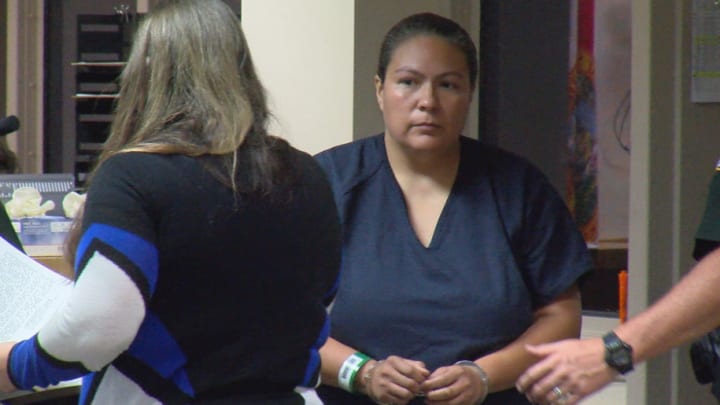
From the beginning, Marcia admitted to the shooting. The question was never whether she did it it was why. Prosecutors charged her with first-degree murder, arguing that she had the time and clarity to walk away but chose not to. Assistant State Attorney Karen Black pointed to the 15 minutes Marcia spent getting dressed for work before reentering the room and pulling the trigger. That time, Black said, was long enough for Marcia to think things through. She accused Marcia of making a calculated decision, not a desperate one.
Terry, she argued, didn’t deserve execution. He should have been prosecuted, not killed.
The Trial, the Verdict, and the Aftermath
But Marcia’s defense team had a different story. Attorney Jessica Mishali called forensic psychologist Dr. Michael Brannon to the stand. He testified that Marcia was suffering from Battered Woman Syndrome, a form of post-traumatic stress disorder that alters how a person perceives threats. In Marcia’s mind, the danger was immediate and inescapable even if to others it looked like a verbal argument.
Marcia took the stand and spoke through tears. She said she had felt trapped for years. She described Terry’s threats, the violence, and her fear that if she left, she wouldn’t survive. “I thought, maybe it’s better if I die and this is all over,” she told the jury. “But then I worried about the kids. I said I can’t do that to them. I have to try to protect them, too.”
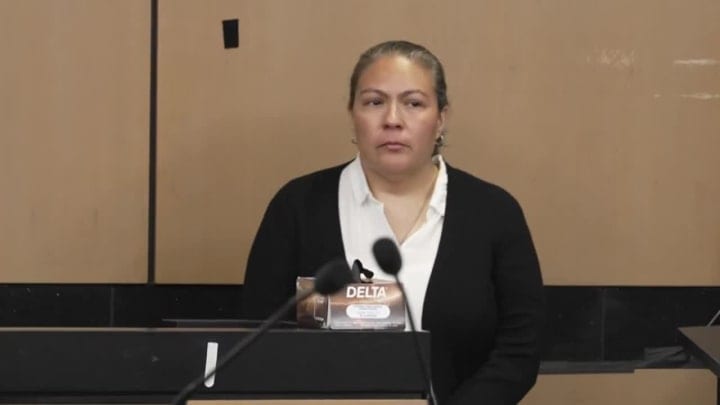
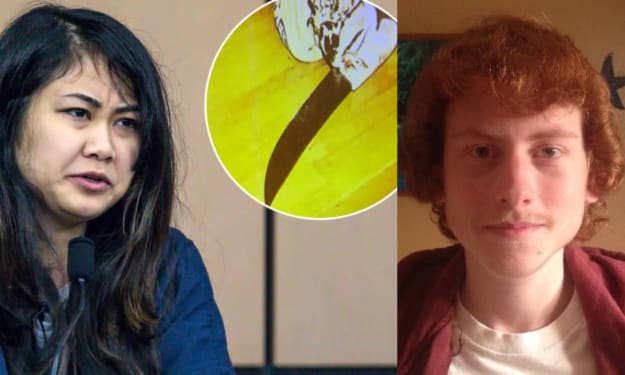
Mishali reminded jurors that Terry didn’t need a weapon to be dangerous. Even though crime scene investigators found no weapons within his reach that morning, Marcia had no way of knowing that. Terry was known to hide weapons around the house a gun in the closet, a machete by the bed, knives in couch cushions. He didn’t need a gun to hurt her. He had done plenty of damage with his bare hands.
Jurors also heard from Marcia’s coworkers and supervisor, who described Terry’s aggressive and controlling behavior. Detectives reviewed text messages between the couple, but found nothing that seemed abnormal on the surface. Still, those who knew Marcia said the abuse was real, and the trauma deep.
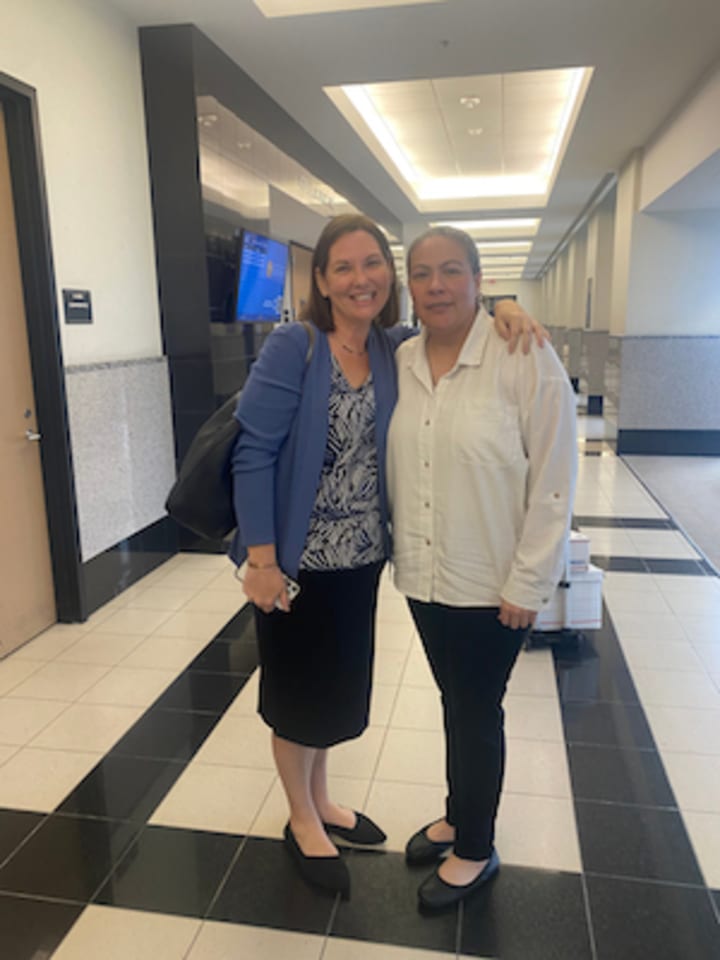
One witness who didn’t get to testify was Tereca Benton, Terry’s ex-girlfriend. She had driven 12 hours to the courthouse to tell the jury about how Terry abused her too dragged her by the hair, punched her hard enough to give her two black eyes, and isolated her from friends and coworkers. But the judge ruled her testimony inadmissible.
Outside the courtroom, Benton said, “I don’t know her. But I was her.”
On July 24, 2024, after nearly five years of legal limbo and one long, emotional trial, the jury delivered its verdict. Not guilty.
The reaction in the courtroom was intense. Terry’s family cried out. The judge had to demand silence. Marcia prayed. And her supporters wept quietly behind her.
The prosecution disagreed with the outcome, but respected the jury’s decision. No plea deal had ever been offered during the proceedings. Marcia had remained under house arrest the entire time, waiting for her chance to explain what happened.
When it finally came, the jury believed her. They believed that after years of abuse, Marcia Thompson truly thought she would die if she didn’t act.
“I’m just grateful to be alive,” she said. “But I’ll carry this with me for the rest of my life.”
About the Creator
Rare Stories
Our goal is to give you stories that will have you hooked.
This is an extension of the Quora space: Rare Stories
X(formerly Twitter): Scarce Stories
Writers:
....xoxo
Keep reading
More stories from Rare Stories and writers in Criminal and other communities.
The Obsession That Ended James Barry’s Life
James Barry was the kind of guy you’d want as your neighbor, your son, or your best friend. Born in 1995, he grew up in Loxahatchee, Florida, surrounded by cats, dogs, and horses. His childhood was filled with family, outdoor adventures, and a quiet kindness that followed him everywhere. When his parents divorced, James stayed with his mom, Nicola, while his sister Alexandra lived with their dad. Still, the family remained close. James did well in school, stayed out of trouble, and loved video games more than anything else.
By Rare Stories12 months ago in Criminal
Murdering the love of Sarah Maguire
January 2022, it was a cold winter in Tulsa, Oklahoma, one that felt colder than most for some of us in the city. If one were to be out in the evening air of the cold, it was bone chilling to the soul. On an evening like this one who wouldn’t enjoy a good home cooked meal by someone who seemed to care about them? Right, Folks?
By Cassie Moore4 days ago in Criminal
Nuclear Firestorm
When a modern nuclear weapon explodes, the world inside its blast zone changes in a matter of seconds. The moment the weapon detonates, a blinding flash of light brighter than the sun fills the sky. Temperatures at the center of the explosion can reach millions of degrees, hotter than the surface of the sun. Everything close to the explosion—buildings, trees, vehicles, and living creatures—is instantly vaporized.
By imtiazalama day ago in Criminal


Comments
There are no comments for this story
Be the first to respond and start the conversation.