
The Man Who Inspired James Bond -Sidney Reilly
Until Stalin eliminated him, adventurer and spy Sidney George Reilly performed daring spying job for Britain's Secret Intelligence Service, earning him the nickname "Ace of Spies."


Sidney Reilly was a legend of early British intelligence, the inspiration for James Bond, and a mystery to both his supporters and adversaries.
This is the story of "the man who knows everything," who inspired Ian Fleming's iconic figure, blurred the lines between spy and criminal, and may have been the most audacious and cruel adventurer in British intelligence history.
Who Was The "Ace Of Spies" Sidney Reilly?
From what little is known about Sidney Reilly's early childhood, it appears that he has always enjoyed deception. Around 1873, he was likely born Salomon or Sigmund Rosenblum in the Ukrainian city of Kherson, which was then a part of the Russian Empire.
Throughout his convoluted and baffling life, he claimed to have been born to an Irish sea captain, a priest, and a landowning, aristocratic Russian colonel. Even Reilly's wife was unaware of his true background, believing that he was born to Polish aristocracy.
Reilly stated that his birth name was Georgi and that he was studying a chemistry course in Vienna when he was summoned to Odessa for his mother's funeral. During the wedding, according to Reilly's account, his uncle revealed that little Georgi was the result of an affair between his mother and the Jewish doctor who had treated her, Dr. Rosenblum.

Georgi assumed the doctor's identity, faked his death in the port of Odessa, and sneaked away on a ship destined for South America. There, he claimed to have rescued three British officers on an excursion into the Amazon, who then granted him passage to England as a token of their appreciation.
Reilly’s Early Career As A Spy
In all likelihood, the majority of Reilly's account was false. Recent evidence indicates that Dr. Rosenblum was in fact Reilly's uncle, and there are no records to support his assertions. In 1892, there was student unrest in Odessa, at the same time he Reilly claimed to have been studying there. Young Rosenblum likely escaped to Paris to avoid the dreaded Okhrana, the Tsarist secret police.
As soon as Reilly arrived in France, he was suspected of murdering an anarchist in order to steal a significant quantity of money from him. Arriving in England in 1895, he put his stolen funds to good use by opening a quack medicine factory in London.
Then, he came to the attention of William Melville, head of Special Branch, the intelligence unit of the Metropolitan Police. Reilly maintained a vast network of contacts with Russian and European Jewish émigrés, a source of knowledge on radical and revolutionary movements that was crucial.
In 1897, the aspiring spy met and courted 24-year-old Margaret Thomas, and he likely assisted her in the murder of her husband, a 63-year-old vicar suffering from Bright's disease. They tied the knot the next year. The Metropolitan Police did not probe the couple's death or question their inheritance of several hundred thousand pounds for unknown reasons.
Soon after, Rosenblum obtained a new British passport that stated he was born in Ireland under the name Sidney George Reilly. The only other known Sidney George Reilly died in childbirth decades ago. The émigré had received the new identification necessary for his safe return to Russia.
Reilly Collects Information As A War Profiteer
Reilly had never been good with money, and after gambling and wasting a large portion of his wife's income, he appears to have resorted to counterfeiting Russian rubles in an elaborate plot to maintain himself. By the summer of 1899, the Okhrana had caught on, and Reilly and Margaret fled to Russia's largest Pacific port, Port Arthur, using his passport.
Reilly joined the staff of merchant Moisei Akimovich Ginsburg, a general war profiteer and supplier to the Russians. Over the next four years, Reilly's position provided the appropriate cover for studying the region's conditions and politics. Additionally, Ginsburg maintained a private intelligence network, which Reilly certainly joined.

Reilly's role in the astonishing Japanese naval victory at Port Arthur is poorly understood; he has been referred to as "one of the unanswered mysteries of the Russo-Japanese War." It is known that he and an accomplice stole the Russian defense blueprints and that the Russian floodlights were inexplicably turned off on February 8, 1904, when the Japanese navy entered the harbor.
Two months later, Japanese forces bombarded the remnants of the Russian navy and broke the position of the Russian Empire in China. Around that time, Sidney Reilly disappeared once more.
Reilly Spies Against The Russian Revolution
Reilly returned to espionage in 1918 after meeting Sir Mansfield Smith-Cumming, the legendary "C." Smith-Cumming was one of the earliest and most influential heads of the British Secret Service Bureau's Secret Intelligence Service, today known as MI6 — and would later inspire Ian Fleming's spymaster M.
Reilly was unable to join the SIS without an officer's commission, so he joined the Royal Canadian Flying Corps and sailed to London.
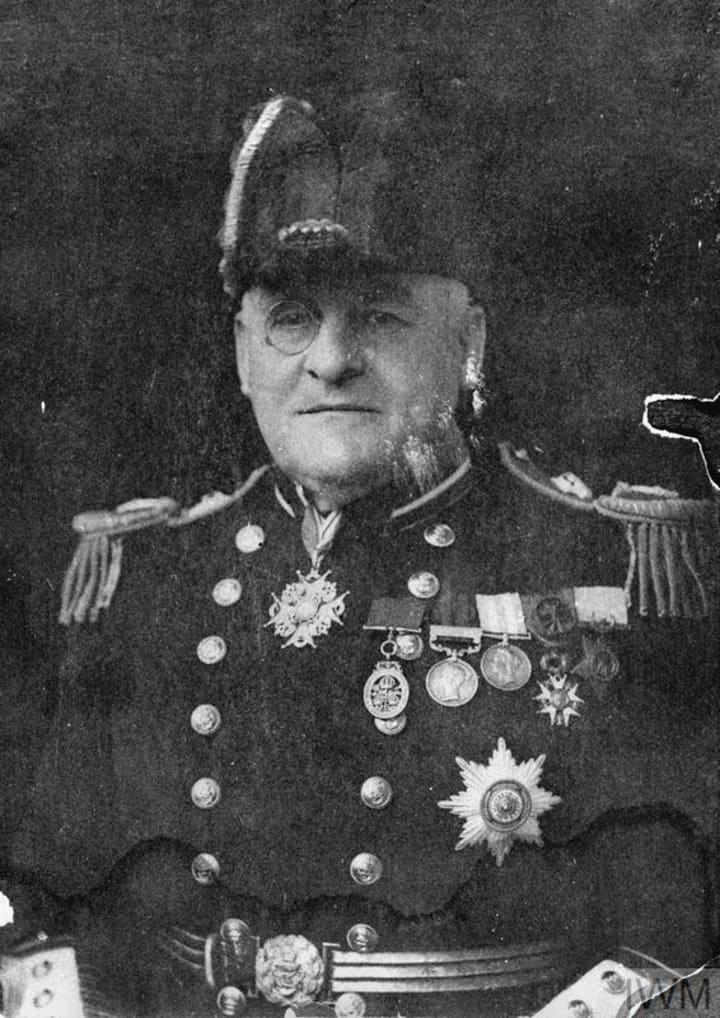
Smith-Cumming was tasked with sabotaging the Russian Revolution, or as Winston Churchill put it at the time, "strangling it in its cradle." Despite recognizing Reilly's qualifications, the spymaster had his misgivings. On March 15, he reported in his notebook his first encounter with the spy he was:
“… willing to go to Russia for us. Very clever — very doubtful — has been everywhere and done everything… I must agree tho’ it is a great gamble as he is to meet all our men in Vologda, Kief, Moscow, etc.”
Reilly coordinated anti-Bolshevik activities in Moscow in less than a month. He intended to incite an armed revolt against Vladimir Lenin's administration and install former junior minister Boris Savinkov as the leader of a counterrevolutionary regime.
However, the plan was aborted when a young woman attempted to shoot Lenin. The secret police had uncovered the alleged plot and initiated the Red Terror, a horrific purge in which thousands of suspected counter-revolutionaries were executed.
Reilly was reviled as the chief conspirator and sentenced to death in absentia once the knowledge of the conspiracy reached the press. A manhunt ensued, but by the time the secret police reached Reilly's residence in St. Petersburg, he had fled once more.
Observing The Destruction Of The Russian Empire
In November 1918, shortly after his return to England, Reilly was dispatched back to Russia to support and spy on the monarchist White Armies in the nascent Russian Civil War. Reilly had no trouble fitting in on the staff of General Anton Denikin, one of the most effective White leaders, given his experience.
As Denikin's mission began to appear like a disaster, Reilly was able to see the writing on the wall, and the spy wrote in his journal, “Old regime all over.” By February 21, 1919, he requested “that I be ordered to return home as my further stay here is a waste of time.” He once more returned to London, was awarded the Military Cross, and then traveled to New York.
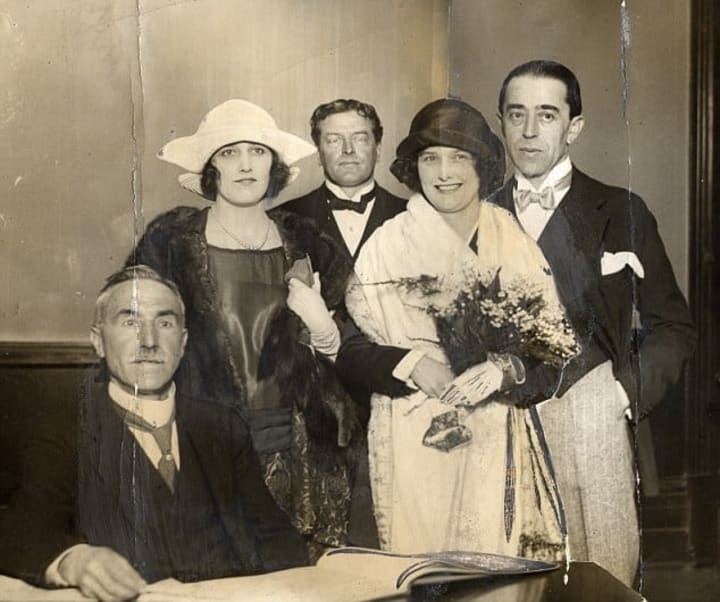
In the years that followed, Reilly attracted investors for a ludicrous plan to invest in post-Bolshevik Russia and married a young actor called Pepita Bobadilla, who insisted he was "the perfect husband." However, he yearned to return to Russia.
In September 1925, Reilly saw his opportunity when he met a group of ostensibly renowned White refugees in Paris who wanted to send him back to aid a group claiming to be surviving monarchists.
Where Did Sidney Reilly Die?
Sidney Reilly did not know that it had been a trap orchestrated by the OGPU, the forerunner of the KGB, until he was deep within Soviet territory. Captured, he initially answered to interrogators with adamant defiance.
Even though Reilly was not tortured, he was exposed to a fake execution, which horrified him to the point where he signed a confession. The prolific spy was bundled in a sack, driven east of Moscow, and shot on the side of the road on November 5, 1925.
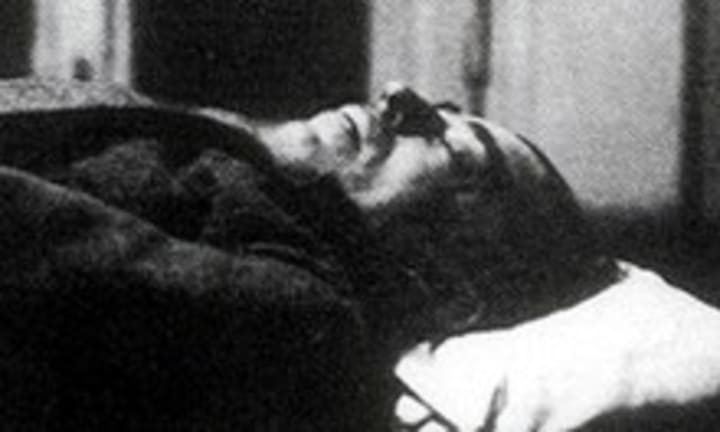
Since his death a century ago, it has become difficult to differentiate the facts of Reilly's life from the tales he told. However, his reputation remained untarnished within the intelligence community.
As one former SIS officer described it, "He was extraordinarily competent... You might almost say it was a bit of a con, and it was certainly a case of sharp practice. But as an agent, he was extraordinary."
During World War II, a young naval officer called Ian Fleming worked for the Director of Naval Intelligence, less than 20 years after his execution. Fleming found time between periods of coordinating Allied espionage in occupied Europe to read about the exploits of a spy designated "ST1" in the archives and immortalized them in James Bond 007.
Years later, Fleming revealed to a friend that the majority of James Bond's escapades were Reilly's own.
About the Creator
Rare Stories
Our goal is to give you stories that will have you hooked.
This is an extension of the Quora space: Rare Stories
X(formerly Twitter): Scarce Stories
Writers:
....xoxo
Keep reading
More stories from Rare Stories and writers in Criminal and other communities.
The Most Evil Lovers-They Killed And Slept With Dead Bodies
Douglas Clark may not be as well-known as Charles Manson, Ted Bundy, or Richard Ramirez, but his atrocities as a participant of the notorious Sunset Strip Killers were as heinous as those of any other serial killer.
By Rare Stories3 years ago in Criminal
Ken Childs and the Shadow Network Behind Celebrity Surveillance
Hollywood is no stranger to intrigue. Behind the red carpets, blockbuster premieres, and glamorous headlines lies a parallel world where privacy is fragile and information can be extremely valuable. Over the years, celebrities have faced stalkers, hackers, and fraud schemes designed to exploit their wealth and visibility. Recently, reports circulating online have drawn attention to a controversial narrative involving private investigator Ken Childs and allegations that place him near the center of a disturbing story about celebrity surveillance.
By Shane Smithabout 4 hours ago in Criminal
Worth the Wait: Puerto Viejo, Costa Rica
Beach bumming in a small Caribbean beach town sounded like a perfect way to end our 6-month trip through Mexico and Central America. Or so we thought. The foul, fishy stench of rotten seaweed hit our nostrils as we stepped from the cramped bus and looked out at a rather depressing, empty, and underwhelming black sand beach. It was pouring with rain, and we had to quickly fish out our ponchos. We thought, this couldn’t be it, could it?
By Sh*t Happens - Lost Girl Travel3 days ago in Wander




Comments
There are no comments for this story
Be the first to respond and start the conversation.