
The Hinterkaifeck Murders: Germany's Most Intriguing Unsolved Mystery
A Brutal Crime Scene, Mysterious Occurrences, and Unidentified Killer Shroud a Bavarian Farmstead in Darkness

Introduction
The Hinterkaifeck Murders is a notorious unsolved murder case that took place in a small farmstead in Bavaria, Germany in 1922. Six people were brutally murdered in the farmstead, and the murderer was never identified. The gruesome nature of the crime and the lack of any conclusive evidence have made this case one of the most intriguing unsolved mysteries in German history.
Background of the Hinterkaifeck Murders
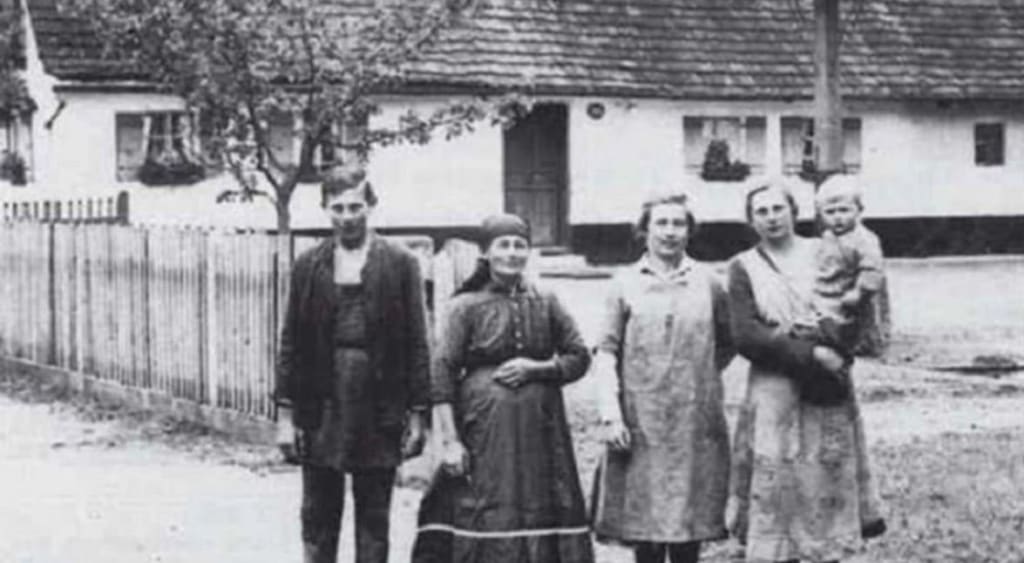
The Hinterkaifeck farmstead was situated in a small village named Kaifeck, located about 70 km north of Munich in Germany. The farmstead was owned by the Gruber family, consisting of Andreas and his wife Cazilia, their widowed daughter Viktoria Gabriel and her two children, seven-year-old Cazilia and two-year-old Josef, and the maid Maria Baumgartner.
The Gruber family was known for their reclusive lifestyle and were rarely seen in the village. However, rumors of strange occurrences and sightings of a mysterious figure lurking around the farmstead had been circulating in the village for some time. The family also reported hearing strange footsteps in their attic, but despite investigating, they could never find the source of the noise.
The Murders
On March 31, 1922, the Gruber family and their maid were brutally murdered in their farmstead. The bodies were discovered by a neighbor who had become concerned after not seeing anyone from the farmstead for several days. The neighbor entered the farmstead and found the bodies of the family and maid in the barn.
The bodies of Andreas, Cazilia, Viktoria, and Cazilia Gabriel were found stacked on top of each other. The bodies had been bludgeoned to death with a blunt object, possibly a pickaxe. The autopsy revealed that Cazilia Gabriel had been alive for several hours after the attack and had tried to pull her hair out in agony.
Maria Baumgartner's body was found in her room in the house, and it was evident that she had been strangled to death. The two-year-old Josef's body was found in his cot, and it was clear that he had been killed by a blow to the head. The strange footsteps in the attic were found to be from the murderer who had been living in the attic for several days before the murders.
The Investigation
The investigation into the Hinterkaifeck Murders was hindered by several factors. Firstly, the crime scene was contaminated by curious onlookers before the authorities arrived. Secondly, the murderer had left no fingerprints or any other identifying evidence. The motive for the murders was also unclear, as there were no signs of theft or any other motive.
The police questioned several people, including the Gruber family's former gardener, a man named Lorenz Schlittenbauer. Schlittenbauer had a dispute with Andreas Gruber over money and had threatened him in the past. However, there was no conclusive evidence linking Schlittenbauer to the murders.
The police also questioned a few suspects who were mentally unstable, but they were released due to lack of evidence. The investigation continued for several years, but no significant breakthroughs were made. In 1925, the case was officially closed due to the lack of evidence and the inability to identify the perpetrator.
Theories
Over the years, several theories have emerged about the motive and identity of the murderer. One theory is that the murderer was a former soldier who had become mentally unstable after serving in World War I. This theory suggests that the strange occurrences in the farmstead had triggered the murderer, leading to the brutal murders.
Another theory is that the murderer was a family member or a close acquaintance of the Gruber family. This theory suggests that the murderer had a personal motive for the killings, possibly related to inheritance or a family feud. This theory gains credibility from the fact that the murderer was able to stay in the farmstead for several days before the murders, indicating that they were familiar with the layout of the property.
A more recent theory is that the murderer was a serial killer who was active in the region at the time. This theory is based on the fact that several similar unsolved murders took place in the region around the same time as the Hinterkaifeck Murders. However, there is no conclusive evidence to support this theory.
In recent years, several attempts have been made to solve the Hinterkaifeck Murders using modern forensic techniques. In 2007, a team of forensic experts analyzed the autopsy reports and crime scene photos to create a 3D model of the crime scene. The model was used to analyze the trajectory of the blows that killed the victims, and the experts concluded that the murderer was likely left-handed.
In 2014, a German journalist named Peter Leuschner published a book about the Hinterkaifeck Murders, in which he claimed to have identified the murderer. Leuschner claimed that the murderer was a man named Paul Mueller, who had been working as a traveling salesman in the region at the time of the murders. Leuschner based his theory on testimony from several witnesses who claimed to have seen a man matching Mueller's description near the farmstead around the time of the murders. However, Leuschner's theory has been criticized for lacking concrete evidence.
Conclusion
The Hinterkaifeck Murders remains one of the most intriguing unsolved murder cases in German history. Despite the numerous theories and investigations, the identity of the murderer remains unknown. The case is a stark reminder of the brutality of human nature and the importance of preserving crime scenes to ensure a thorough investigation.
About the Creator
Keerthana Thirumalairaj
An Independent Solitude girl, who recently found the interests in writings and converts Facts and imaginations into writings.
Keep reading
More stories from Keerthana Thirumalairaj and writers in Criminal and other communities.
The Axe Murders That Haunt Villisca
Introduction The Villisca Axe Murders is a gruesome, unsolved crime that took place in 1912 in the small town of Villisca, Iowa. Eight people, including six children, were brutally murdered in their sleep by an unknown assailant, leaving the town in shock and horror. Despite a thorough investigation, the killer was never found, and the case remains one of the most infamous unsolved mysteries in American history.
By Keerthana Thirumalairaj3 years ago in Criminal
Push To Prevent Catapults Being Bought By Children
MP’s have been warned to put new legislation in place that will help to close a loophole in the law which allows people including children to legally buy weapons which is capable of killing wildlife. The alert was issued during a briefing in parliament which set out growing evidence that catapults were being misused against animals and to damage other people’s private property. The Naturewatch Foundation who hosted the session expanded on their message that at the moment there is a completely unregulated system where people of any age can buy weapons and there are no meaningful controls on sale or power.
By Ashish Prabhu3 days ago in Criminal
Becca
"Everything is so... flat." Denille said stupidly as she looked around her new neighborhood. She looked around at the muted desert where even the smallest sign of life seemed to have given up. The plant life was shrubs that were half cooked by the heat and where there should have been a lawn, a mess of white rocks laid glistening in the sun. Even the sky looked stretched thin, like the sun had ironed it smooth. She’d moved from Riverside, where at least there were hills, but here in Barstow, everything felt baked and brittle.
By Sara Wilson7 days ago in Fiction


Comments
There are no comments for this story
Be the first to respond and start the conversation.