
The Gruesome Embalming of Pope Pius XII: A True Story of Horror
Chest began to expand due to the build-up of chemicals


In October of 1958, the weather was hot at Castel Gandolfo, where Pope Pius XII was bedridden due to a condition called ischemia. This disease occurs when the tissue does not receive enough blood to stay alive. As his health declined, the Pope requested to be treated by a particular physician, Ricardo Galeazzi Lisse, who was from Italy and had a personal relationship with him. It is possible that Dr. Lisse's connections with important figures, such as the Pope, may have helped him to become the chief physician in charge of the Pope's care.
Despite having minimal medical training, Ricardo played a vital role in the International Society for the History of Medicine during the Pope's final days. As the Pope's caretaker, he took advantage of the opportunity to make the most of the Pope's remaining time. He gained popularity with the press as they relied on him for insider information.
However, this caused a commotion when he falsely informed them of the Pope's passing by stating that a window at Castell Gandolfo would be opened to signal it. On a hot day, a nurse inadvertently opened the window, which the press took as a signal, leading to the incorrect announcement of the Pope's death.
Ricardo's media attention increased when he shared articles and photographs of the Pope's last moments with an Italian magazine and Paris Match, a French magazine. He even intended to publish documentation of the Pope's final four days, but this plan never came to fruition.
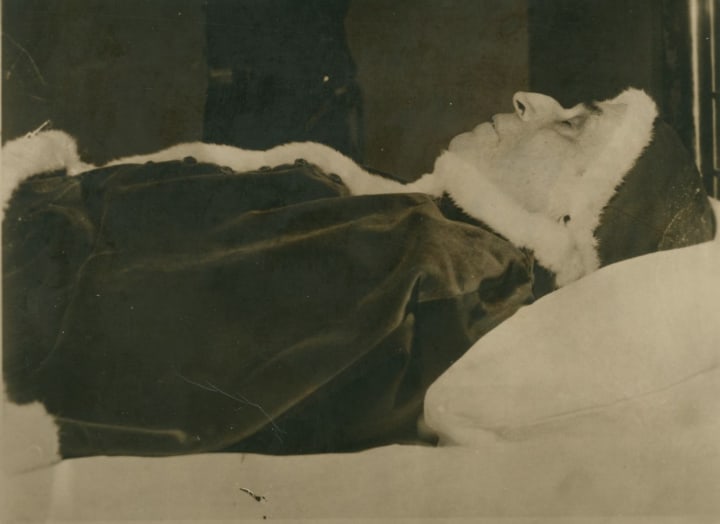
In the past, the embalming process involved preserving Popes' internal organs in jars separate from their bodies. However, Pope Pius X deemed this practice gruesome and ended it before his own death in 1914.
Pope Pius XII followed in the footsteps of his predecessors by making a particular request regarding the preservation of his body after death. His wish was for his body to remain intact without any organ extraction or preservation in a container.
After the Pope's death, Ricardo was entrusted with the noble responsibility of embalming his body. However, he and another surgeon, named Oreste Nuzzi decided to embalm him using a unique method they had developed. They claimed that their technique was similar to the embalming process used on Jesus Christ.
The two doctors claimed that they could preserve the body without injections or denudation. Instead, they proposed covering the body with a combination of oils and resins before wrapping it with cellophane to ensure it smelled nice and remained well-preserved.
However, this practice was ultimately abandoned by scientists due to its drawbacks. The cellophane caused a blockage of air, leading to an accumulation of internal gases within the organs as the body decayed. Unfortunately, this led to chemical reactions in the Pope's body and anaerobic decomposition, causing the body to decompose rapidly.
Ricardo attempted to embalm the body a second time, but unfortunately, it did not resolve the issue at hand. As a result, the decision was made to send the body for the procession. During the procession, which spanned from Castel Gandolfo to Rome, the audience was horrified to witness the body beginning to decompose right before their eyes. As if this wasn't disturbing enough, reports indicate that the Pope's chest began to expand due to the build-up of chemicals that had nowhere to escape. Eventually, the pressure became too much, and the Pope's chest caved in.
As time went on, the state of the body only worsened. The Pope's nose and fingers detached, and his body turned a sickly shade of emerald green. The smell emanating from the body was so noxious that even the typically stoic Swiss guards had trouble withstanding it. To combat the stench, they had to take turns being on duty to avoid prolonged exposure.
Ricardo faced no official accusations regarding his embalming services or the medical condition of the Pope. Responsibility for the Pope's health rested with a committee of doctors, as was customary for all popes. However, he was punished for his improper behavior with the media and for misusing his medical privileges. This led to a lifetime ban from Vatican City. In 1960, Ricardo published a book called "In the Shadow and the Light of Pius XII" in an effort to refute the accusations made against him.
About the Creator
Kamya
We should enjoy every moment fully, fall in love, make the most of our time, and live without regret. We should cherish the fact that there are still many moments in life that we have yet to experience for the last time.
Former Miss Universe Canada Delegate Files $500 Million Defamation Lawsuit Against Grant Cardone and Cardone Capital in Miami
MIAMI, FL — Chealse Sophia Howell, an internationally recognized model, entrepreneur, and former Miss Universe Canada titleholder, has filed a civil lawsuit against Grant Cardone and Cardone Capital, LLC in the Eleventh Judicial Circuit Court, Miami-Dade County (Case No. 25-024299-CA-01). The complaint, officially filed on December 11, 2025, alleges defamation and tortious interference, claiming that the defendants engaged in a coordinated campaign of false statements across multiple digital platforms.
By Dena Falken Esq2 days ago in Criminal
Miss Persephone's Manual to a Seemingly Ordinary Life
Miss Persephone was found at the dining table, her blue eyes swollen, her tears arriving and retreating like the tides of the ocean. Earlier that day, her family had visited her in the retirement home where she had lived for eight years. It was her eightieth birthday.
By Imola Tóth4 days ago in Fiction



Comments
There are no comments for this story
Be the first to respond and start the conversation.