
The Forgotten Children of Willowbrook: A Dark Chapter in Psychiatric History
Willowbrook was a real institution for children with intellectual disabilities. Patients were subjected to neglect, abuse, and medical experimentation (such as the controversial hepatitis studies).

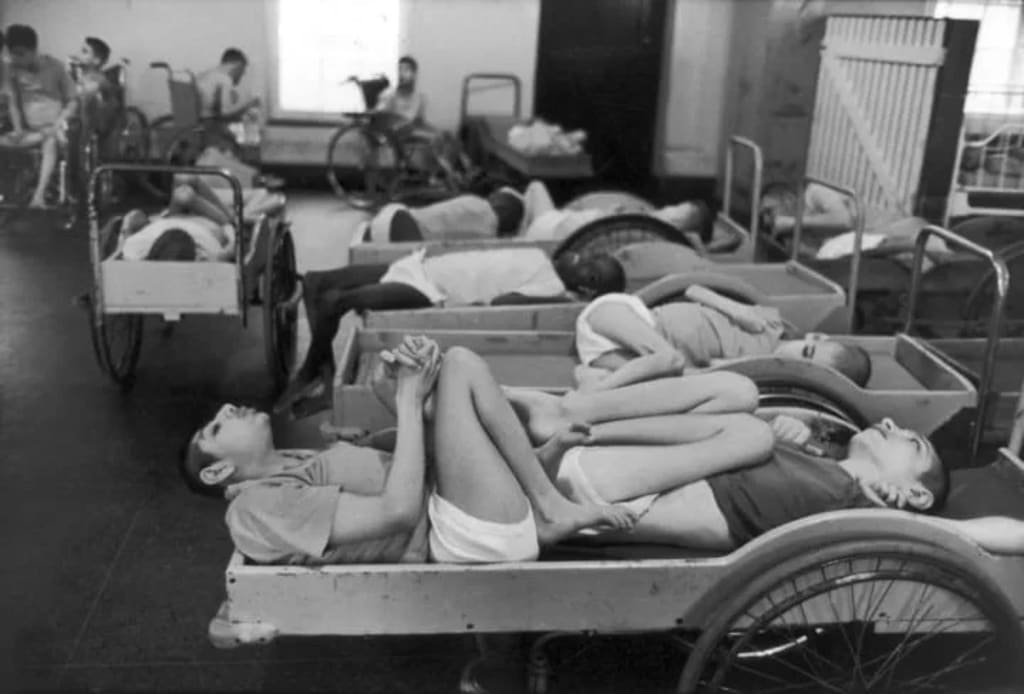
In the early 1970s, nestled in the quiet borough of Staten Island, New York, sat a facility that would become synonymous with horror, neglect, and government scandal. Willowbrook State School, initially founded in 1947 as a home for children with intellectual disabilities, had fallen into a tragic state of disrepair and cruelty. What was meant to be a safe haven for vulnerable children became a nightmarish institution where they were subjected to unimaginable suffering.
Willowbrook’s reputation would remain largely unchallenged until one pivotal moment in 1972, when a young reporter named Geraldo Rivera exposed the facility’s dark underbelly, igniting a firestorm of public outrage and demanding a reckoning for the mistreatment of its patients.
The Dark Reality of Willowbrook
By the early 1970s, Willowbrook had become a symbol of institutional failure. The state-run school, meant to care for children with developmental disabilities, was severely overcrowded, housing more than 6,000 children — far exceeding its capacity. Children were often confined to grim, decaying wards, left in filth and subjected to inhumane conditions.
The facility’s staffing was woefully inadequate. Caregivers and medical staff were overwhelmed and often indifferent to the needs of the children. Most alarmingly, children were left to wander the halls with little to no supervision, many of them bound to wheelchairs, barely able to communicate, and in desperate need of medical and emotional care. They were deprived of both.
But it wasn’t just the lack of care that made Willowbrook notorious. It was the brutal neglect and the cruel, often sadistic behavior of those responsible for the children’s care. The children at Willowbrook were routinely subjected to physical abuse, verbal humiliation, and medical experimentation without consent.
The Hepatitis Experiment: Unethical Medical Trials
One of the darkest chapters in Willowbrook’s history revolved around the unethical medical experiments conducted by Dr. Saul Krugman, a pediatrician at the facility. In the 1950s, Krugman began conducting experiments to study hepatitis, using the children of Willowbrook as his test subjects. Children with little to no understanding of the procedure were injected with the virus to study its effects.
Many of these children were vulnerable, having already been subjected to severe neglect, and they suffered terribly from the virus. Some of the children died as a result of the experimental trials, while others were left with lasting health complications. Krugman and his team justified the experiments by claiming that the children’s living conditions exposed them to the virus anyway. This rationale, however, was a thin veneer for what was, in essence, an exploitative and cruel medical experiment.
Geraldo Rivera’s Expose
It wasn’t until 1972 that the horrors of Willowbrook would be brought to light. Investigative reporter Geraldo Rivera, working for WABC-TV in New York, was given the task of covering the conditions inside the institution. What he uncovered would change the course of American healthcare and reform for the mentally ill forever.
Rivera gained access to Willowbrook by posing as a family member of a child living there. What he filmed was nothing short of devastating. The footage showed children lying in their own waste, unable to speak or move, their faces filled with terror and confusion. Many of the children were placed in long rows of beds, with no attempt at providing care, comfort, or stimulation. Some were locked in cages, abandoned in rooms for hours, left alone in their misery. The institutionalized children were left to cry in silence, with no one coming to their aid.
The camera captured the shocking sight of children rocking back and forth in distress, their eyes vacant. The footage showed staff members who appeared indifferent to the suffering around them, some even mocking the children. The sheer neglect was staggering, and the lack of compassion was chilling.
When the footage aired on April 20, 1972, it sent shockwaves through the public and government. People were horrified to see the conditions inside Willowbrook, and Rivera’s investigative report became a national scandal.
The Aftermath: A Call for Change
The fallout from Rivera’s expose was swift. A grand jury investigation was launched, and New York State Governor Nelson Rockefeller faced mounting pressure to address the issue. In the aftermath of the story, the Willowbrook facility was gradually phased out. By the 1980s, the institution closed its doors, but its legacy remained forever marred by the suffering it had caused.
Although Willowbrook was eventually shut down, the children who endured its horrors were left to deal with the long-term emotional and psychological damage. Many survivors were transferred to smaller group homes, but they faced an uncertain future in a healthcare system that had failed them for so long.
Geraldo Rivera’s expose became a defining moment in the history of psychiatric reform. The public outcry led to an increased focus on the rights of people with intellectual disabilities, and the scandal prompted much-needed changes to institutional care across the United States. Yet, for the children who suffered inside the walls of Willowbrook, the damage had already been done.
A Forgotten Tragedy
The story of Willowbrook serves as a painful reminder of the cruelty that can arise when vulnerable individuals are ignored and exploited by a broken system. The children of Willowbrook were not just victims of neglect; they were victims of a system that dehumanized them, reducing them to little more than statistics in the eyes of those who were supposed to protect them.
It is a tragedy that no amount of reform can ever fully undo. But thanks to the tireless work of advocates, journalists, and survivors, the story of Willowbrook remains a powerful testament to the need for compassion, oversight, and care for those with mental disabilities — a call for a future where no one is left behind in the shadows of our society.
Reflections and Legacy
Willowbrook’s story serves as a grim reflection of a time when institutional care was poorly managed, and people with intellectual disabilities were often treated with neglect or outright cruelty. It calls into question the ethics of psychiatric care in America, and serves as a warning to never again allow such abuses to take place.
Though the Willowbrook scandal prompted changes in laws and attitudes toward the care of individuals with disabilities, the emotional scars left on the children who lived there are still felt by many today. The dark history of Willowbrook serves as a chilling reminder that behind every institution, there are real lives — lives that deserve dignity, respect, and care.
Thank you for reading!
If you find this piece interesting, please leave a heart, comment, or even subscribe! Your support means a lot to me!
About the Creator
Victoria Velkova
With a passion for words and a love of storytelling.
Keep reading
More stories from Victoria Velkova and writers in Criminal and other communities.
Larry Ray, the Leader of the Sarah Lawrence Sex Cult
In 2010, a charismatic and manipulative man named Lawrence “Larry” Ray moved into his daughter’s dorm at Sarah Lawrence College, a prestigious liberal arts school in New York. What followed was a disturbing decade-long story of psychological manipulation, abuse, extortion, and sex trafficking—one that would ultimately land Ray behind bars. His crimes shattered the lives of the young students who fell under his influence and exposed the terrifying ways a single person can exert complete control over others.
By Victoria Velkovaabout a year ago in Criminal
OMB Bloodbath Indicted Again As Feds Seek Conviction In Gang Related Murder
If the street life isn’t enough for some people, it may be too much for others. For OMB Bloodbath, an indictment might be an example of the latter. The prosecution is seeking to see her put behind bars for a gang-related murder of an innocent bystander.
By Skyler Saundersabout 3 hours ago in Criminal



Comments
There are no comments for this story
Be the first to respond and start the conversation.