

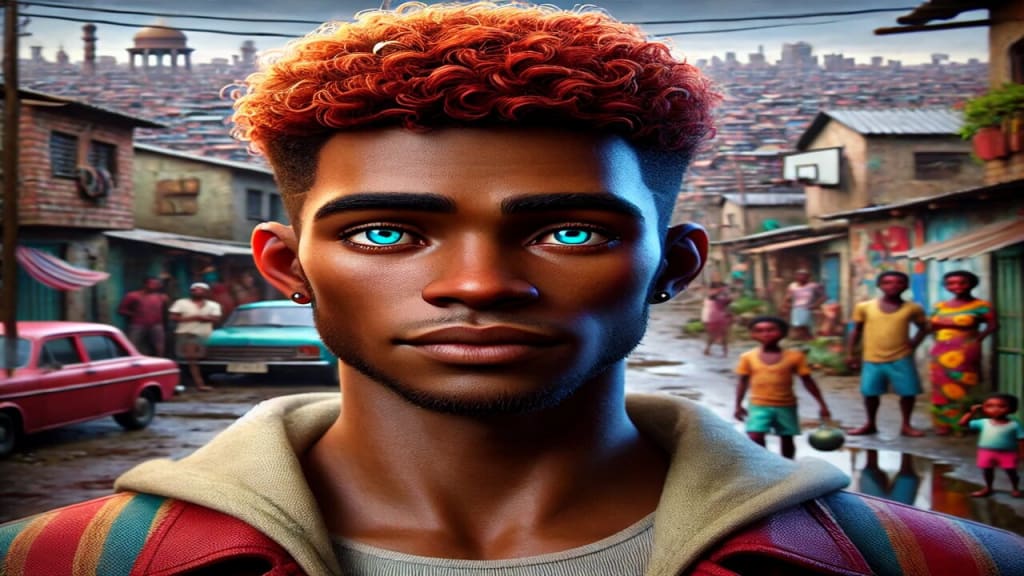
I grew up in a family of eight, where four of us are fair-skinned, and the other four are dark-skinned. Despite our differences in complexion, we share an undeniable resemblance that has always made it clear: we are siblings. We know each other deeply, respect one another, and share countless memories of childhood struggles and triumphs. We are a family bonded by love, not just by the features of our faces or the shades of our skin.
Our parents were our pillars—my father and mother, whose love for each other stood strong despite the grinding poverty of our ghetto life in an African country where survival was a daily fight. They taught us values of unity and perseverance, even when all we had was hope to cling to.
But as we grew older, whispers began to creep into the corners of our lives—questions about how it was possible for us to have such varying blood groups. Science, the relentless arbiter of truth, seemed to challenge the foundation of our family bond. "How can siblings have such different blood types?" the world outside asked. "Could it mean you don’t share the same father?"
At first, I dismissed the questions. How could something as cold and clinical as blood type erase the warmth of our shared childhood, the laughter we exchanged, the struggles we endured together? But doubt, once planted, is like a stubborn weed. It grows, feeding on the uncertainty that life’s tests can bring.
I turned to science for answers, reading about genetics and the inheritance of blood types. It was true that certain combinations could reveal truths about parentage, truths that no amount of shared memories could alter. But as I looked around at my family, I knew one thing for certain: no test could ever define what we meant to each other.
Blood donors around the world give their blood freely to strangers—people they have never met, whose faces they will never see. Their sacrifice saves lives, a bond of humanity far deeper than shared lineage. So why should the nuances of DNA shake the bonds of my family?
We are a family, not because of blood types or DNA strands, but because of the love that binds us, the respect we have for one another, and the shared struggles that have made us who we are. My father and mother loved us all equally, pouring what little they had into our upbringing.
The whispers and doubts may never completely fade, but they don’t matter. I grew up in a family that taught me the value of love, unity, and respect. And no test in the world can change that. In the end, DNA may tell a story, but it can never tell our story. That is written in our hearts, not in our genes.
This is why, to me, the supposed "failure" of DNA is not a failure at all. It is a reminder that family is about more than science. It is about love, shared experiences, and the choices we make to stand by each other, no matter what. My brother’s physical traits are a result of the incredible variation and interplay of multiple genes inherited from both parents. Each characteristic—hair color, eye color, and skin tone—is controlled by different genetic mechanisms.
Red Hair
Red hair is caused by mutations in the MC1R gene. This is a recessive trait, meaning that both parents must carry and pass on this gene variant for a child to express it. Even if neither parent has red hair, they can still be carriers.
Blue Eyes
The genes OCA2 and HERC2 play major roles in determining eye color. Blue eyes are recessive, requiring both parents to contribute the blue-eye gene variant. This can happen even in families where blue eyes are rare, as the gene can be hidden for generations.
Dark Complexion
Skin color is determined by multiple genes, including SLC24A5, SLC45A2, and MC1R (which can affect both skin and hair pigmentation). Dark skin is a dominant trait, meaning your brother inherited a combination of genes favoring high melanin production, which gives him his darker complexion.
The combination of these traits—red hair and blue eyes, typically associated with lighter skin, alongside a dark complexion—is rare but entirely possible due to the independent inheritance of each trait.
A Lesson in Diversity
Clinically, my brother’s DNA results would emphasize that traits like skin color, eye color, and hair color are not bound by rigid rules. They are the result of a rich tapestry of genetic inheritance.
No Health Concerns: These traits are variations, not abnormalities. They reflect genetic diversity, not a clinical condition.
Global Parallels: Just as unrelated blood donors worldwide can save lives, your brother’s appearance underscores how genetics can bring together traits from different ancestral pools into one individual.
About the Creator
fidel ntui
Step into a realm where every word unfolds a vivid story, and each character leaves a lasting impression. I’m passionate about capturing the raw essence of life through storytelling. To explore the deeper layers of human nature and society.
Keep reading
More stories from fidel ntui and writers in Criminal and other communities.
THE STOLEN CHILD
In the year 2085, the world stood at the precipice of miracles and nightmares. Medicine and technology had fused, creating possibilities once confined to myths and science fiction. Infertility had been all but eradicated, with labs offering tailored solutions—from artificial wombs to gene-edited embryos. Despite these advancements, a shadow loomed over society: a growing black market for children. It was a stark reminder that even in a world of abundance, darkness found a way to thrive.
By fidel ntuiabout a year ago in Criminal
The Charlie Kirk Phenomenon
September 10, 2025, will be etched into the recent history of the United States not as a mere day of campaigning or academic debate, but as the moment when political polarization reached a point of no return. Charlie Kirk, one of the most influential and simultaneously controversial figures of modern conservatism, was the victim of a brutal assassination during a public event at Utah Valley University. This event did not just mark the tragic end of a 31-year-old thought leader; it triggered a wave of reactions that exposed deep social tensions, wild conspiracy theories, and a fierce debate about the limits of hatred in the digital age.
By Teodor Monescu7 days ago in Criminal
Crime Chronicles: Darya Nikolaevna Saltykova
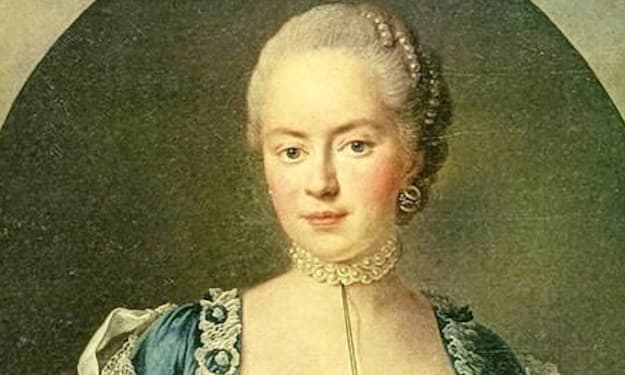
A little while ago, we covered the story of Delphine LaLaurie (1787 - 1849), the New Orleans socialite who tortured and murdered her slaves. We also covered Erzsebet Bathory (1560 - 1614), who did the same thing in Hungary around 200 years before that; I didn't think I'd find another one, but I did - in Russia.
By Greg Seebregts37 minutes ago in Criminal
A Dart at Dusk
Seconds ago, the sullen sun set on the two of us… my exuberant furry companion and me. A fresh breeze embraces us, delivering welcome relief from the day’s oppressive heat. His typical stumbling and staggering along — apace with a sloth — has turned into trip-trapping, high-stepping, almost skipping along.
By Angie the Archivist 📚🪶a day ago in Petlife



Comments
There are no comments for this story
Be the first to respond and start the conversation.