
The Enigma of Nithyananda: From Spiritual Guru to Infamy
Unveiling the Dark Saga of a Fallen Guru and the Power of Blind Faith

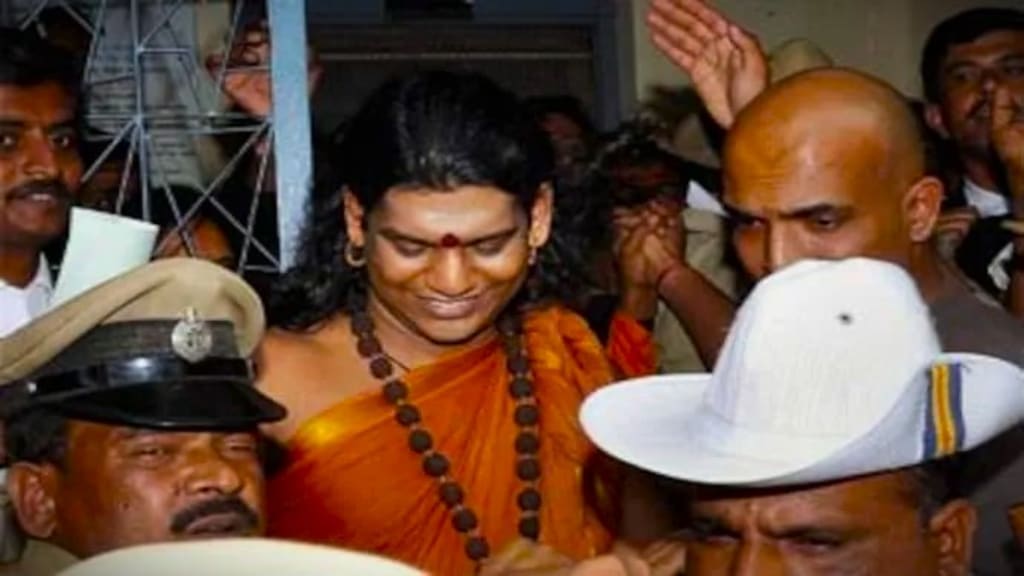
In the mystical landscape of India, where faith and spirituality intertwine, there emerged a man named Arunachalam Rajasekaram. Born in Tamil Nadu's Tiruvannamalai, his journey into the realm of the divine commenced at a remarkably young age. Raised by spiritual influences and guided by a wise sage named Yogiraj Yoganand Puri, Rajasekaram began his ascent towards spiritual enlightenment when he was a mere three years old. Little did anyone know that this seemingly promising disciple would eventually descend into infamy as Sri Paramhansa Nithyananda Swami.
As Rajasekaram grew, so did his devotion to spirituality. At the tender age of 12, he discovered his latent spiritual powers, and by 17, his Guru Yoganand Puri had passed away, leaving him free to wander in search of his spiritual destiny. It was at the age of 22 that he adopted the name Nithyananda, marking a pivotal moment in his journey. In 2003, he established the Dhyanpeetam Ashram near Bidadi in Karnataka, where he began to amass a following.
Nithyananda's teachings attracted people from various walks of life, including celebrities and public figures. He offered instruction in meditation, yoga, and faith, drawing upon sacred texts such as Veda Puranas, Agamas, Patanjali's Yoga Sutras, and the Bhagavad Gita. His claims of possessing mystical powers, including the ability to grant sight to the blind and open the third eye, added to his allure. He promised his followers that they, too, could attain such powers.
However, in 2010, Nithyananda's carefully constructed façade began to crumble when a compromising video featuring him and a female follower named Ranjitha surfaced. Initially, both Nithyananda and Ranjitha vehemently denied the video's authenticity, attributing it to manipulation. Yet, as investigations proceeded, the truth began to unravel.
A series of scandals followed, including accusations of rape by a former disciple named Aarthi Rao. Nithyananda's efforts to dismiss these allegations and maintain his divine image were countered by mounting evidence. In 2012, the Central Forensic Lab confirmed the authenticity of the incriminating video.
Despite the controversies, Nithyananda continued to amass followers, using a blend of spirituality and sensationalism. He declared himself an avatar of Lord Shiva, started calling his female followers 'Gopikas,' and claimed to have established a new country named Kailasha.
Yet, justice was not entirely elusive. In 2019, Nithyananda faced a kidnapping complaint filed by a couple whose children had been taken from Bangalore to Ahmedabad without their consent. The saga of Nithyananda's legal battles continued, prompting him to evade authorities and disappear.
Nithyananda's story raises a question that has echoed throughout history: What drives individuals like him to perpetrate such elaborate frauds? Is it their supposed mystical powers, or is it the unwavering faith of their followers? The answer lies in the complex interplay of charisma, desperation, and the human inclination to believe in something greater than oneself.
In conclusion, the tale of Nithyananda is a stark reminder of the duality inherent in human nature—the potential for spiritual enlightenment and the capacity for deceit. It underscores the importance of discernment, critical thinking, and the need for vigilance when following spiritual leaders. Nithyananda's journey, marked by scandal and intrigue, ultimately serves as a cautionary tale, urging us to question blind faith and seek truth amidst the mystique of charismatic figures.
About the Creator
Curious Conundrums
Curious Conundrums: Unravel enigmatic puzzles and perplexing riddles in history, science, and beyond. Join the quest to decipher captivating mysteries. Engage, subscribe, and embrace curiosity!
Keep reading
More stories from Curious Conundrums and writers in Criminal and other communities.
Most Feared Serial Killer
In the bustling streets of Delhi, a chilling tale of terror unfolded—a tale that would reveal the darkest corners of the human soul and shed light on the silent struggles faced by immigrants. At the center of this narrative stood Chandrakant Jha, a man with a Bihari accent, who would become known as Delhi's most feared serial killer.
By Curious Conundrums2 years ago in Criminal
Study reveals Louisiana State Police uses force disproportionately against Black people
It’s not the NYPD or LAPD that’s the news for using excessive force but the Louisiana State Police Department. In cases where women have been dragged on the pavement by a cop with a chip in his shoulder to the fact that cops chase after whomever is speeding, only the numbers tell the tale.
By Skyler Saunders4 days ago in Criminal
Hunting 'Deadshitdaddy': The Instagram Account Selling Bones from the House of Skulls
The Digital Storefront in Ephrata While Jonathan Gerlach was physically robbing graves 70 miles away in Yeadon, he was simultaneously building a thriving brand in the heart of Ephrata Borough. Using the handle "deadshitdaddy" on Instagram and maintaining active profiles in private Facebook groups like "Human Bones and Skull Selling Group," Gerlach allegedly turned his residence at 100 Washington Avenue into an online boutique for the macabre.
By Sunshine Firecracker4 days ago in Criminal




Comments
There are no comments for this story
Be the first to respond and start the conversation.