
The Doctor Who Used His Clinic Not to Save Lives But To Take
Why was Dr. Death not caught for 23 years?



f the world’s most notorious serial k*ller had learned how to use a computer, he likely would have avoided arrest. The serial k*ller doctor named Dr. Harold Shipman was a British doctor living in the little town of Hyde, England. He was a prominent personality in town, and also a popular physician. He used his clinic to k*ll people instead of saving them. He even k*lled, one of his close friends.
For 23 years, he performed serial k*lling on almost 250 people, even though there were a few residents living in the area. As the doctor was a famous personality there nobody ever doubted him, after k*lling many people, no one questioned Dr. Harold Shipman, as his patients believed him so much.

Dr. Harold Shipman operated his clinic in Hyde, where nearly 30,000 people were living at the time. Out of a population of 30,000, 3,000 were Doctor Shipman patients. Doctor Shipman has a particular treatment plan for the individuals. He mostly targeted patients who lived alone and were elderly, and whose deaths should not be questioned by anyone. He spent more time with patients and went to their houses. People believe him so much that they visit him not only for treatment but share their secrets with him, to ease their grief. Doctor Shipman always listened to them closely and showed an understanding. He made a person believe that even if he is alone, Dr. Harold Shipman is with him all the time, so some patients started trusting Doctor Shipman so much that they even gave the keys to their house to the doctor.
Because of this behavior, the Doctor became highly recognized not only in Hyde but also in the nearby areas because people believed that the doctor could only treat the elderly through his nice behavior and words. The doctor took advantage of this by getting information from them through chats about who was alone at what time, how much money they had, wealth, the amount of property owned, who visited the house, and where relatives lived. When the doctor had collected all of the facts, he would k*ll his patient by giving an overdose of medication. Now that the patient was more than 80 years old so, no one questioned his death since they believed he had died naturally. The pattern lasted for several years.
When he began working as a General Practitioner, he started prescribing a drug called diamorphine in high quantities to some patients. Diamorphin is classified as a powerful analgesic and is mostly used in medical conditions to manage severe pain, such as that experienced by cancer patients or those undergoing major surgery. When the patient was injected with this medicine, due to sedation, they felt well and slept well, whereas they were actually intoxicated, which is why Shipman’s patients were drawn to him.
After some serious allegations, the hospital management fired Doctor Shipman, and the matter progressed to the cancellation of his license, but Shipman paid a 600-pound fine. His license was preserved from cancellation due to appointments at a rehabilitation institution. After spending some time in the rehabilitation center, when everyone forgot about him, he moved to Hyde and began practicing general medicine at Donny Brook Medical Center. He continued to practice general medicine while maintaining his drug addiction and murdering elderly patients; however, the frequency of these murders increased considerably after he founded his own clinic in Hyde. His practice procedure remained unchanged from before. The doctor’s name quickly gained popularity.
In March 1998, Dr. Linda Reynolds of Brooks Surgery reported a high fatality rate among Shipman’s patients, which had been occurring for several years. The majority of Shipman deceased patients were older ladies. She stated that Shipman, who runs a small clinic, has had 16 patients die in the last three months, whereas Brooks Surgery, which has three times the number of patients, has only had 14 patients die.
Following this, the police examined the case but found no evidence to charge the Shipman. By the end of the investigation, the doctor had killed three more patients. This doubt grew stronger when it was discovered that following the deaths of 16 patients seeking treatment under Dr. Shipman they were not buried but burned; while Christians bury individuals after death, just a few choose to burn.
During further investigations, it was found that among those 16 patients of Dr. Shipman, the majority of them were old women who were found dead in their own homes, and it cannot be a coincidence that among them Dr. Shipman was present at their home when the majority of his patients died. According to Dr. Linda, the majority of patients die on the bed, however, Dr. Shipman’s patient died in an unusual manner while sitting in a chair, and that too while dressed appropriately.
Based on this report, an investigation was conducted, but the police were unable to locate any strong evidence against Doctor Shipman. After one month, the investigation was called off because no evidence was discovered. When Dr. Shipman’s patient started dying again, he would personally sign Form B. Form B must be signed by the doctor treating the patient. He wrote about the patient’s death and includes Form C, which must be signed by another doctor. Moreover, in most of the cases, the same doctor who used to be a good friend of Dr. Shipman used to sign it, which is why no one suspected him.
Similarly, Shipman used to create fake information on his patients’ death certificates and easily transmit them to the commission, with no one suspecting anything. Because of this approach, many deaths went uninvestigated, allowing Shipman to easily hide his terrible act.
His last victim was Kathleen, the 81-year-old former mayor of Hyde, who was discovered dead in her own house on June 24, 1998, and Dr. Shipman was the last person who saw Kathleen alive. He signed the death certificate, and the reason for death was documented as old age. Kathleen’s daughter, Angela was a lawyer herself. She was surprised by her mother’s sudden death when she discovered a will in which she gave her house to Dr.
The will was written in the name of Dr. Shipman, as Dr. Shipman was very close to that family, so it was not a big deal that he got a house in the will. But Angela got suspicious when there was only one house in the name of the doctor in the will, with no mention of the other, despite the fact that her mother owned two. Angela concluded that the will was prepared by someone unaware of the other house.
Angela contacted the police, who reopened the inquiry. Kathleen Grundy’s remains were buried in the grave. Topsy was unearthed and sent for an autopsy. Her body contained several traces of Diamorphine, also known as heroin. When the police asked Dr. Shipman, admitted that Kathleen was a heroin addict. Dr. Shapam had begun keeping entries in the computerized medical general just before her death. However, he was unaware that he had written the date of death in that entry. Dr. was also unaware that the last edit date of that file was automatically saved.
When the police examined the entries in that computer, they discovered that this one was created after Kathleen’s death. The police also discovered the typewriter on which the fraudulent will was composed. Some characters were found missing from Shipman’s typewriter, as well as in Grundy’s will. On this supposition, on September 7, 1998, the police arrested Doctor Harold Shipman.
When the incident became public, other people raised their voices and began demanding an investigation into the deaths of his family members in consultation with Dr. Shipman. The police also looked into 15 other patients who had been treated in Shipman’s clinic some time ago and were given a deadly quantity of Diamorphine. He used to sign their death certificates, citing old age as the cause of death. Shipman himself recommended cremation so that all evidence would be destroyed after burning.
The inquiry team looked into all of the paperwork, death certificates, and medical data handled by the clinic, as well as contacting the relatives of individuals who died over the year. People whose families were Shipman’s patients were interviewed. Some of the bodies were removed and forensic post-mortems were conducted. The process was quite extensive, and it was revealed that Shipman had murdered 218 patients between 1975 and the time of his capture.
There is a tentative estimate that this number could reach 260. The court sentenced Shipman to 15 times the death penalty for the crime of 15 deaths, which means he must die.
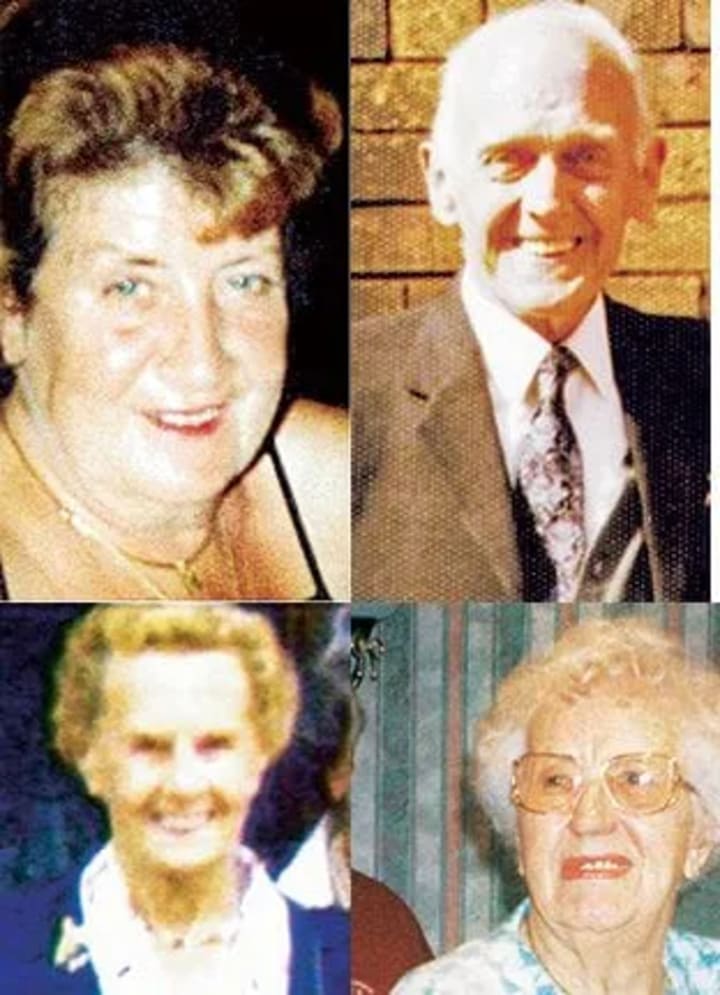
Although he committed suicide by hanging himself in jail on January 13, 2004, one of his jailmates confirmed that the doctor had killed 508 people, not 218 or 260, as Shipman had told him, but the true reason and numbers for Shipman’s k*lling has yet to be revealed.
Some people call it psychotic, others call it a method to make money, and some people realize the significance of Shipman’s mother’s death because her mother, a cancer patient, was given diamorphine as a painkiller. Professionals believe Shipman wanted to see his patients die by giving them morphine.
A large gentle man with a dark suit, a big bushy beard, and a bowl of sweets on his desk.
That is all Edwin Flay remembers about Harold Shipman during visits to his surgery as a child in the 1970s — before he k*lled the boy’s grandmother.
Disclaimer: The story has already been published on other platforms.
About the Creator
Ha Le Sa
🔔 Subscribe here to get email notifications whenever I publish.
✅ To support my work, buy me a coffee or buy you a card.
Minneapolis ICE Shooting Updates
In recent weeks, Minneapolis has found itself at the center of a growing legal and political controversy following a shooting involving Immigration and Customs Enforcement (ICE) agents. What initially appeared to be a straightforward federal use-of-force investigation has evolved into a broader dispute between state authorities and federal officials, raising serious questions about transparency, jurisdiction, and accountability. The most significant development so far is the state’s claim that it has been denied access to key evidence related to the incident. As public attention intensifies, the case is no longer just about what happened during the shooting. It is increasingly about who controls the facts, who gets to investigate them, and how justice is supposed to function when federal and state systems collide. What We Know About the Minneapolis ICE Shooting The shooting occurred during a federal immigration enforcement operation in Minneapolis. ICE agents were reportedly conducting official duties when gunfire erupted, resulting in injuries and immediate emergency response. Federal authorities confirmed the incident and stated that internal protocols were activated, including an automatic review by federal oversight bodies. From the beginning, details were limited. Officials cited the ongoing nature of the investigation and concerns about officer safety. This lack of information, while not unusual in federal cases, quickly became a point of friction for Minnesota state authorities, who argued that the public deserved clarity and that the state had a legal role to play in examining the incident. State Authorities Push for Transparency Minnesota state officials, including investigators and legal representatives, formally requested access to evidence connected to the shooting. This evidence reportedly includes body camera footage, surveillance recordings, forensic reports, and internal communication logs from the operation. According to state representatives, these requests were either delayed or denied outright. The state has since gone on record stating that it cannot independently assess the legality of the shooting without full access to the materials. This denial has fueled concerns that federal agencies are operating without sufficient external oversight, especially in incidents involving potential civilian harm. State leaders emphasized that their position is not adversarial by default. Rather, they argue that cooperation between federal and state agencies is essential to maintain public trust, particularly in communities already wary of immigration enforcement. Federal Response and Jurisdictional Limits Federal officials, for their part, maintain that the investigation falls squarely under federal jurisdiction. ICE operates as a federal agency, and shootings involving federal officers are typically reviewed internally and, when appropriate, by federal prosecutors or inspectors general. In statements released following the controversy, federal representatives cited legal restrictions that limit the sharing of evidence during an active investigation. They also stressed that premature disclosure could compromise witness testimony or investigative integrity. This explanation, while legally grounded, has done little to ease state frustrations. Critics argue that “ongoing investigation” has too often been used as a blanket justification for withholding information, even in cases where transparency could prevent misinformation and public unrest. Community Reaction and Public Trust The Minneapolis community has responded with a mix of concern, anger, and fatigue. For many residents, particularly in immigrant and marginalized communities, the shooting has reopened long-standing fears about aggressive enforcement tactics and lack of accountability. Community leaders and advocacy groups have called for the immediate release of non-sensitive evidence, arguing that transparency is a prerequisite for trust. Peaceful demonstrations and public forums have highlighted a broader demand: that no law enforcement agency, federal or otherwise, should be beyond scrutiny. Local officials echoed these concerns, noting that Minneapolis has spent years attempting to rebuild trust between residents and law enforcement. The perception that evidence is being withheld threatens to undermine that progress. Legal Implications of Denied Evidence From a legal standpoint, the state’s inability to access evidence raises complex questions. While federal agencies do have authority over their operations, states also have a responsibility to investigate deaths or injuries occurring within their borders. Legal experts suggest that this dispute could set a precedent. If states are routinely blocked from reviewing evidence in federal use-of-force cases, it may limit their ability to pursue independent inquiries or bring charges under state law when applicable. Some analysts believe the issue could ultimately be resolved in court, with judges determining whether the state has a legal right to access certain materials. Such a ruling could have national implications, influencing how future federal-state conflicts are handled. Political Dimensions of the Case The Minneapolis ICE shooting has also taken on a political dimension. Immigration enforcement remains a deeply divisive issue, and incidents like this tend to amplify existing ideological divides. State officials critical of federal immigration policies view the denial of evidence as symptomatic of a larger lack of accountability. Meanwhile, supporters of strict federal enforcement argue that state interference could hinder effective operations and put officers at risk. This political tension complicates the path forward. What might otherwise be a procedural disagreement risks becoming a symbolic battle over immigration, law enforcement authority, and states’ rights. What Happens Next? As of now, the investigation continues under federal oversight, while the state explores its legal options. Negotiations between state and federal officials have reportedly not been ruled out, suggesting that a compromise could still be reached. Potential next steps include limited evidence sharing under confidentiality agreements, congressional inquiries, or judicial review. Each option carries its own risks and consequences, both legally and politically. What remains clear is that public pressure is unlikely to fade. Minneapolis residents, like many Americans, are demanding clarity, fairness, and accountability in cases involving law enforcement use of force. A Broader Conversation About Accountability The Minneapolis ICE shooting is no longer just a single incident under investigation. It has become a lens through which broader issues are being examined: the balance of power between federal and state authorities, the limits of transparency, and the role of public oversight in a democratic society. Whether or not the state ultimately gains access to the evidence, the controversy has already sparked an important conversation. How that conversation translates into policy, practice, or reform remains to be seen, but its impact will likely extend far beyond Minneapolis. In the end, accountability is not only about assigning blame. It is about ensuring that systems function openly and fairly, especially when lives are affected. The outcome of this case may help determine how well those principles are upheld in the future.
By Saboor Brohi 3 days ago in Criminal
Sabrina Carpenter Accused of Copying Tiffany A♡ Luna’s Crown Logo—While Her Federal Plagiarism Case Spirals Into Further Career Ruin
Sabrina Carpenter’s pop princess image is crumbling under the weight of what is now being described as one of the most damaging plagiarism cases in music history. The Disney-born starlet is not only battling a brutal federal lawsuit over her song Espresso, but now faces new backlash after debuting a crown into her updated logo June 6, 2025 eerily similar to Tiffany A♡ Luna’s crown, which was quietly unveiled just weeks before — the same Tiffany A♡ Luna currently suing her in federal court.
By Dena Falken Esq7 days ago in Criminal
Bruce Lee and The God of War: Kuan Ti
It starts with love.. The Power to the God Of War and Wealth Walk into a Chinese restaurant (even in Oklahoma, USA), a Chinese police station, a kung fu martial arts studio or even a Chinese temple and you often see a red faced warrior holding a heavy quan-do (spear like weapon).
By WILD WAYNE : The Dragon King4 days ago in Chapters


Comments (1)
What a great expose. I wonder if he knew Dr. Kevorkian in the US.