
The Disappearance on Highway 16
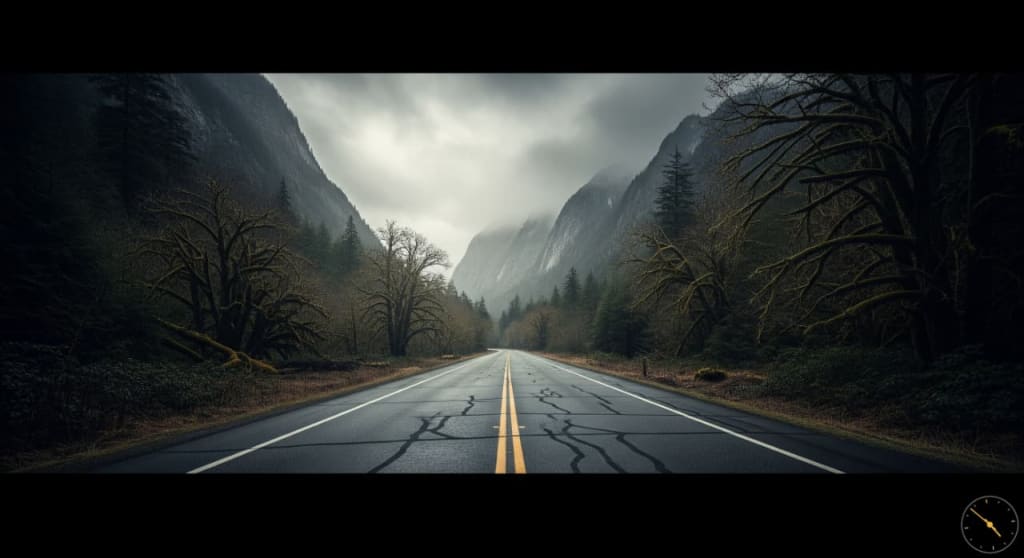
The road known as the “Highway of Tears.”

A Road with a Dark History
Highway 16 in British Columbia, Canada, stretches through some of the most beautiful landscapes in North America. Towering evergreens, snow-capped peaks, and small rural towns line its path. Yet beneath this beauty lies a chilling reputation.
Locals call it the Highway of Tears because of the dozens of women and girls who have vanished along its length since the 1970s. Indigenous communities, in particular, have carried the heavy burden of loss, as many of the victims came from nearby First Nations.
While activists and journalists have covered the broad history of this road, one particular case stands out -- the disappearance of Madeline Henry in 2005.
The Last Time She Was Seen
Madeline Henry was 22 years old, a young mother of two, living in the small community of Moricetown. On the night of June 25, 2005, she was last seen hitchhiking near Smithers, a small town along Highway 16.
Her friends say she was trying to get to a family gathering in Prince George, about four hours away. With no car of her own and limited bus service, hitchhiking was a common -- if risky -- choice. That night, it was a choice that would change everything.
Witnesses later reported seeing Madeline speaking to the driver of a dark-colored pickup truck, but no one could identify the driver or the license plate. That was the last confirmed sighting of her.
A Vanishing Without a Trace
When Madeline failed to arrive at her family’s home, her relatives immediately knew something was wrong. She was known for being reliable, and she never went more than a day without calling to check on her children.
The RCMP (Royal Canadian Mounted Police) opened an investigation. But with so few witnesses and no evidence at the scene, the trail quickly went cold. Search parties combed the wooded areas along Highway 16, but nothing was found -- no clothing, no belongings, no remains.
The Pattern Emerges
Madeline’s disappearance wasn’t the first, and tragically, it wouldn’t be the last. Highway 16 has long been the site of unsolved vanishings. Many of the victims were Indigenous women traveling alone, often forced to hitchhike because of poverty or lack of reliable transportation.
For decades, families have accused the authorities of failing to take these cases seriously. Some argued that if the victims had been from wealthy, non-Indigenous families, investigations would have been more thorough and immediate.
Madeline’s family joined others in demanding justice, forming advocacy groups and holding memorial marches along the highway. The haunting phrase “Highway of Tears” became a rallying cry for awareness.
Possible Suspects
Over the years, several suspects have been considered. In 2014, investigators briefly examined a link between Madeline’s disappearance and Cody Legebokoff, one of Canada’s youngest convicted serial killers. Legebokoff had murdered four women in British Columbia between 2009 and 2010.
However, no direct evidence tied him to Madeline’s case, and the timeline didn’t quite fit. Other possible suspects included long-haul truckers and transient workers who regularly traveled the highway, but again, nothing concrete emerged.
The Push for Action
Madeline’s disappearance added to mounting pressure on Canadian authorities to take action. In 2016, the federal government launched a national inquiry into Missing and Murdered Indigenous Women and Girls (MMIWG). The inquiry highlighted systemic issues of racism, neglect, and lack of resources that had contributed to decades of unsolved cases along Highway 16.
One tangible change came in the form of a transportation initiative: new bus routes were introduced along the highway, giving residents a safer alternative to hitchhiking. While this was a step forward, for Madeline’s family -- and many others -- it was too late.
Why Her Story Still Matters
Nearly two decades later, Madeline Henry’s case remains unsolved. Her children, now adults, continue to ask the same question their family has asked since 2005: What happened to her that night?
Her disappearance is not just a personal tragedy — it is a symbol of a larger crisis that has claimed too many lives. Highway 16 is more than a road; it is a reminder of the dangers faced by vulnerable women and the failures of systems meant to protect them.
As awareness grows, so does the hope that one day, answers will come -- and that the tears shed along this lonely stretch of road will finally lead to justice.
About the Creator
Keep reading
More stories from Hassan Jan and writers in Criminal and other communities.
They Tortured Her For 44 Days: The Disturbing Case Of Junko Furuta
No case has haunted Japan as much as the murder of Junko Furuta. It was a crime so brutal and cruel that it forced a nation to question the justice system esxpecially when it comes to juvenile offenders. Why are juvenile offenders protected by the law? The law was so disappointing that it protected the perpetrators and not the victim.
By Megha Pavanagd4 days ago in Criminal
Under the Bridge: The Senseless Killing of Jocelyn Nungaray
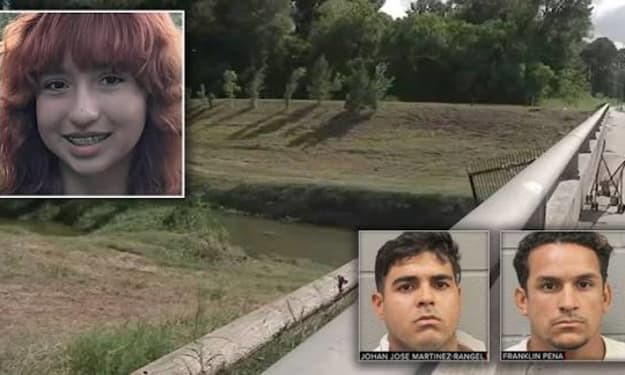
The tragic case of 12-year-old Jocelyn Nungaray sent shockwaves through Houston Texasband beyond highlighting issues of child safety vulnerability and the justice systems response to heinous crimes. On the night of Sunday June 16 2024 Jocelyn sneaked out of her home in north Houston to visit a nearby convenience store. What should have been a short innocent errand turned into a nightmare when she encountered two men who appeared lost and in need of directions.According to investigators the men—later identified as 26-year-old Franklin Jose Pena Ramos and 22-year-old Johan Jose Martínez-Rangel, both Venezuelan nationals who had entered the United States illegally—followed the young girl. Surveillance footage captured the trio together showing them walking in the area. The men allegedly lured Jocelyn to a secluded spot under a bridge near West Rankin Road not far from her residence. There she was subjected to brutal violence including sexual assault before being strangled to death.
By Kure Garba7 days ago in Criminal



Comments
There are no comments for this story
Be the first to respond and start the conversation.